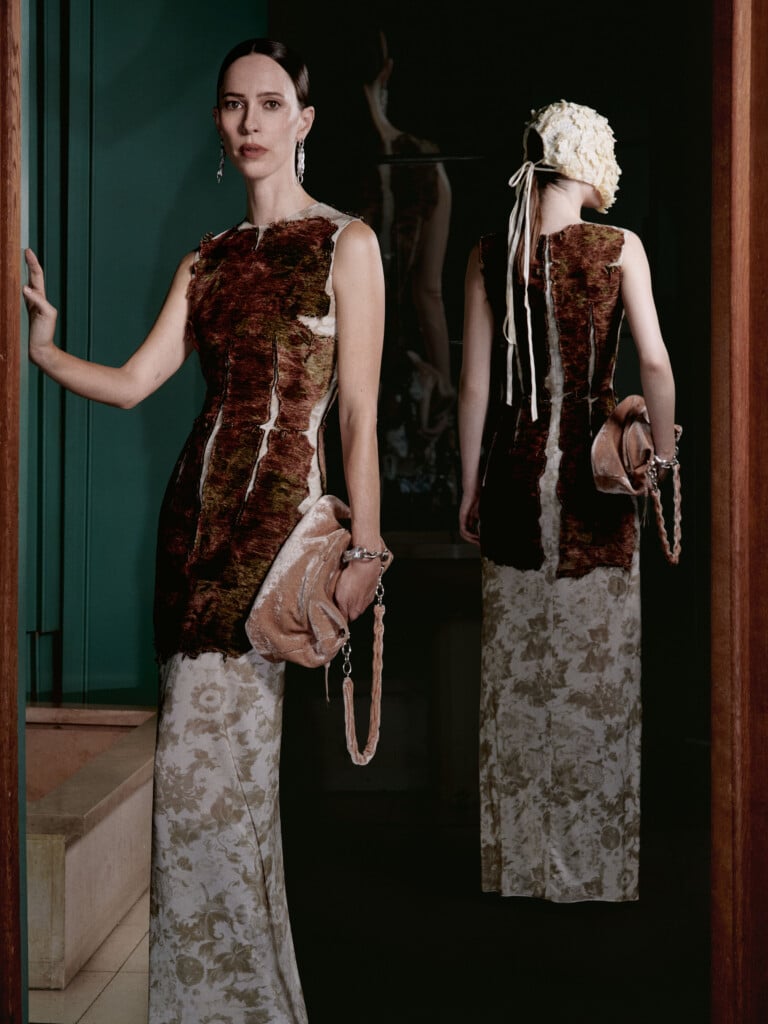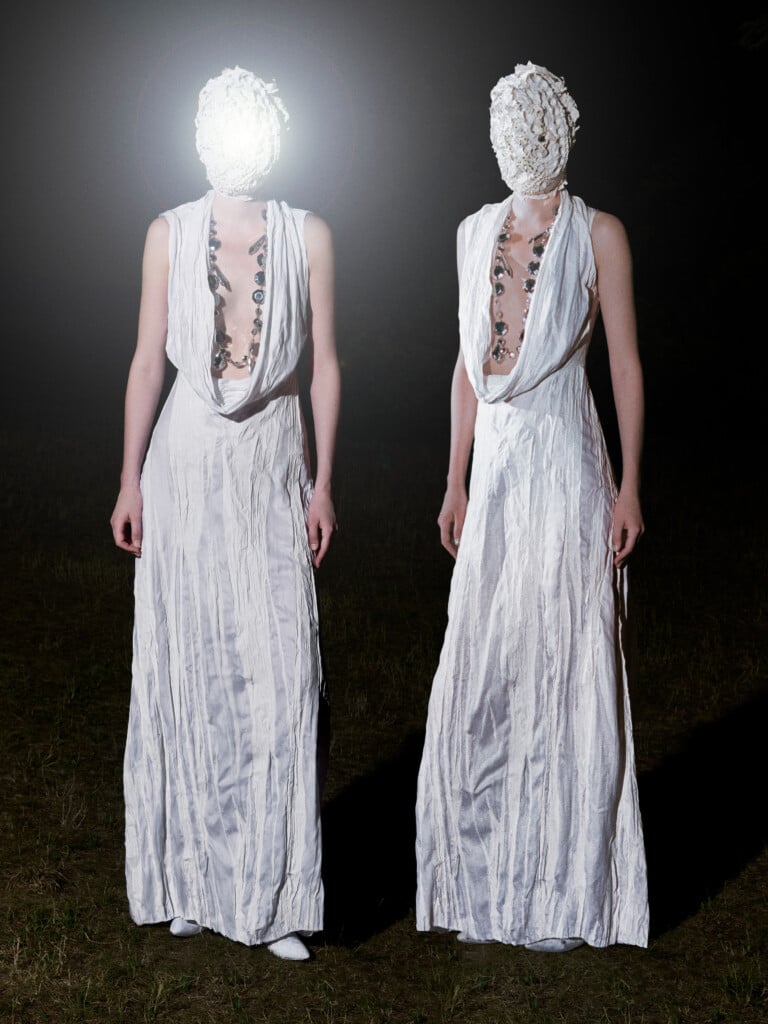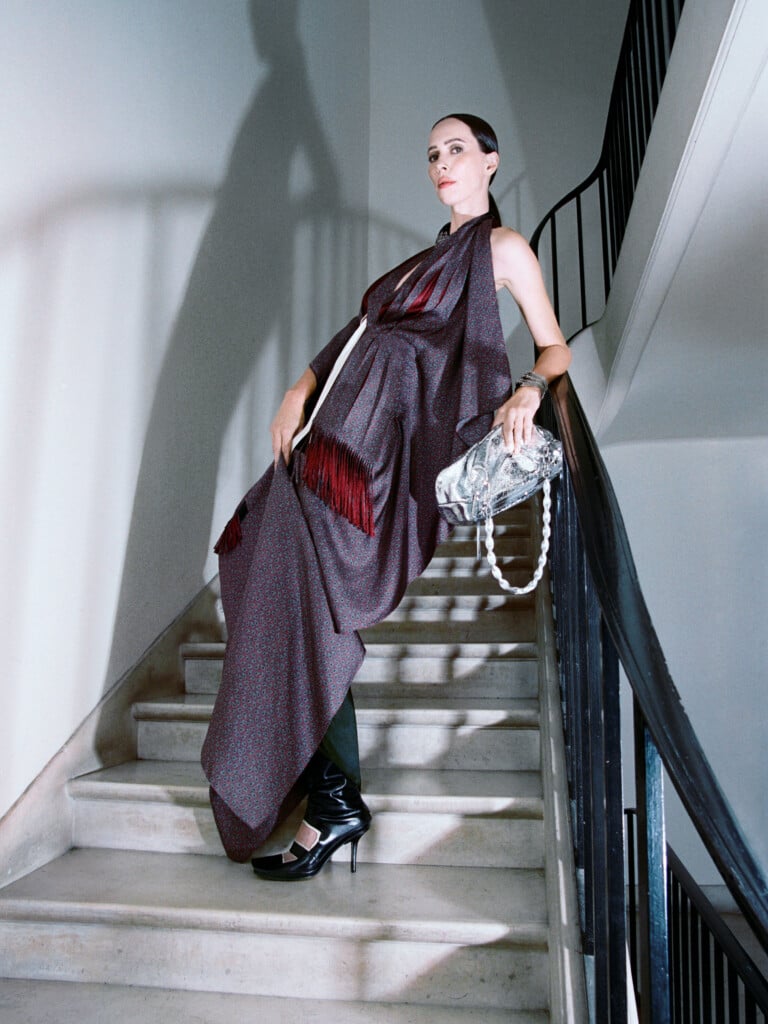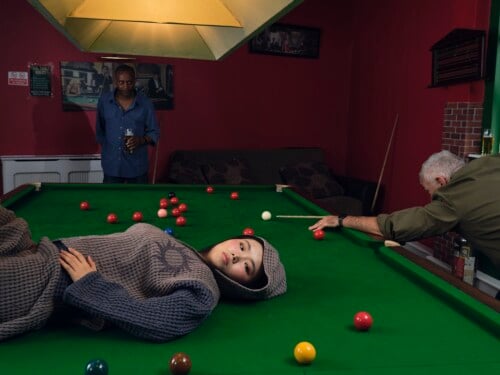
“Who are you?”. This is the question that runs through Anonymity, the new audiovisual project by Maison Margiela, directed by Thibaut Grevet and starring Rebecca Hall. But the answer, at least this time, does not come through a traditional film: Anonymity is in fact the trailer for a psychological thriller that does not exist. An imaginary film built around a very real question: how much of the identity we show truly belongs to us?
Maison Margiela once again turns to cinema as a space for research. After Joy, the short film made for Spring/Summer 2026 with composer Max Richter and an orchestra of 43 young musicians. The title already says a lot. Anonymity seems to return to one of the principles through which Maison Margiela has built its own identity: the possibility of creating without necessarily placing the author at the center. For Margiela, anonymity is in fact not merely a matter of image. Since the maison’s earliest days, the face has been progressively withdrawn from the scene: in the first shows of 1988 the models appeared with their faces covered by veils, while in the following years masks, fabrics, and devices of concealment would become an integral part of the house’s vocabulary.
This is a particularly significant choice when one considers the figure of Martin Margiela, who throughout his career refused the traditional media exposure of the designer. His face never became the logo of the maison: on the contrary, Margiela built one of the most recognizable identities in contemporary fashion precisely through his own absence.
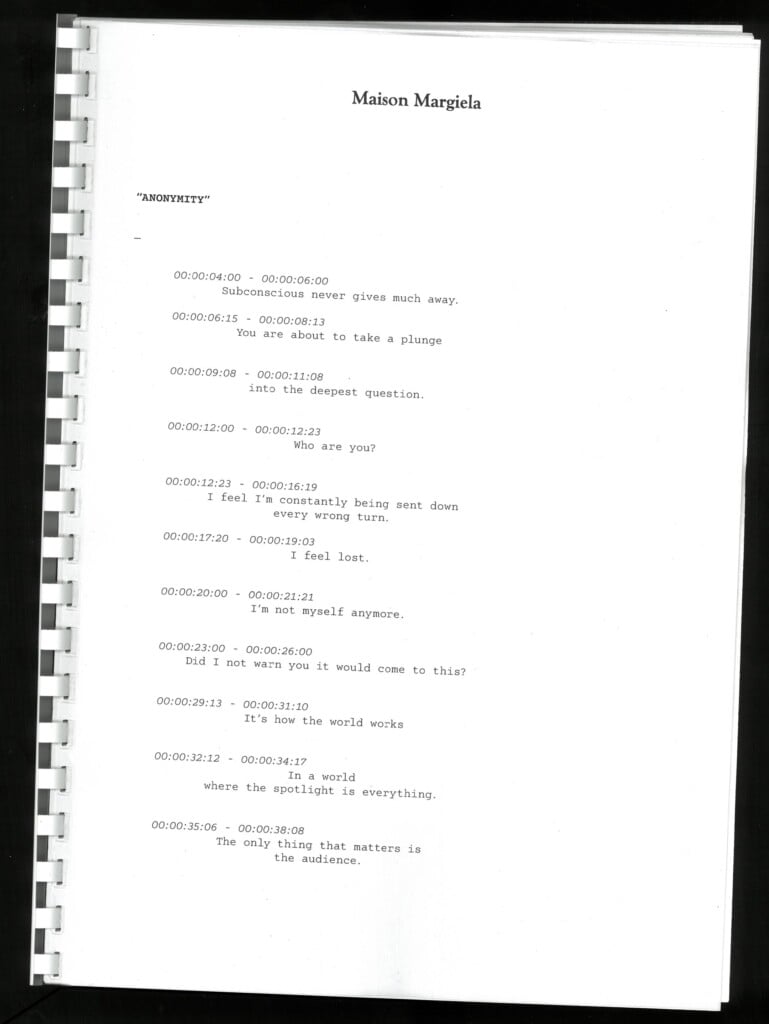

Anonymity thus arrives as a natural extension of this research, but also as a possible reversal of it. If fashion allowed Margiela to hide the body and the face, cinema now offers the maison another language with which to question what remains once identity is taken away. This is perhaps the most interesting point of Anonymity. At a moment when fashion and cinema seem to constantly chase faces, personalities, and recognizability, Maison Margiela once again chooses the opposite direction: turning absence into language.
This is where the project moves away from a classic fashion campaign. Maison Margiela does not use cinema merely to present a collection, but builds a small narrative device around its own codes. The Fall–Winter 2026 collection, presented in Shanghai, is not simply shown: it enters into the construction of the thriller and becomes part of the way in which Rebecca Hall’s character takes shape.
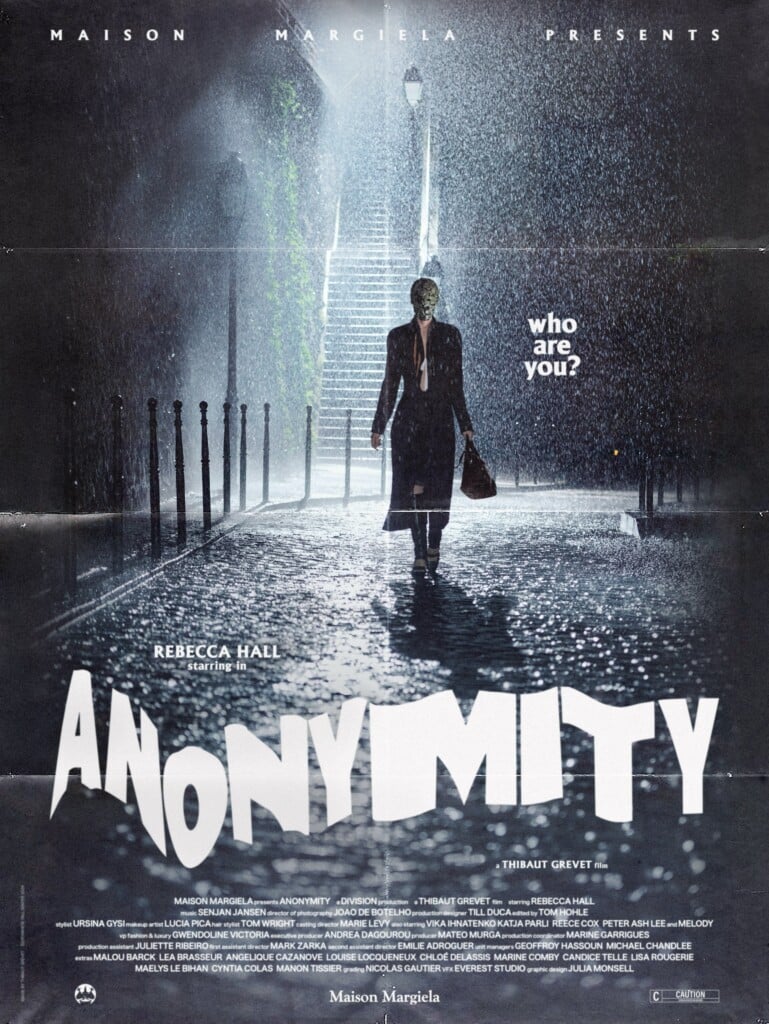
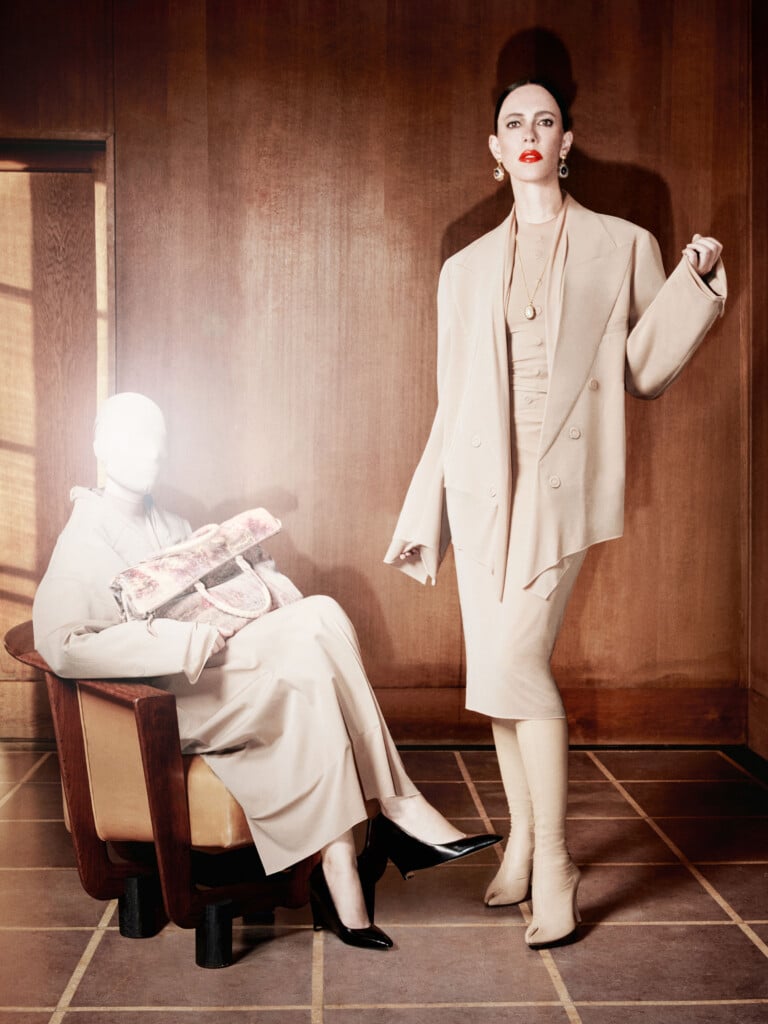
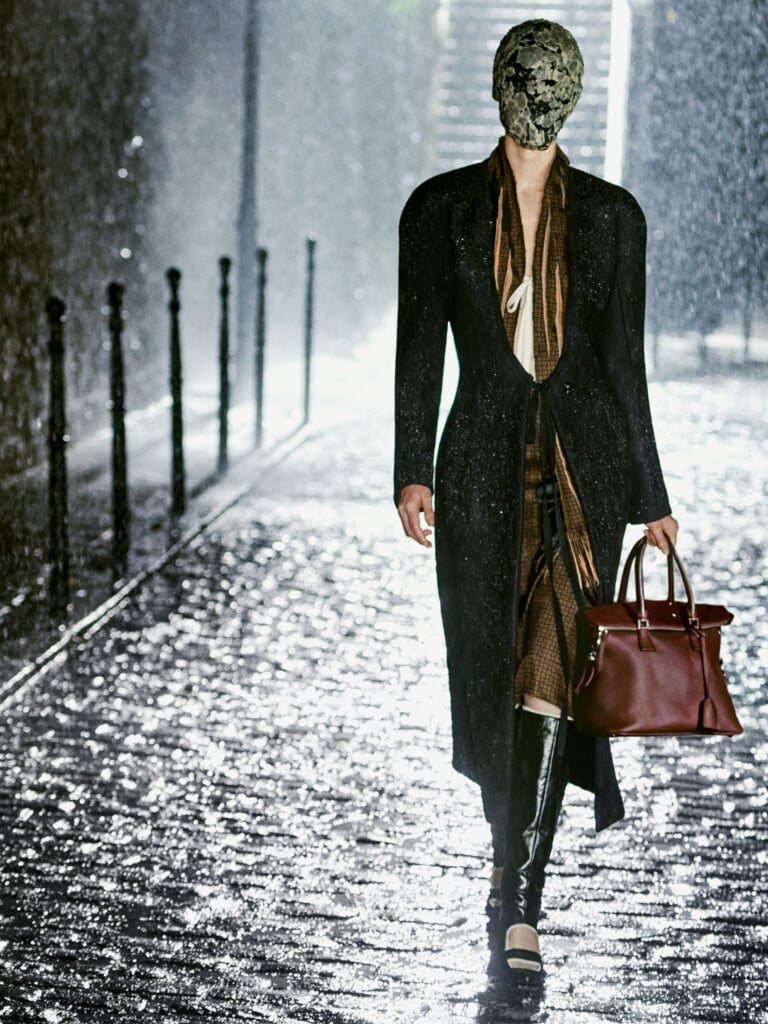
The wardrobe in fact follows the same logic of transformation that runs through the film: what appears recognizable is covered, altered, reassembled. The looks thus also become part of the narrative — Second Skin, salvaged fabrics, surfaces treated with the Bianchetto technique, and above all the handcrafted masks made by the maison’s atelier do not function as mere styling: they contribute to Rebecca Hall’s transformation into her alter ego. In this way the collection does not interrupt the narrative to become “fashion,” but becomes one of its instruments. The garments help build the identity of the characters and, at the same time, call it into question.
In a fashion system increasingly built on the presence of faces, on social media, and on the personality of whoever wears or creates a garment, Anonymity chooses to complicate exactly that certainty. The question “Who are you?” concerns not only Rebecca Hall, nor only Margiela. It concerns the way in which, today, we build an image of ourselves and how quickly that image ends up becoming a character.