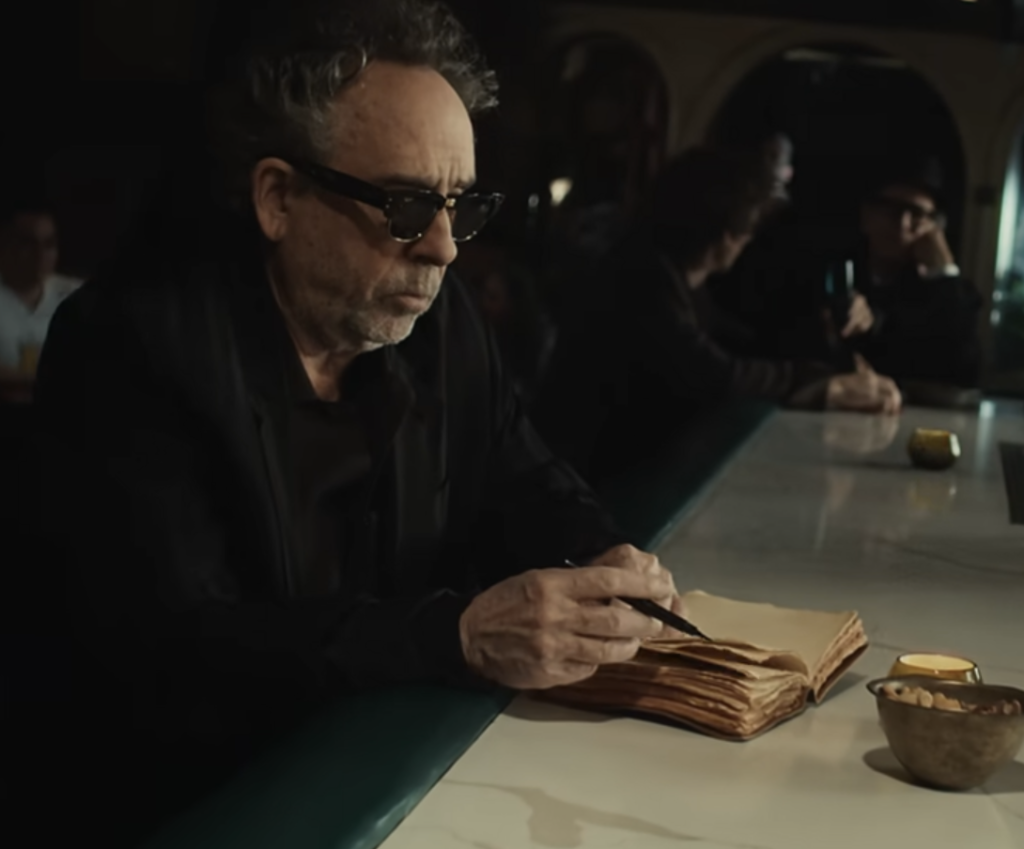
We already knew that DON’T BE DUMB, A$AP Rocky’s new album, would arrive with a contribution from Tim Burton. But with the release of the WHISKEY / BLACK DEMARCO video, this unusual crossover finally comes to life—and it also seems to be fueling plenty of rumors about a film in the works. And if we rewind the tape and go back a few weeks, to when A$AP Rocky unveiled the cover that partially signaled the partnership with the director, we see a “no” sign placed like a collage over the very idea of a rap album. The crossed-out title, repeated, while around it a crowd of A$AP Rocky variants takes shape. Distorted figures and off-kilter stares multiplying. It didn’t feel like an aesthetic choice for its own sake, but something deliberate: there isn’t one single protagonist here, but many characters fused together.
The collaboration with Burton works precisely because it isn’t decorative. It’s not just a prestige signature, but a change of direction—if you will, a more intellectually engaged one. Burton has always built worlds where identity is unstable and fragmented, and Rocky has been working with that same idea for years: rapper, fashion icon, media figure living off constant transformation. DON’T BE DUMB is the point where these two visions overlap without canceling each other out.

That logic becomes explicit in the WHISKEY / BLACK DEMARCO video, closer to a short film than to music videos as we know them. Burton steps into the frame and kickstarts the story, unleashing six illustrated characters who begin moving through New York as if they don’t belong—too artificial to fit inside reality. They aren’t random creatures, but Rocky’s alter egos: masks that embody different phases, attitudes, and postures across his career.

GR1M, MR. MAYERS, RUGAHAND, BABUSHKA BOI, DUMMY, and SHIRTHEAD share the same space without hierarchy, as if Rocky were looking at his own mythology from the outside and deciding to let it go. It’s controlled chaos—stagey, deliberately artificial. Burton brings his imagery of dark humor and jittery lines; Rocky uses it as a lens to reread himself.

DON’T BE DUMB works because it treats aesthetics as narrative structure. The image doesn’t accompany the music—it comes first and shapes it. The cover is the inciting incident, the video is the heart of the story, the characters are clues to a larger universe. A$AP Rocky therefore seems to move against the current, and Burton manages to adapt to the rapper’s world by pushing it off-kilter—but in the right way.