In the heart of the Qatari desert, far from the futuristic skyline of Doha, the landscape changes. It is precisely in this almost primordial setting, today more than ever under threat, that Richard Serra created one of his works: East-West/West-East, the same concept from seven years ago.
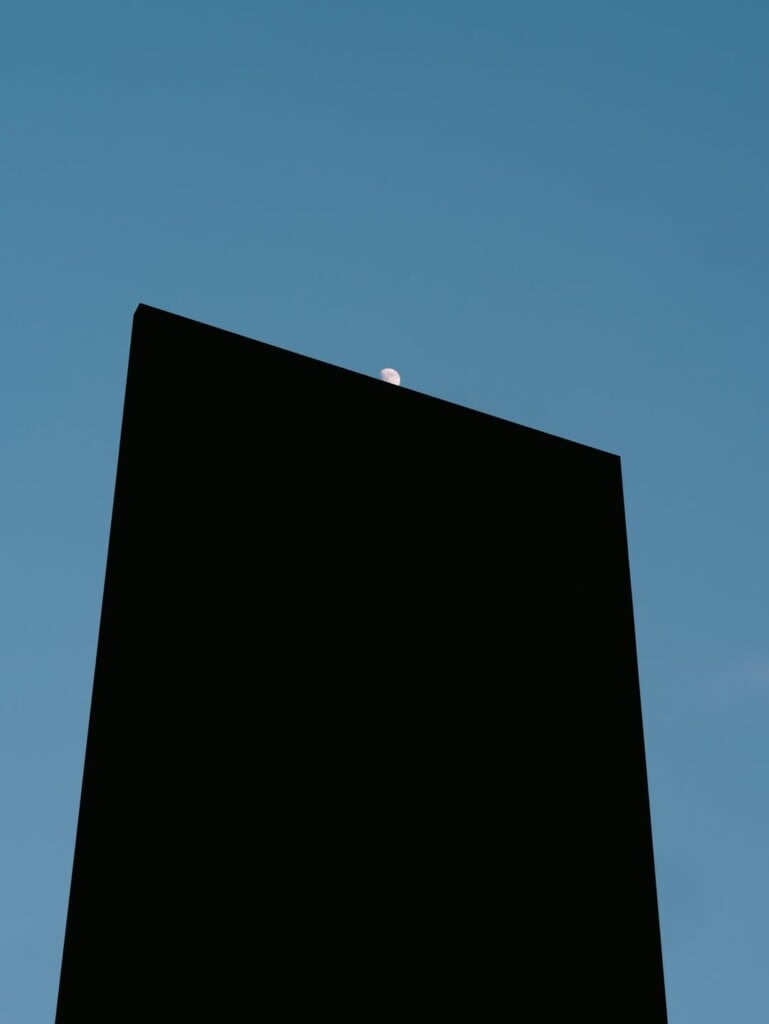
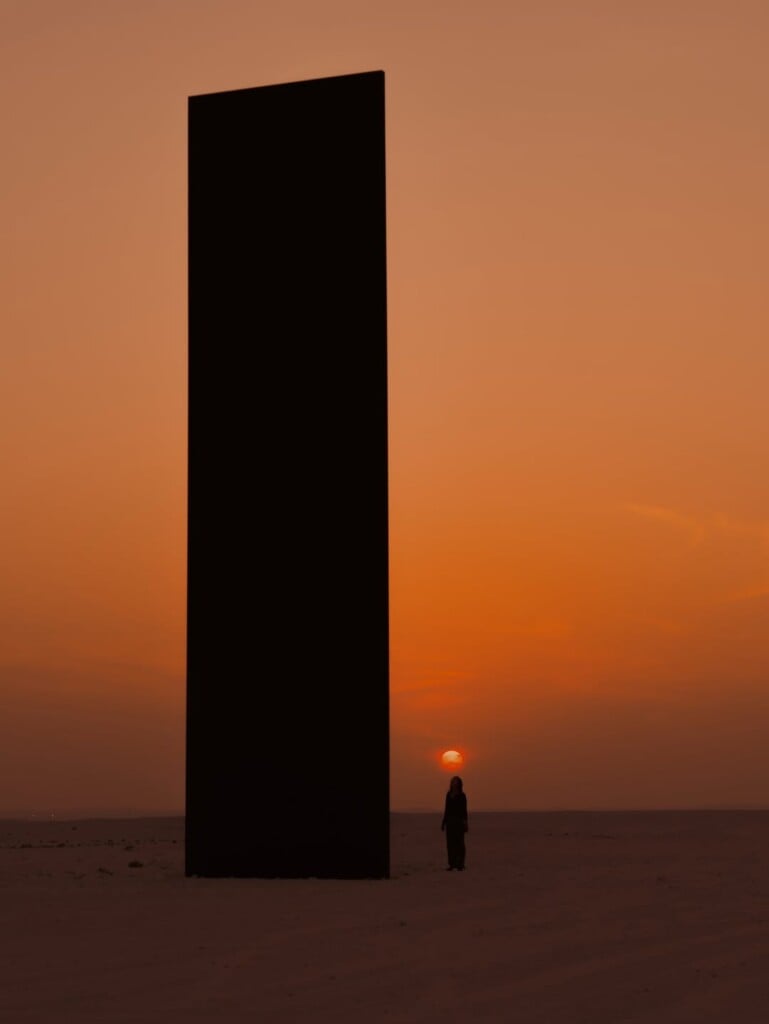
Commissioned by Qatar Museums, the installation consists of four imposing corten steel plates about fifteen meters high. Arranged along a line that cuts across the landscape for more than a kilometer, the sculptures rise from the ground like essential markers, almost geometric coordinates drawn across the open space of the desert.
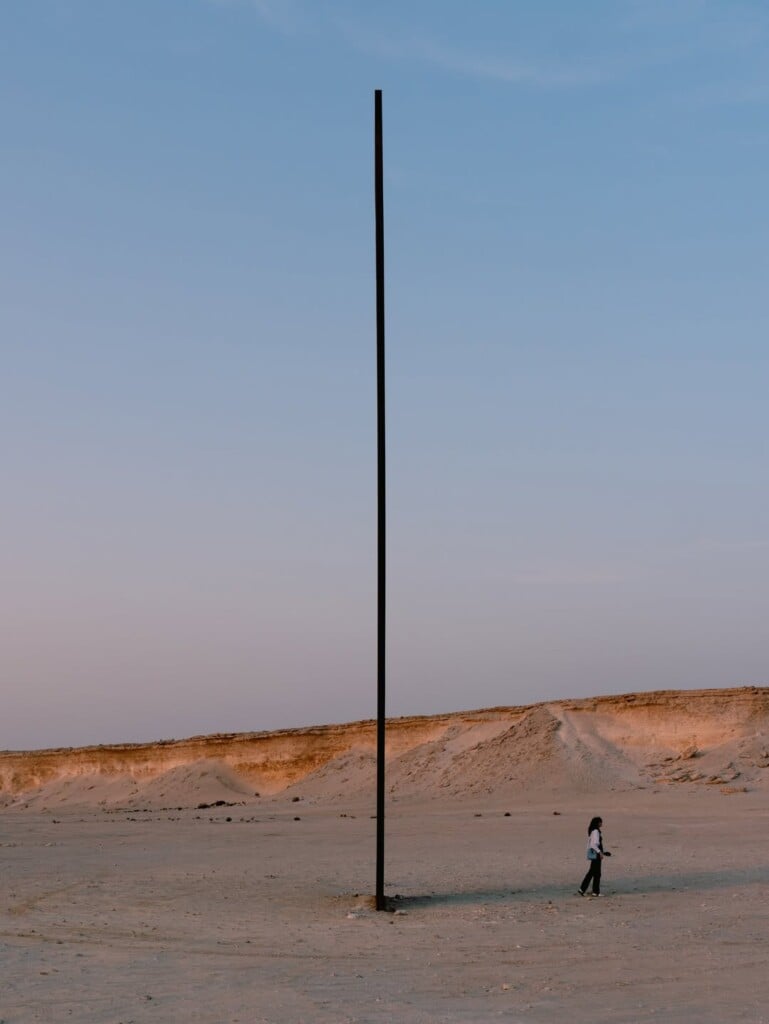
The work is located in the Brouq area, a region characterized by limestone ridges that interrupt the continuity of the sand. Serra chose this precise point after carefully studying the site’s topography, positioning the plates so they interact with the natural curvature of the terrain. The result is a minimal yet powerful intervention, capable of redefining the perception of the landscape without altering its essence.
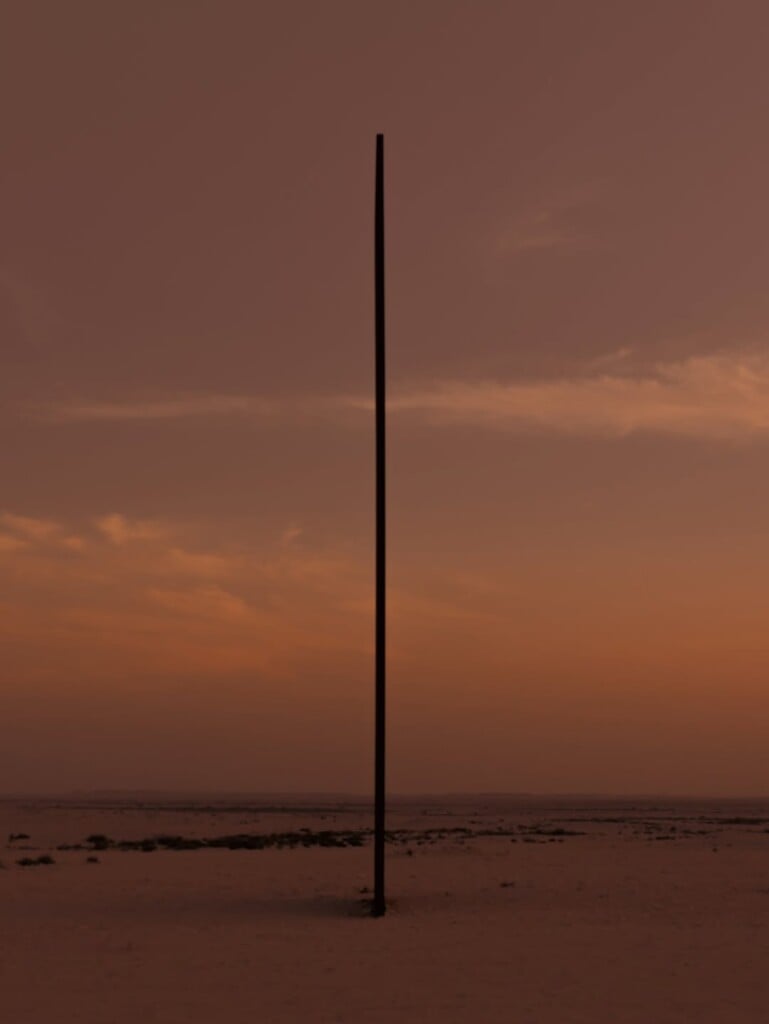
Unlike many monumental sculptures designed to be observed from afar, East-West/West-East truly exists only when it is crossed. Walking through the desert, each plate appears like a threshold: as you approach, its scale becomes almost disorienting, while the distance between each element forces visitors to confront the immensity of the surrounding space.
In this sense, the work is not just an object but a physical experience. The movement of the body, the time required to traverse the landscape, and the evocative atmosphere of the Qatari desert all become integral parts of the sculpture. Richard Serra does not simply add something to the territory: he uses four vertical elements to make the very dimension of space visible.
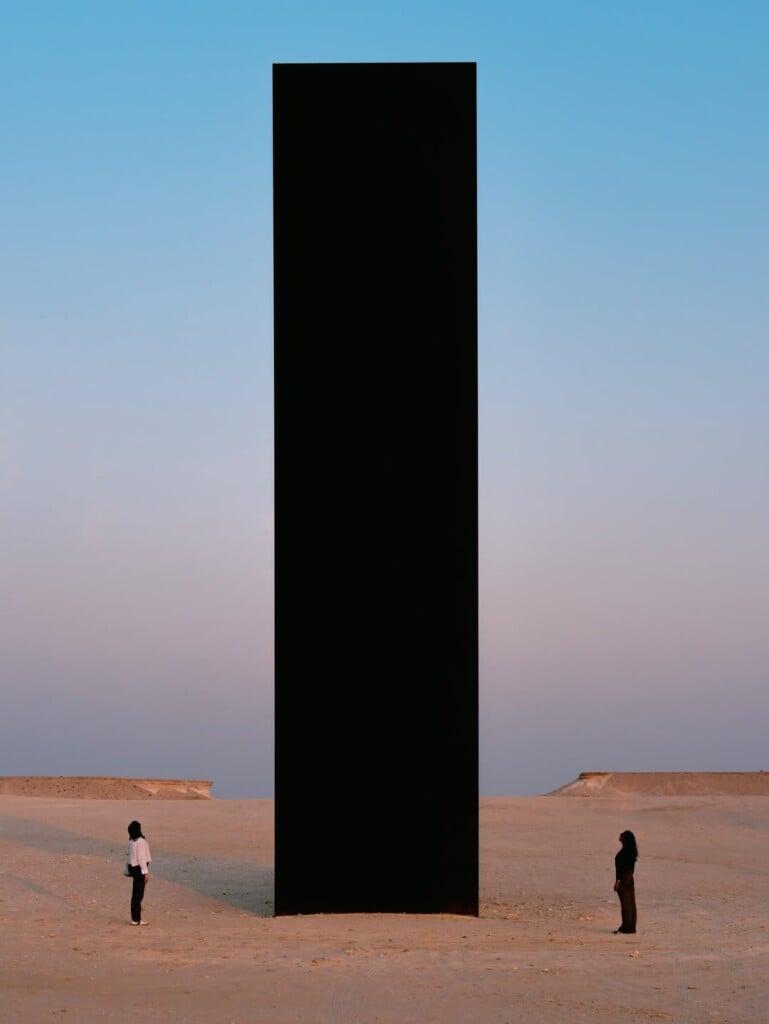
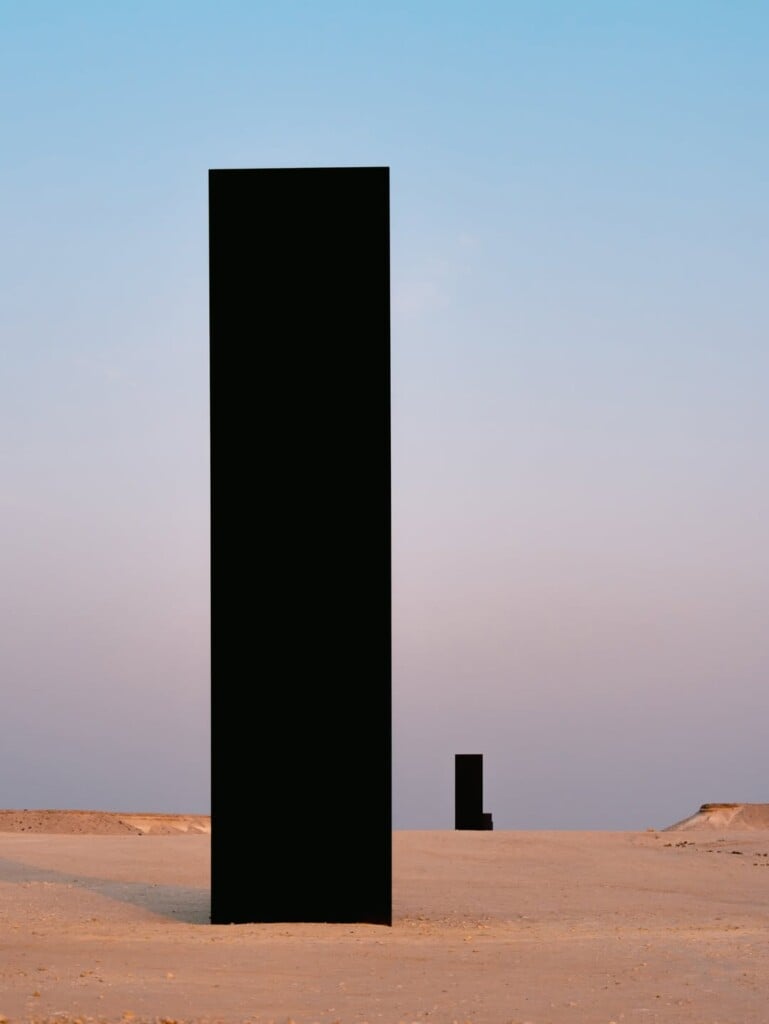
ph. courtesy: Rustam Shagimordanov