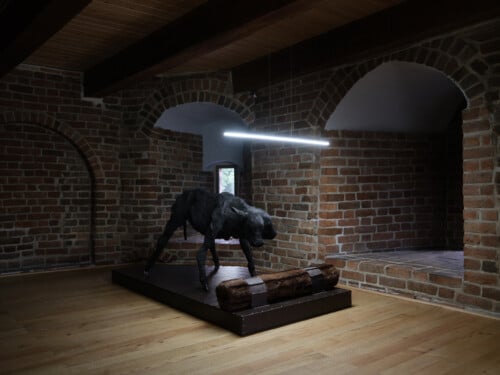
Everything for Margarita Senkova began with a dream. At the age of eight, when she was still in her home country of Belarus, she met in a dream a huge black cat with a star drawn on its forehead. «From there I realized I was a witch and that’s what made me survive during the boring years of my childhood,» says Margarita, aka Electropantera. Actually, the real turning point of her art happens in Milan, the city where she has been living for ten years. Here she began drawing funny cats that over time began to take on human features. Today the imagery of her illustrations is well delineated. The witch woman, free and uninhibited, is often the protagonist of narratives that are set in places with strong references to the Belarusian folkloric tradition in which, however, there is no lack of contemporary elements, especially related to the world of fashion. A strange mix of the erotic and the occult, undoubtedly feminist and incredibly self-aware. Her story telling is yes direct but it is also equally layered, with hidden dietrologies not too easy to reveal. This is why we decided to meet with Electropantera and commented with her on some of her illustrations that we loved the most.
My characters wear Balenciaga, Vetements, Gucci, Louis Vuitton, Prada. I like to imagine that time is not linear and that my creatures live beyond it and can look like a peasant girl wearing Adidas sneakers and an Ikea bag.
Before commenting on some of your work, tell us about your research. It is evident that there is a strong esoteric component. Where does this interest of yours come from?
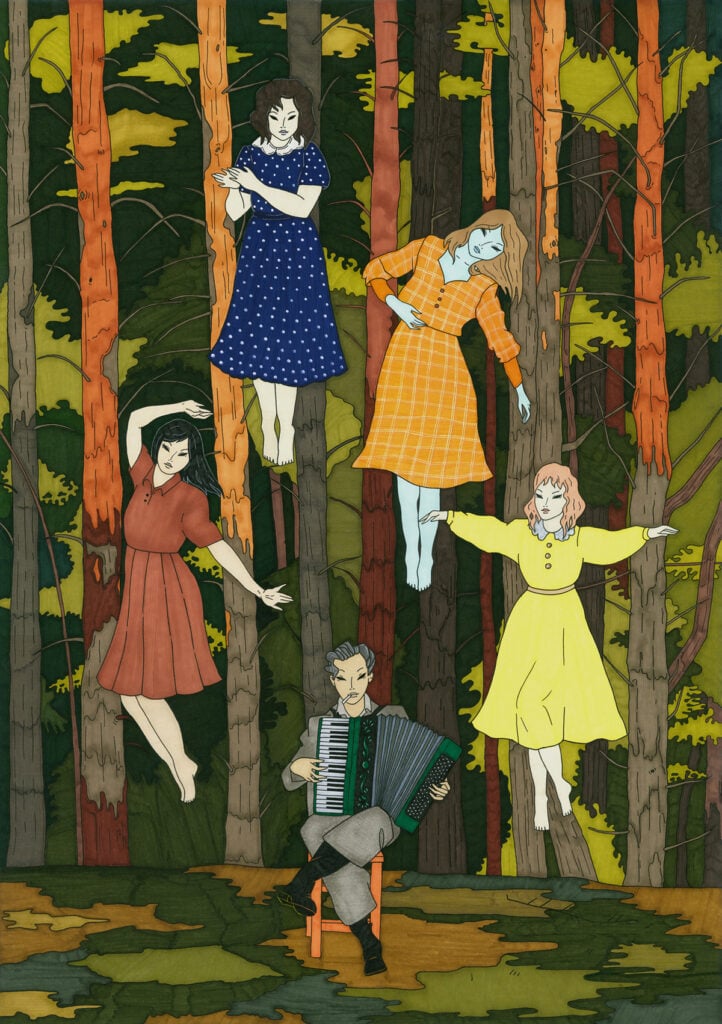
Electropantera: I would not call my art esoteric as I do not rely on any doctrine or “spiritual science.” I am attracted to “low” mythology, folklore, fairy tales, paganism. My characters are chthonic creatures, related to nature, especially forests. I am very connected to my home – to swamps, small villages, endless forests. I try to incorporate these elements in my drawings.
The protagonists are almost always women, looking somewhere between human and alien. What does this representation mean to you?
Electropantera: In my imagery I often use Witch Woman, for me she represents the concept of the free woman, deprived of any social role. Historically, a witch has always been a marginal character within the society in which she lived: either too ugly or too beautiful, or too old or too strange. My women are like that too, but for me it is good: they are neither mothers, nor wives, nor workers. They can do whatever they want.
Your style seems to wink at the anime world and, at the same time, at many elements of Eastern and Eastern European traditions. Are these your visual references?
Electropantera: I know little about the anime world. Like many, I like Miyazaki. My favorite director is Yoshiaki Kawajiri, but there my anime and oriental references end. Actually my visual inspiration comes mainly from art. I would tell you mostly medieval and Baroque painting. I love surrealism and symbolism, I’m very inspired by Art Nouveau graphics.

In the opera Swan Lake, the main character is the swan-the bird that in Slavic mythology connects the world of the living with the world of the dead.
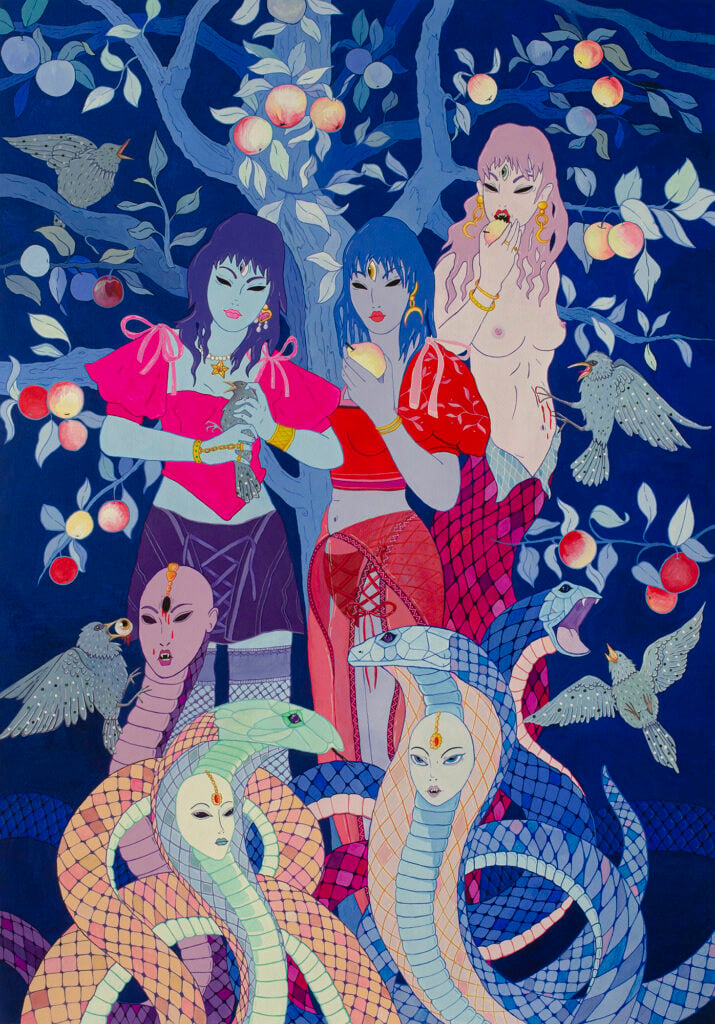
Apple Garden is based on common legends throughout Europe about magical apples, plus I have included snakes, chthonic, generally female creatures linked to earth, underworld and fertility cults.
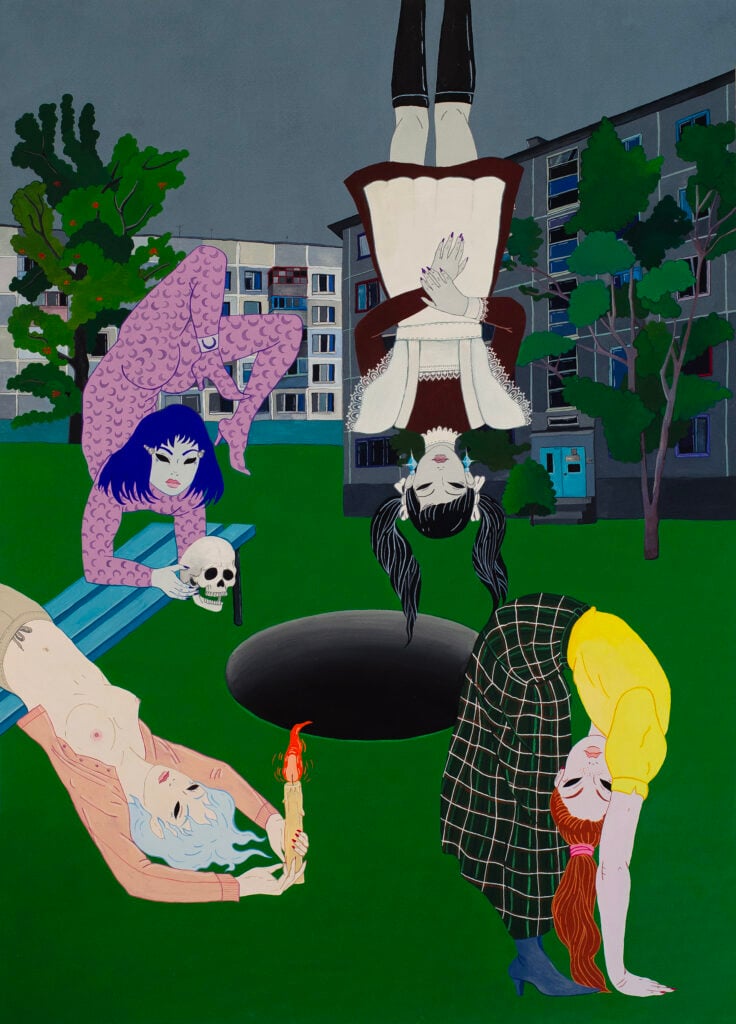
In my head there are always the memories of my childhood, the past for me is like a deep lake where I dive.
I grew up in a post-Soviet city at the turn of the 1990s and 2000s. Its name is Moghilev and it means “grave of a lion,” as well as my future passions: death and cats. As a child I loved urban legends, so-called “creepypasta.” My illustrations combine elements of architecture and interiors that remind me of that bygone era with urban legends that I often invent. For example, Art School is the urban legend I created. It tells the story of a woman who wanted to have children, but because of magic gone wrong, she gave birth to two cats.

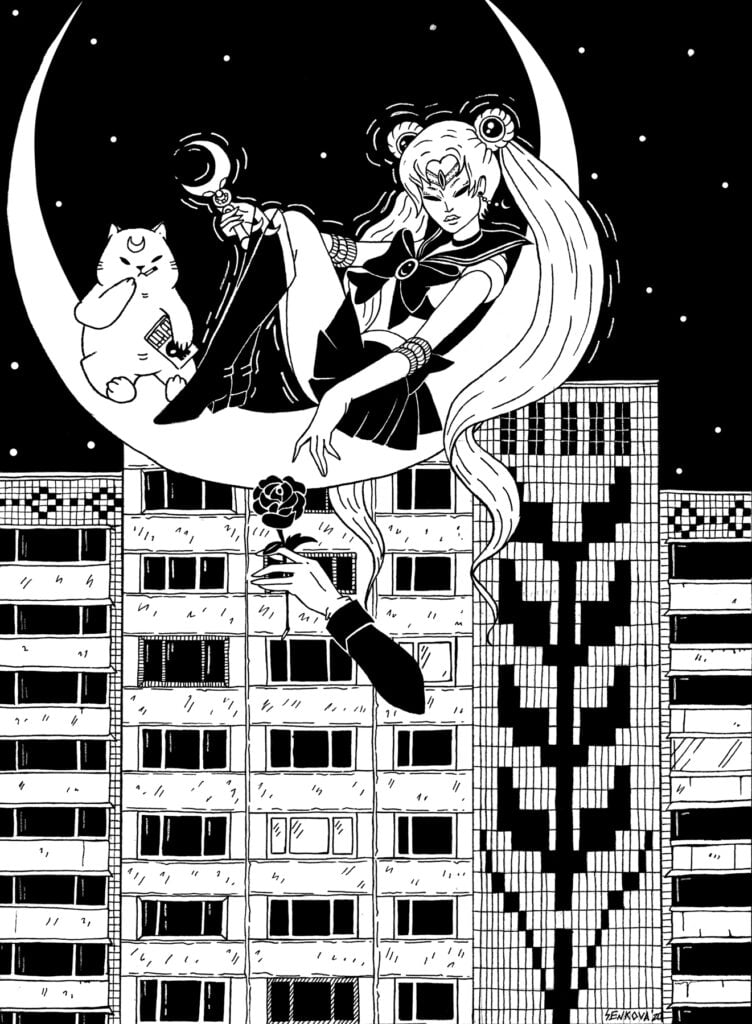
Autumn Time Sadness is a painting with two witches set in the typical Soviet kitchen. Going Home is set in the 1990s, one can immediately recognize the typical post-Soviet buildings, as well as in Sailor Moon.

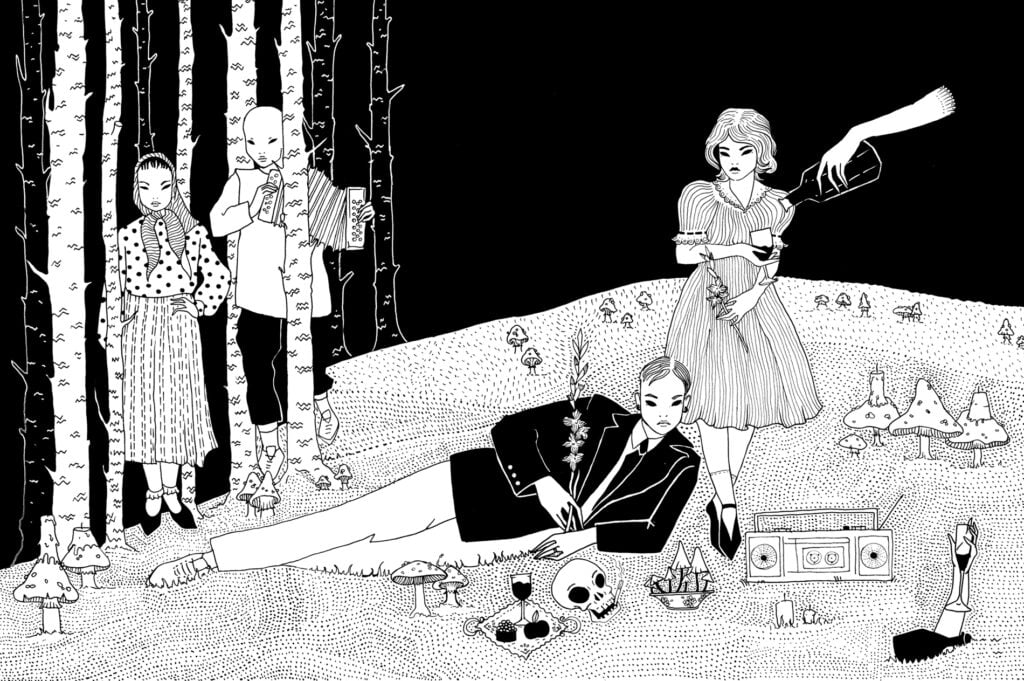
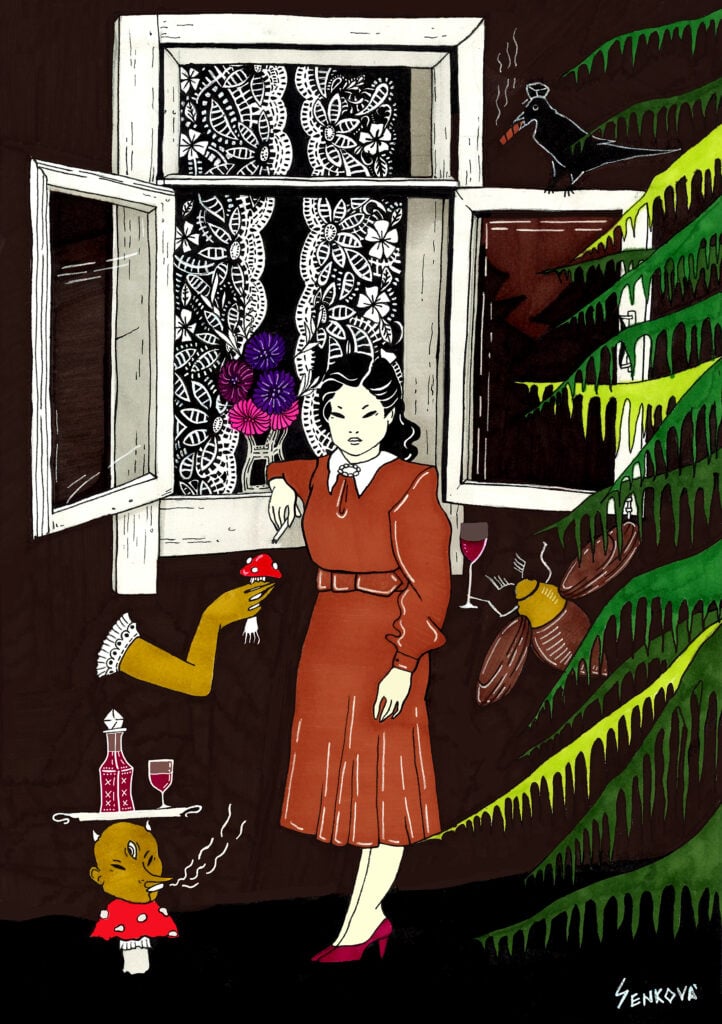
I often go back in my mind to my grandmother’s village and imagine what it might have been like fifty years ago if it had been inhabited by witches. An example are the works Party Time, Devil in a Well – the love story between a well devil and mortal girl -, and Break Time.

Courtesy Electropantera, Margarita Senkova