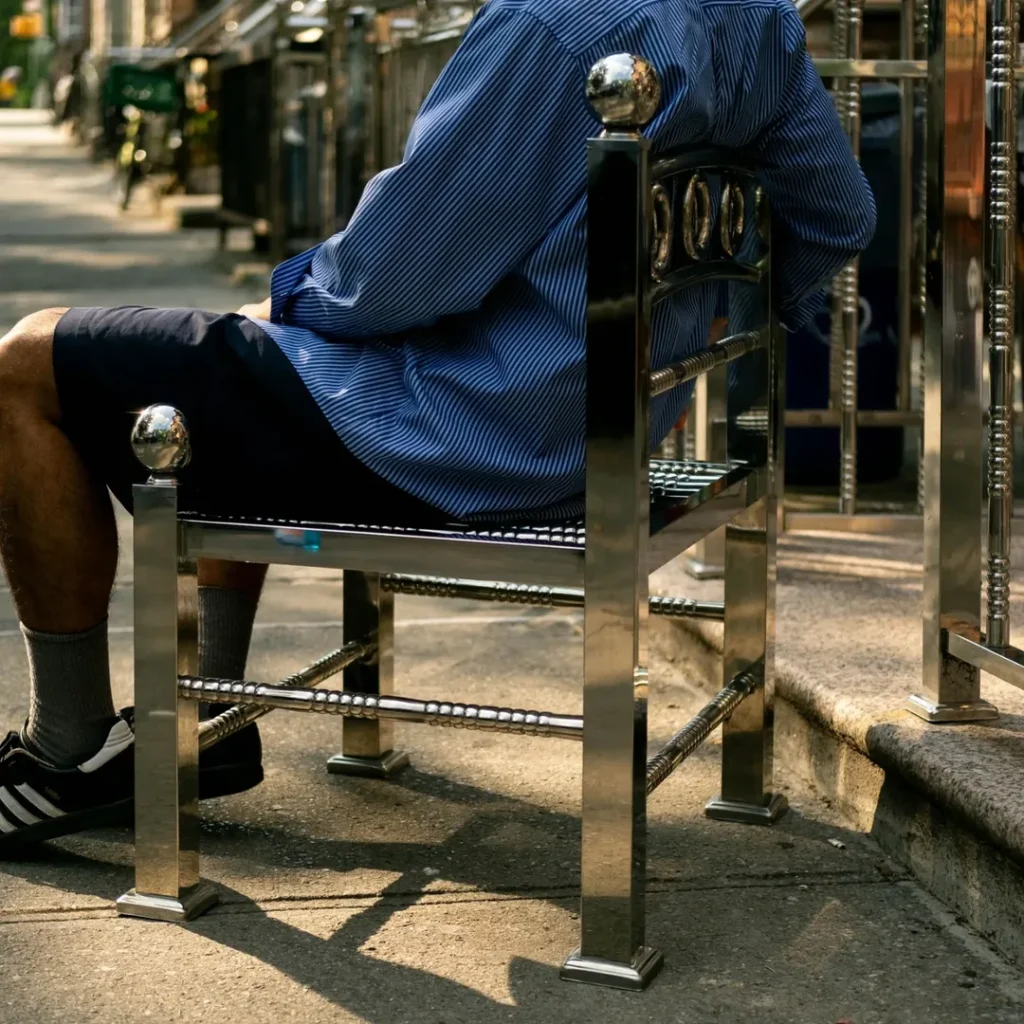
The American Dream has always had a very specific image: a detached house, a green lawn, and a white picket fence outlining its perimeter. It’s a symbol so deeply rooted in the collective imagination that it has almost become a cliché. With his latest project, White Picket Chair, designer Han Seungmin takes that very icon and flips it, turning it into an object that speaks from the perspective of those who view that dream from elsewhere: the lived experience of migration.
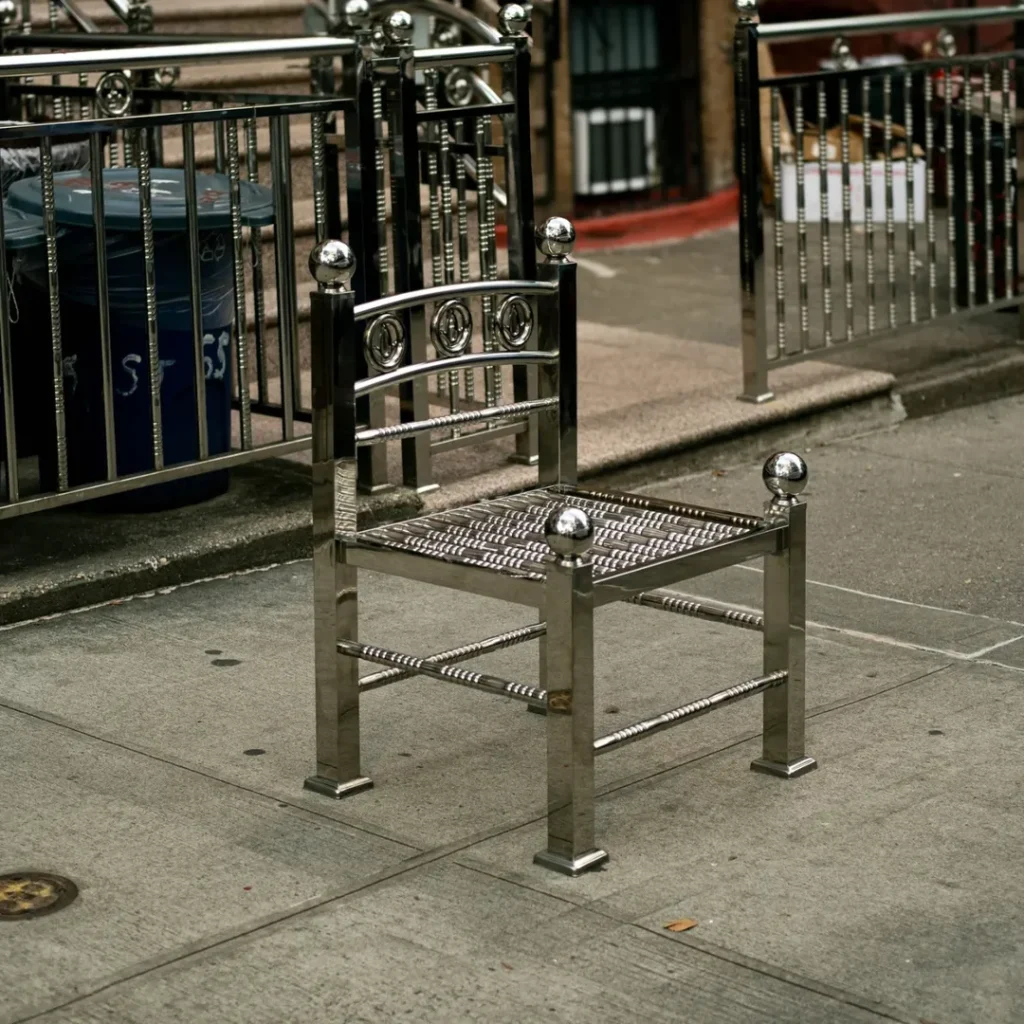
The chair is built using modular stainless steel components normally used for gates and fences—flashy decorative elements that punctuate the facades of many homes in New York’s Asian and Caribbean neighborhoods. Handrails, vertical bars, and ornamental finishes—like the spikes and spheres that often crown urban gates—are reassembled into a seat with a tall, curved backrest, preserving the bold, showy aesthetic of these metal structures.

Those fences—especially common across Brooklyn and Queens neighborhoods shaped by immigrant communities—have, over the years, become a visual marker of social aspiration and economic mobility. Their shiny, decorative look echoes, with a hint of irony, the classic “white picket fence” tied to the ideal of American domestic life.
Visualizza questo post su Instagram
Han Seungmin’s object becomes a small piece of domestic architecture—a kind of miniature monument to a vernacular aesthetic that often goes unnoticed, yet says a lot about the communities that inhabit the city. By reusing ready-made elements, White Picket Chair questions the idealized image of the American Dream and reframes it through a direct material language, made of steel, urban memory, and cultural identity.