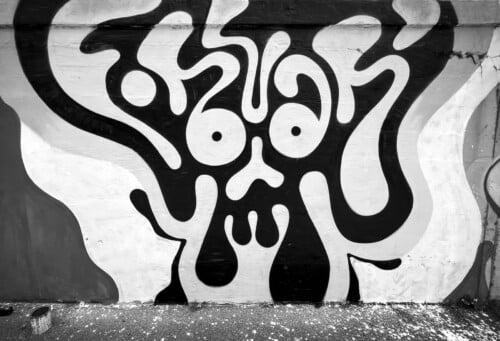
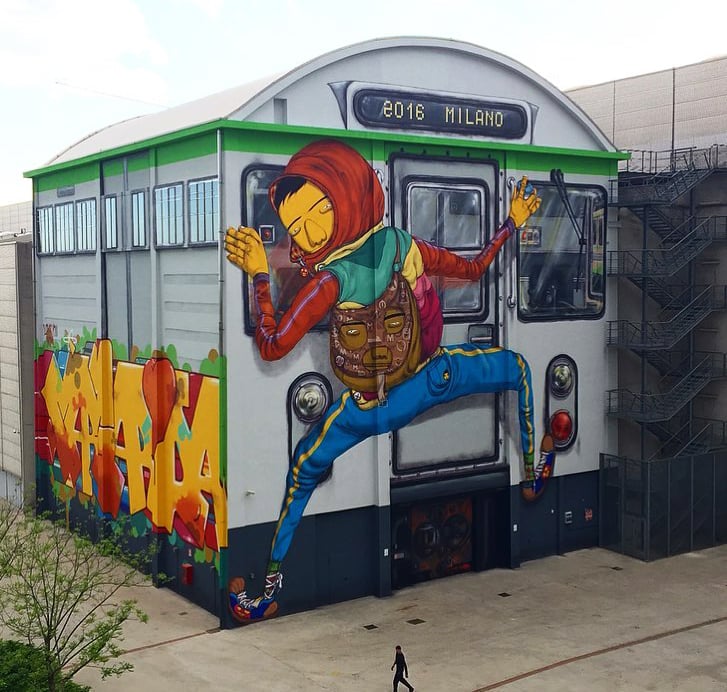
It was 2016 when the Cubo at Pirelli Hangar Bicocca welcomed the mural by the Brazilian duo OSGEMEOS, a pair of street artists formed by twin brothers Otavio and Gustavo Pandolfo. The duo’s work was to be the first in the Outside the Cube programme, a series of site-specific interventions commissioned from international street artists with the intention of changing every two years. However, the work Efêmero – depicting a maxi underground car – remained visible until last February, becoming almost a symbol of the space. That is why today, as we see the Cube in a new guise, we find ourselves looking at the old pictures with some nostalgia. But after all, that is what the new eL Seed mural, presented to the press today, 2 July, is all about. The meaning of belonging, of immigration and the feelings connected to emigrating from one’s own country and going to another, creating new connections, are all concepts that eL Seed addresses in the new gigantic Milanese work Waves Only Exist Because the Wind Blows.
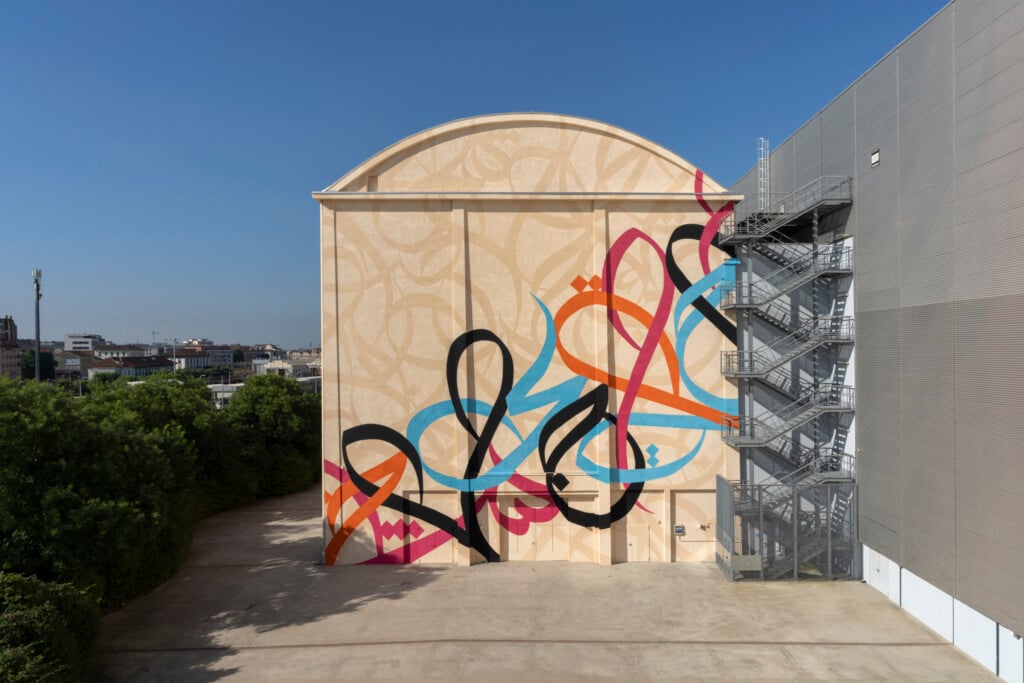
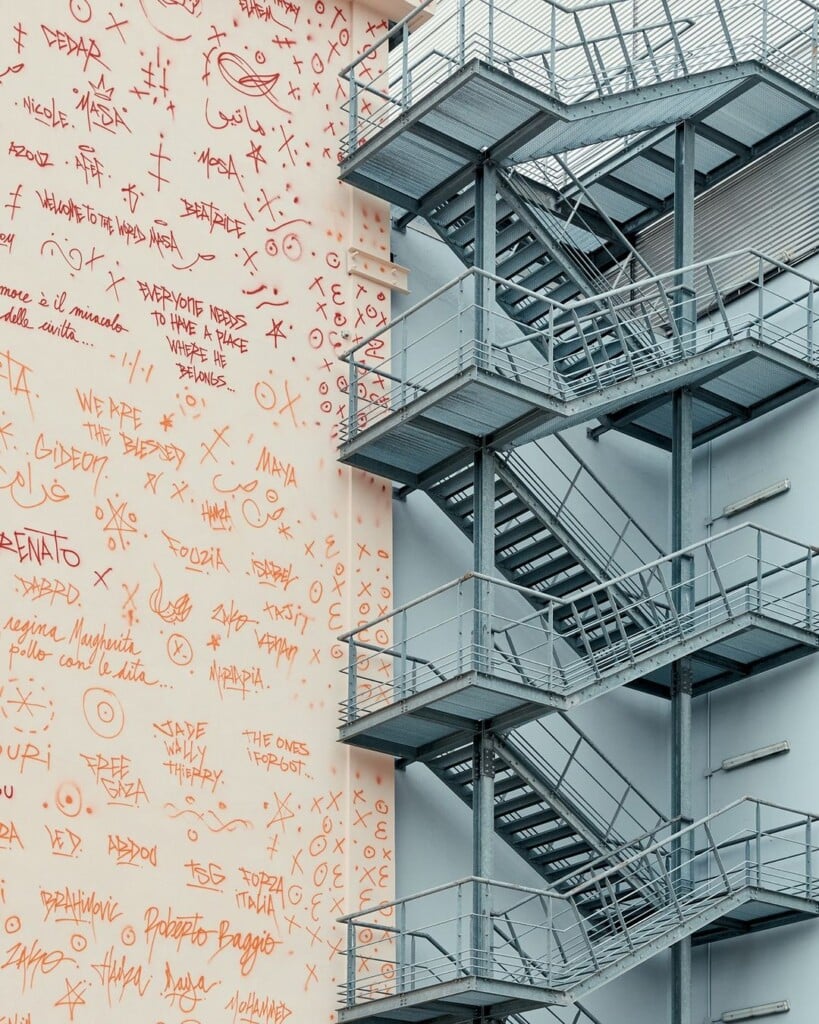
eL Seed – Waves Only Exist Because the Wind Blows, 2024 | Courtesy l’artista e Pirelli HangarBicocca, Milano, 2024
Foto Lorenzo Palmieri
The title of the work anticipates what the work wants to interpret, talking about the collective memories of each of us and the layers of our identity. Representative is Cesare Pavese‘s phrase, ‘A country is needed, if only for the sake of leaving’, which strikes eL Seed as the synthesis of its own concept:
«Where is home? Is it a place or a feeling? As human beings, we all want to belong somewhere, to a place, to a group. The feeling of being at home is intertwined with the feeling of belonging. The psychological sense of attachment to home is so complex and profound that it goes beyond the physical aspects of a place. It involves a deep emotional connection and a sense of rootedness. As humans, we all long for a sense of belonging. Milan is an international hub that has always been busy welcoming people from all walks of life, joyfully celebrating their diversity while preserving their sense of rootedness and identity».
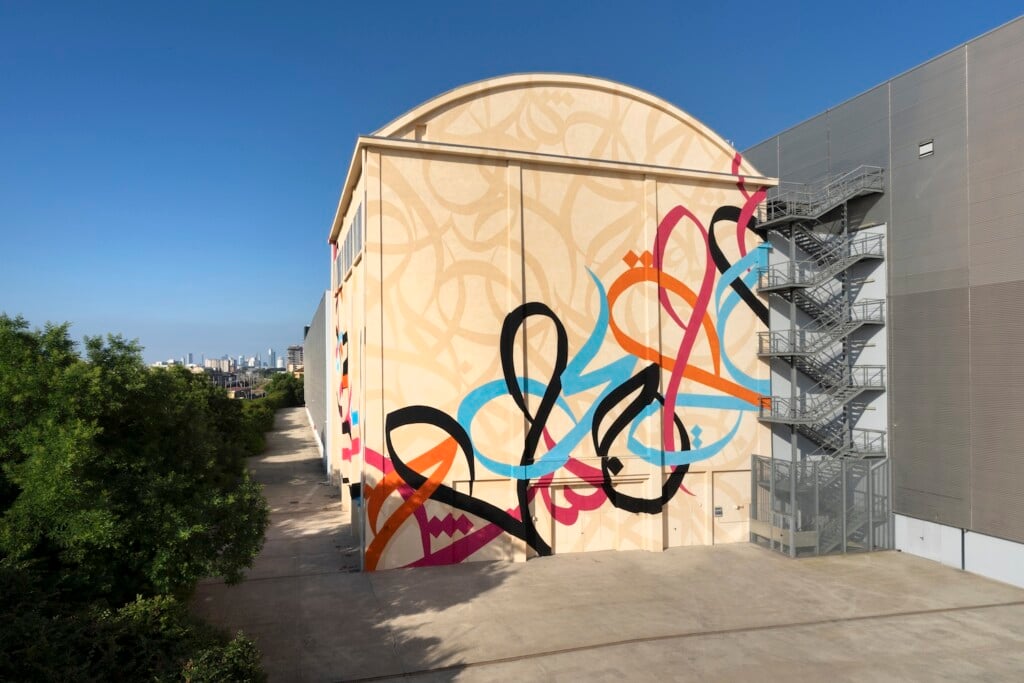
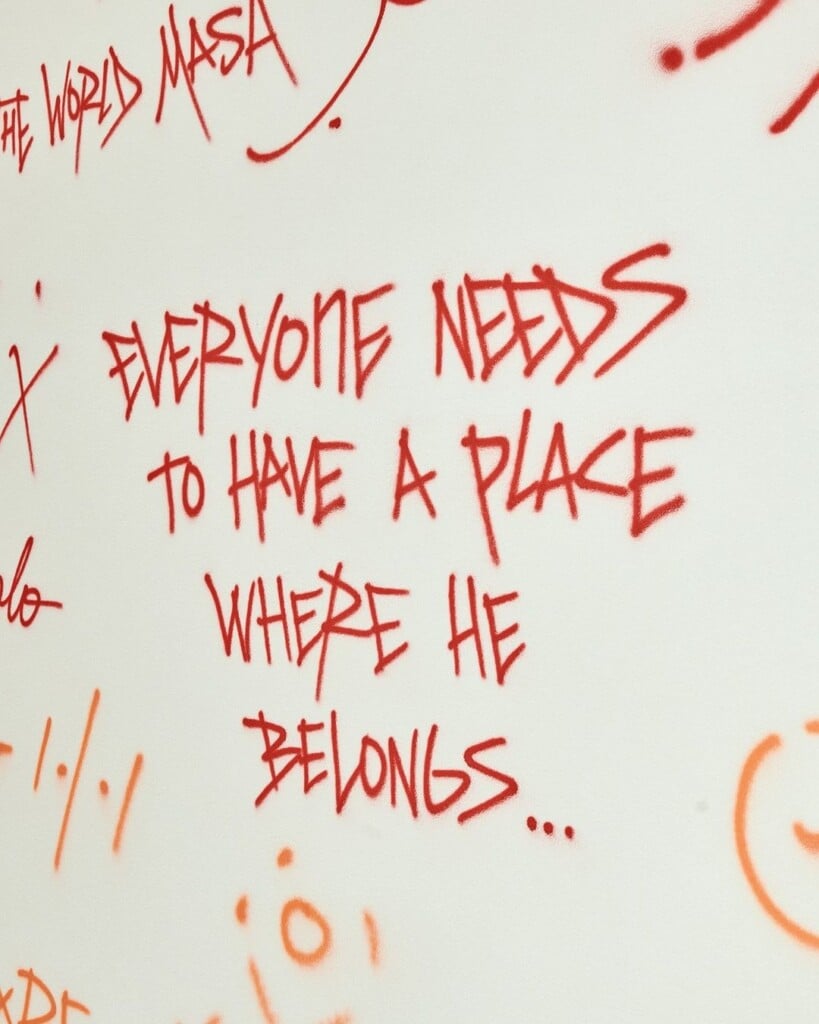
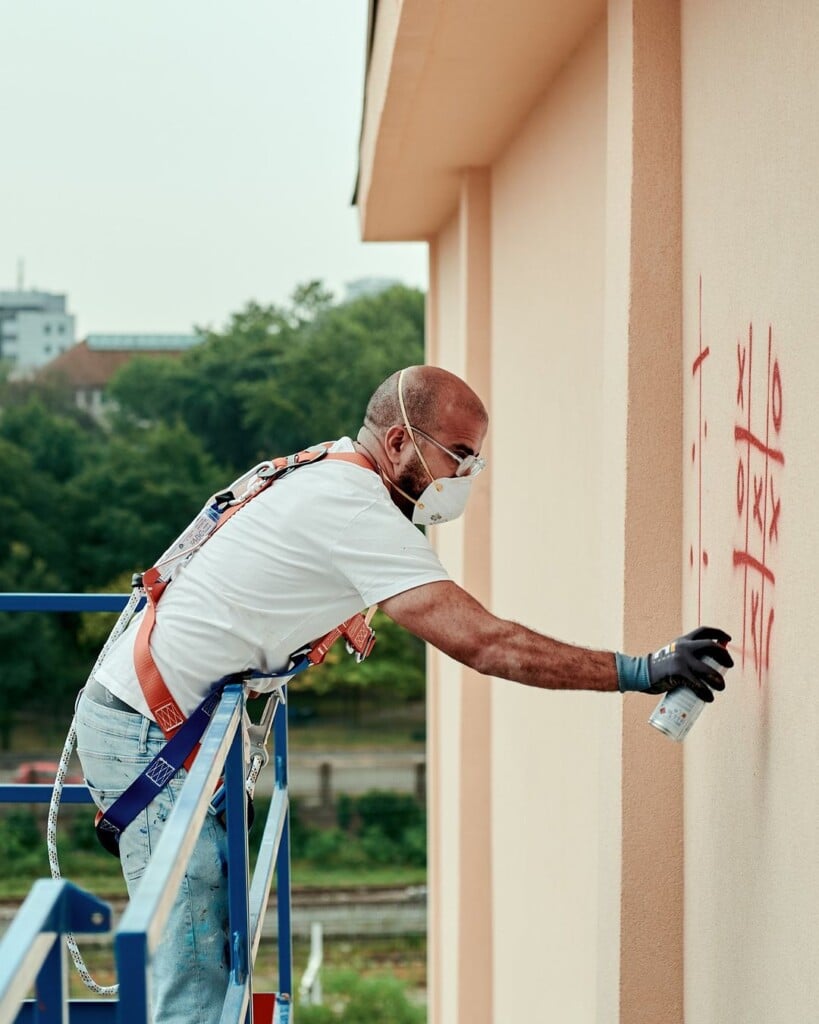
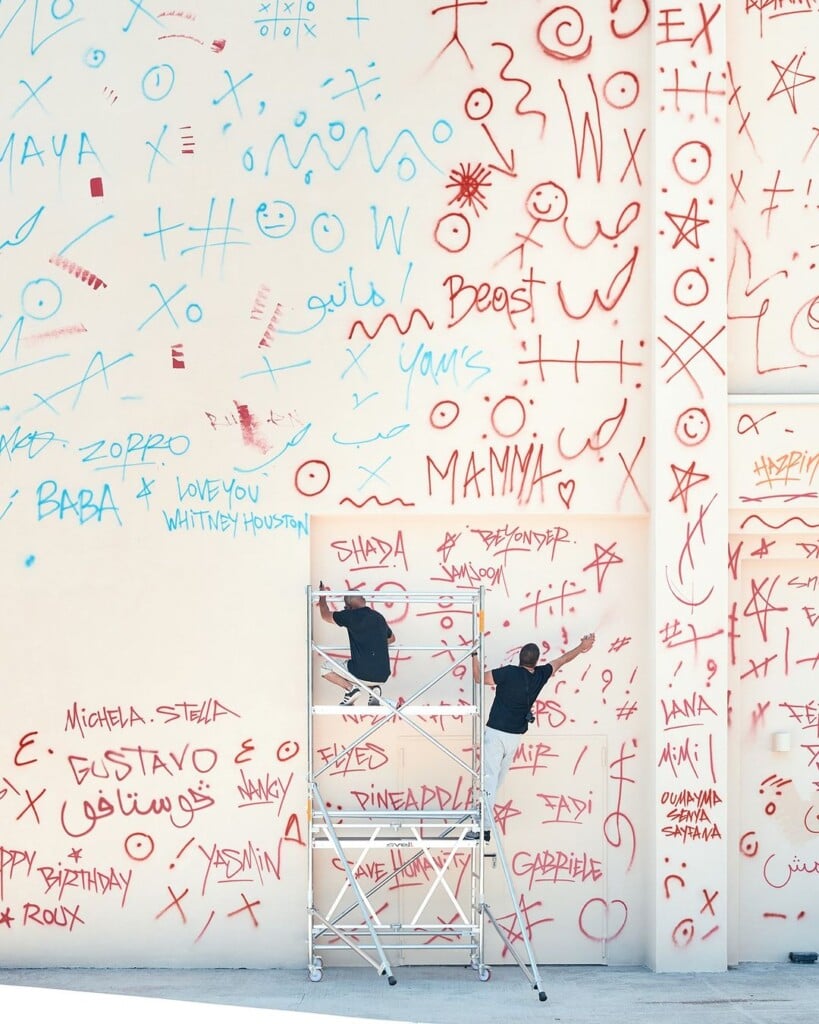
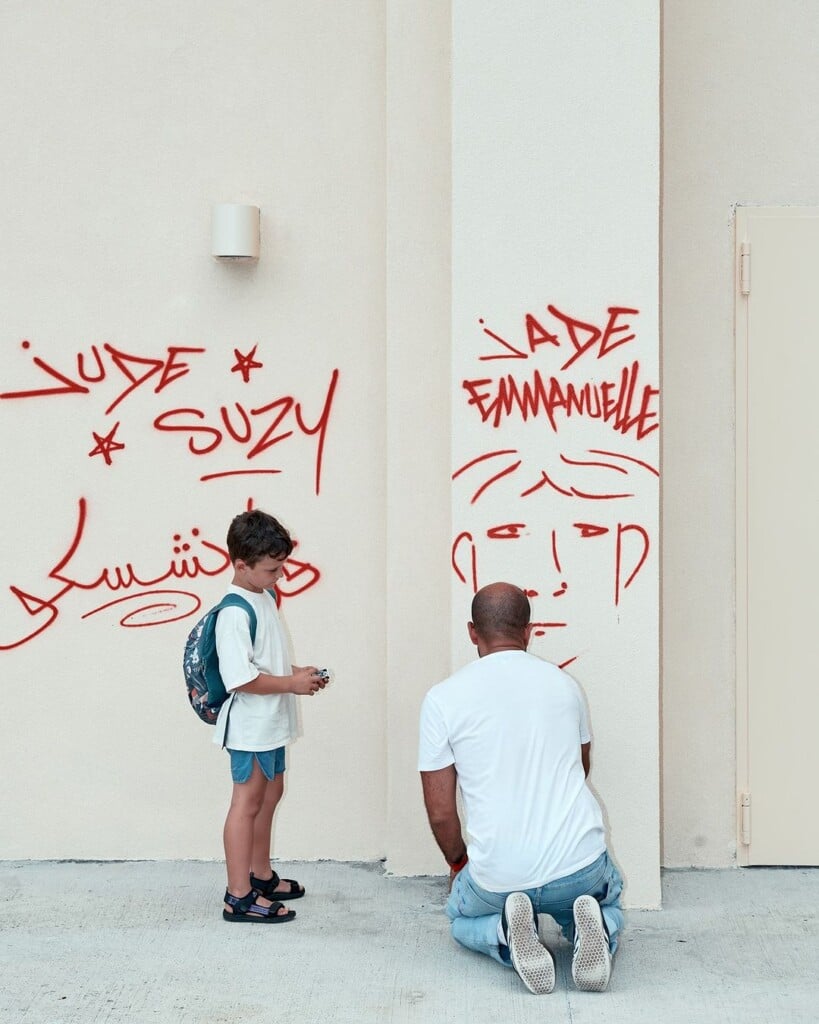
What eL Seed’s work presents on its façade are coloured waves of Arabic calligraphy on a sand-coloured background. Beneath these colours, eL Seed has hidden the names of people close to him and those who requested to be included, thus returning the work to the community. Curated by Cedar Lewisohn, the project explores current global issues and interacts with the historical architecture of the site. In general, all eL Seed’s works, exhibited around the world, use colours, symbols and calligraphy to convey messages of unity. If we stay in Milanese territory, his works can also be seen at the Patricia Armocida Gallery in Milan until 26 July.