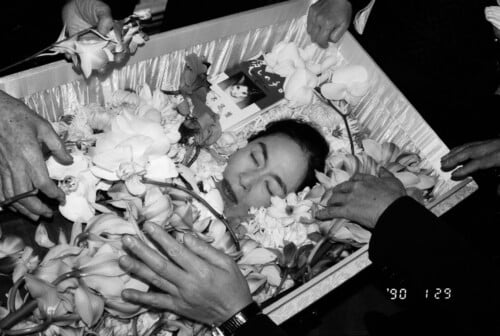
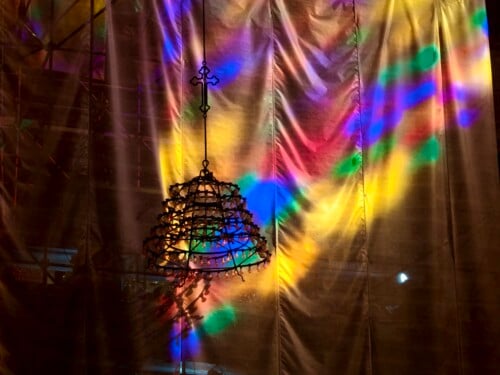
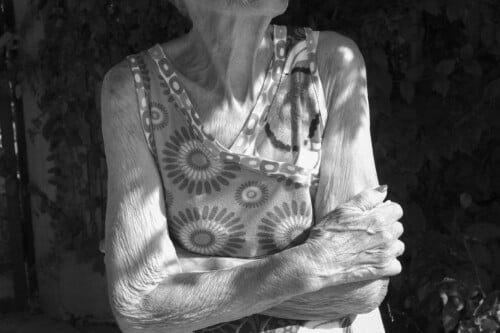
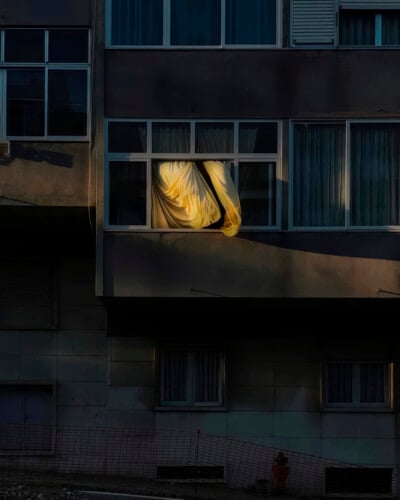
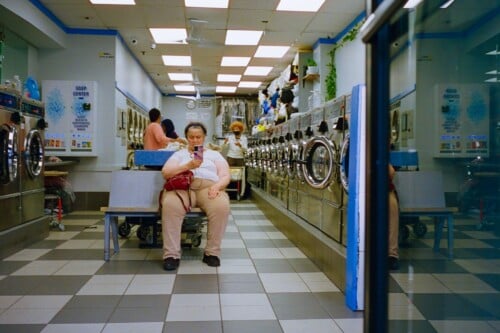
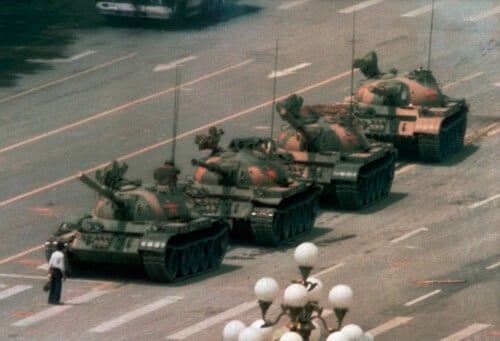
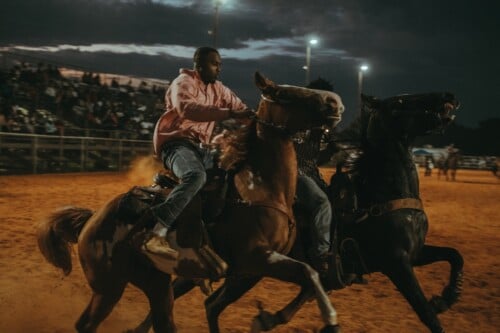
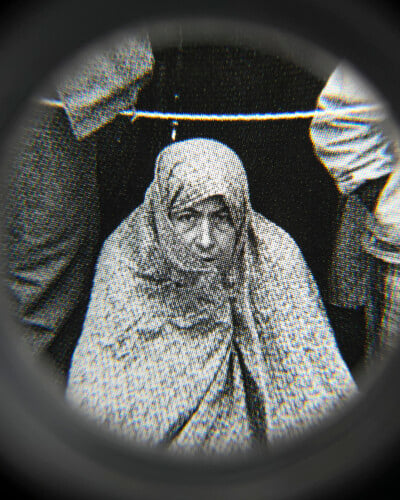
Mysterious and suspended, Jessica Basso‘s photographs accompany us on an introspective journey, from which we will not come out the same as before.
Born in 1988, Jessica Basso has always been dedicated to art in all its forms. A graduate in New Art Technologies from the Brera Academy of Fine Arts, Jessica Basso uses every artistic form to create something capable of healing. And if her specialization in Art Therapy and Dance Therapy concretely and physically help bodies, her photographs can heal our souls, bringing us back into harmony with ourselves.
A selection of her shots will be exhibited for Ph.ocus – About Photography in the “Please, Take Care” section. In the meantime, we asked Jessica Basso a few questions and she told us how this passion was born and not only.

When and how did the first approach to photography take place?
The first-ever memory I have dates back to when I was 12 years old. I’ve always remembered the first photo I took, it was in analogue during a course in junior high school, we could take two pictures each to develop then in the darkroom, I would have liked to spend more time there. They were in black and white and I still keep them in the drawer of the important photos. I don’t know if we can consider a first approach, I’ve certainly always had a connection with looking and observing, but it was years before I rededicated myself to photography. At first I think it was a process, like a love that always comes back, until you realize that it is inevitably part of you and becomes stable.
What do you want to tell through your shots?
Surely an inner motion always in evolution, reflecting research started from far away, and which slowly defines itself and takes a direction, or many directions. I use photography to describe evolutionary processes, those particular periods in which we always enter and leave different ones. Sometimes they are small revolutions, other times they are more important revolutions, but this happens to us all the time.

Every shot is tied to a moment, it brings me back to something, I often feel the need to tie it to words, even if only with a title or sometimes with writing. Other times this need is so urgent that I feel the need to integrate words into the image, and it is a great paradox to think of the other important research I have always carried out, the one on silence.
I think that the journey itself is the underlying story, a return to identity, which we often seek by losing ourselves in someone we are not, that identity that has become a central focus in the last period, often hidden in details, sometimes hidden in others, which then are nothing but our reflection.
Often ranging from digital to analogue photography. Which aspects of the two techniques do you appreciate the most?
I tend to shoot more digitally for convenience. When I shoot digitally I have much more control over the post-production image, which I use almost always. I first see what I want to achieve, the vision filtered by the mood I was talking about above, which I try to get as close as I can and then take it out. When the technical part aligns with the emotional part I know that the image is finished. It is a process that allows me to refine the detail.
With analogue I have the impression that I never shoot alone, there are many more variables, I shoot with different machines and all of them give the image something unique that I feel depends on me only partially. Surely the analogue makes me feel bound to something, to a time in evolution, as if the photo didn’t just pass through my eyes, but through different eras and it is these eras, in fact, that give back the image.

That’s why I love to feel like the creator and the user at the same time and that’s why, in this case, I always tend to leave the image as pure as possible.
You often use the double exposure technique, in some cases you also play with negatives and, in general, your photographs are characterized by a suggestive and ethereal atmosphere. How does the shot happen?
There is no universal way. There are projects that I have imagined and defined for years, studied in detail and only afterwards have I transformed them into images.

Other times the process happens in reverse, I happen to photograph always, at any time and everywhere, I think that everything we encounter is never random, the real act is seeing and deciding whether to take it with you or let go. There are thousands of photographs that I didn’t want to take. In this case the shot belongs to the moment, to how we are filtering the vision, to the choice we make.
Other times the real shot happens in post-production, which is nonsense, but it happens that only more shots can return the real image I had inside my eyes. So sometimes it’s an operation that takes a thousandth of second, other times it can take hours, sometimes a shot can last even years. An infinite exposure.
Is there a shot you are particularly attached to? Tell us about it.
It is difficult to answer this question, precisely for the reasons I wrote above. With each photo I have a different bond, but I will choose “Non posso pesare gli occhi”. There are many others with perhaps stronger ties because they are related to a period, a memory, or something important, but this one I consider special because it is a clean photo and not consumed by looks, I feel it is mine.

It brings me back to the question I asked myself when I chose that title, I was convinced it was perfect only for me, for certain parameters I was observing it, it gave me harmony and made me feel that technical-emotional click I was deciding it was over. So I asked myself: “but how can we decide the value of a certain look?” We usually use units to measure everything, to give value to anything, but after all, we can’t weigh our eyes. So how much is the look worth today?