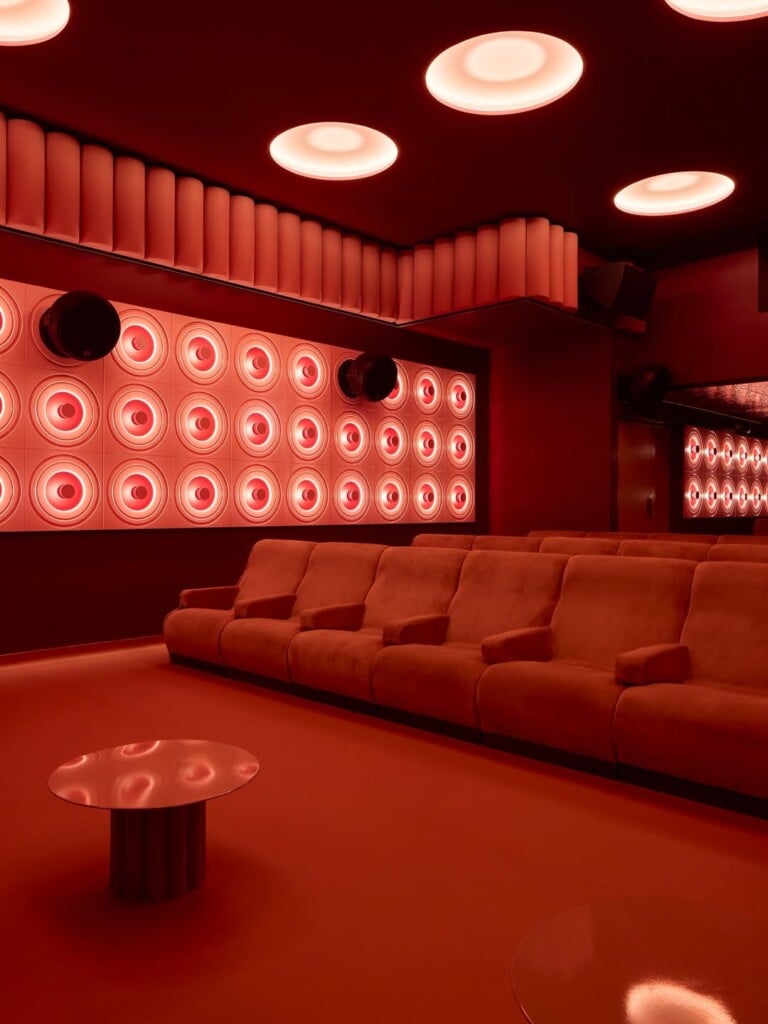
Louis Denavaut’s new intervention at Paris’s L’Elysées Lincoln goes against the grain. No showy hyper-technology, no chase for the standardized comfort of big chains: here, Denavaut’s choices work with atmosphere, memory, and a precise idea of the cinematic experience. It’s an almost political stance, reaffirming the value of independent cinemas as places of identity rather than simple consumption.
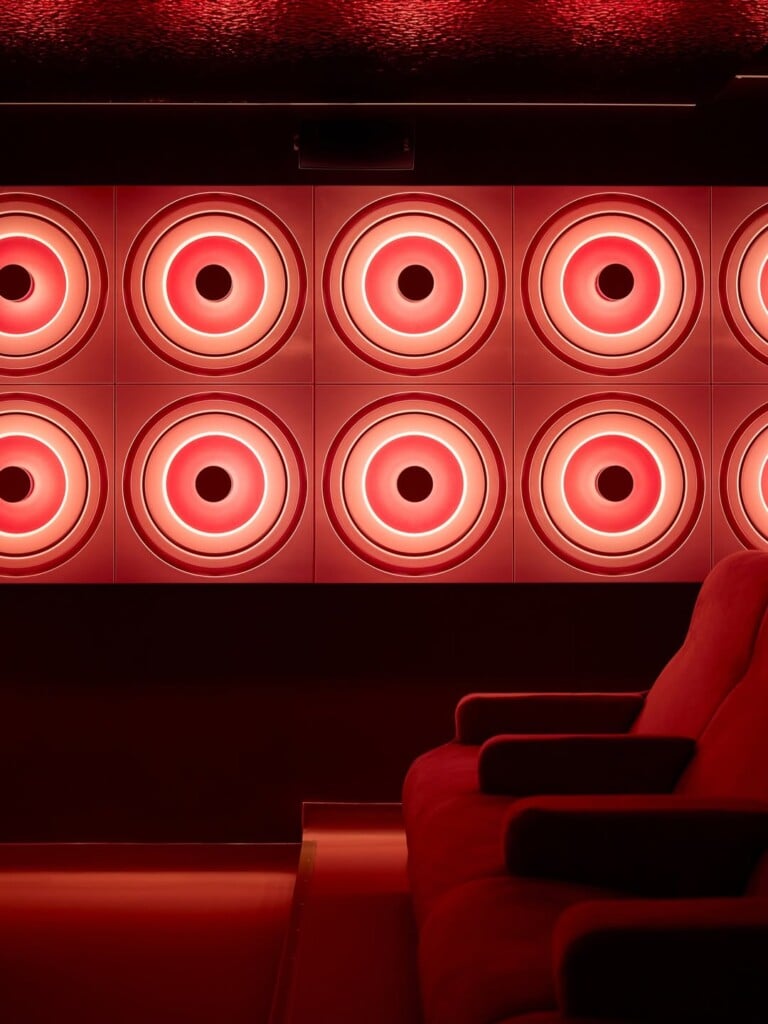
Denavaut’s project unfolds across three distinct spaces, each conceived as an autonomous microcosm, with a use of color that echoes—without ever openly quoting—the visual grammar of Wes Anderson. Not an exercise in style, but a way of building coherent spatial narratives, where each room becomes an extension of the film it hosts.
L’Audito is perhaps the most reassuring space: olive-green velvets, walls with a muted harlequin pattern, a palette that envelops without distracting. It’s a room that invites focus, designed to make you forget the outside world and accompany the viewer into a suspended, almost cushioned dimension. Here, cinema becomes ritual again—slowed time, listening.


Le Studio of the Elysées Lincoln changes register completely. A compact, almost monolithic room, immersed in a vivid pink that turns viewing into an intimate, openly artificial experience. It’s a room that doesn’t aim for neutrality—it takes a stance: color becomes an emotional device, amplifying the proximity between screen and audience and making every screening feel intensely personal.

Le Club, finally, works with softness of form and light. Baby-pink curves, glowing sconces that mark the space, an atmosphere hovering somewhere between a lounge and a film set. It’s the most social area of the project, conceived as a place to meet and linger—where cinema stretches beyond the screening and becomes a shared experience.
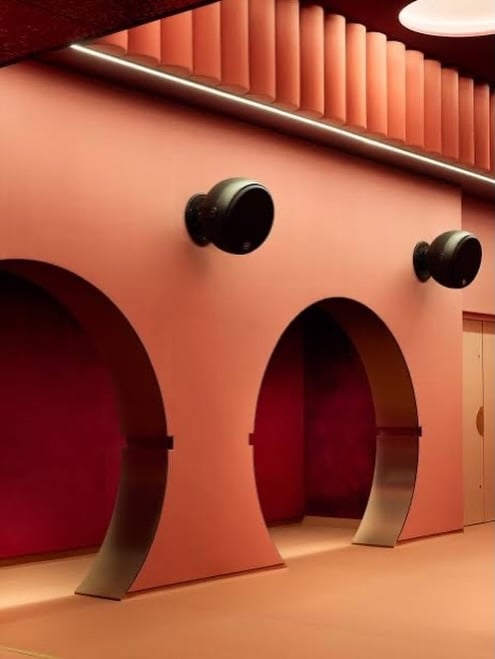
The Lincoln renovation doesn’t try to compete on extreme comfort or functional neutrality. On the contrary, it claims the right to a measured excess—to specificity, to mood. In an era when many theaters are trying to look alike, Denavaut shows that identity still passes through materials, colors, and radical choices. A quiet but effective reminder: cinema, before it’s a screen, is an emotional space.
Read also: How the Louis Vuitton monogram has changed over the last 130 years