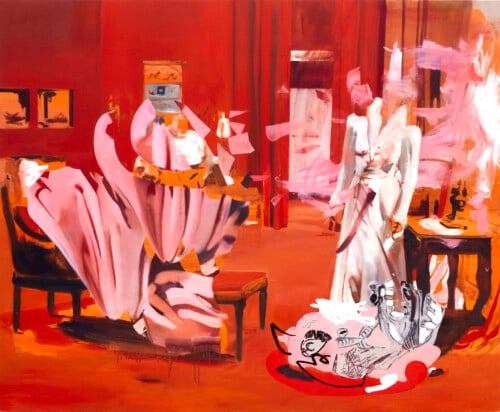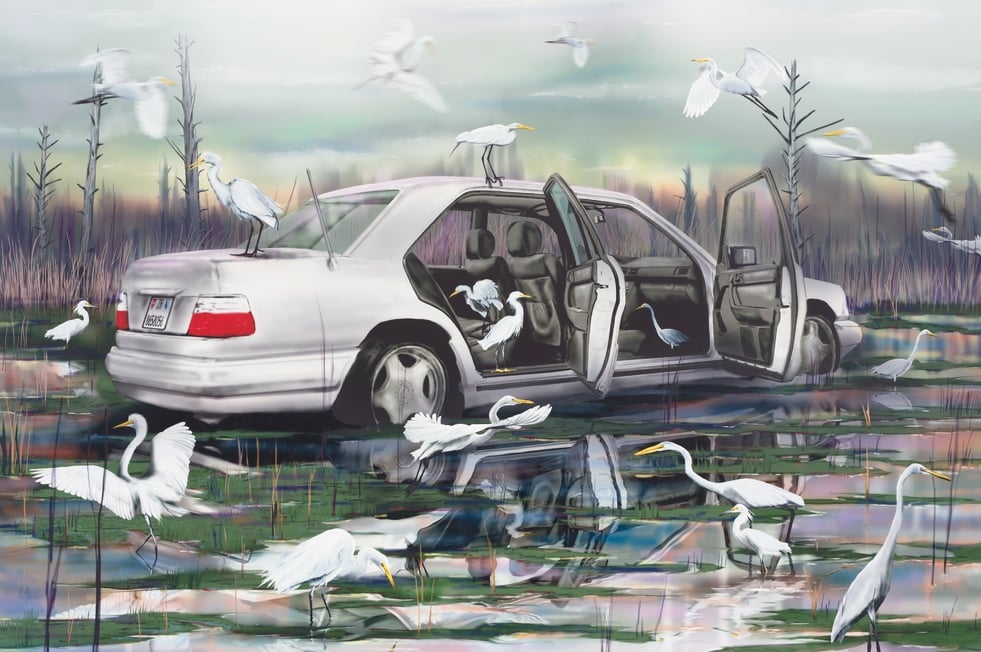
Looking at Louisa Gagliardi’s works evokes a wide range of emotions. Her art transports the viewer into a world that feels like a post-apocalyptic dimension—at times, unsettling. Surrealism, metaphysics, and magical realism are the key elements shaping Gagliardi’s universe. This effect is made tangible through disturbing details and perceptual shifts, where everyday scenes are flipped and transformed into true dreamlike visions. But who is Louisa Gagliardi, and what lies behind her work?

Louisa Gagliardi is a Swiss artist whose creative process is both lengthy and complex. It begins with a digital phase, followed by printing her paintings onto vinyl. These prints are then stretched onto a frame and finished with paint, gel, glitter, or even nail polish. Her works feature urban landscapes and enigmatic details, but it’s the domestic dimension that proves to be the most captivating—always with a sense of eerie intimacy.

Gagliardi masterfully recreates ambiguous environments and genuine trompe-l’œil effects, sometimes extending beyond the canvas itself. This is evident in Many Moons, her solo exhibition at MASI Lugano, where Le Corbusier’s LC2 armchairs are not just depicted in her paintings but also incorporated into the exhibition setup. This innovative and disorienting approach turns her art into a reflection on our relentless desire for control and self-image management in this strange, digitalized era we inhabit.

Color also plays a fundamental role in Gagliardi’s world. Acidic shades of green appear throughout many of her works, along with deep purples—such as in Chaperons (2023), where giant hands clad in violet gloves “intervene” in a claustrophobic, metallic setting.
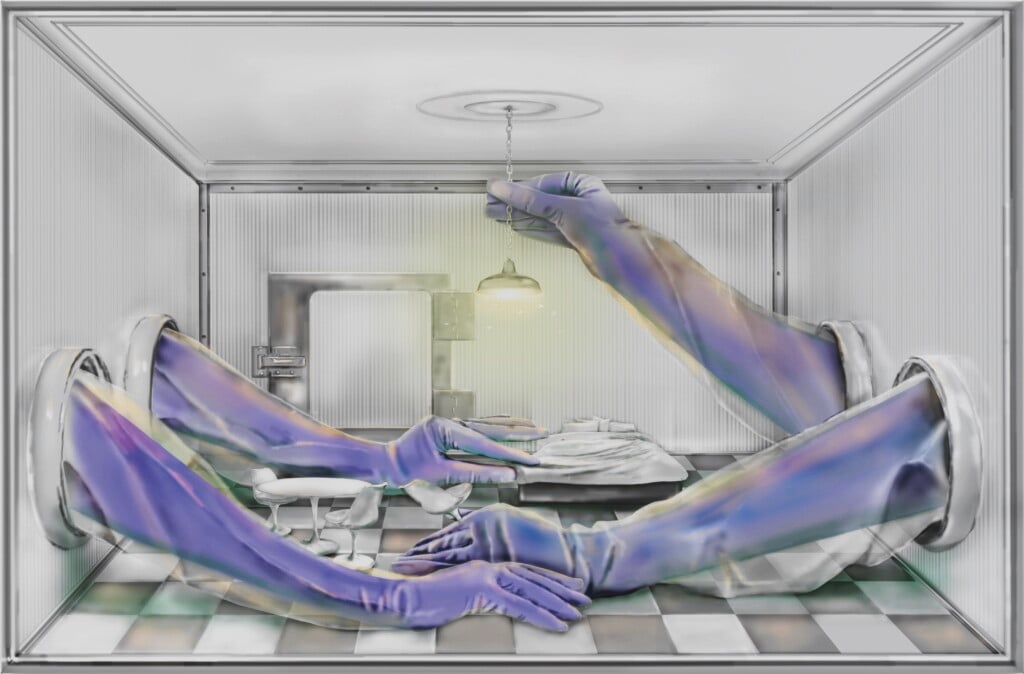
Through her evocative atmospheres, Louisa Gagliardi compels us to reflect on the era we are living in—a fusion of ambiguity and artistic exploration rooted in a painting technique that feels entirely contemporary. The potential of digital media expands, generating a parallel reality, one that, as MASI Lugano curator Francesca Benini points out, is «inhabitable not only in theory.» The exhibition runs until July 20.