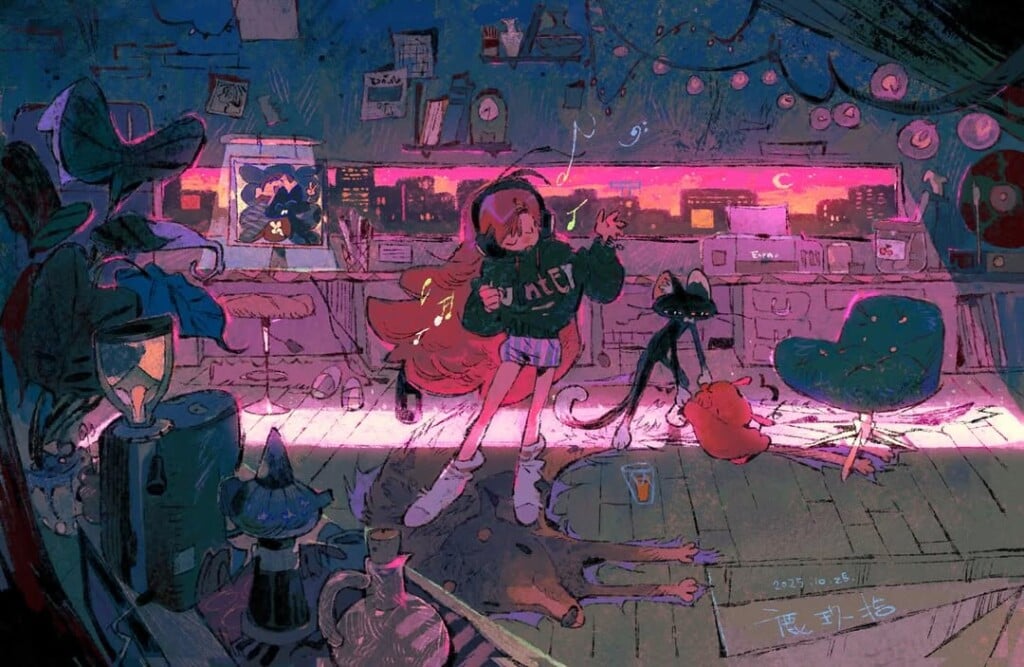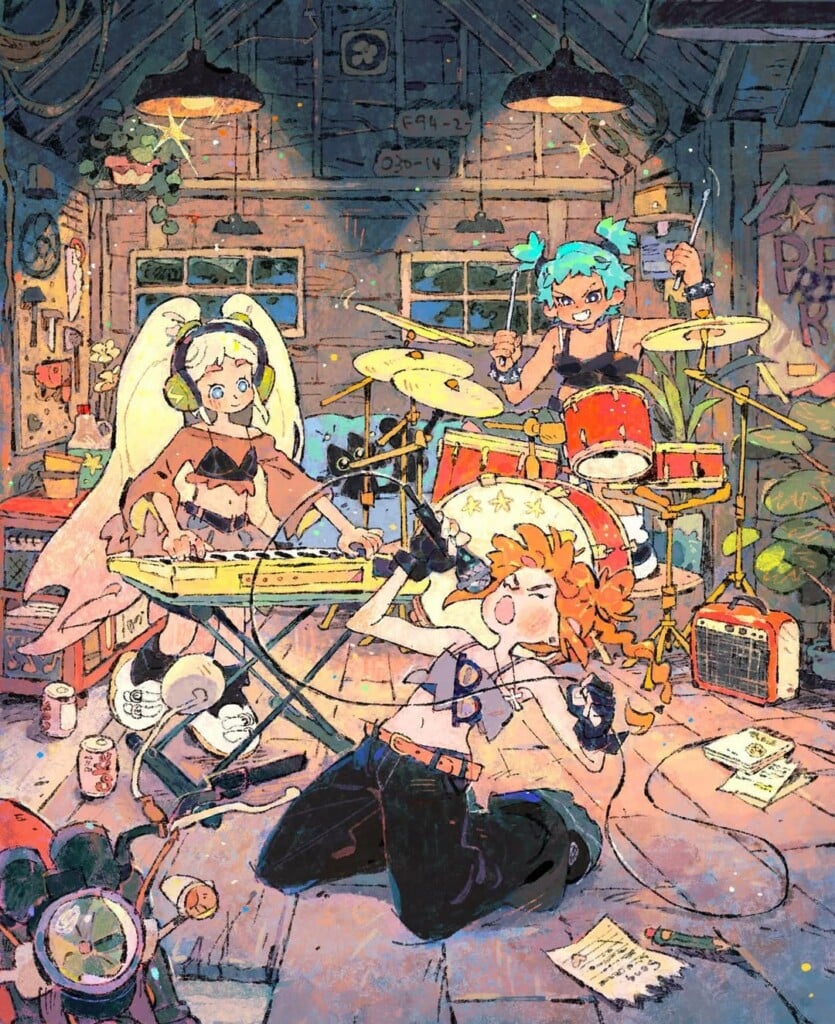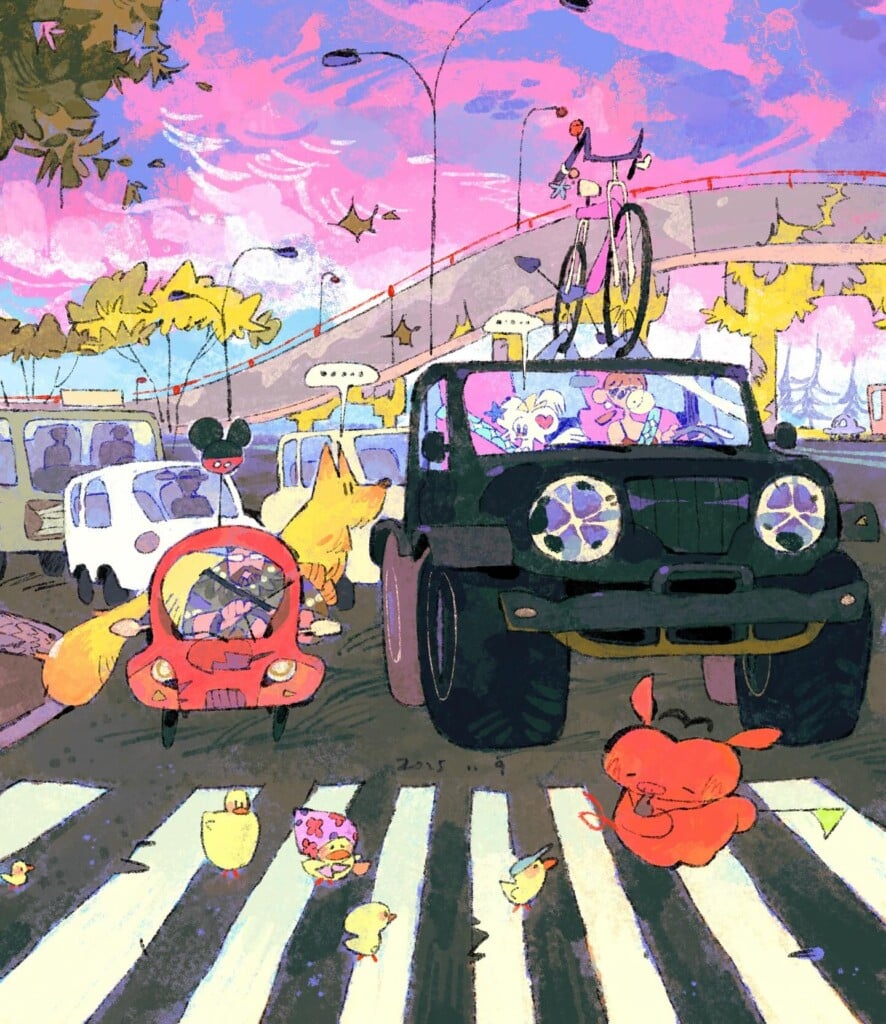
Lu Jiushi builds a dense and noisy visual world where every element seems to push for space. His illustrations unfold like pages from a sketchbook left open for too long, where marks, colors, and characters pile up until they saturate the surface.
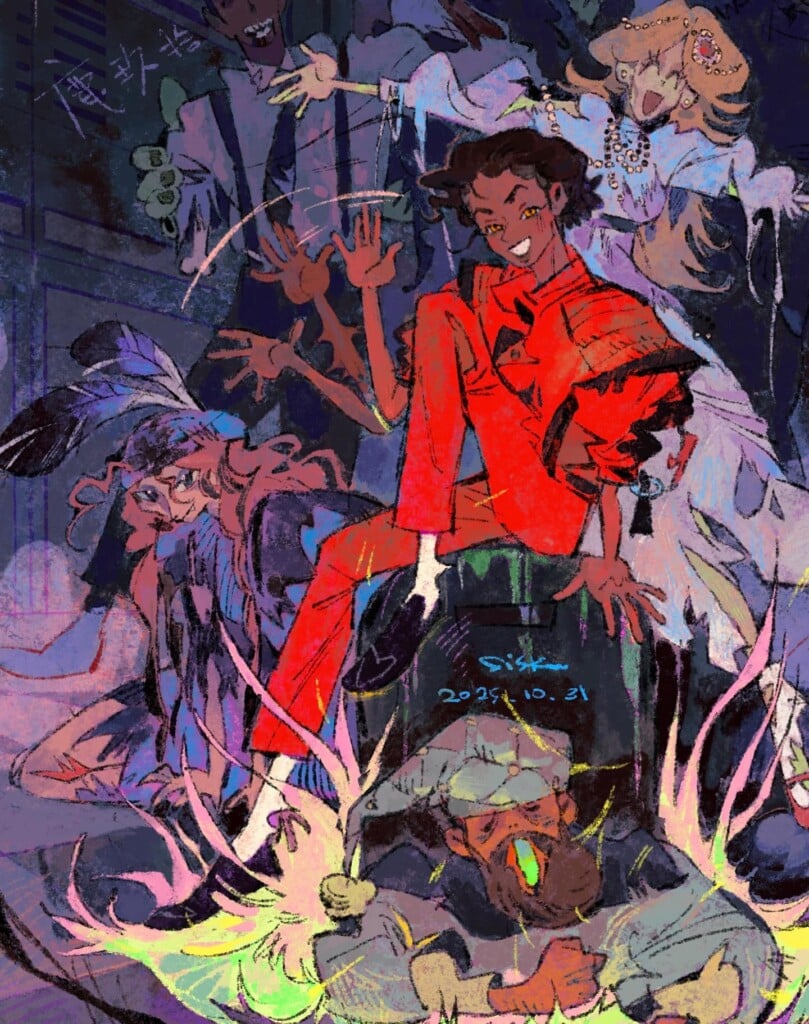
The scenes are crowded with hybrid figures, often anthropomorphic animals or distorted creatures, coexisting with everyday objects such as handheld consoles, cell phones, and elements of daily life, creating a fragmented narrative that seems to emerge directly from a stream of consciousness rather than from a rational construction. It is a world that blends pop culture, video game references, and an almost childlike imagination, filtered through a more restless sensibility.
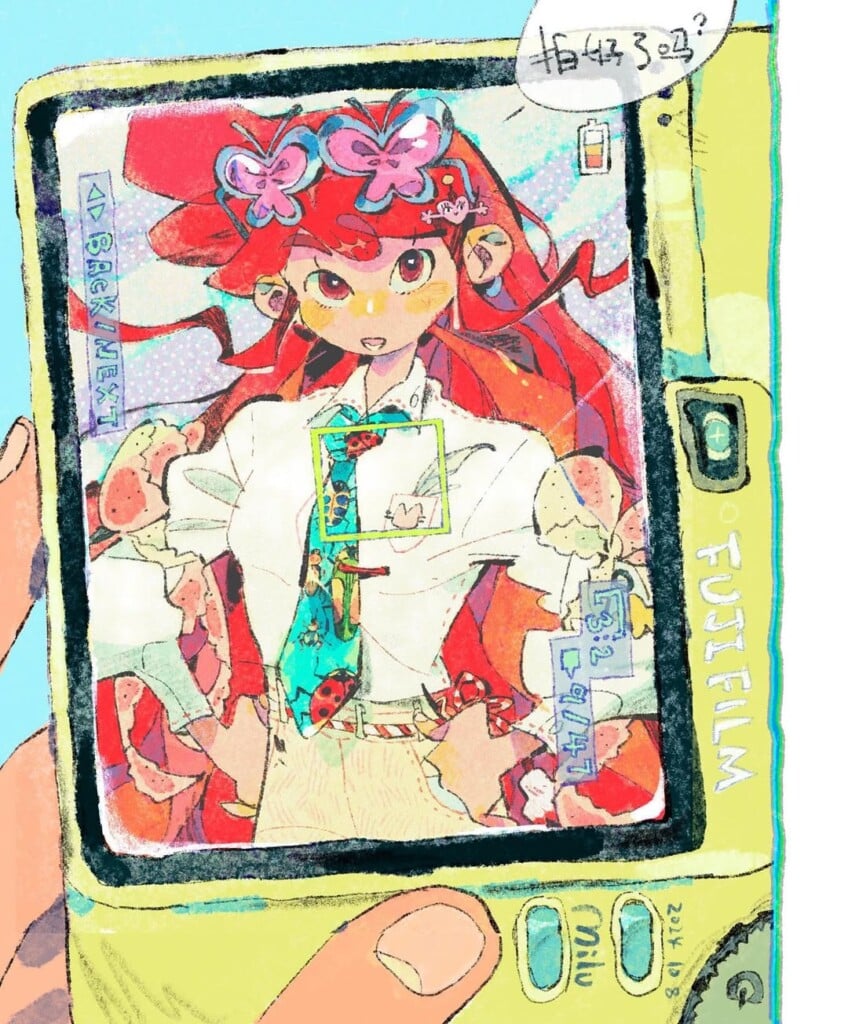
The mark-making is one of its most recognizable elements: messy and deliberately unstable, in the best possible sense of the term. The lines never fully define the forms, but rather chase them, correct them, and contradict them. Color follows the same logic, with flat areas that overlap, smudge, and contaminate one another. The palettes are bright, but never truly “clean”: every hue seems to have passed through a material filter that makes it feel more physical, almost dusty.
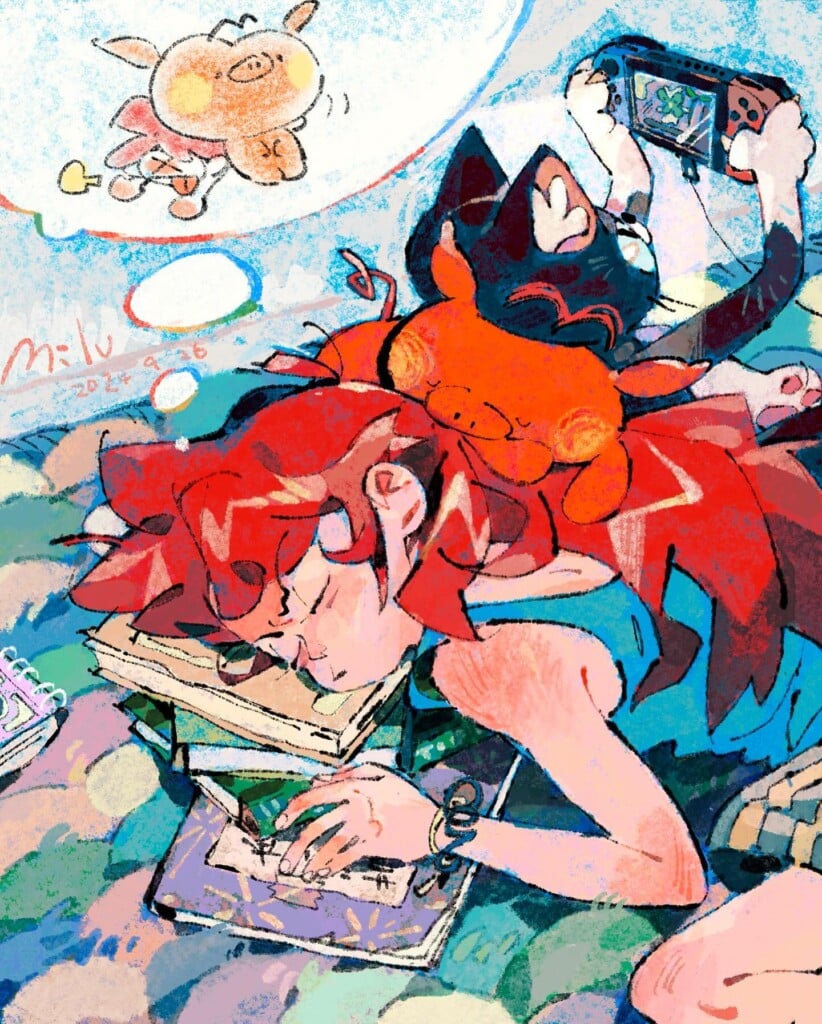
There is also a strong narrative component, though not a linear one. The images work like small visual ecosystems where multiple layers coexist: dream, memory, play, and, why not, boredom too. One character may be sleeping on a book while another is playing, while elsewhere a figure appears as if it had emerged from a thought or a distorted memory. Everything happens at the same time, without hierarchies.
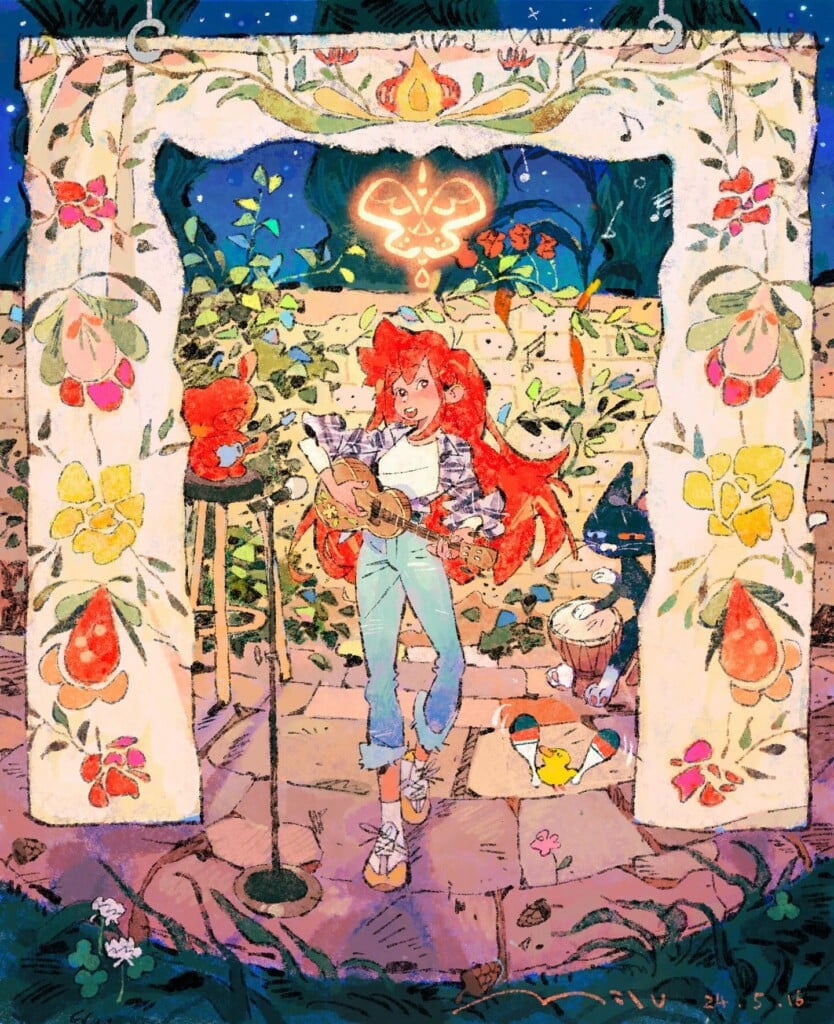
In this sense, Jiushi’s work feels closer to a practice of accumulation than of synthesis. There is never any intention to simplify, but rather to let the image remain open, crossed by different stimuli. The result is an immediate yet layered visual language, one that captures the eye precisely because it refuses to be orderly.