Article by Floriana Savino
In the vital breath of a rich and varied interconnection of worlds lies the specificity of the artistic practice of Jessie Rose Vala (Madison, Wisconsin, 1977). A visual artist and professor at the University of Oregon, she has long and brilliantly cultivated the possibility of pursuing a vegetal and mineral spirit that shines in its encounter with the human horizon.
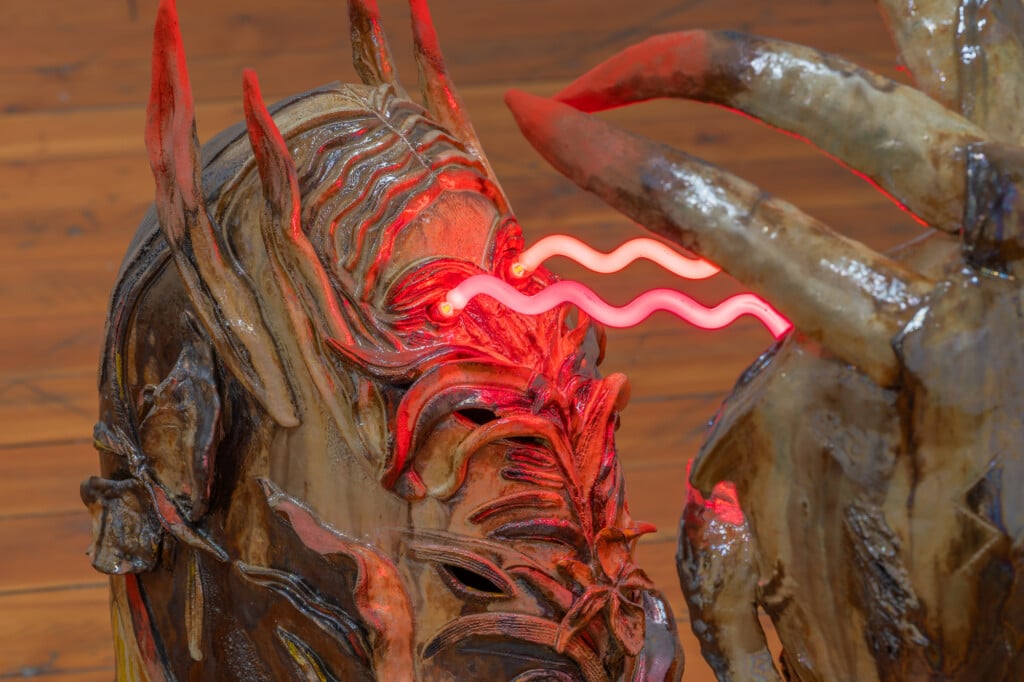
“Our rocky and dreaming planet” represents for Vala a privileged ground for artistic hybridization across multiple materials. Starting from archetypal clay and moving toward stoneware, up to a material emblematic of progress such as neon light, the artist seeks to weave a path that suggests new possibilities and different visions.
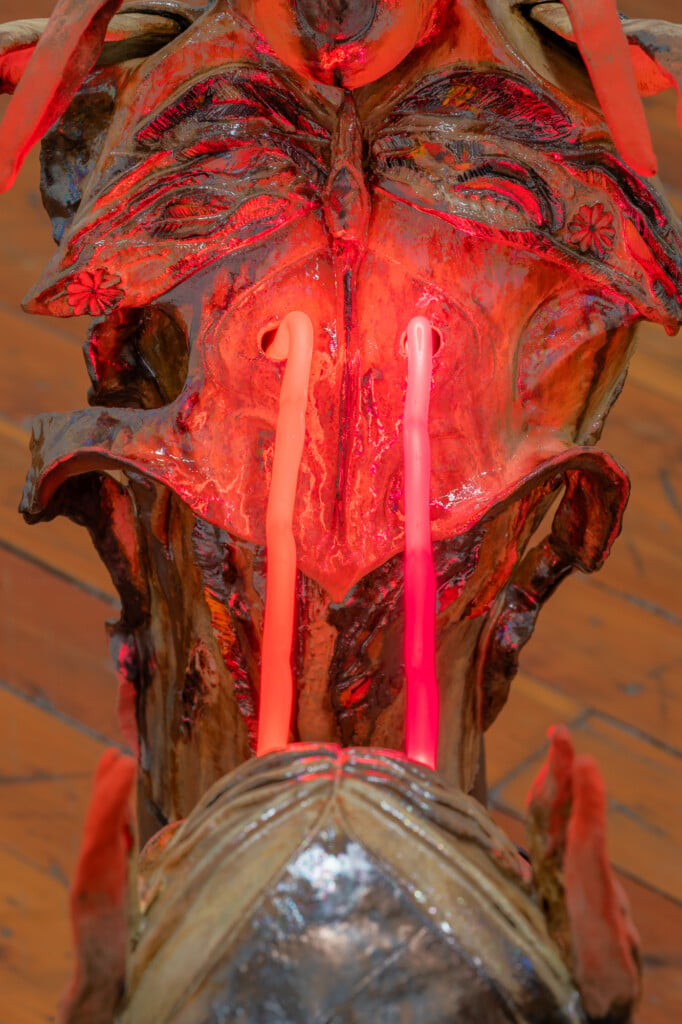
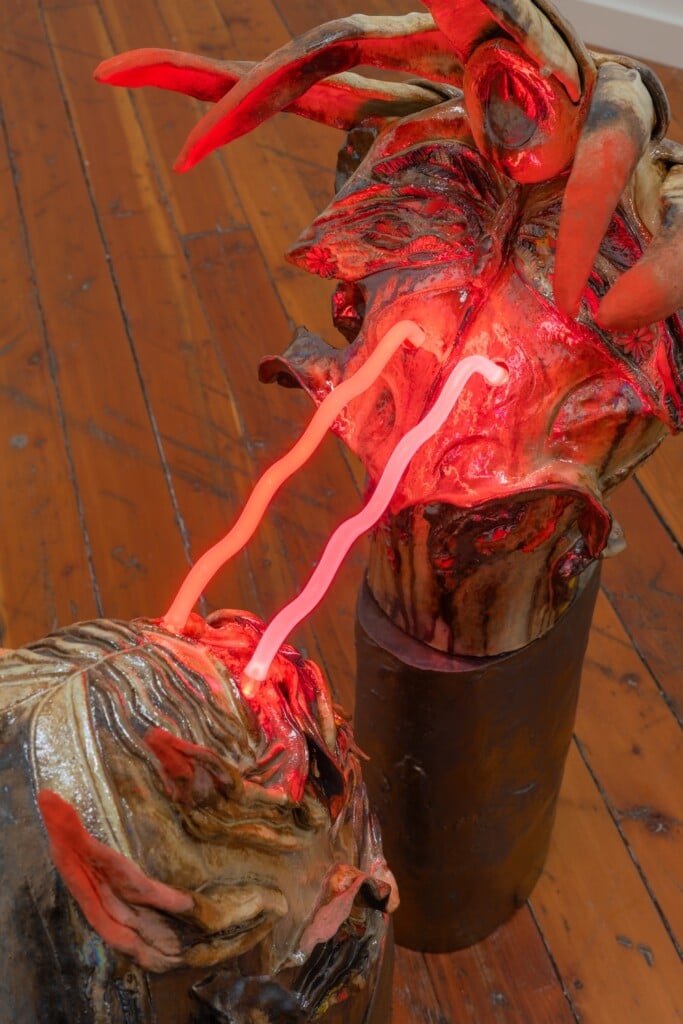
In the fantasy universe, often portrayed by well-known cinematic sagas, there has always been the dream of imagining the nocturnal awakening of the vegetal and underground species that inhabit the world. Magic potions and enchanted hands often grant ordinary mortals the possibility to cross the threshold and witness their dialogue, revealing the fantastic vitality of species generally considered inanimate and immobile. Chimerical worlds populated by hybrid forms, like relics or heraldic emissaries, inhabit the space envisioned by Vala in her exhibitions. For Chefas Projects in Portland, the artist has given form to a journey grounded in the material of a tangible, living dream. Endangered plant species are evoked through refined stoneware, combined with colorful glazes and the dynamism of neon tubes animated by the chromatic presence of noble gases.


Reflecting on the scope of myth and the long tradition of primordial legends passed down orally, plants and pollinators such as the sphinx moth, the Bois Dentelle, and the greater long-nosed bat invite us to reconsider our complex relationship with the preservation of different living species. Rejecting the dominance of humans over all other forms of life, Jessie Rose Vala calls upon a mysterious, deep, and animistic nature tied to the strength and existence of vegetal and mineral life. The myth celebrated in Vala’s sculptures seems to echo the beautiful reflections offered by Alain Badiou in his philosophical work Black: The Brilliance of a Non-Color (2017).
The renowned French philosopher observes:
As far as we can see, the plant world practically ignores black. To our dazzled eyes […] it is truly an apotheosis of colors. […] Should we then conclude that plants represent the symbol of the non-black, the very foreclosure of black by the colors that shine upon that green playing field which is the world? Perhaps this is why Alexandre Dumas […] turned the black tulip into the emblem of the impossible, the ultimate flower […] And yet […] the Black Radish alone should be enough to warn us! The radish […] testifies […] that the true essence of flowers, stems, branches, and leaves [lies] in what anchors them to the nourishing earth. In short, the black and subterranean darkness of roots.
Embracing the ground of a new, awakened, and possible alliance, the space of The Pollinators evoked in the gallery opens a glimpse into the intricate and precious networks that indissolubly bind human existence to the underground and essential work of overlooked and silenced species. Along the paths of a progress driven by primacy and reckless aggression, Jessie Rose Vala offers a mirror for an alternative, vital, and intellectually dreamlike reflection.