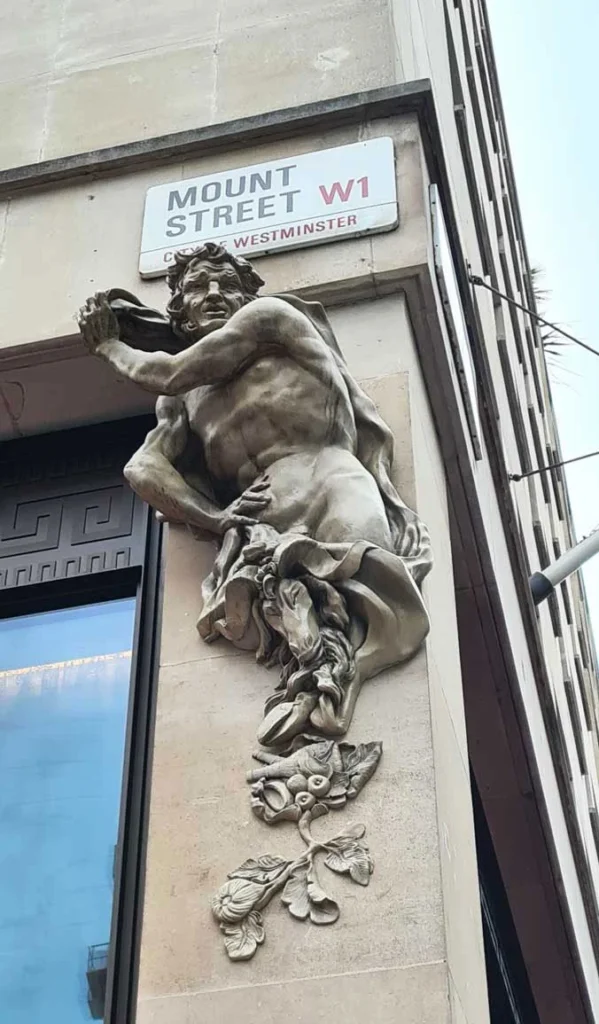
In a former Porsche showroom in Mayfair now stands a banquet temple suspended between archaeology and spectacle: Bacchanalia, one of the many creations of English restaurateur and tycoon Richard Caring. The very name already transports us into an ancient, unrestrained world.
The Bacchanalia were ritual festivals of ancient Rome dedicated to Bacchus (Dionysus for the Greeks), god of wine and ecstasy. Born as religious ceremonies, they involved collective rites where music, dances, and wine accompanied participants towards a state of trance and mystical exaltation.
Over time, however, the Bacchanalia turned into increasingly free and transgressive celebrations: banquets, excesses, and forbidden encounters that temporarily set aside moral and social rules. This dimension of rupture and freedom frightened the Roman authorities so much that in 186 BC the Senate issued a decree to limit their spread.
Since then, the term “bacchanal” has become a synonym for unrestrained and chaotic festivity, a collective image of excess and pleasure that continues to inspire art, literature, cinema, and design — as in the case of London’s Bacchanalia.
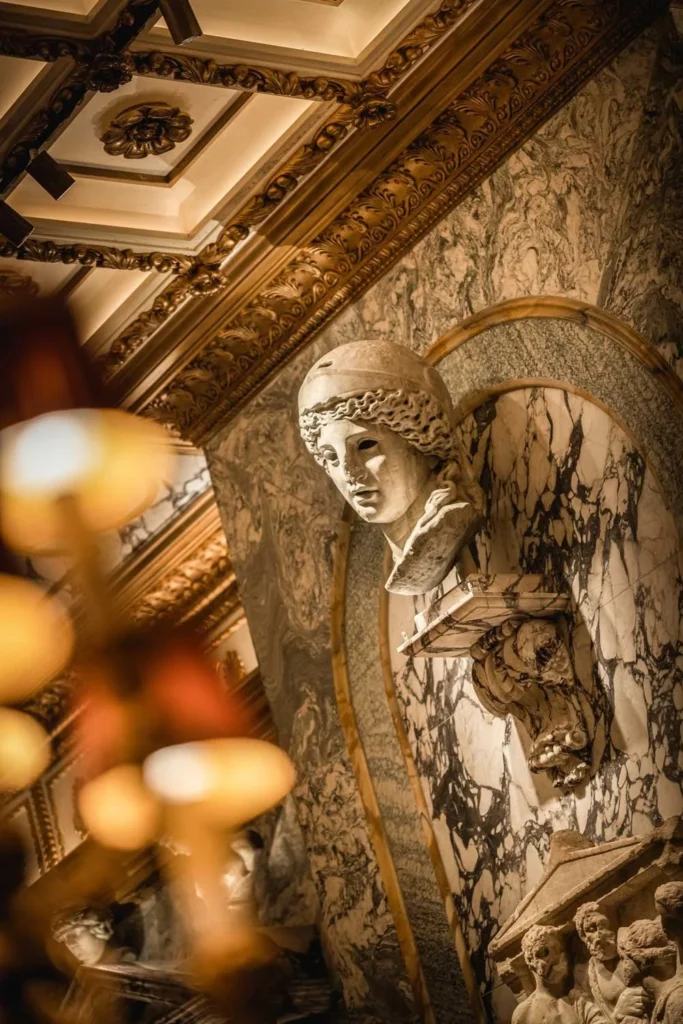
The project is signed by the Martin Brudnizki Design Studio, which here has pushed its theatrical aesthetic to the extreme, transforming the restaurant into a scenic machine able to evoke both ancient myth and contemporary imagination.
A Mythological Theatre
Crossing the threshold means entering an eccentric, deliberately redundant universe where the reference to Greco-Roman classicism is both declared and deconstructed.
Over the diners’ heads, five monumental statues by Damien Hirst dominate the scene. Medusa, Bacchus, a winged lion, and two unicorns are not mere decorations, but acts of presence — symbols of a pantheon reinvented for the 21st century.
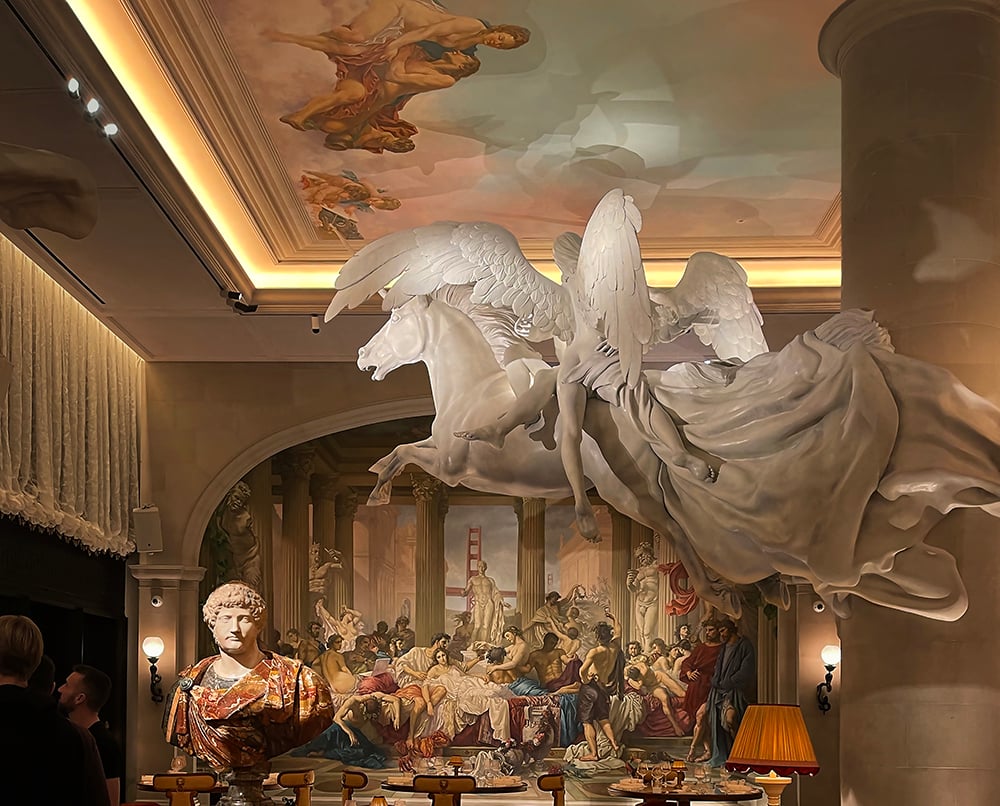
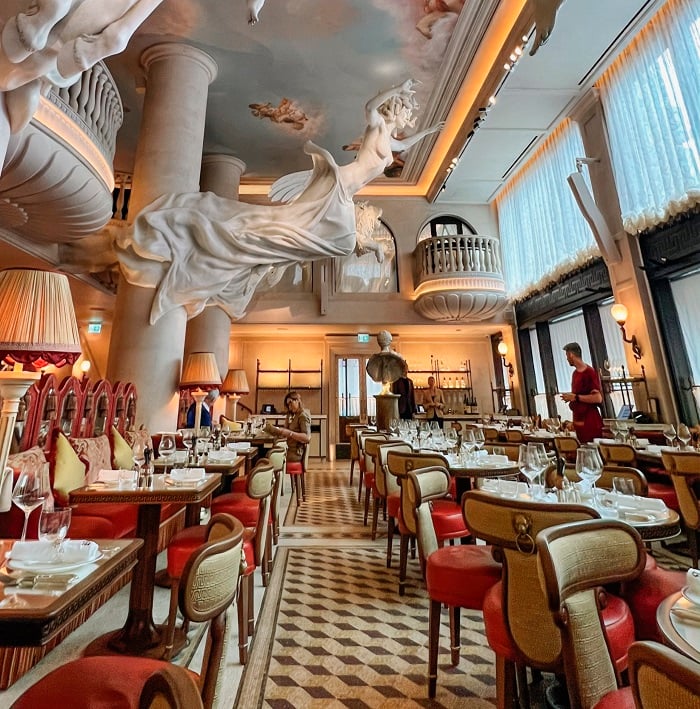
On the walls, enormous murals by Gary Myatt reinterpret Thomas Couture’s 1847 painting “Romans in their Decadence.” The classical figures feast in settings where an open MacBook, an iPhone, or the Golden Gate Bridge appear. This visual short-circuit defines the entire project: a dialogue between distant times and the hyper-connected present, between myth and pop culture.

Mosaic as a Narrative Device
If statues and frescoes set the scenographic tone, it is the mosaic that ensures narrative coherence. For this project, SICIS created the entire flooring of the restaurant, bar, and private club: an immense expanse of polychrome marble that recalls the floors of Roman domus.
Geometric patterns and floral friezes were composed in shades of olive green and dark green, yellow, red, pearl pink, and antique white. Each tile was cut, finished, and laid by hand in the Ravenna workshops, then transported to London. The result is a floor that is not mere covering but a narrative fabric: walking in Bacchanalia means moving across a carpet of stories unrolling underfoot.

Bathrooms as Chambers of Revelation
In this hyper-decorated universe, even the bathrooms become protagonists.
The ladies’ restroom is a true chamber of wonders: more than 400,000 glass mosaic tiles cover the walls and ceiling, creating a landscape inspired by the Garden of the Hesperides. Among the branches appear golden apples that catch the light as if they were real suspended fruits, in a continuous play of reflections. It is a space that overturns the very concept of intimacy: a bathroom that becomes an art installation.

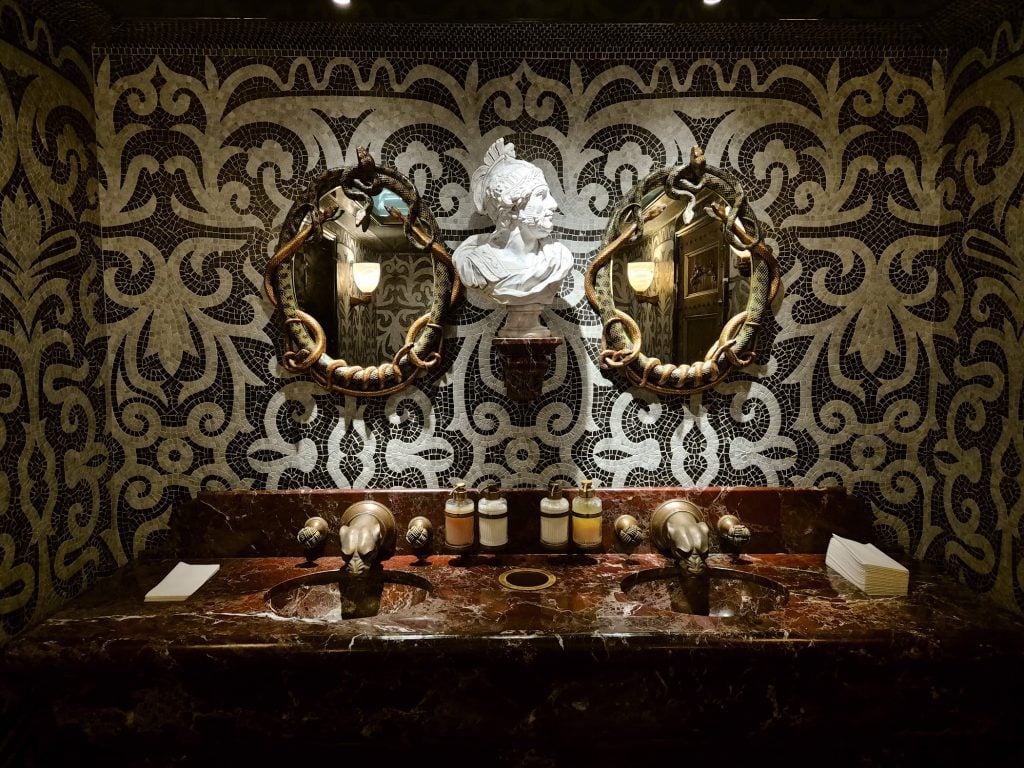
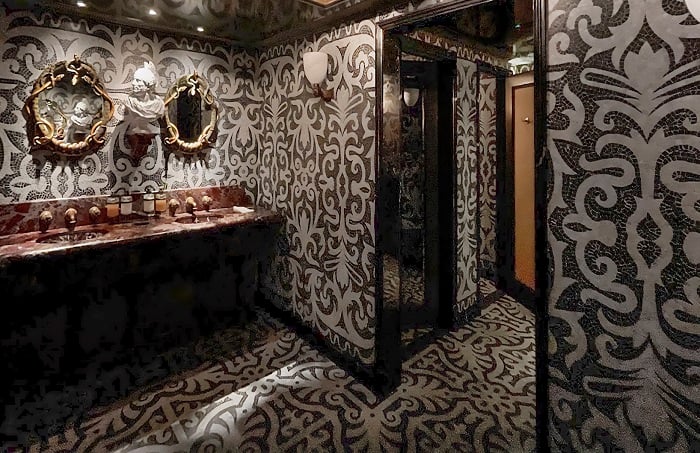
The men’s restroom, on the other hand, evokes the darkness of Hades. Here black and white dominate with graphic rigor, while mirrors framed by snakes recall the ouroboros, symbol of cyclicality and regeneration. An environment that transforms the everyday act of “pausing a moment” into a ritual immersed in mythology.
Apollo’s Muse: a Hidden Elsewhere
Downstairs hides the private club and bar Apollo’s Muse, one of London’s most exclusive and evocative places. Here the scenography grows denser: mosaic-adorned columns frame the bar counter, ancient relics coexist with bespoke sculptural creations by AH Studios, and the atmosphere recalls a secret archive of forgotten deities. It is no surprise the venue was named among the best bars in Europe: more than a cocktail lounge, it is a journey into a mythological elsewhere.
Excess as Balance
What might seem redundancy — colossal statues, polychrome mosaics, gold leaves, overflowing frescoes — instead becomes a calibrated exercise in balance. Opulence is never left to chance: each element dialogues with the other, and artisanal mastery balances the scenic hyperbole.
Thus Bacchanalia is an example of how art, design, and industrial savoir-faire can intertwine to create a totalizing experience. Not simply a restaurant, but a cultural device where dining becomes a ritual act, a banquet evoking Dionysian bacchanals in a contemporary key.


In its uncompromising theatricality, Bacchanalia showcases design’s ability to transform into a total “mise en place”. Here the table is not only set with plates and glasses but surrounded by a visual and tactile universe that stretches from the floor beneath one’s feet to the ceiling, passing through the most intimate and hidden spaces.
The result is a place that leaves no one indifferent: for some excessive, for others visionary, certainly capable of embodying that thirst for experiences that today merges with the desire for conviviality. A contemporary banquet, an ode to ecstasy, a piece of myth reinvented in today’s London.