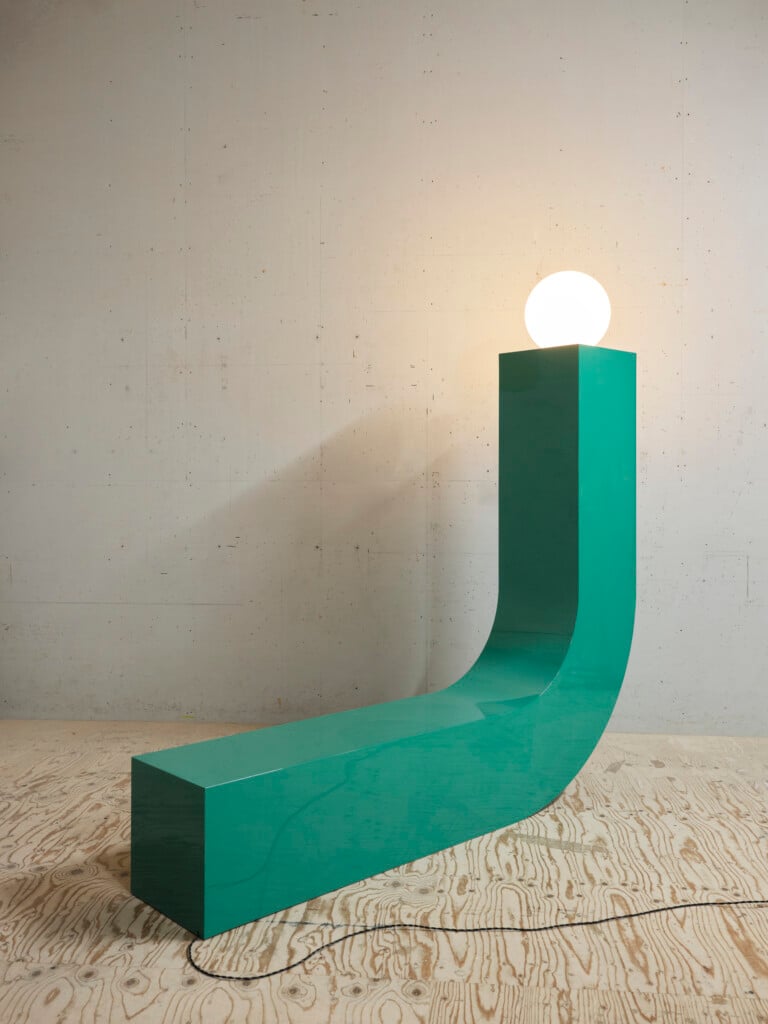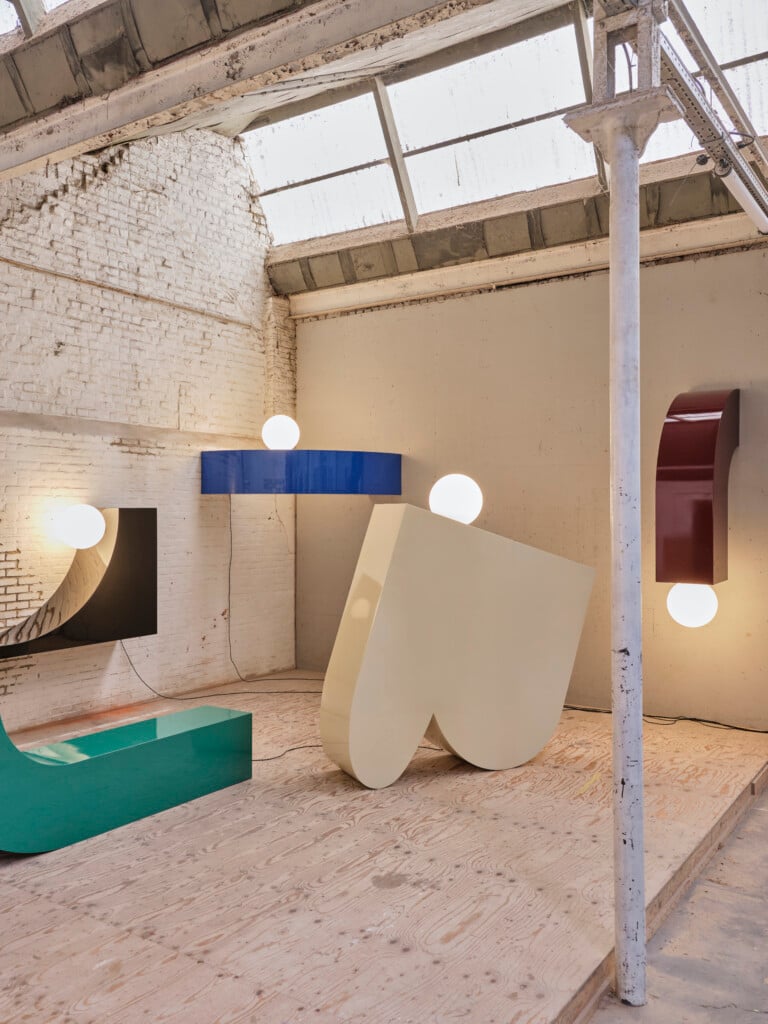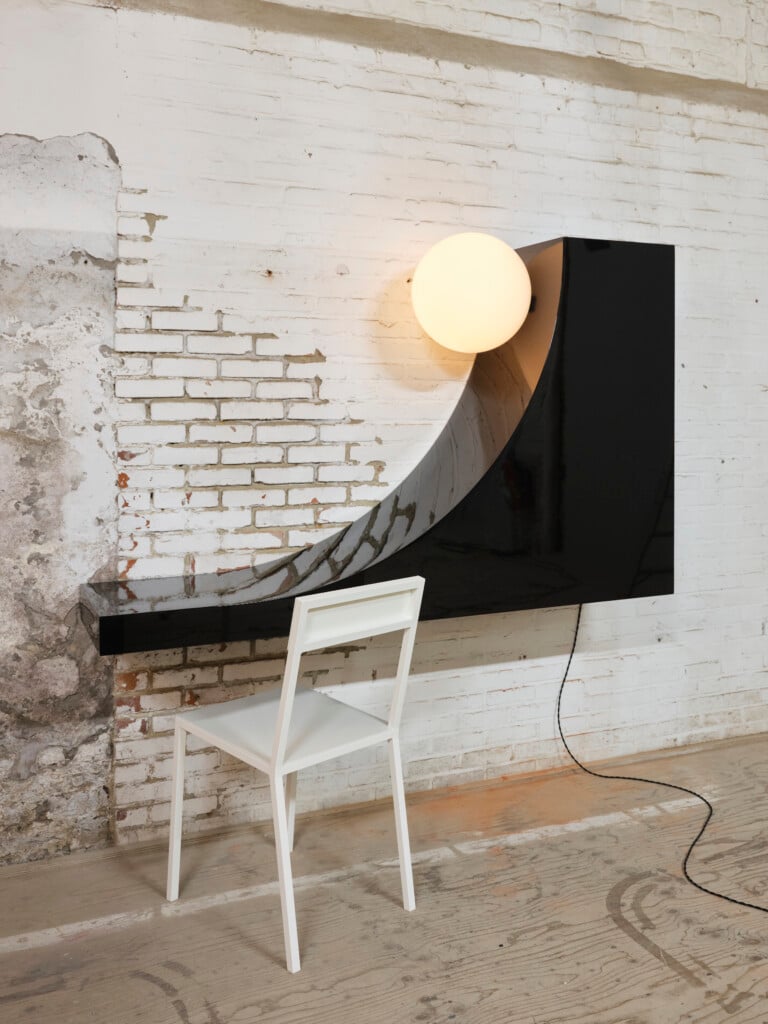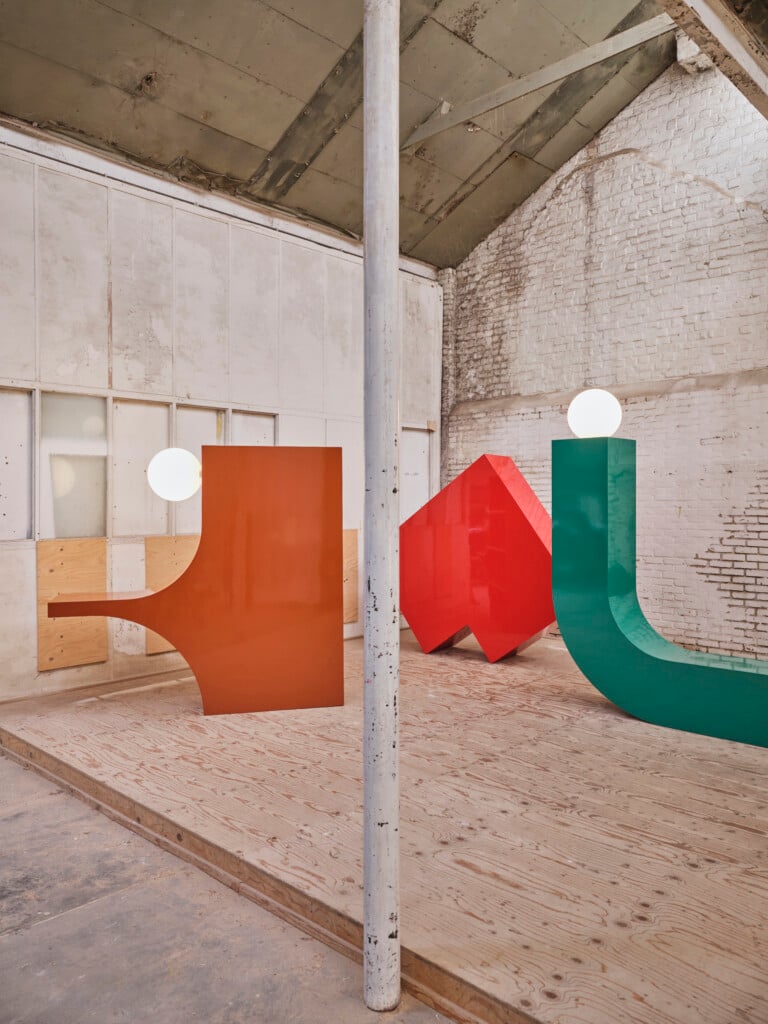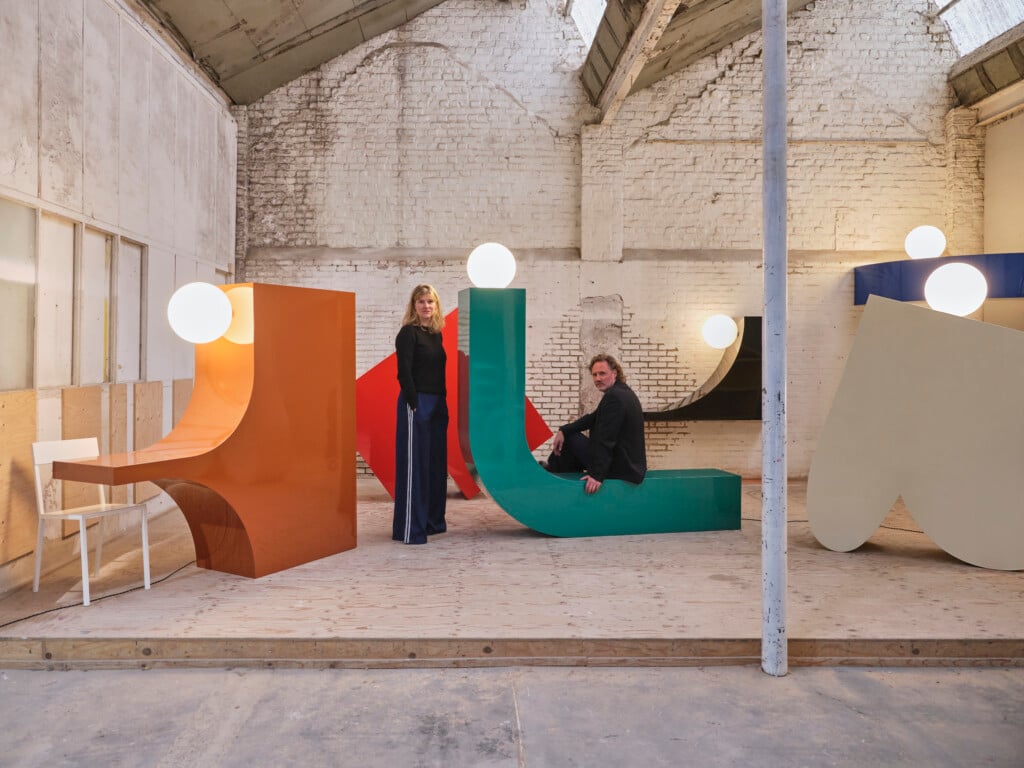
A piano that cannot be played, but on which you can rest a book, store objects, or sit. This is the idea at the heart of Pianos, the new exhibition by Muller Van Severen at Tim Van Laere Gallery in Rome, the second solo show for the Belgian studio with the gallery. Deep, glossy lacquer, soft curves alternating with sharp passages, an almost architectural monumentality: of the instrument, the presence and the silhouette remain, while the function changes entirely.
The project brings together seven unique works with lacquered, glossy surfaces, placed in an ambiguous territory between furniture, sculpture and musical instrument. None of these objects can be played. Freed from their original function, they become sideboards, tables, benches or wall sculptures.
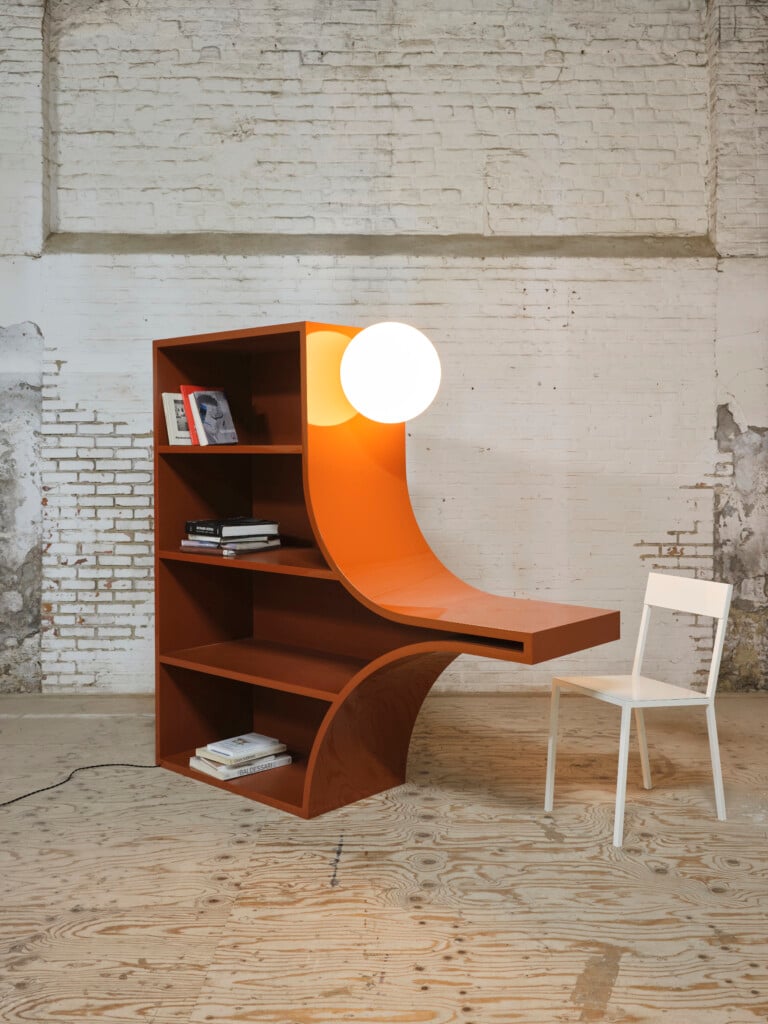
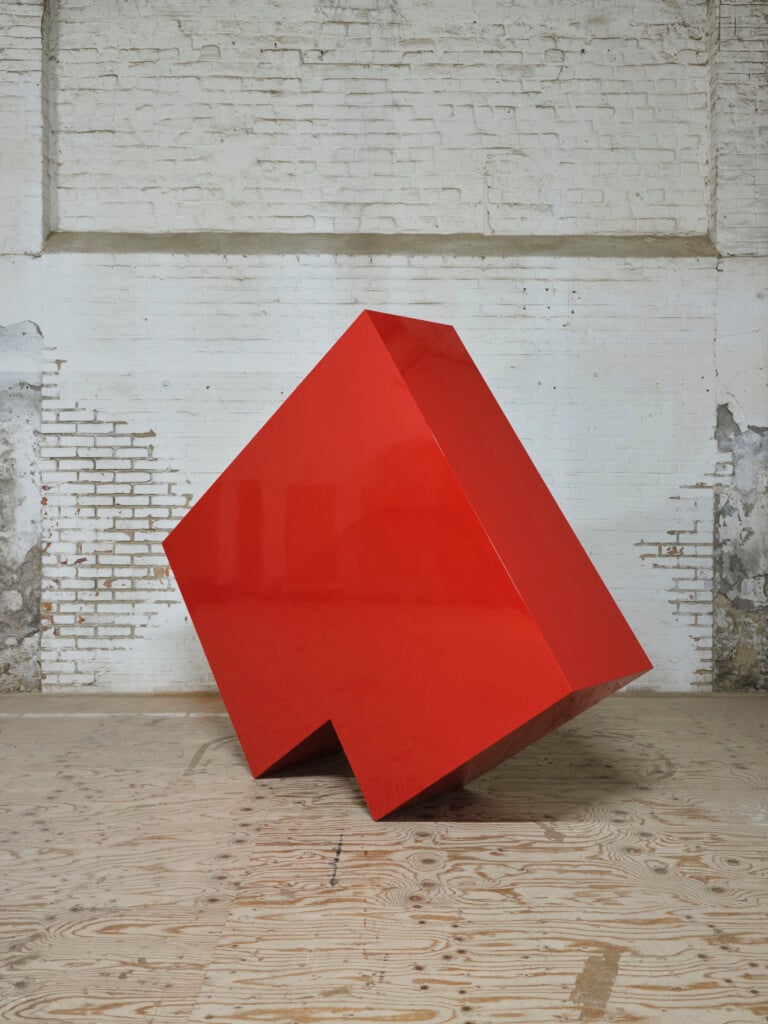
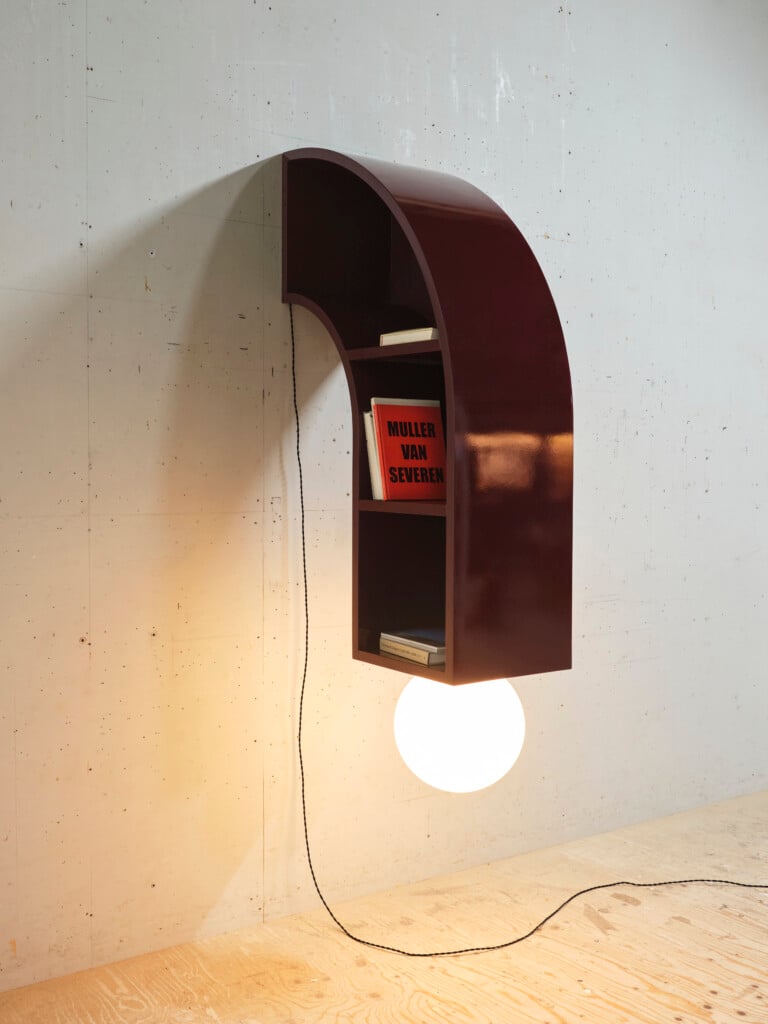
The starting point is almost a question. The studio observes that there is something curious about such an imposing object, designed around a function that remains out of reach for anyone who cannot play. What happens if the piano is separated from music? And what if it were given a purpose accessible to everyone? The answer from Fien Muller and Hannes Van Severen comes through decomposition: the familiar silhouette is deformed and reassembled, until the result is objects that are no longer pianos but have not entirely lost their identity.
The title works on two levels. Pianos evokes the instrument, but also the Italian word “piano”, meaning level, surface, floor. The shelves and horizontal surfaces that make up the works form small architectures of overlapping planes, and the same logic extends to the entire installation, where floor, walls and different heights build a spatial composition. The piano thus becomes a play of volumes, levels and functions.
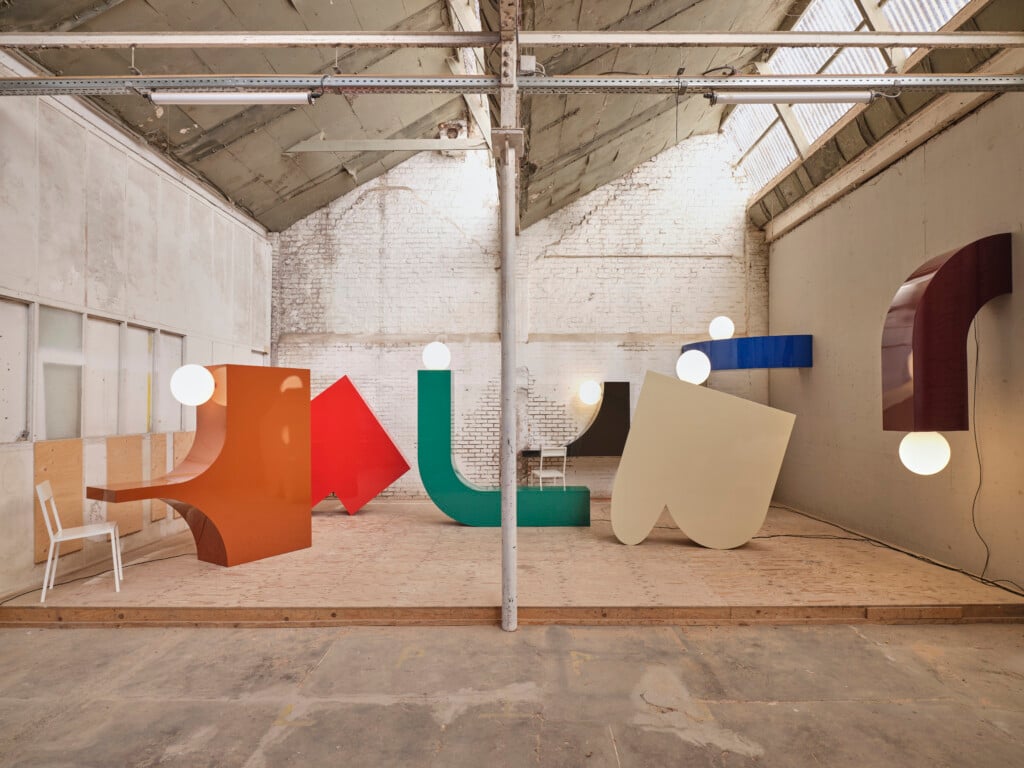
Six of the seven works are topped by an opal glass sphere. Where the instrument once produced sound, it now emits light: one sensory dimension gives way to another. The resulting atmosphere is the intimate one of a jazz club late at night, made of dimly lit interiors, reflective surfaces, soft lighting and the melancholy of Chet Baker’s music. This shift in meaning evokes the work of Marcel Duchamp, in which everyday objects acquire new meanings once removed from their context. Here, however, these are not ready-mades in the traditional sense: instead of relocating an existing object, Muller Van Severen reinvents its form and function. The piano remains recognizable, while its meaning shifts.
The surrealist world of René Magritte also resonates, with its lanterns, night lights and enigmatic objects, suggesting a reality that is both familiar and impossible. The glowing spheres of Pianos share the same ambiguity: they add a function and, at the same time, give the furniture a dreamlike quality, as if it belonged to a world almost identical to ours, in which objects behave slightly differently. With this series, the studio continues its research into the boundaries between art and design, function and imagination, furniture and sculpture. The piano has stopped playing, but its presence remains: the silhouette, the sheen and the monumentality endure. Only the function has changed.