The boundary between cinema and contemporary art has become increasingly blurred. Performances, installations, and virtual reality experiences now occupy exhibition spaces that were once reserved for paintings and sculpture. Off Screen was created precisely to explore those filmmakers who refuse to stay confined to the screen, transforming their cinematic vision into something larger, tangible, and sometimes even inhabitable.
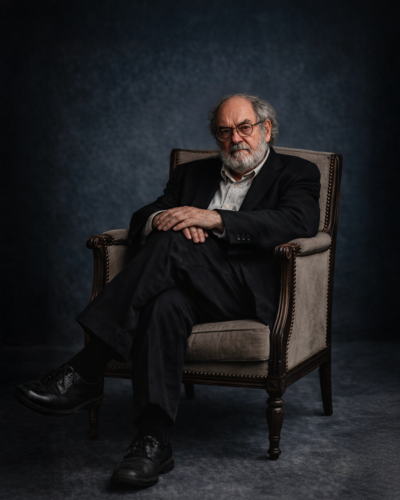
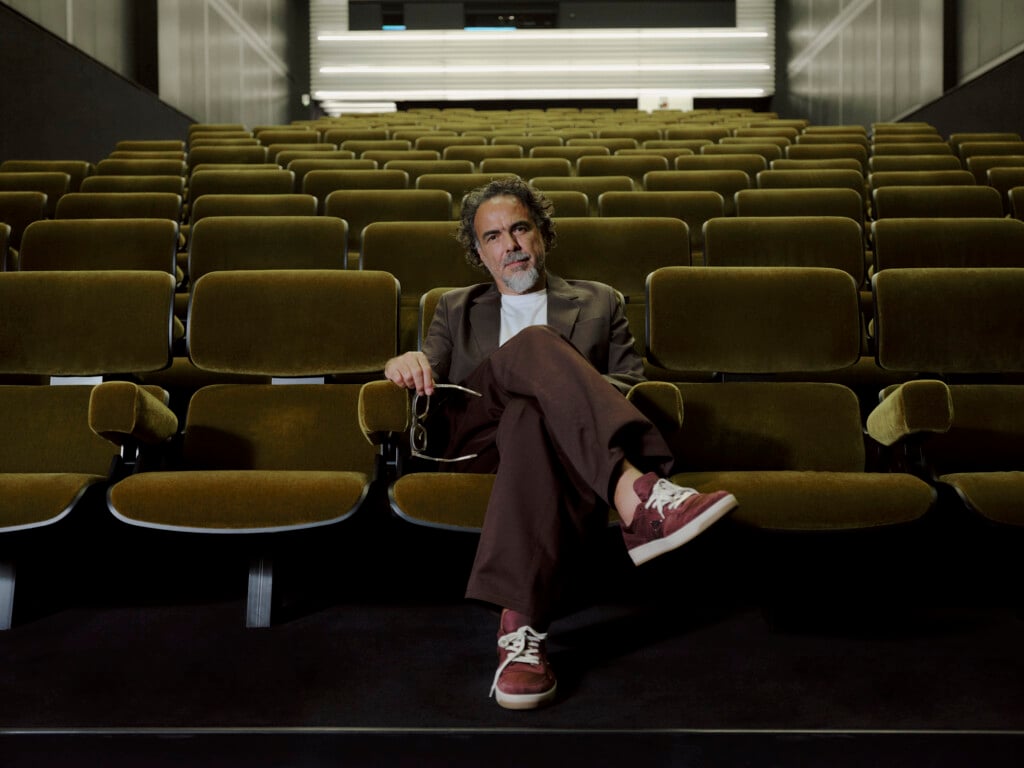
Alejandro González Iñárritu perfectly embodies this evolution. Born in 1963 in Mexico, the director has won five Academy Awards, four Golden Globes, and three BAFTAs. Yet beyond the accolades, what truly makes him essential to this column is the work he has created outside traditional cinema.
From Cargo Ships to the Camera: An Unconventional Filmmaker
Born in Mexico City in 1963, Iñárritu grew up far from the structured world of film schools and academic institutions. His adolescence was turbulent: financial struggles, expulsions from school, and an unstable family environment shaped his early years. At twenty, he boarded a merchant cargo ship twice, taking humble jobs that brought him across the Mississippi, Europe, and Africa. During the second journey, he spent an entire year abroad carrying little more than a thousand dollars and books by Camus, Sartre, and Dostoevsky. That physical and existential experience profoundly shaped the way he would later portray humanity on screen.
After returning to Mexico, he studied communications, became a radio DJ for WFM — eventually turning it into the most popular youth radio station in Mexico City — composed soundtracks, and immersed himself in theater. Only after this unconventional path did he make his feature debut, nearly forty years old, with Amores Perros in 2000.
Amores Perros arrived like a shockwave: a violent and fragmented portrait of Mexico City built around three interconnected stories linked by a car accident and the recurring presence of dogs — creatures loved, abandoned, exploited, and killed. The film won the Critics’ Week Grand Prize at Cannes and helped launch the Nuevo Cine Mexicano movement alongside Alfonso Cuarón and Guillermo del Toro.
With 21 Grams (2003) and Babel (2006), Iñárritu further developed his signature cinematic language: fractured narratives, emotionally broken characters, and psychological landscapes where geography mirrors the inner lives of the protagonists. Set between Morocco, Mexico, the United States, and Japan, Babel earned him the Best Director Award at Cannes, making him the first Mexican filmmaker in history to receive the honor.
Global recognition arrived with Birdman (2014) and The Revenant (2015). Filmed to appear as one continuous take, Birdman won four Academy Awards, while the brutal wilderness survival story of The Revenant earned Iñárritu his second consecutive Oscar for Best Director. In 2022, he returned with Bardo, arguably his most personal work: a dreamlike odyssey following a Mexican journalist living in Los Angeles as he confronts memory, identity, and displacement. Baroque, excessive, and deeply introspective, the film introduced themes that would later explode within his immersive installations.


Carne y Arena: Physically Entering Cinema
Milan, 2017. Fondazione Prada unveils Carne y Arena (Virtually Present, Physically Invisible), Iñárritu’s groundbreaking VR installation. Originally conceived inside a hangar near Cannes before arriving in Milan, the project radically transformed the relationship between audience and screen, becoming one of the most influential immersive cinematic experiences ever created.
To develop the installation, Iñárritu collaborated with artist Carsten Höller, George Lucas’ experimental lab, and cinematographer Emmanuel Lubezki, winner of three Academy Awards for Gravity, Birdman, and The Revenant. The result was a virtual reality artwork that can no longer be fully reproduced or documented — a deliberate decision intended to preserve the uniqueness of the experience.
Entering Carne y Arena immediately meant abandoning the role of passive spectator. Visitors were asked to leave behind their personal belongings, remove their shoes and socks, and walk barefoot across sand and stones. Once inside the empty space, they put on a VR headset and suddenly found themselves in the desert between Mexico and the United States, surrounded by migrants attempting to cross the border.
Unlike traditional cinema, there was no off-screen space. Instead, viewers experienced a full 360-degree environment where they could move freely, follow the migrants, approach them, and feel fear with unsettling proximity. At the same time, however, a subtle “safe distance” remained. You knew it was fiction, and your freedom was ultimately limited by the director’s gaze. Initially, most visitors tried to remain detached; gradually, though, the instinct to move closer became unavoidable. Every interaction subtly altered the emotional experience, making each journey through the installation unique.
At the end of the experience, portraits of the real refugees who had shared their stories with Iñárritu stared directly back at the audience. Who were they? Did they survive the crossing? Where are they now?
The subtitle revealed the project’s central paradox: Virtually Present, Physically Invisible. Participants were present yet invisible — both to the virtual characters and to themselves, unable to see their own bodies inside the simulation. Empathy and distance coexisted simultaneously. If viewers moved too close, the illusion collapsed.
In 2017, the Academy honored the installation with a Special Oscar, making Carne y Arena the first virtual reality work ever to receive the award.


Sueño Perro: The Resurrection of Analog Film
In September 2025, Iñárritu returned to Fondazione Prada with Sueño Perro: Instalación Celuloide. Arriving years after Carne y Arena, the immersive installation celebrated the twenty-fifth anniversary of Amores Perros while refusing the easy language of nostalgia.
The project emerged from an almost archaeological discovery: more than 300 kilometers of 35mm film — roughly sixteen million frames — left on the editing room floor during the production of Amores Perros and stored for twenty-five years inside the archives of the Universidad Nacional Autónoma de México. Iñárritu described the discarded material as the film’s “placenta.” As he explained, “All the raw material reminded me of a discarded placenta still filled with richness.”
Rather than creating a director’s cut or a conventional retrospective, the filmmaker transformed those forgotten fragments into a completely new work. “This installation is not a tribute, but a resurrection,” he stated, inviting audiences to encounter what had never previously surfaced.
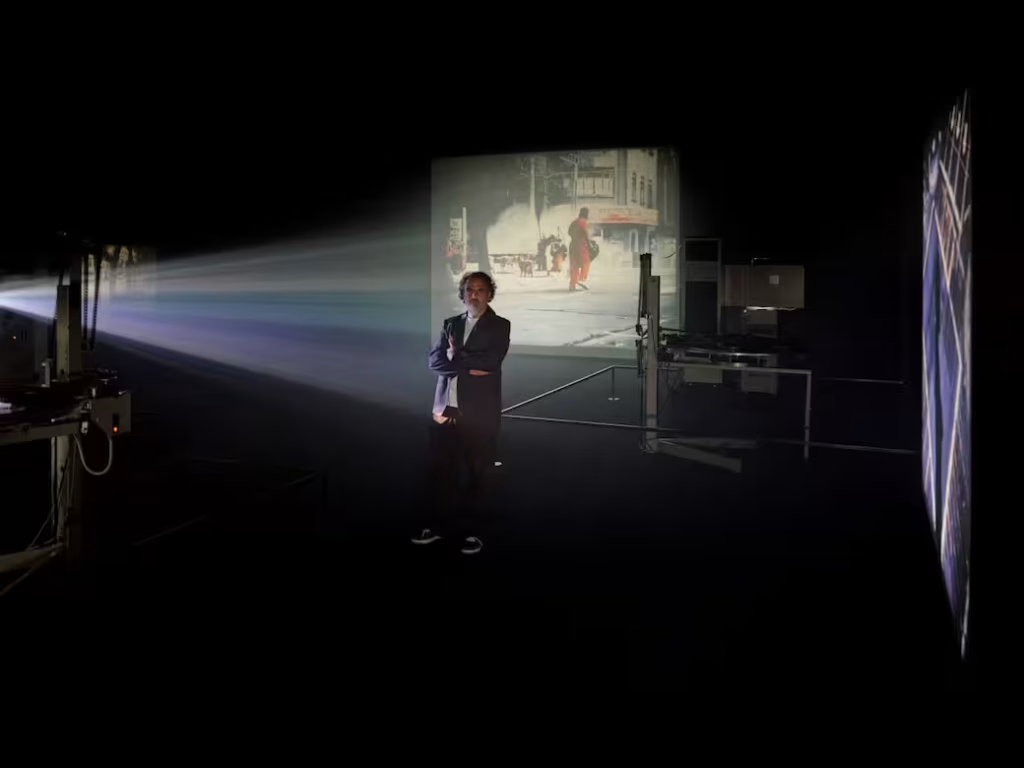
The exhibition unfolded through six dimly lit rooms illuminated only by the flickering light of analog 35mm projectors. Massive metallic machines — relics from the pre-digital era — continuously projected deleted scenes, rehearsals, damaged frames, and imperfect takes. “It’s all raw,” said Iñárritu. “I’m exposing my dirty laundry.”
Visitors needed at least fifty minutes to cross the installation, although many remained for far longer. Moving through the labyrinth meant following light, sound, and texture: the mechanical noise of projectors, the rustling of film reels, the visible grain and flicker of analog footage. Here, imperfection itself became aesthetic material. The result felt visceral — cinema made of flesh rather than digital precision.
The title itself inverted Amores Perros. While the original film explored cursed forms of love, the installation immersed viewers in a “dog dream” where discarded images resurfaced like ghostly memories. “I’m not interested in revisiting the past. The past is dangerous because it makes us drown. Instead, I’m fascinated by the in-between reality of dreams,” Iñárritu explained.
Those familiar with Amores Perros rediscovered fragments of a recognizable story stripped of narrative structure, while newcomers connected instead with universal sensations and emotional textures. In both cases, the installation dissolved any perception of time. Forgotten reels, scratches, and cinematic debris became an archaeology of memory. Ultimately, Sueño Perro stood as a monument to the beauty of cinematic imperfection — a ruin to experience with every sense.
The exhibition, which recently concluded in Milan, will travel to Mexico City and LACMA in Los Angeles throughout 2026.


Alejandro González Iñárritu: Space, Body, and Memory
What connects Carne y Arena and Sueño Perro? Above all, the belief that cinema is not merely projection, but a physical and emotional architecture. Iñárritu does not simply direct films — he constructs inhabitable environments, immersive emotional geographies that audiences must cross with their bodies as much as with their eyes.
Throughout his work, space is never neutral. Every environment functions as an extension of the characters’ psychological condition, shaping them just as much as they shape it. His immersive art installations push this concept even further. In Carne y Arena, audiences crossed the Mexican desert alongside migrants; meanwhile, Sueño Perro invited visitors to wander through suspended strips of film, smoky beams of light, and projectors transformed into sculptural objects. Cinema stopped being representation and became embodied experience.
Revisiting thousands of meters of archived film also required an entirely different creative perspective. During the production of Amores Perros, every frame had been selected according to strict narrative needs. This new exploration, however, abandoned linear storytelling in favor of pure sensory flow. Material once rejected during editing suddenly revealed unexpected emotional richness and meaning.
Alejandro González Iñárritu ultimately represents the spirit of Off Screen in its purest form. He is not a filmmaker who occasionally creates installations; rather, he is a total artist who uses cinema, virtual reality, analog film, and exhibition spaces as equivalent tools to investigate identity, exile, memory, death, and the body itself. His installations are not spin-offs of his films, but extensions of an expansive creative universe that traditional cinema alone can no longer contain. More than a director, Iñárritu has become an architect of inner landscapes. And like every great architect, he understands that the most important spaces are not simply seen — they are inhabited.