What does it mean to be present? Not merely to occupy a space with one’s body, but to recognise oneself in a condition that is constantly changing, shaped by memories, relationships, experiences and identities that do not always have defined boundaries. It is from this ambiguity that Otherwise, Presence takes shape, the group exhibition opened on 26 November by Artopia Gallery in Milan, bringing together the research of Gaia Fugazza, Paul Maheke and Anousha Payne.
The exhibition starts from a seemingly simple question and expands into a more complex reflection on the body and its possibilities of existence. Here, presence does not coincide with something stable or immediately recognisable. Rather, it becomes a condition in motion, a place where physical and immaterial dimensions, individual and collective memories, natural and cultural transformations meet. The body thus escapes a single definition to become a threshold: something that preserves the traces of what it has been, yet remains open to new forms and identities.
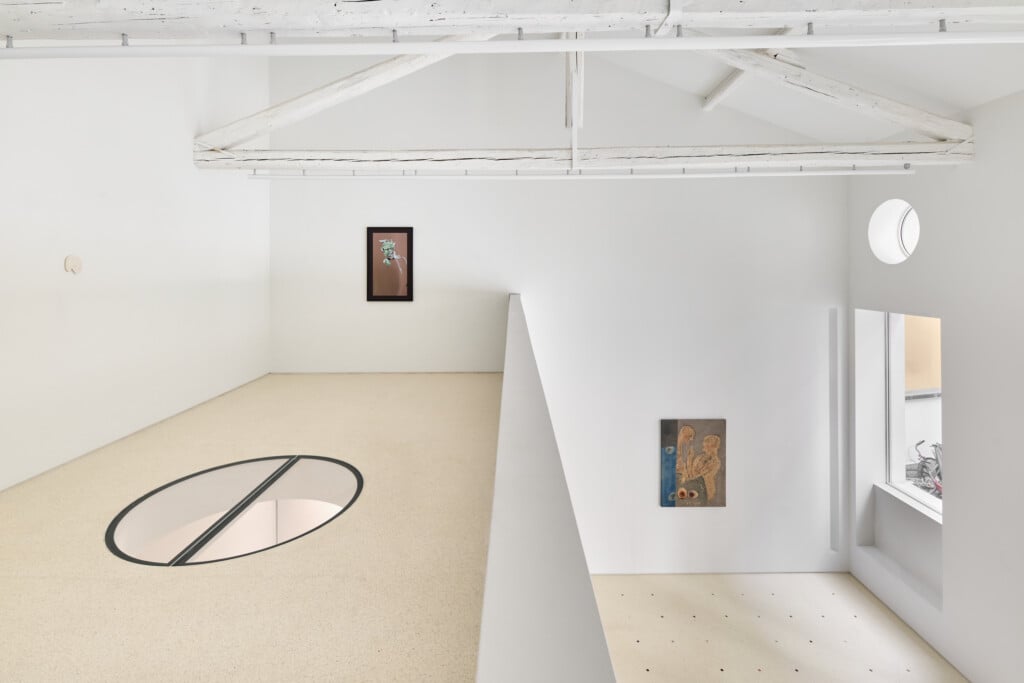
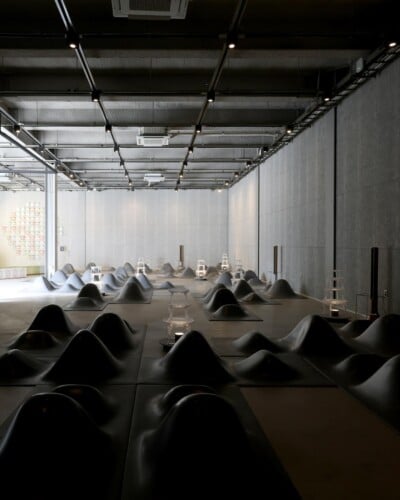
The exhibition unfolds in dialogue with the architecture of Artopia Gallery, bringing works, materials and languages into relation. These are not three practices reduced to a single visual code, but independent lines of research that find a point of contact in the desire to observe what escapes the most familiar categories. From historical memory to the relationship with the natural world, from hybrid identities to marginalised stories, Otherwise, Presence invites us to consider presence also through what often remains invisible.
Three practices, three ways of crossing the body
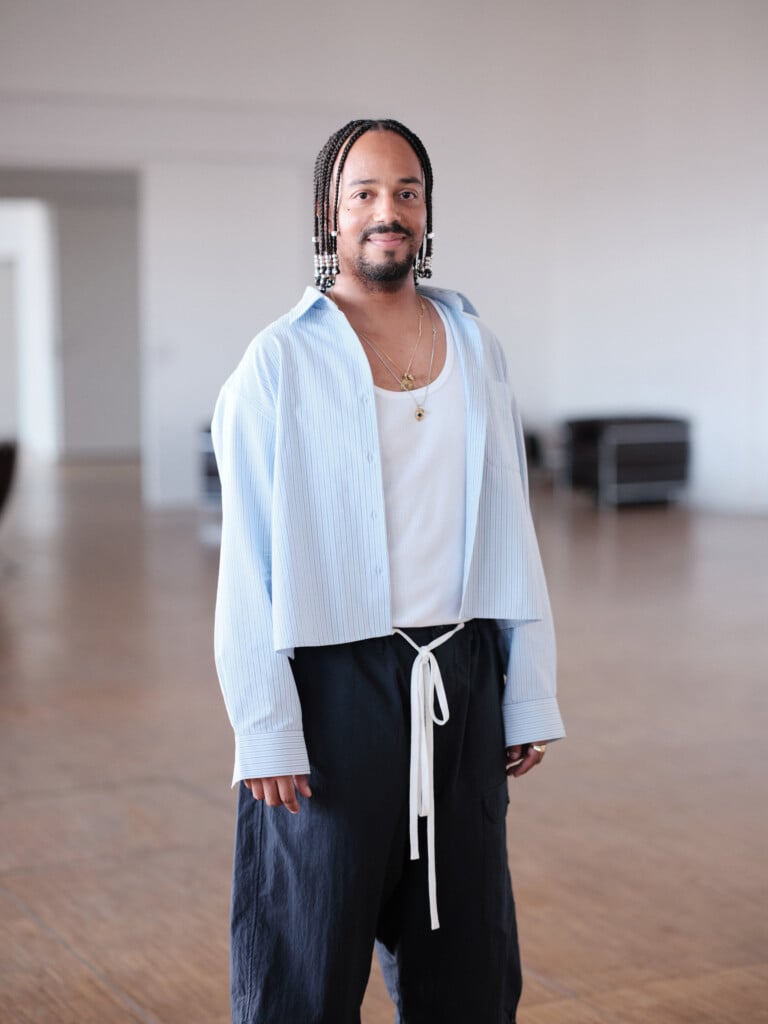
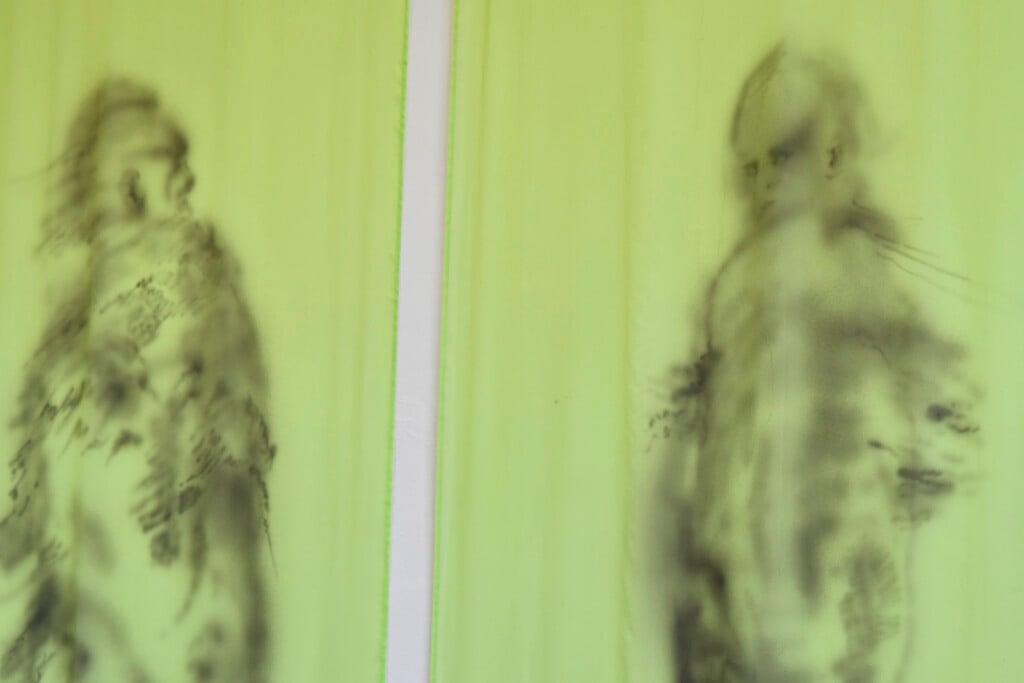
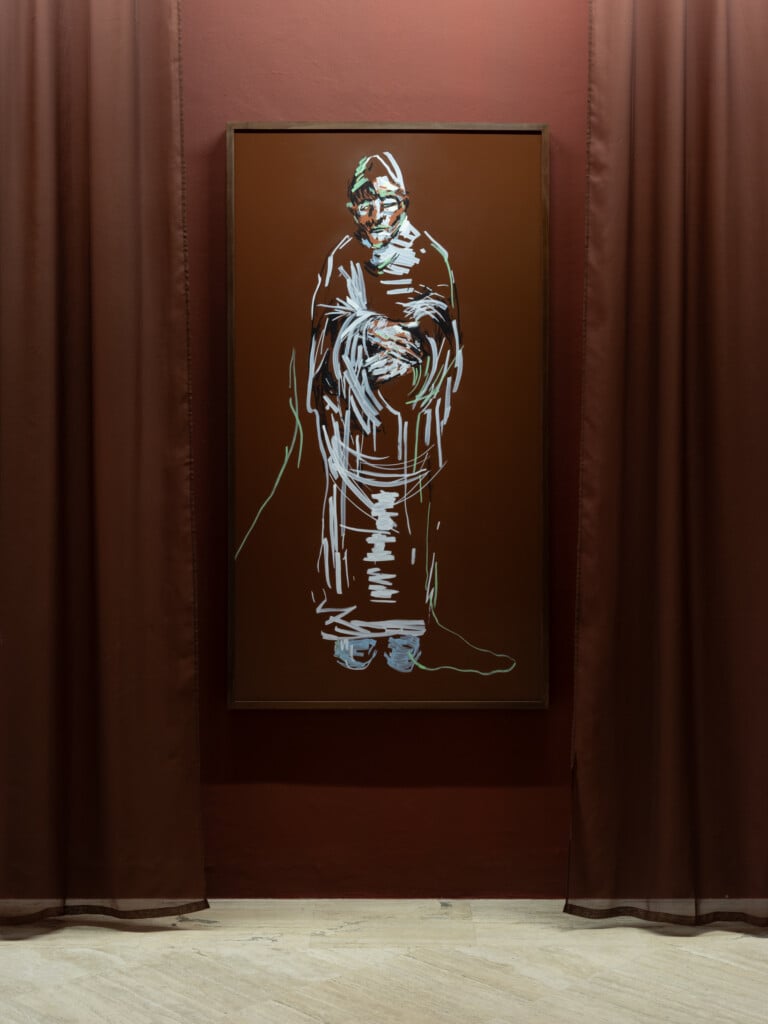
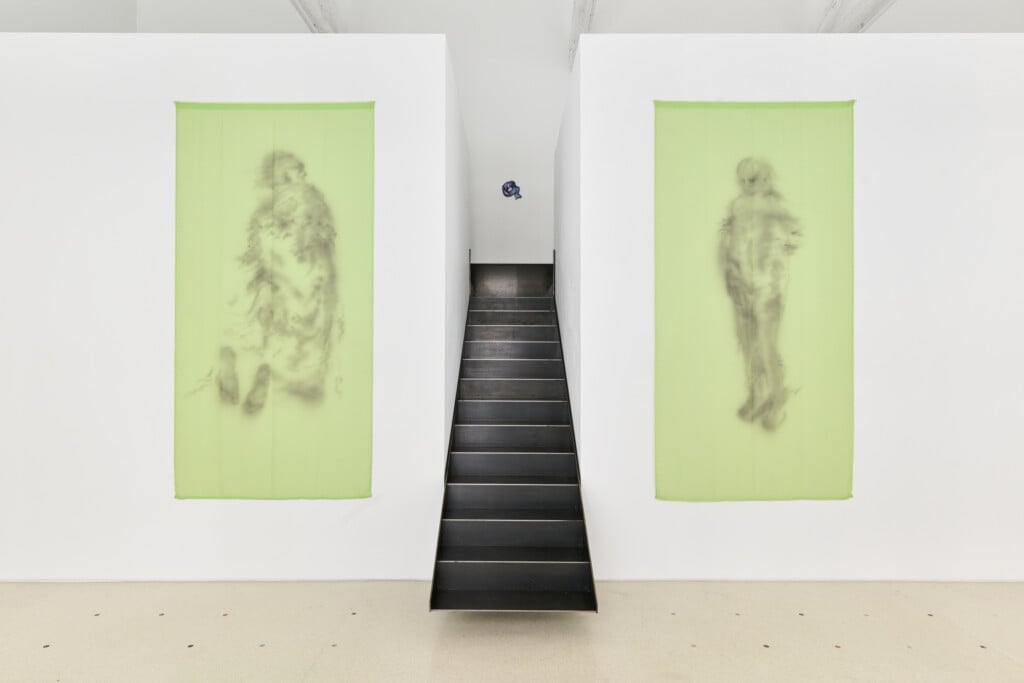
In the works of Paul Maheke, the body takes on an almost unreal consistency. The artist, whose research spans performance, installation, video, sound and painting, presents a series of works developed during his residency at Villa Medici in Rome, between 2025 and 2026. The starting point is a reflection on death and, in particular, on the way bodies are represented after they have gone. Observing the city’s funerary iconography, Maheke asks which lives were granted the right to be remembered and which, instead, were relegated to the margins of historical memory.
From this inquiry emerge figures that seem to surface and dissolve at the same moment. Painted on light fabrics such as silk, and on plexiglass surfaces, the presences take on a spectral quality. The transparency of the supports and the delicacy of the mark make it hard to tell where the image ends and the surrounding space begins. Viewers find themselves confronting figures that seem to belong to another time but, through reflection and overlap with the environment, end up entering their own space. Looking at these works therefore also means questioning one’s own position in relation to the stories they tell.
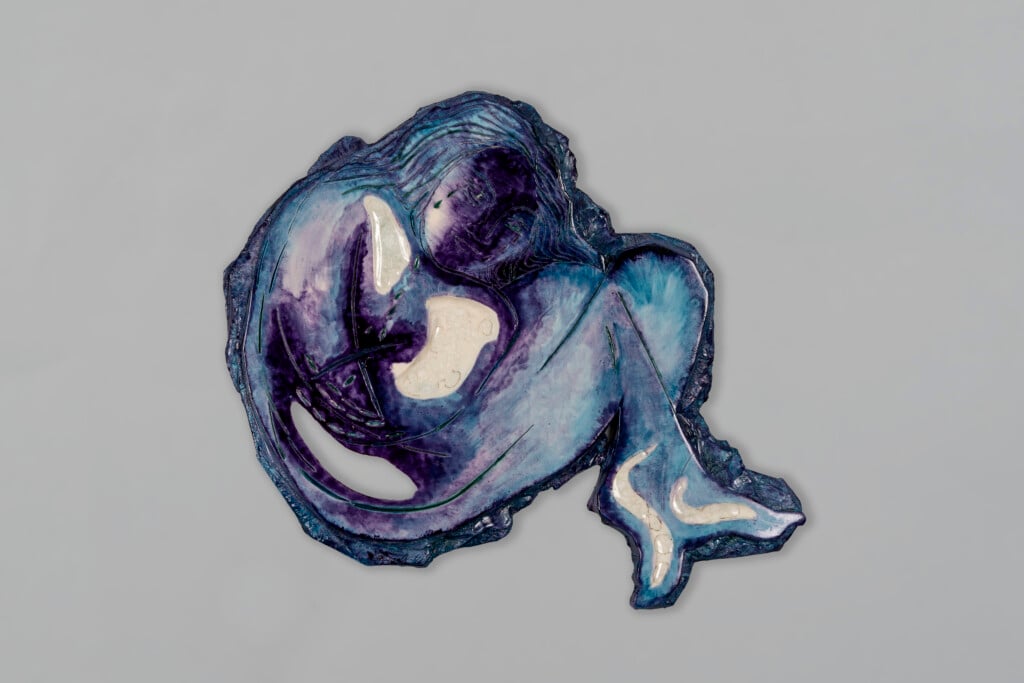
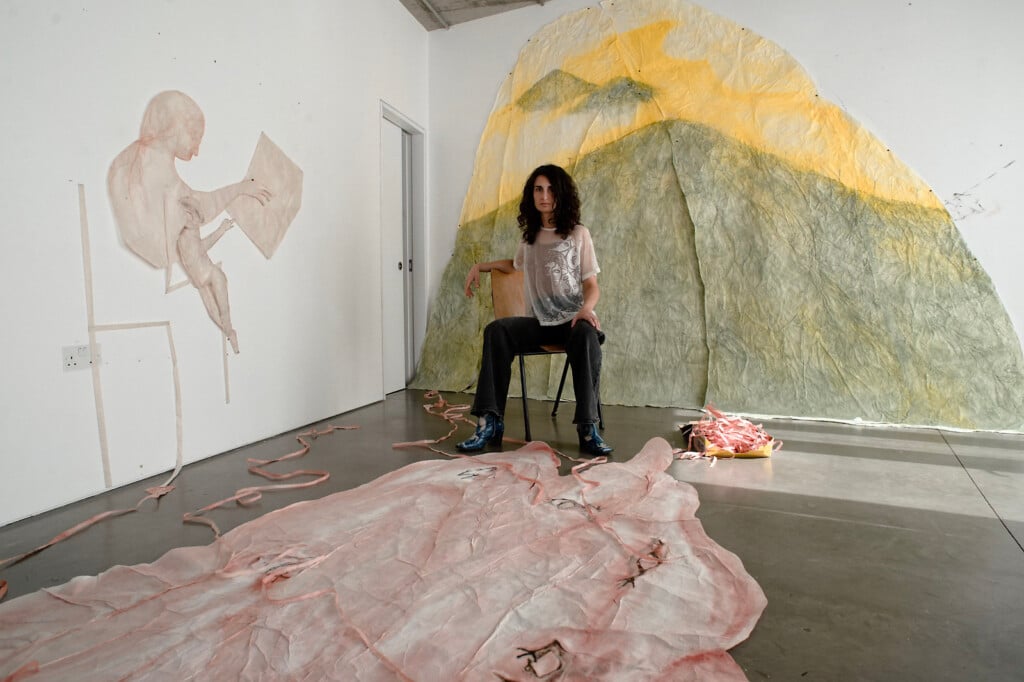
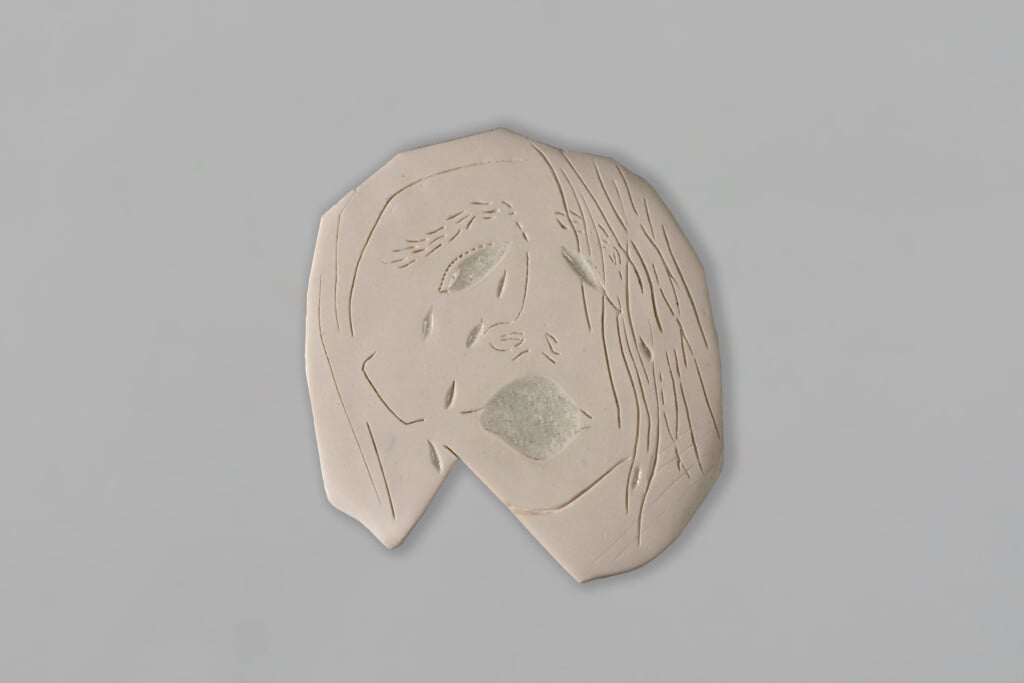
Another form of crossing emerges in the work of Gaia Fugazza, who investigates the relationship between corporeality, environment and knowledge through ceramics, drawings and works on paper. Her research often begins with physical and emotional conditions that are difficult to translate into images: crying, listening to external stimuli, involuntary movement, the passage from one state to another. In the small porcelain fragments made between 2023 and 2024, these experiences become forms, incisions and chromatic variations. The body is never isolated, but appears in constant relation with what surrounds it.
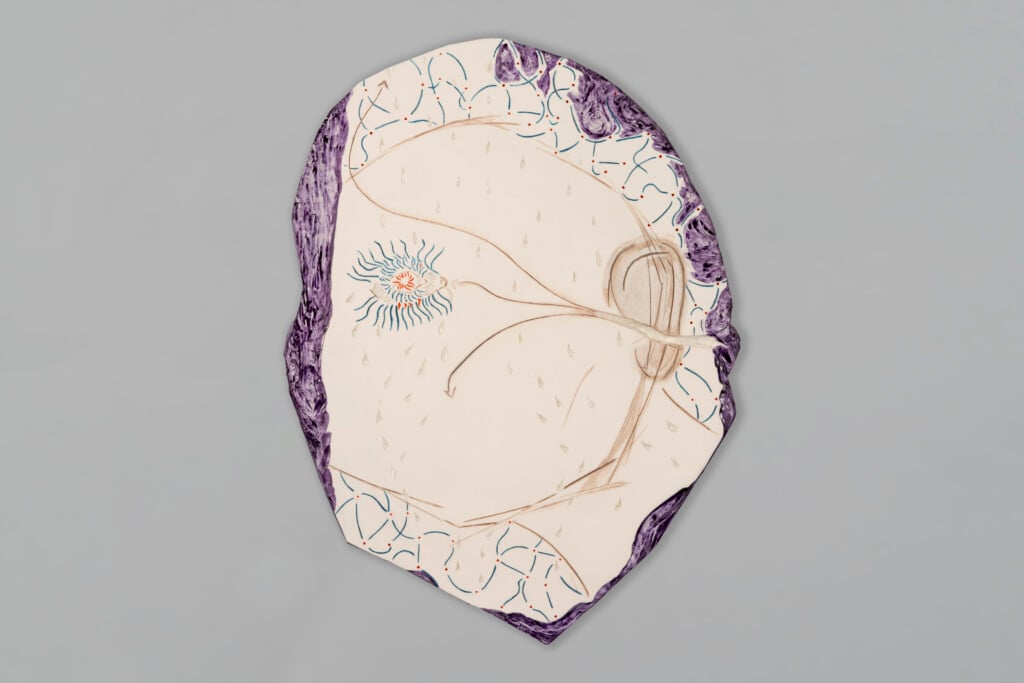
For the exhibition, Fugazza also presents a large work on paper created specifically for Artopia Gallery. At its centre is a reflection on the theme of burial, which also grew out of an engagement with the words of the Palestinian poet Batool Abu Akleen. The reference is to the possibility, denied by the experience of war, of having a place in which to be received after death. The grave is thus observed not only as a physical space, but as a place of rest, memory and dignity, capable of maintaining a bond between those who remain and those who are no longer here.
Alongside this dimension, the artist also addresses stories of geographical and social crossing. In the work on Japanese paper described by the curator, bodies move between Tangier and Tarifa, following the journeys of women employed in the seasonal strawberry harvest between Spain and Morocco. Their lives are marked by continuous ferry crossings, determined by the economic organisation of the crops. A condition in which movement, rather than representing a possibility of choice, becomes a necessity imposed by work. It is one of the most interesting aspects of Fugazza’s research: bringing to light often invisible lives, showing how a body can be crossed not only by emotions and natural transformations, but also by precise economic and political conditions.
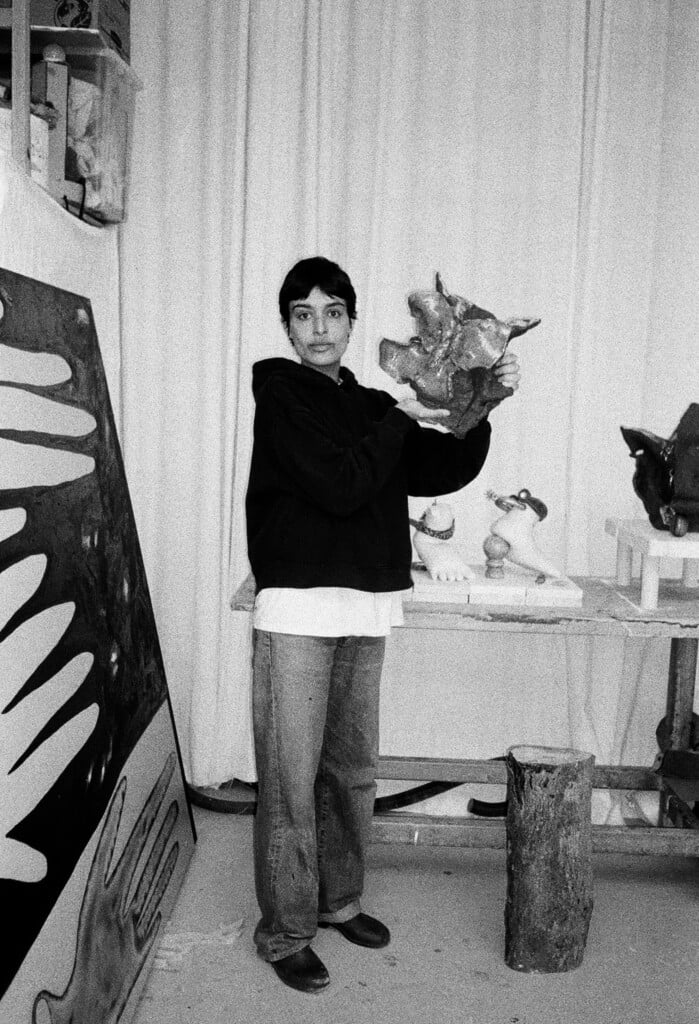
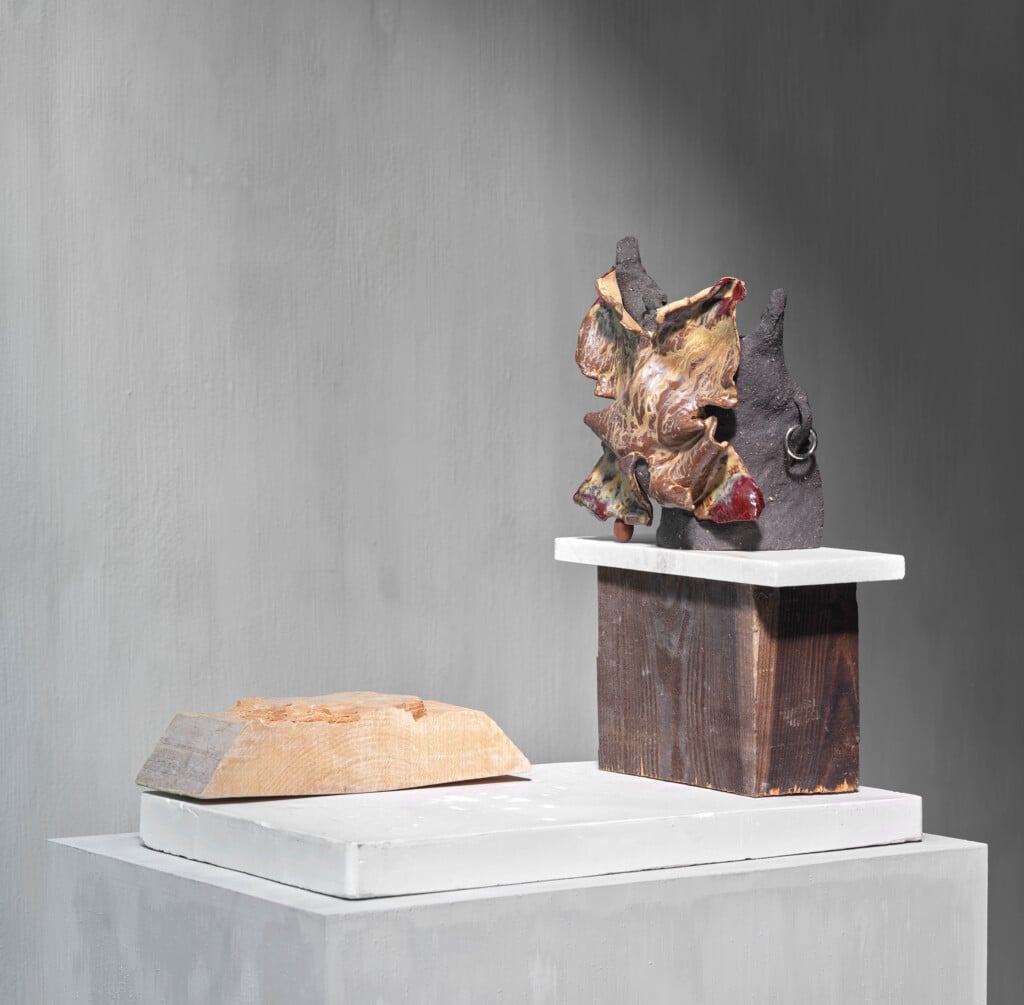
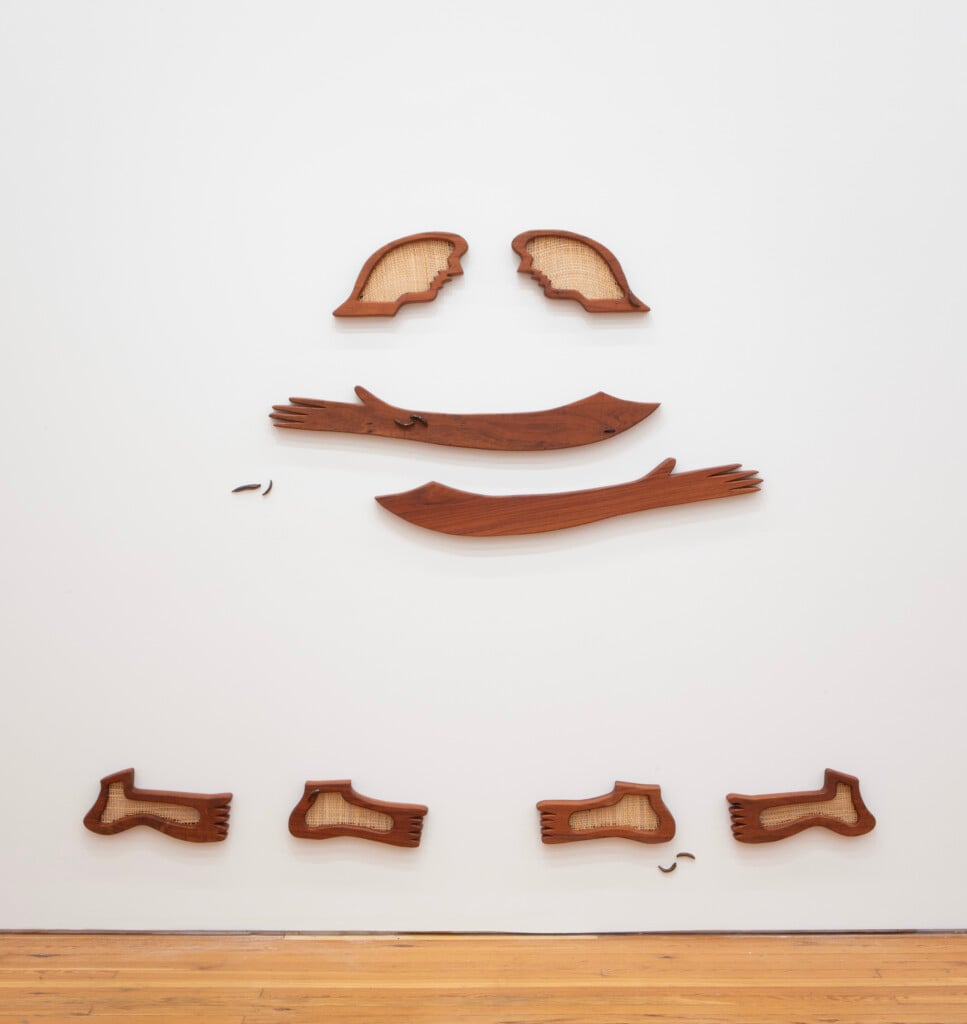
In the works of Anousha Payne, on the other hand, metamorphosis becomes a tool for questioning the boundary between human and animal. Her hybrid sculptures, made by assembling ceramic, rattan and wood, seem to belong to an imaginary in which folklore, animism and family memory coexist without hierarchies. Alongside these are works on fabric, populated by sinuous figures and organic forms that suggest identities never fully defined.
Animal transformation, a recurring element in the artist’s practice, is also tied to a reflection on origins and inherited cultural histories. Her works in fact evoke experiences of migration and colonial memories, asking what happens to identities when they are transferred, fragmented or reworked over time. In this sense, the relationship between species also becomes a metaphor for the possibility of belonging to more than one world.
A personal episode, recounted by Elena Forin in the curatorial text, further clarifies this direction. Payne developed a work based on the relationship between an imaginary female figure and an animal that had frequented her garden for years. After the creature’s death, the artist observed the transformation of the body during cremation and burial, dwelling also on the visual effects produced by combustion, including a trail of blue smoke. From this experience comes a reflection on the continuity between forms of life, on loss, and on the possibility of recognising oneself in an existence different from one’s own.
Presence as a form of otherness
What brings the three artists together is therefore not a formal similarity, but a shared way of looking at existence as something unstable, shaped by changes and relationships that exceed individual boundaries. Their works move between very different experiences, yet return to question a common issue: what remains of a body when its conditions change, when it is marginalised, when it crosses a territory or when it transforms until it becomes something else? In the critical text accompanying the exhibition, Elena Forin identifies precisely in this distance between the body and the wider context of their research the meeting point of the three artists. Presence is interpreted as a form of otherness, attention and awakening, capable of challenging habitual readings of reality. The works of Fugazza, Maheke and Payne open a space in which the distinction between human and non-human, visible and invisible, past and present progressively loses its rigidity. And where the body, rather than representing a definitive identity, becomes the place from which to rethink our relationship with others and with the world.