The work of Belgian designer Mathilde Wittock starts from materials to arrive at something more difficult to design: a sensory relationship with objects. Wittock looks at what we normally consider waste, a residue, or matter still without a defined function, and tries to understand what it could become, ranging from used tennis balls to plant roots.
In the designer’s work, sustainability is the starting point of a research that brings together biodesign, materials science, industrial design and sensory perception. Her studio MWO, founded in Brussels in 2024, currently works on local, renewable, waste-derived materials, developing them for furniture, surfaces and acoustic installations. Defining Mathilde Wittock simply as a “sustainable designer” risks being reductive, because her interest lies not only in where a material comes from, but also in what that material allows us to feel.
Wittock works with materials that come from biological processes or waste streams, and tries to preserve their circularity as much as possible. The result, however, is not an easily recognizable “green” aesthetic. On the contrary, some of her projects start from materials so everyday that they become almost invisible.
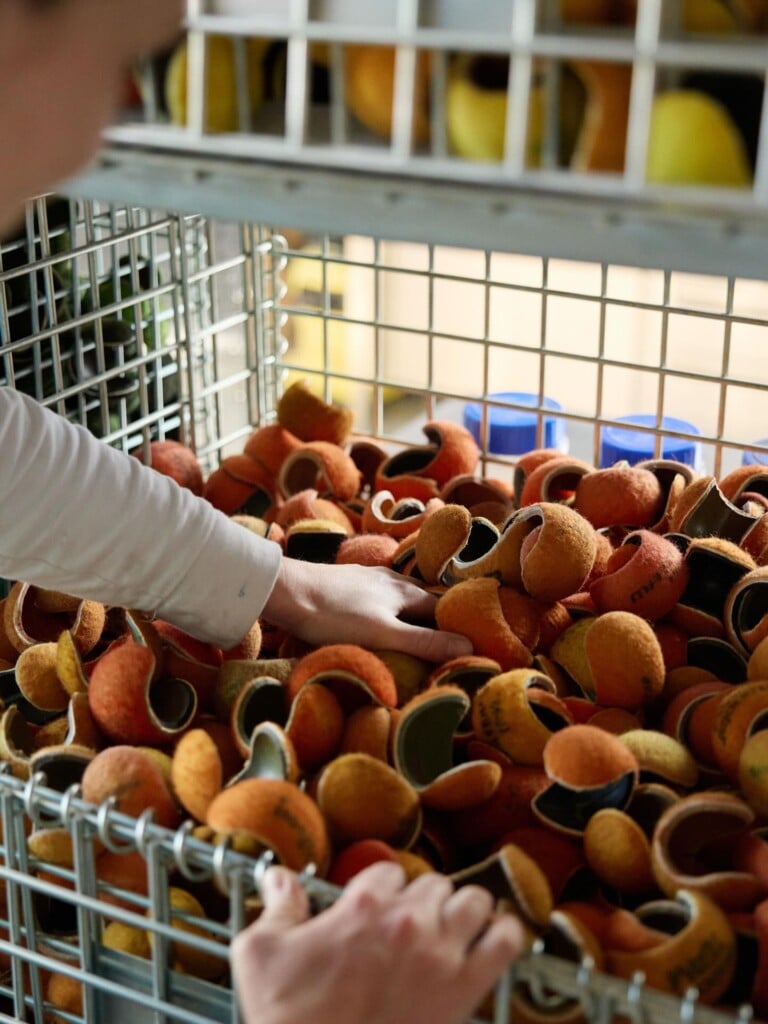
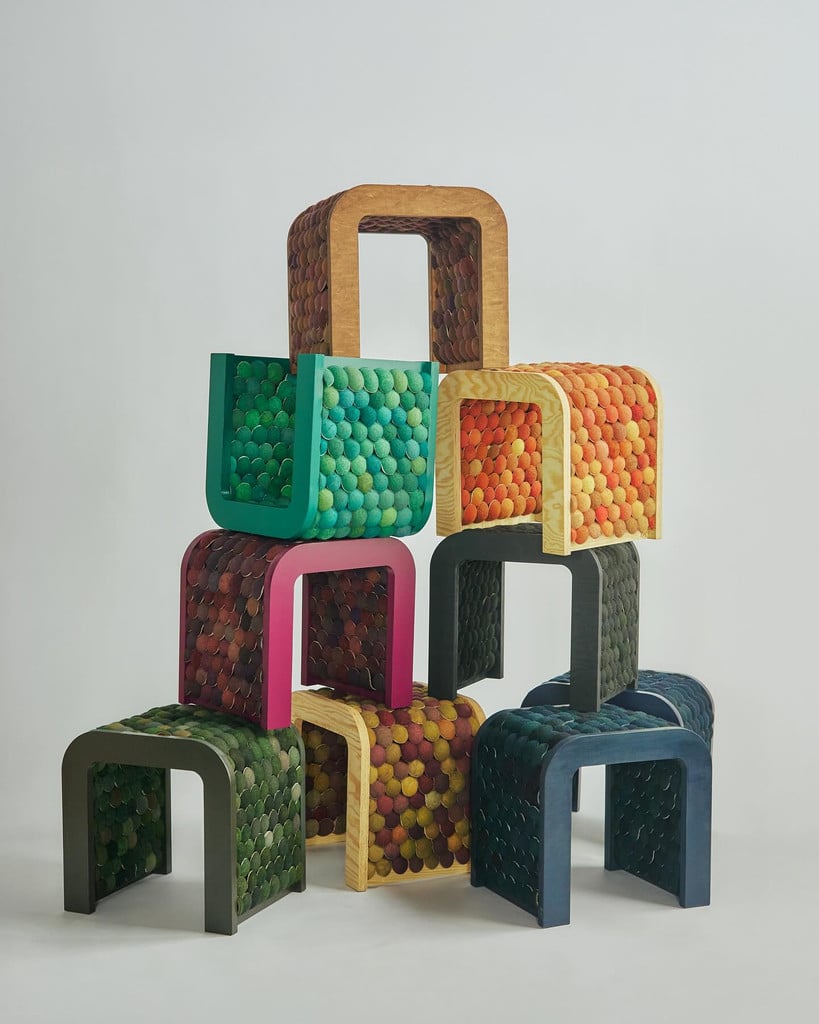
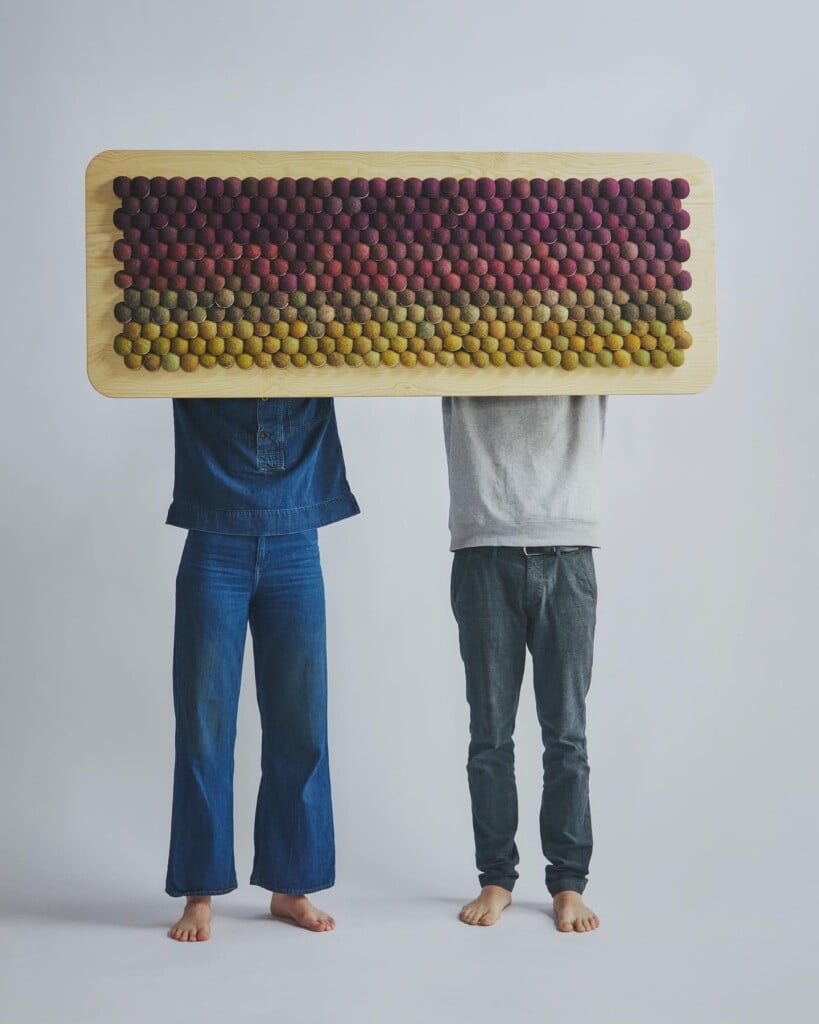
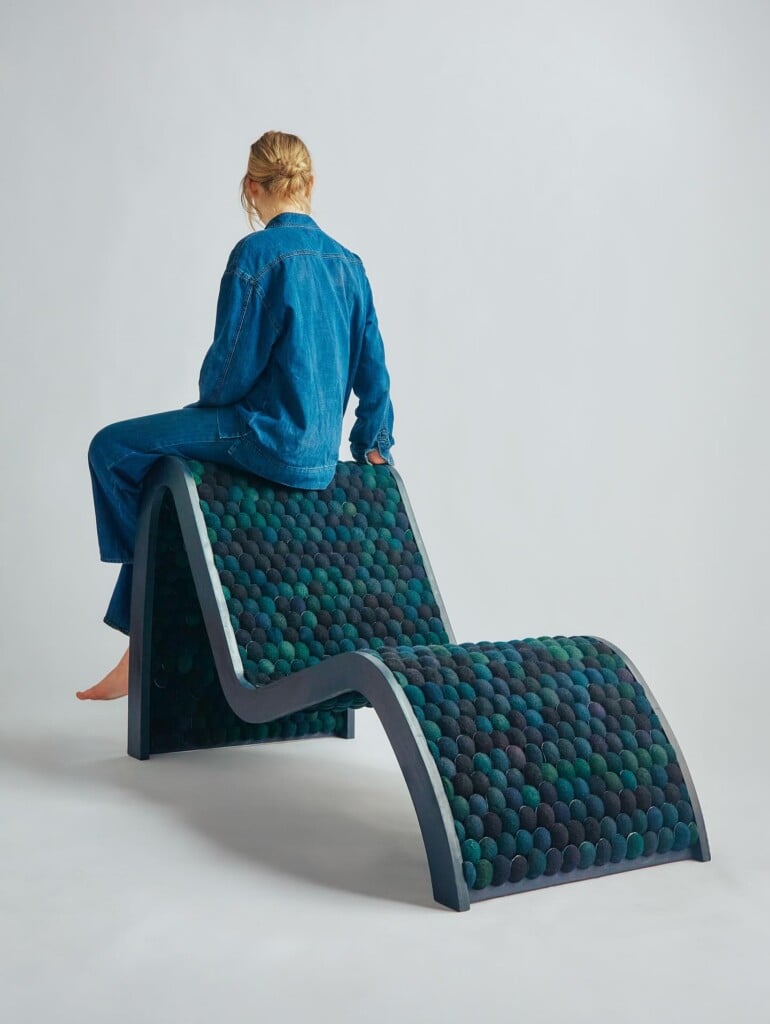
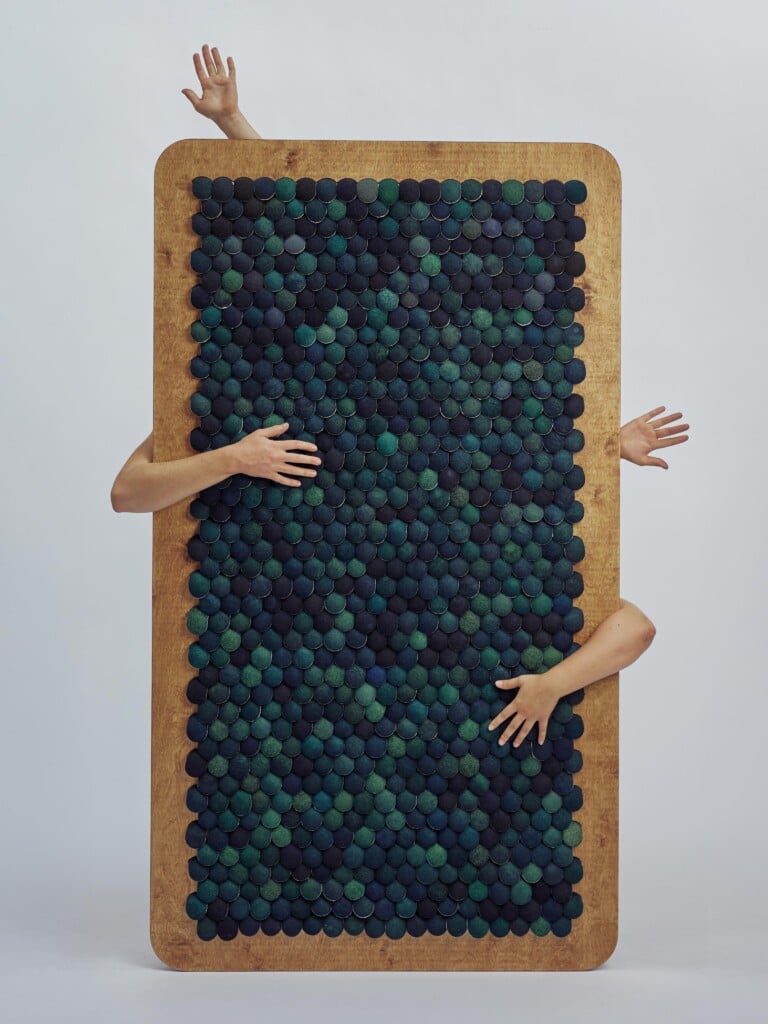
The project that has drawn the most attention to her work originates from a surprisingly common object: the tennis ball. Wittock collects worn-out balls in Belgium, cuts them by hand along the white line, and uses the two halves as modular elements to create surfaces, seats and panels. The material thus retains its physical identity but loses its more immediate visual one, as the fluorescent color and references to the world of sport are replaced through pigments and colored oils. The half-spheres are assembled onto wooden structures in modular configurations that recall textile surfaces or scales. Rubber and felt, materials born to withstand impact and friction, thus become a soft, tactile surface for the body and, at the same time, a material with acoustic properties.
In the most recent developments of her research, Wittock has focused increasingly on acoustics. Her studio describes this direction as an investigation into how materials can influence how we feel, listen to and inhabit a space. In parallel, Mathilde Wittock collaborates with a university on research into the acoustic properties of materials. It is a natural extension of her idea of sensory design. An object, in her practice, does not necessarily have to be beautiful only when looked at. It can be interesting for its surface, for the way it responds to touch, for the quality of the sound it absorbs or reflects, even for the way it alters the perception of a space.
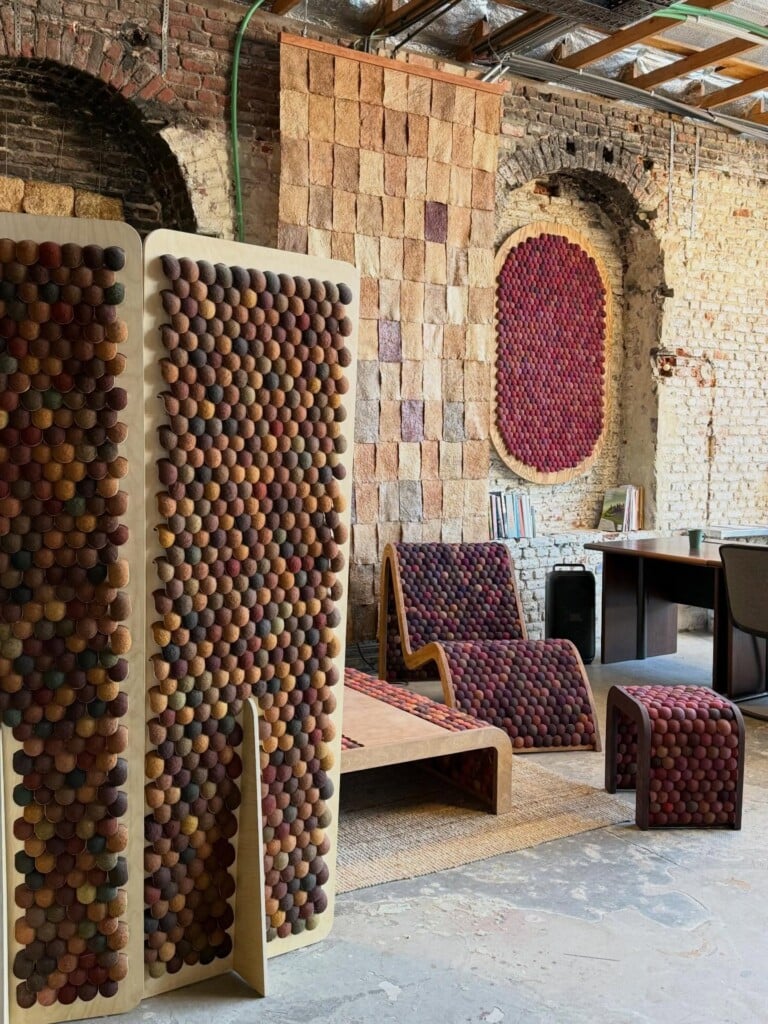
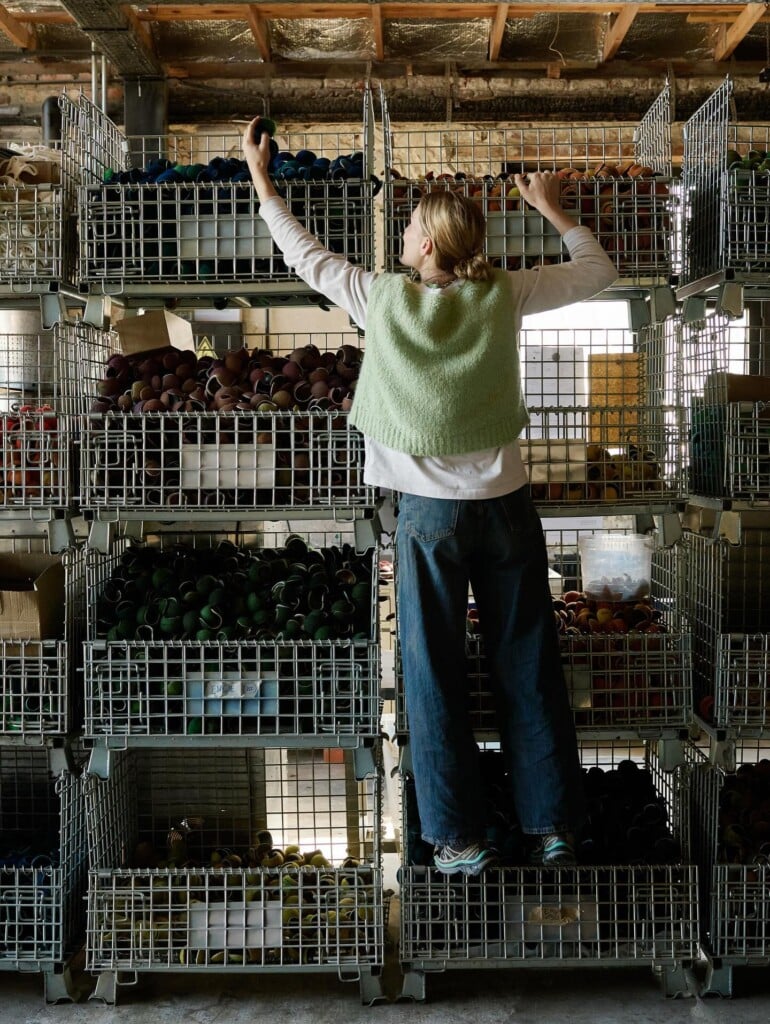
In MWO’s studio, this research is gathered into a series of studies exploring themes such as Fractals, Cell Division, Collective Light, Soundscapes and Root Stem Cells. Rather than a collection of finished products, they seem like chapters of an ongoing research into the relationship between matter, biology and perception.
What makes Wittock’s work particularly interesting in the landscape of contemporary design is that imperfection is not necessarily corrected. When the material comes from a living organism or a recovered object, variability is inevitable. Texture, color, density and shape change. In a traditional industrial system, this variability is often a problem to be eliminated. In biodesign, it can instead become a feature of the project.
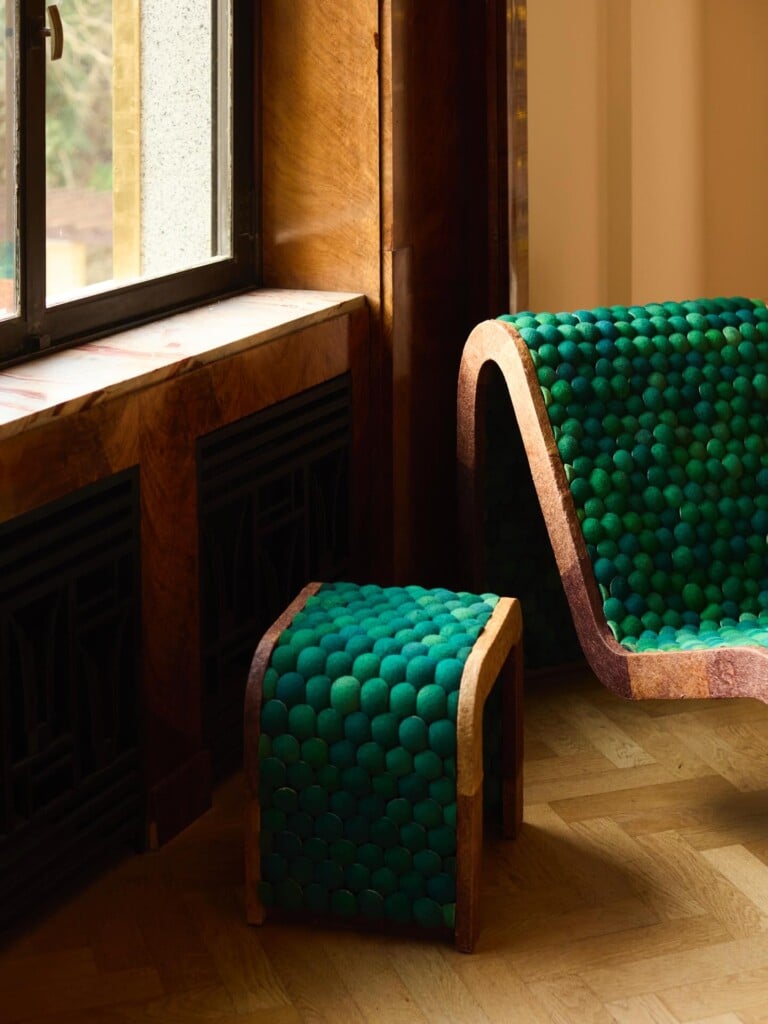
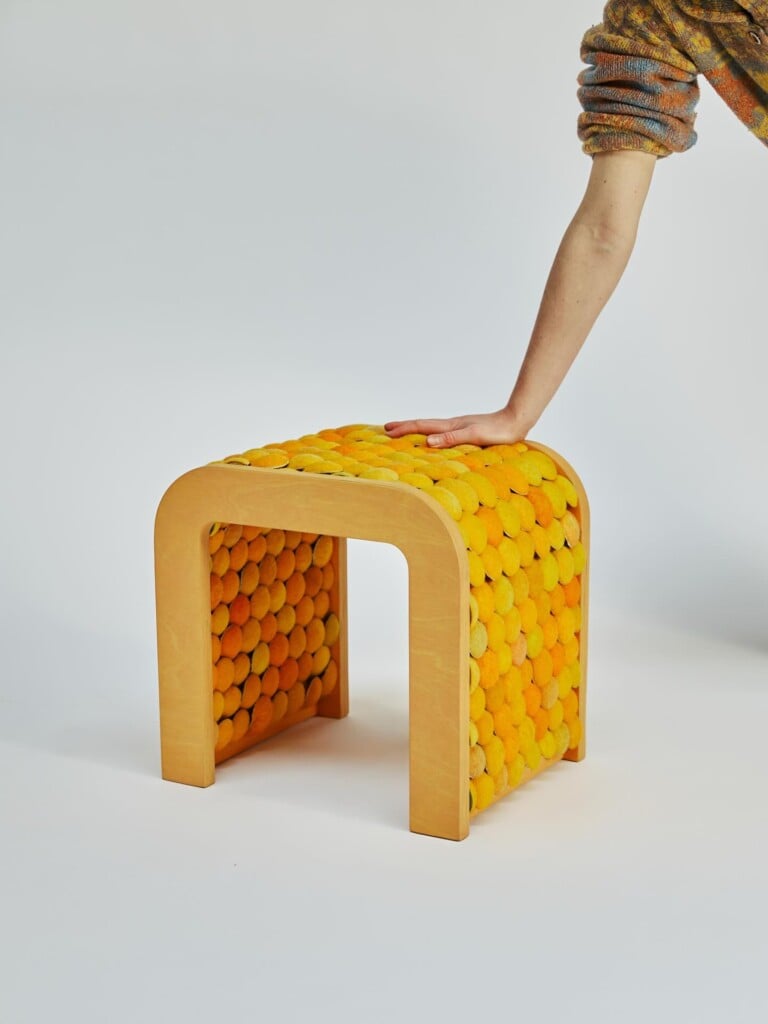
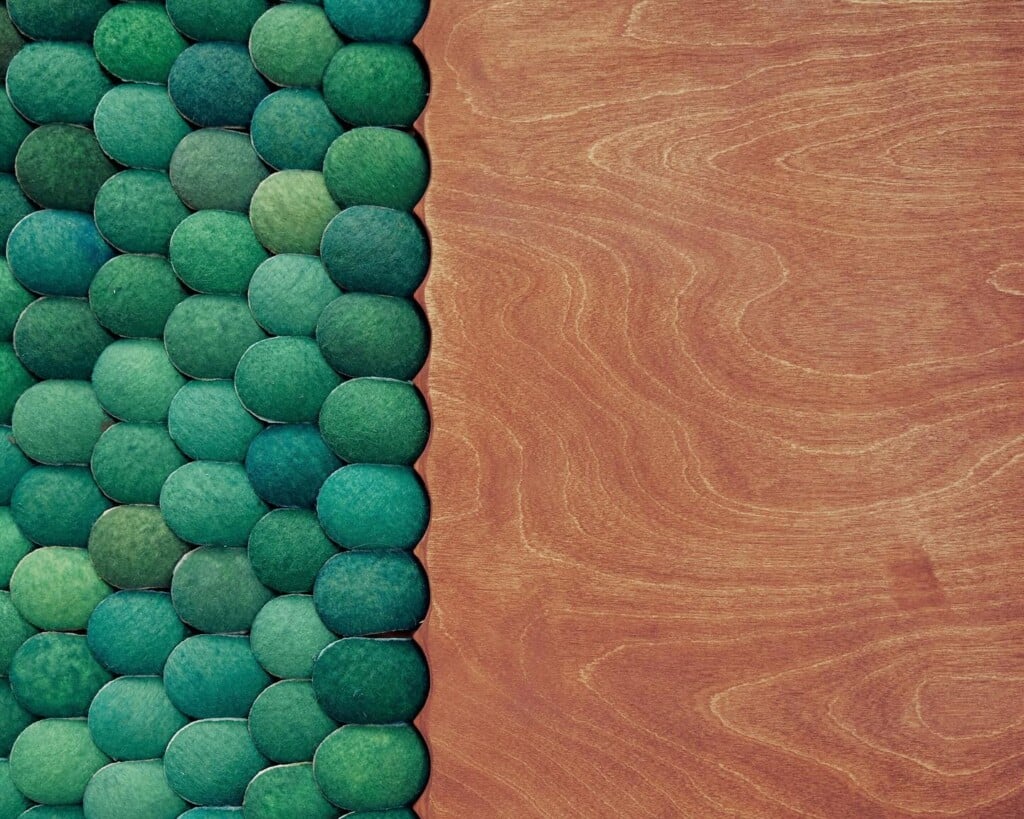
Her design suggests how objects can have a past, show the process through which they were born, and even retain part of the unpredictability of the matter they come from. And this is precisely the most interesting part of Mathilde Wittock’s research, which uses design to make the history of materials visible and tactile.