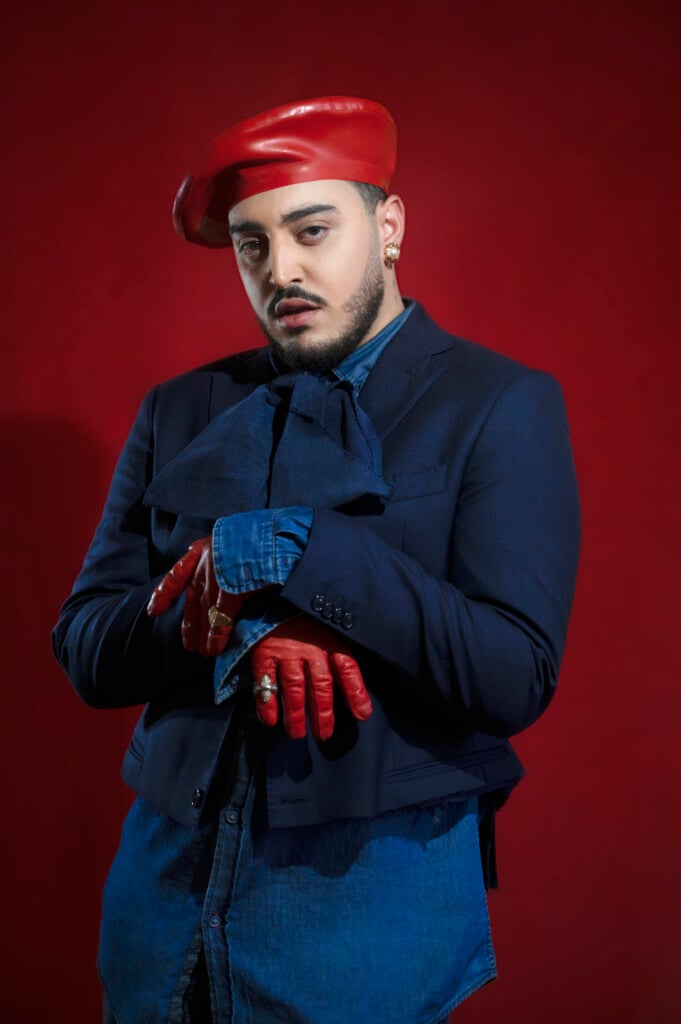
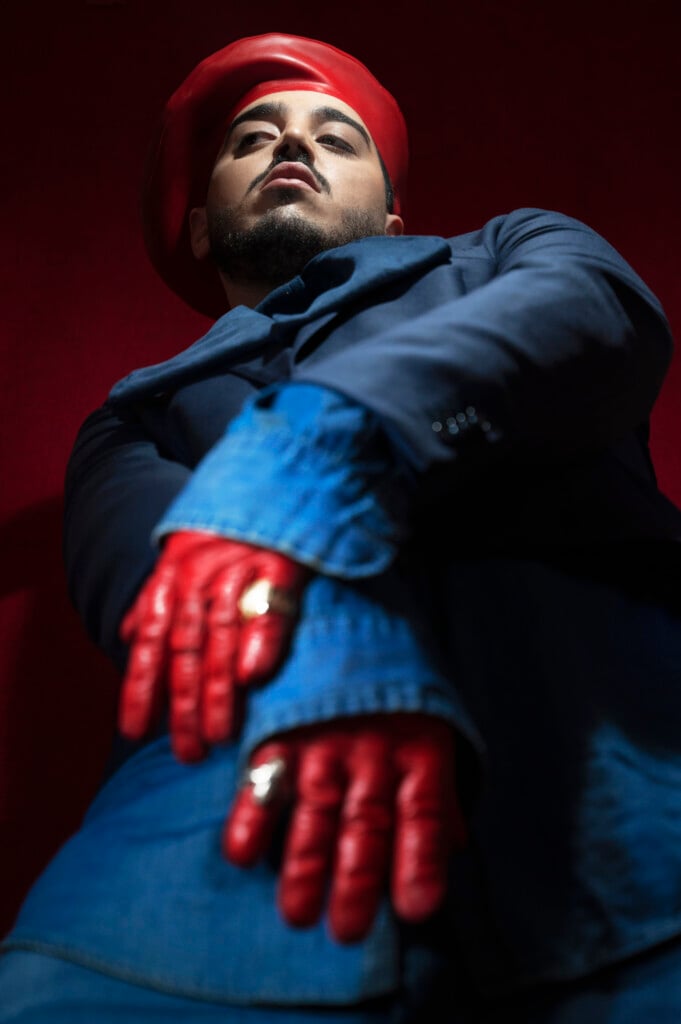
Today marks the release of Viscardi‘s latest single, MY LADY – a track born from the collaboration with young producer and musician Giada De Prisco, born in 2004. The passion for Neo Soul – fueled by «deep and repeated listening to artists like Erykah Badu, D’Angelo, Lauryn Hill, and Jill Scott,» as Viscardi himself tells us, has significantly influenced his musical journey, inspiring him to create songs that reflect on the complexity of human experiences. The styling – and especially the accessories, as we will see shortly – are a fundamental component of Viscardi’s identity. Specifically, Simone Folli – who is also the stylist for Anna Tatangelo and Rosa Chemical – has created a well-defined aesthetic vision, closely aligned with the musician’s R&B suggestions. Hats are the most important accessory in this vision, a true declaration of style and personality. In this interview with Viscardi and Simone Folli, we discussed these themes, intertwining the stylistic choices of this duo with the musical context of an emerging artist aiming to make a significant impact in the Italian R&B scene.
How did you meet and decide to start this collaboration?
V: This collaboration came about entirely by chance thanks to Giada Ramera, the photographer following this new musical project who immediately saw its potential and introduced me to Simone Folli. The collaboration was smooth and genuine: the music naturally inspired the style we see today, curated by Simone. I thank him for immediately understanding the imagery I wanted to evoke and for enriching it with his touch.
MY LADY è il tuo nuovo singolo in uscita. Come avete deciso il concept dello styling legato a questo brano? Quali sono state le ispirazioni?
V: ‘MY LADY’ was the starting point to identify and mature my new sound, rich in R&B/Neo Soul influences and sonorities. The musical production evoked an elegance that we wanted to reflect in the styling as well, creating a dreamy atmosphere. Simone Folli and I quickly agreed to draw inspiration from the Buffalo style of Ray Petri, the famous stylist who dominated the fashion scene in the ’80s.
SF: Exactly! Petri was the first to seek strong contrasts, playing with gender and mixing elements of different cultures and subcultures, always keeping the subjects’ attitude and personality at the center. The Buffalo Style aesthetic was raw, bold, and unrefined, characterized by oversized silhouettes, layered outfits, and the distinctive use of accessories like hats and jewelry. It integrated urban streetwear into high fashion, creating hybrid and unique looks. This approach seemed perfect to define Viscardi’s artistic identity. One of the fundamental elements of the Buffalo Style was the headgear. Hats have always fascinated me since I was a child, thanks to my mother, a milliner and hat collector. From the most classic ones to the more elaborate ones with feathers and metal plates, like those of Philip Treacy, who transformed hats from mere functional accessories to central elements of high fashion. Treacy brought a touch of fantasy and innovation that continues to influence the contemporary fashion world.
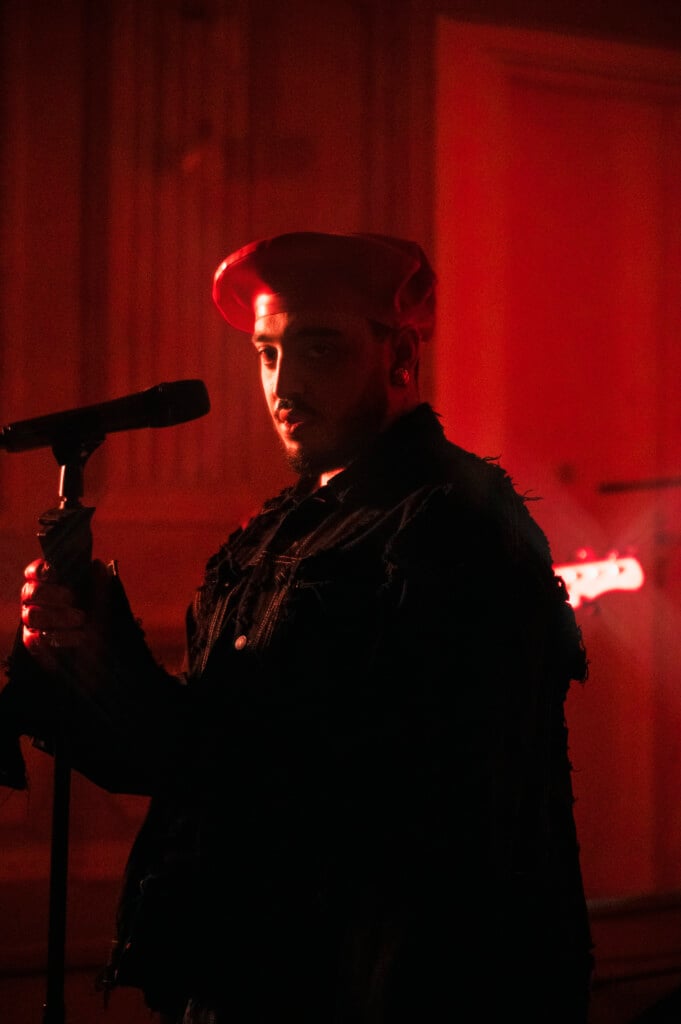
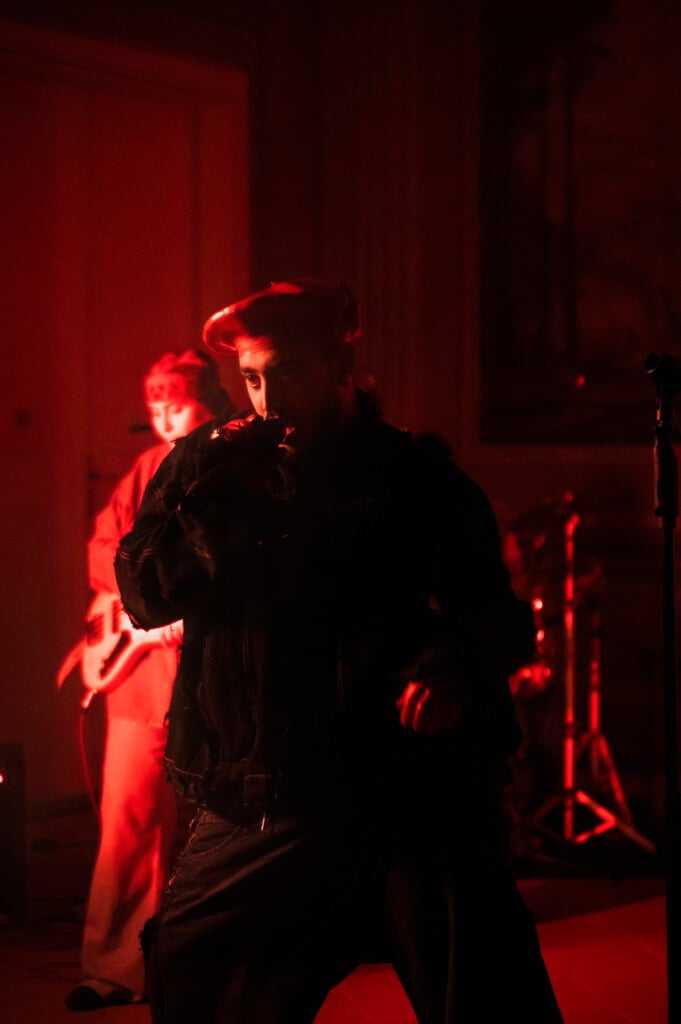
The hat is a central element not only in LADY but also in other appearances and music videos. What is behind this attention to the theme? What attracts you, and how do you choose the hats to use?
V: Since I was little, hats made me feel comfortable and gave me more self-confidence, completing my daily look. Today, I see them as a fundamental accessory that defines and encapsulates my style. This connection with Simone’s world brought us closer even before we fully knew each other. It was natural and smooth to integrate something so personal and significant for both of us.
SF: One of the fundamental elements of the Buffalo Style was the headgear. Hats have always fascinated me since I was a child, thanks to my mother, a milliner and hat collector. From the most classic ones to the more elaborate ones with feathers and metal plates, like those of Philip Treacy, who transformed hats from mere functional accessories to central elements of high fashion. Treacy brought a touch of fantasy and innovation that continues to influence the contemporary fashion world.

How has the visual language of fashion helped you express yourself? In the music world, who do you admire for the way they use clothing?
V: For me, fashion is not just clothing but an extension of who we are and who we like to be. Often, we need to reinvent ourselves and discover new sides of ourselves. It’s not lying. We have examples in the music world that, through fashion, have changed rules and ways of doing things, reinforcing messages and fighting ideals. Artists like Prince, Erykah Badu, and Rihanna have built powerful stories, giving voice to new messages and ways of seeing things. This has always pushed me to achieve strong self-awareness so I can demonstrate every side of myself, telling my ideals.

How has your relationship with fashion changed over time?
V: I was born in a family context very free about personal choices. My mom created her own looks without asking too many questions and always showed how confident she felt with the clothes she wore. This influenced me to want to feel free to express myself through clothes. However, social contexts during childhood can fuel insecurities and standards to follow, so more than time, I would focus on the society in which one grows up. The society I grew up in made me understand how difficult it is to express oneself without being judged and how this can trigger behaviors that are not at all fluid and sincere.
Fortunately, I managed to turn this difficulty into a message, giving space to what I felt I was and continuously evolving my style. Over time, I reinforced this concept, bringing my relationship with fashion to an increasingly confident level.
ph. courtesy Giada Ramera