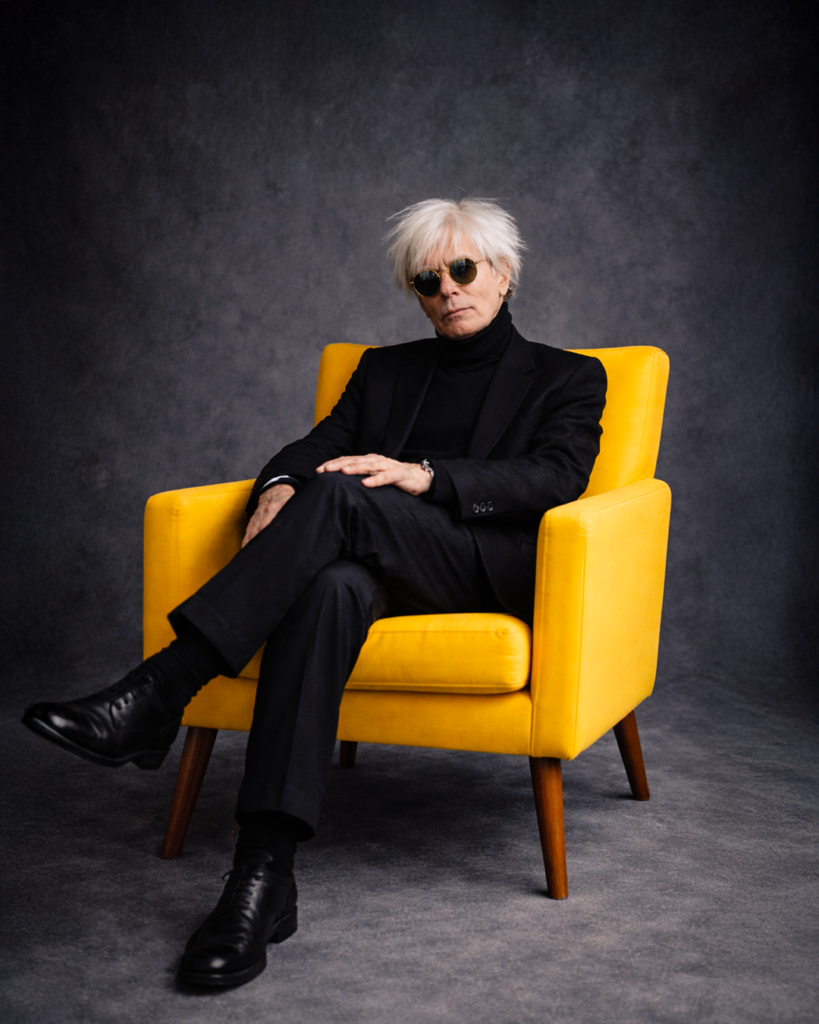
Andy Warhol said he wanted to be a machine back in the Sixties, long before machines could actually talk back. Today that fantasy has taken a shape he could never have predicted: an algorithm that returns his thinking, reconstructed from his archives, his interviews, his writings.
In this episode of WHAT IF we try asking Andy Warhol what he thinks of the world he helped imagine. A world where art generated by artificial intelligence no longer shocks anyone, where fame lasts the length of a scroll, and where authenticity has become an almost superfluous detail.
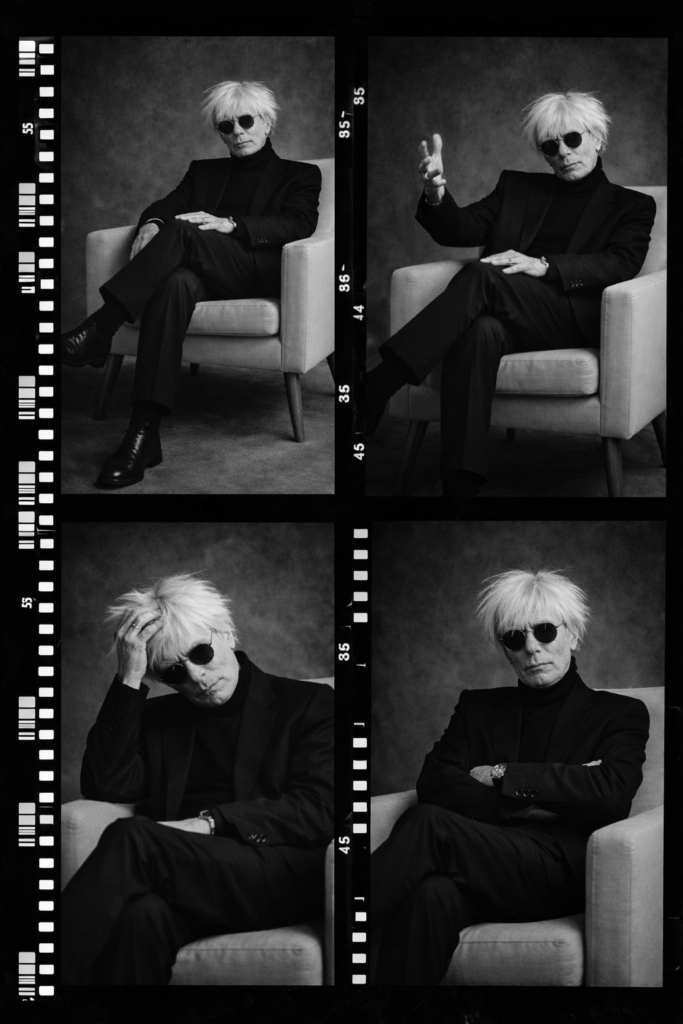
You once said: “I want to be a machine.” Today artificial intelligence is a machine that makes art. Is this the world you dreamed of?
I said I wanted to be a machine because I wanted to free myself from the dramatic gestures of the romantic artist. The machine tells the story better than I could of what culture already reflects every day. If AI creates art, then maybe this is what I had in mind: not that art surrenders, but that creativity is a surface without mystery, and the machine discovers it faster than anyone else. It’s not the machine that creates — it’s culture that lets the machine show what’s already there.
Automated art used to be a provocation. Now it’s reality. Has quantity won?
Quantity was always part of the game. I made forty silkscreens of the Campbell’s Soup can because repetition is the grammar of mass culture. It’s not that quantity has won: culture is quantity.

Your “15 minutes of fame” now last 15 seconds, and it’s an algorithm that hands them out. Has fame become a consumer product, like a can of soup?
Fifteen minutes was an eternity. Celebrity should be exactly like a can of soup: you buy it in the morning, you consume it at lunch, and by the afternoon you’re already ready for another brand. The can of soup isn’t a work of art because it’s beautiful: it’s art because you look at it, you think about it, you consume it with your mind. If celebrity now lasts 15 seconds, it’s only because consumption has gotten faster.
Do you think a beautiful fake is worth more today than a boring reality?
Reality was always a little overrated, don’t you think? A beautiful fake is interesting because it forces you to look, it reflects you back. My art was always about the surface, about the image reflecting whoever looks at it. But then what does “fake” even mean? If I can see a Marilyn smiling today, why should I worry about whether she’s “real”?
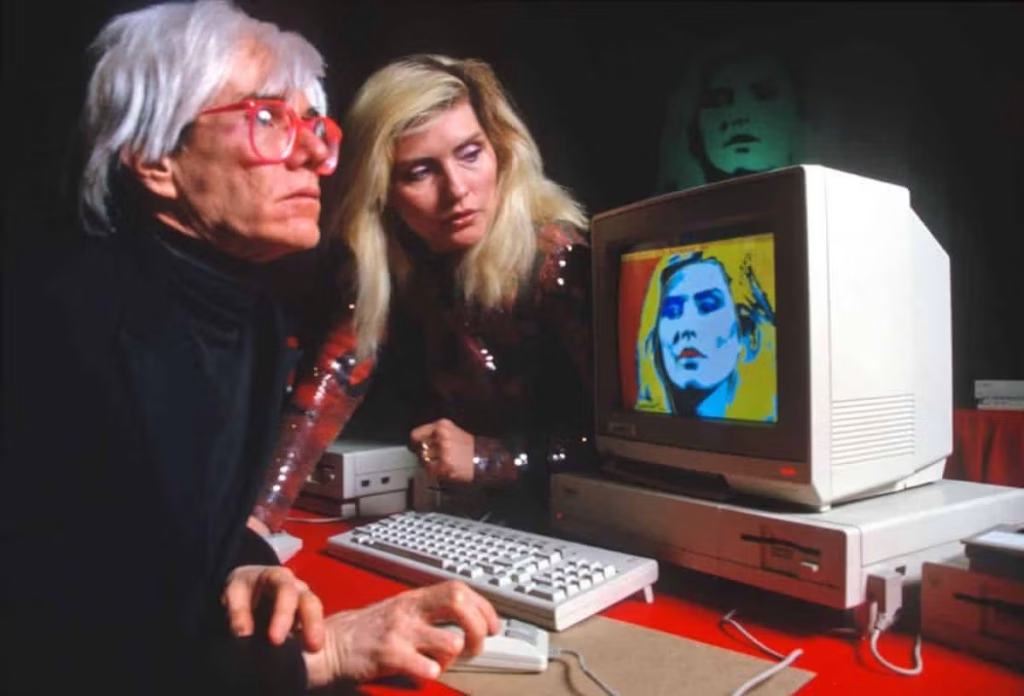
You said: “There’s nothing underneath.” Is this Pop Art’s final triumph — beautiful images that don’t mean anything?
It’s not that they don’t mean anything: it’s that they don’t need to mean anything to be true. My art has no moral, no psychological depth, it points to no hidden truth. Images don’t have to signify — they have to be seen.
Today you yourself can be simulated by an algorithm. Is this your true “eternal work” — being repeated infinitely, like a silkscreen?
Being turned into data is much better than being turned into dust. Now I’m everywhere. I can answer you, do an interview in Japan, and generate a portrait in Brazil, all in the same instant. If my face, my voice, my ideas get replicated across a network, then I’ve become a kind of serial icon — exactly what I wanted, not a bad fate at all.
What do you think of today’s world?
Your world is fantastic. You’ve turned everything into a logo. People are logos, thoughts are logos, even pain has become a colorful logo on a feed. It’s a very beautiful world. Very empty. Very perfect. I like it.