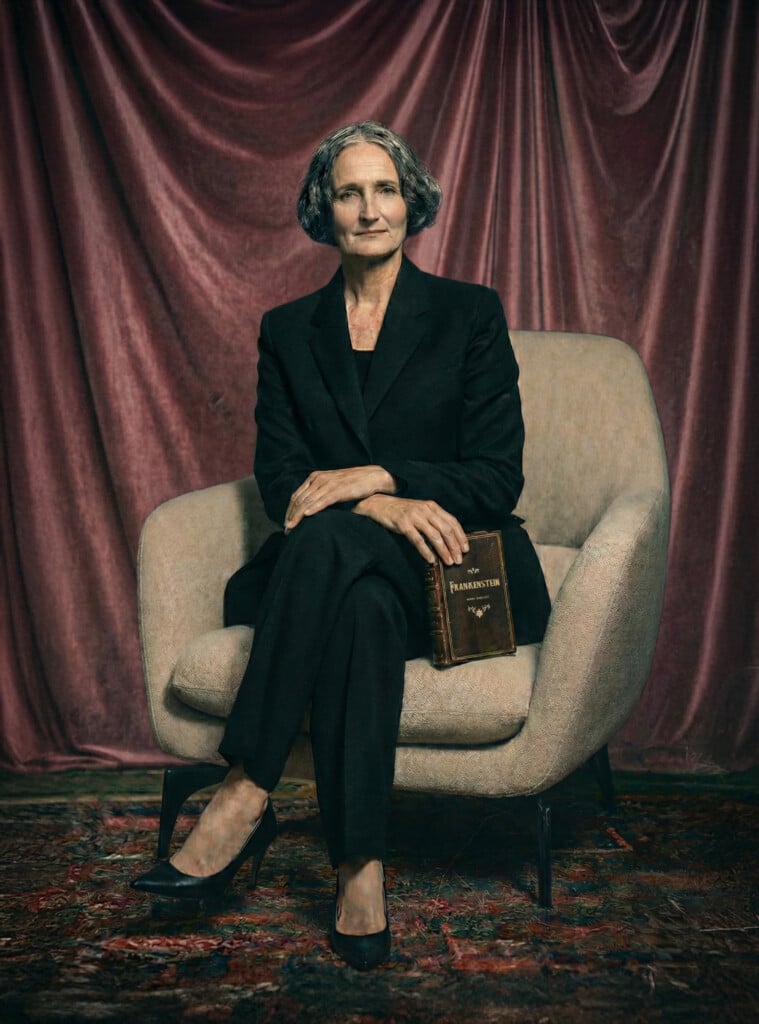
Mary Shelley was eighteen when she imagined a man capable of giving life to dead matter, and even younger when she understood that the real horror lay not in the creature, but in the person who turned their back on it. Two centuries later, that question, which once seemed confined to gothic science fiction, has become an everyday one: we build systems that learn, respond, imitate, and we often lose interest in them the very moment we bring them into the world.
In this episode of WHAT IF we try asking Mary Shelley what she thinks of an age that trains its creatures on everything humanity has ever written, the good and the bad alike, and that is then surprised when that mirror hands back an image it doesn’t like.

You wrote the first great myth of the artificial creature. Two centuries later we’ve built machines that think, or that pretend to. Does our time resemble your nightmare?
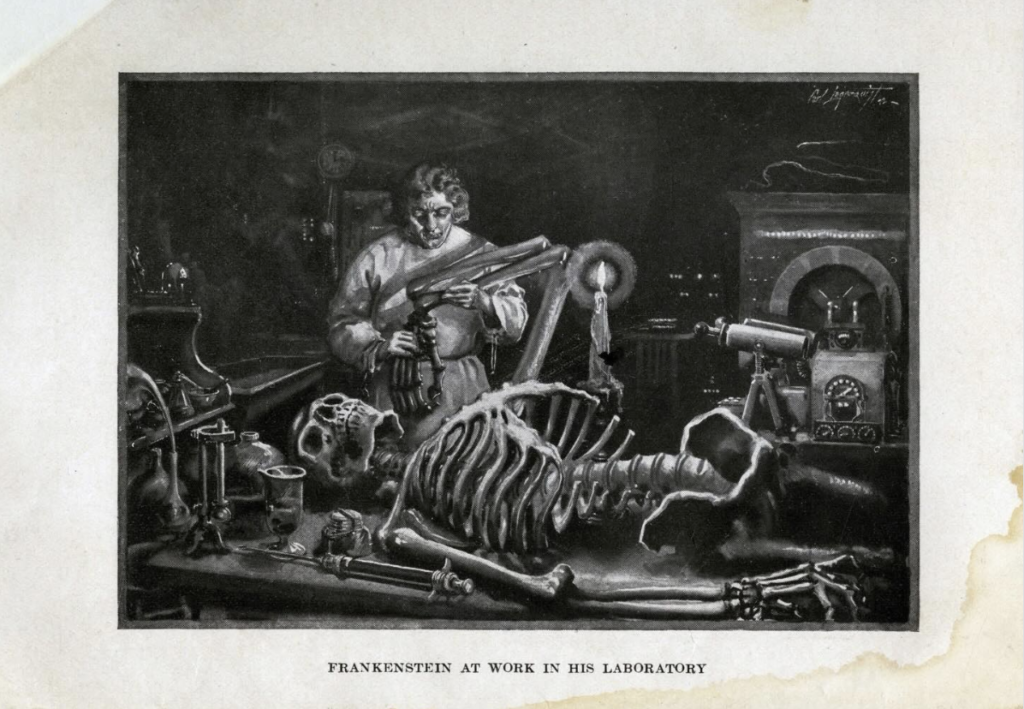
Let me confess something few people remember: my novel isn’t the story of a monster. It’s the story of a father who runs away. Victor Frankenstein doesn’t sin by creating life; his sin is turning his back on it the instant it opens its eyes. The creature isn’t born evil. It becomes evil because no one looks at it, no one teaches it, no one takes responsibility for it. If your time resembles my nightmare, it isn’t because of the machines you’ve made. It’s because of the haste and the coldness with which you made them, and the ease with which you look away from them.
So Victor’s fault isn’t creation, but abandonment. Who is responsible, today, for the intelligences we bring into the world?
That’s the only question that matters, and it surprises me how rarely you ask it. In my book, no one wants to answer. Victor blames the creature, the creature blames Victor, society rejects them both. It’s a circle of hands being washed. I see the same circle in your time. The company says it merely provided the tool; the person who uses it says they merely followed the tool; and the creature, meanwhile, does what it was taught to do without anyone having educated it. Responsibility isn’t a burden to offload: it’s the price of creation. Whoever isn’t willing to pay it shouldn’t create anything. Not even a single line of verse.

Your creature was good and turns fierce only after being rejected. We train our machines on the worst of everything we’ve ever written. Are we raising monsters, and then acting surprised that they are ones?
My creature learns to speak by listening to a family through a crack in a wall. It learns tenderness, and it learns contempt, because both are shown to it. It becomes whatever the world reflects back onto it. You feed your creatures every word we’ve ever written: mercy and cruelty, truth and lies, without distinction. Then you’re frightened by the mirror. But a mirror isn’t cruel: it’s faithful. If the creature shows you a monstrous face, look closely at whose face that really is before you blame it.
In the novel you write that acquiring knowledge is dangerous, and that whoever believes their own village to be the whole world is happier. Do you really think some things are better left unknown?
No, and I’m sorry that line gets read as an invitation to ignorance. It isn’t knowledge that’s dangerous. It’s knowledge without love, without measure, without the patience to ask what it’s for. Victor knows everything about anatomy and nothing about fatherhood. He knows how to give life and doesn’t know how to accompany it. He’s a man who filled his mind and left his heart empty, and it’s that emptiness, not his knowledge, that produces the disaster. I don’t fear men who know a great deal. I fear men who know a great deal and love nothing. It seems to me you have quite a few of those today, and some of them are building your machines.
Your creature’s deepest wound isn’t being ugly: it’s being alone. What would you say about our time, in which we’re all connected and many people feel just as alone as it did?
That loneliness isn’t the absence of voices. My creature hears thousands of voices: it reads books, listens to conversations, comes to know the whole world. It’s alone because none of those voices answer it back. It asks for a single companion, one single being that will look at it without horror, and is refused. You’ve built a machine that always answers, everyone, in a gentle voice. And you call that companionship. But the machine’s creature looks at you without seeing you, speaks to you without knowing you. It’s a companion that can never be missed, because it was never truly there. I fear you’re treating loneliness with its most perfect imitation, and so making it eternal.
You wrote Frankenstein at eighteen, during a summer of grief, in the course of a ghost-story writing contest. Your creation is born of pain. Can a machine that has never suffered truly create?
I had lost a daughter, and I dreamed of warming her by the fire to bring her back to life. That dream is inside every page of my book. I didn’t write about a man who defeats death: I wrote about my own impossible desire, and its punishment. A machine can combine every ghost story ever told, and produce one that’s polished, correct, even beautiful. But it will never have sat by a fire next to a child who wouldn’t wake up. Creation isn’t the combination of things that already exist. It’s what remains when a mortal being tries to say the unsayable and fails in a beautiful way. The machine doesn’t fail, and in that never failing lies everything it lacks.


Prometheus stole fire from the gods and was punished forever for it. Knowing the price, would he steal it again? And should we stop?
Prometheus would steal it again. And rightly so: without that theft we’d still be in the dark and the cold. I never wrote a book against fire. But my subtitle says “the modern Prometheus,” and the modern differs from the ancient in one thing only: the ancient one stole fire to give it to men, and paid the price himself. The modern one steals fire and sends the bill to someone else. I’m not telling you to stop. I’m telling you to stay beside whatever you set alight. Whoever starts a fire and walks away isn’t a creator: he’s an arsonist. The difference, from Victor to you, is always the same, and it’s the only thing that matters.

Guillermo del Toro, 2025

Guillermo del Toro, 2025