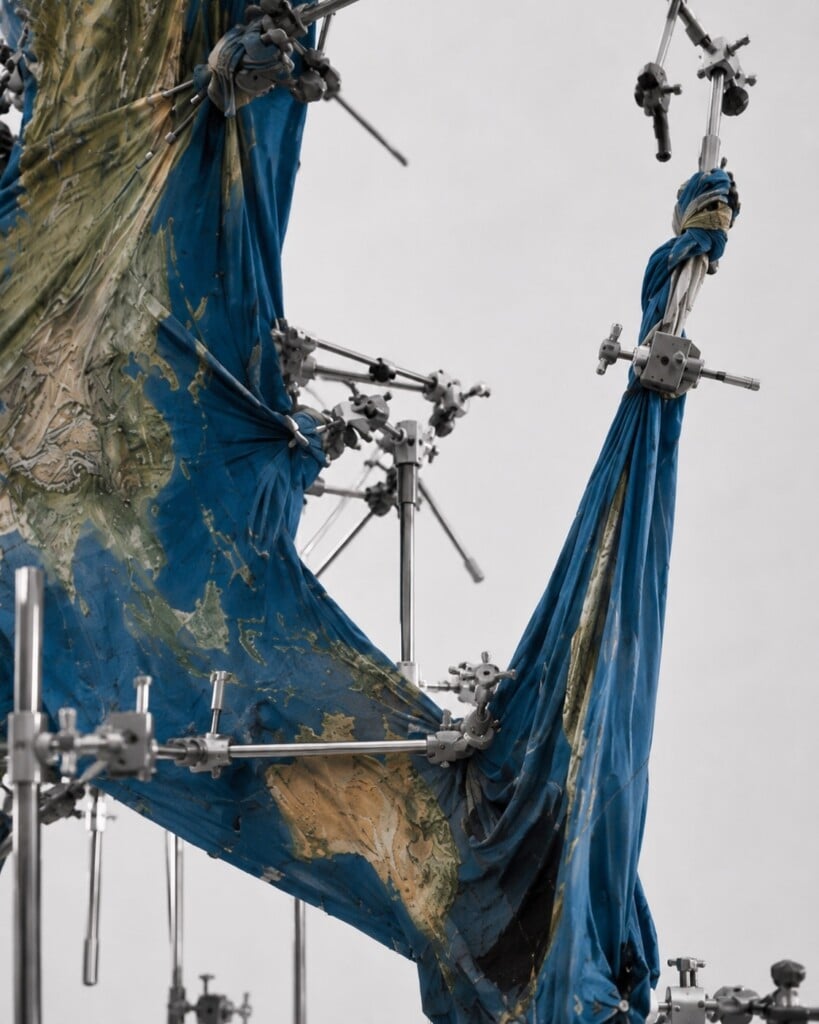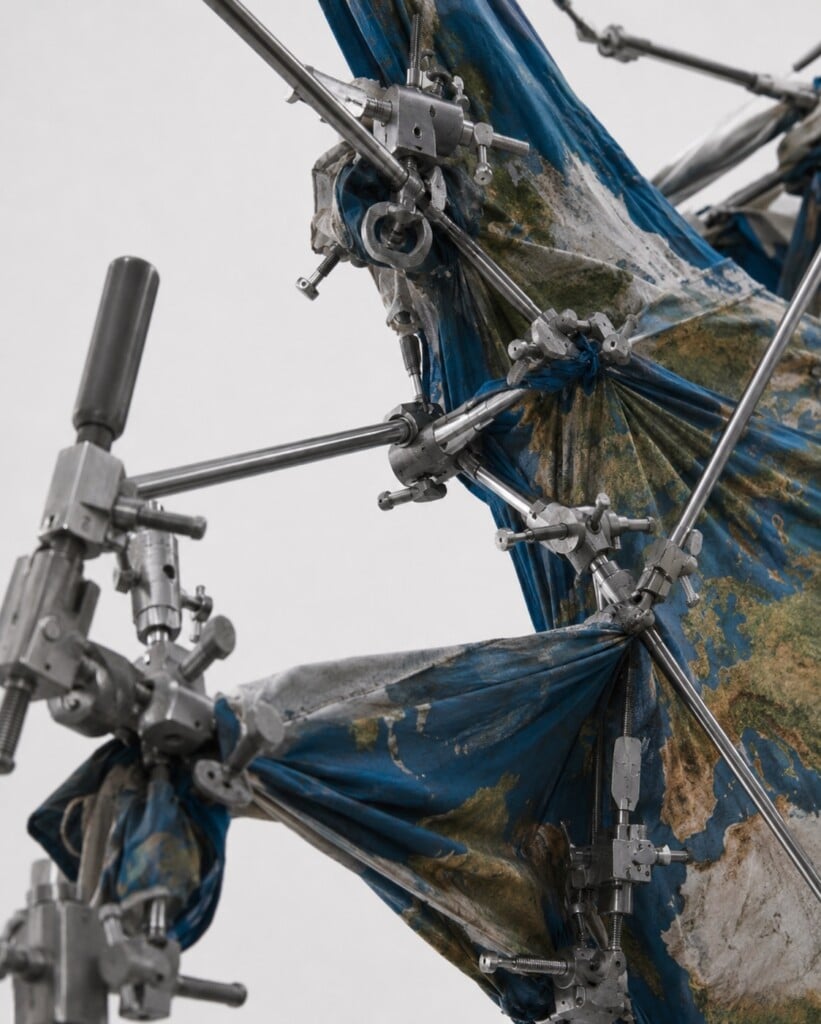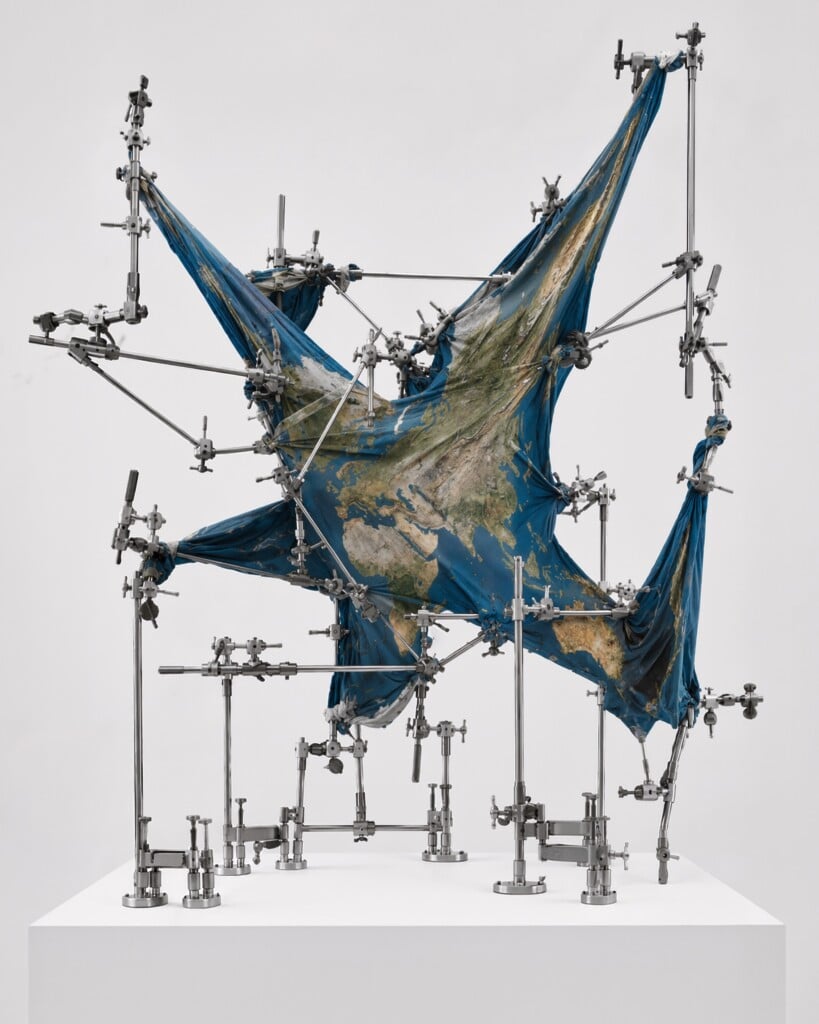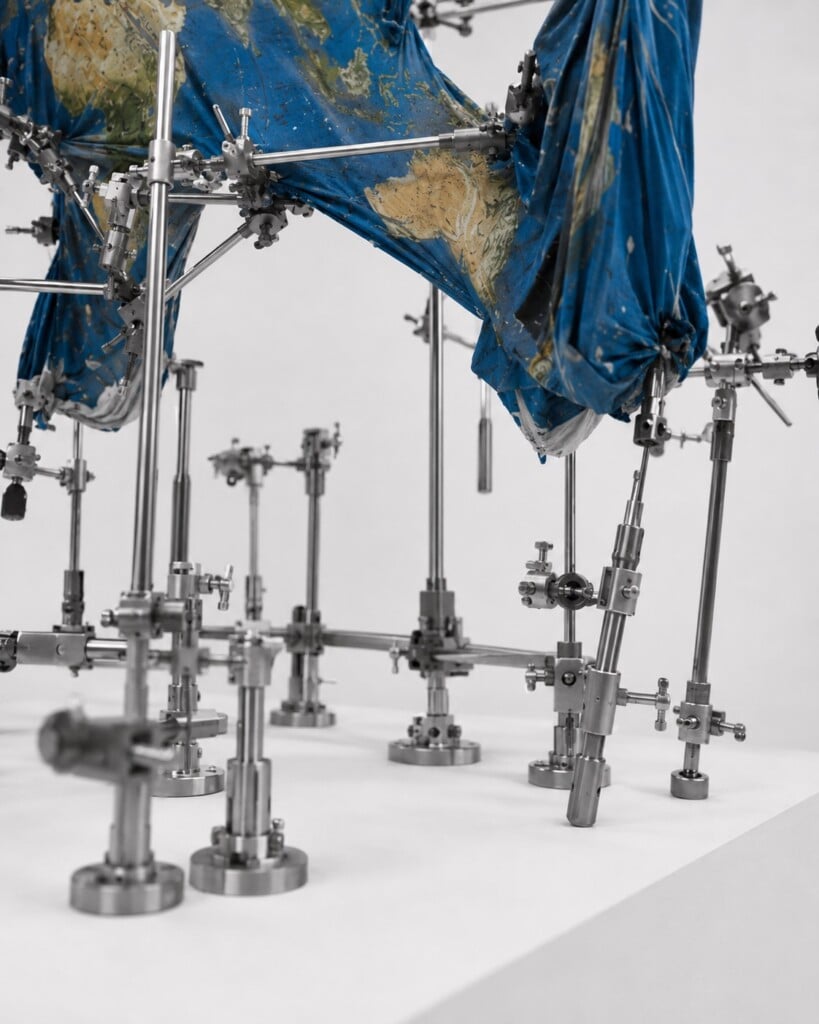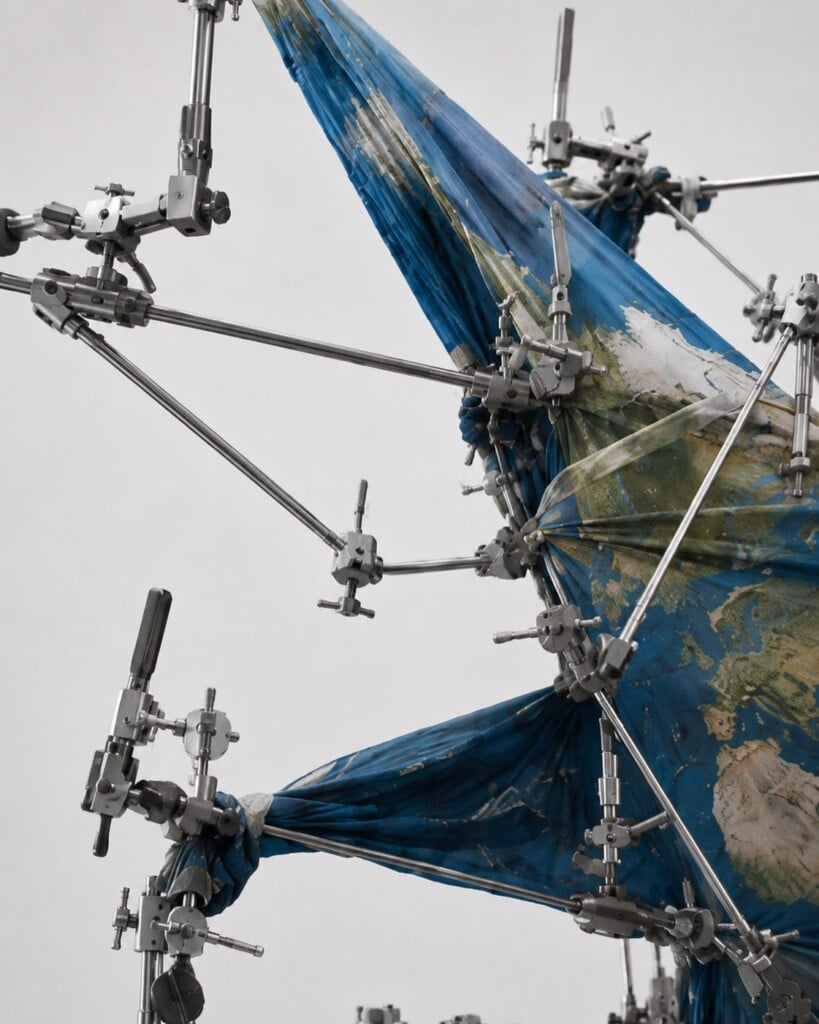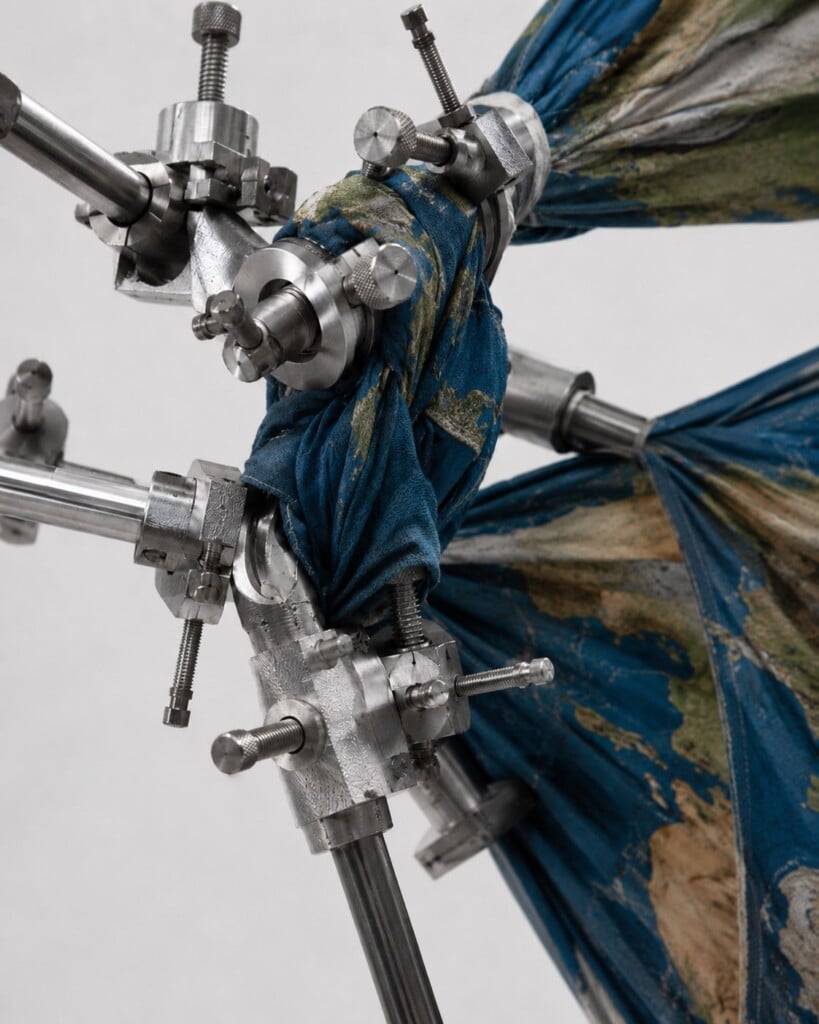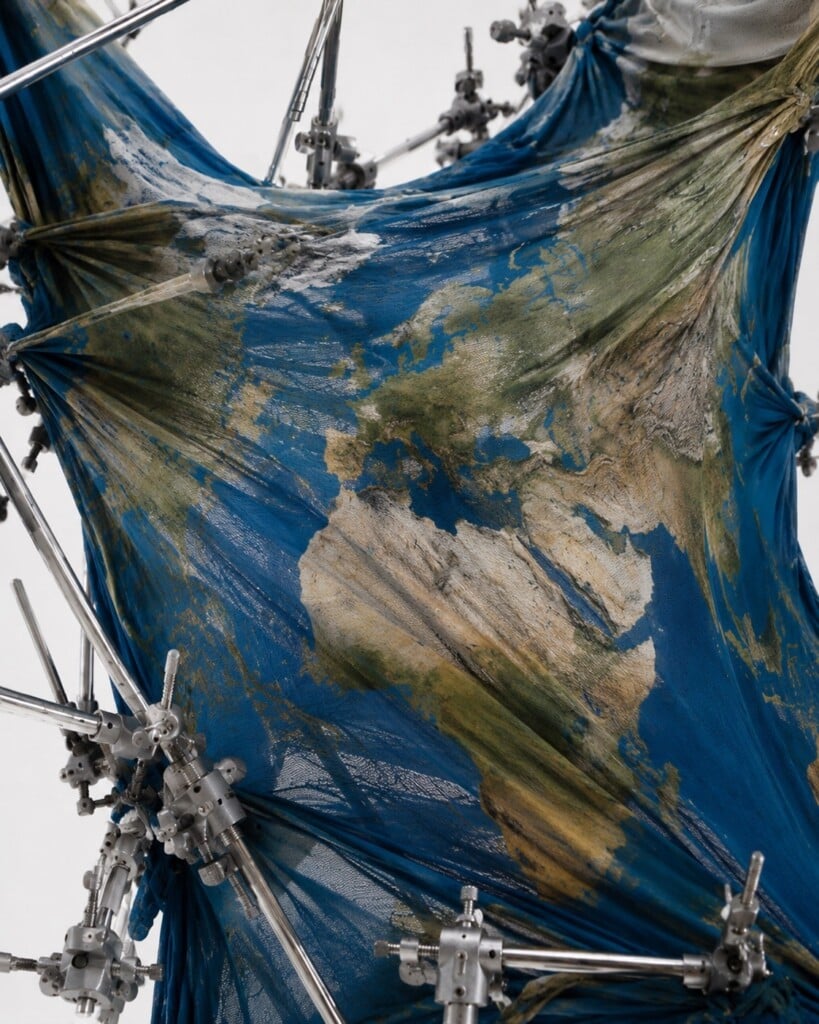
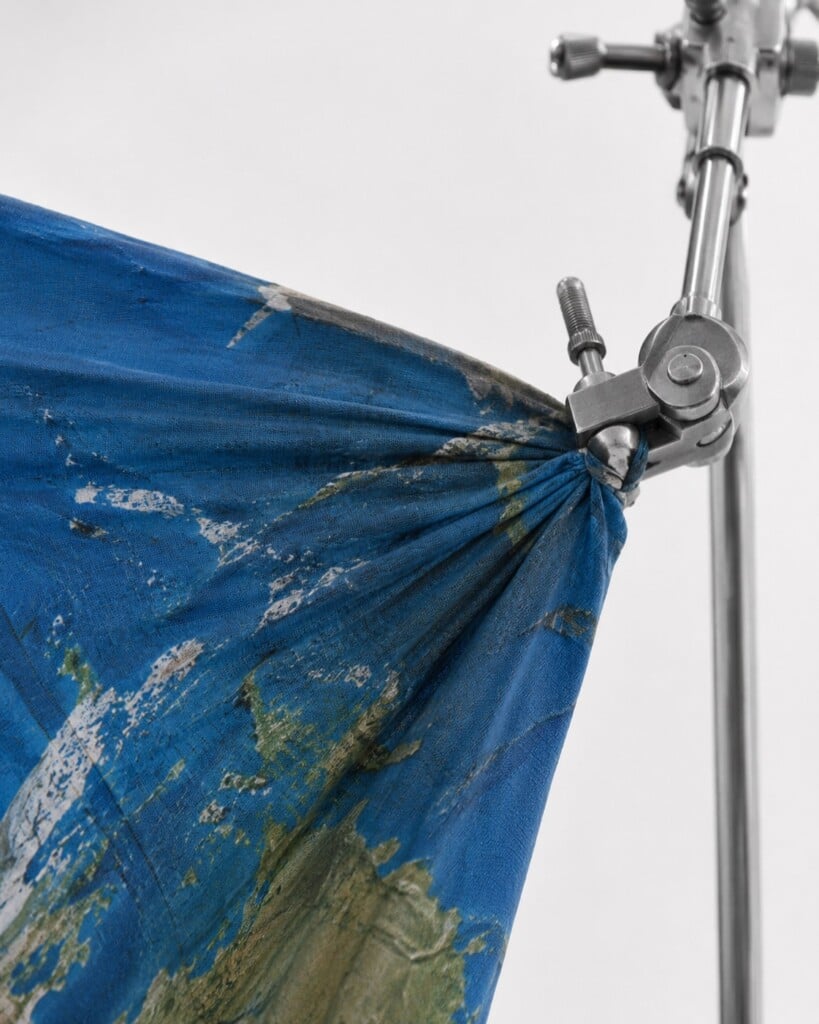
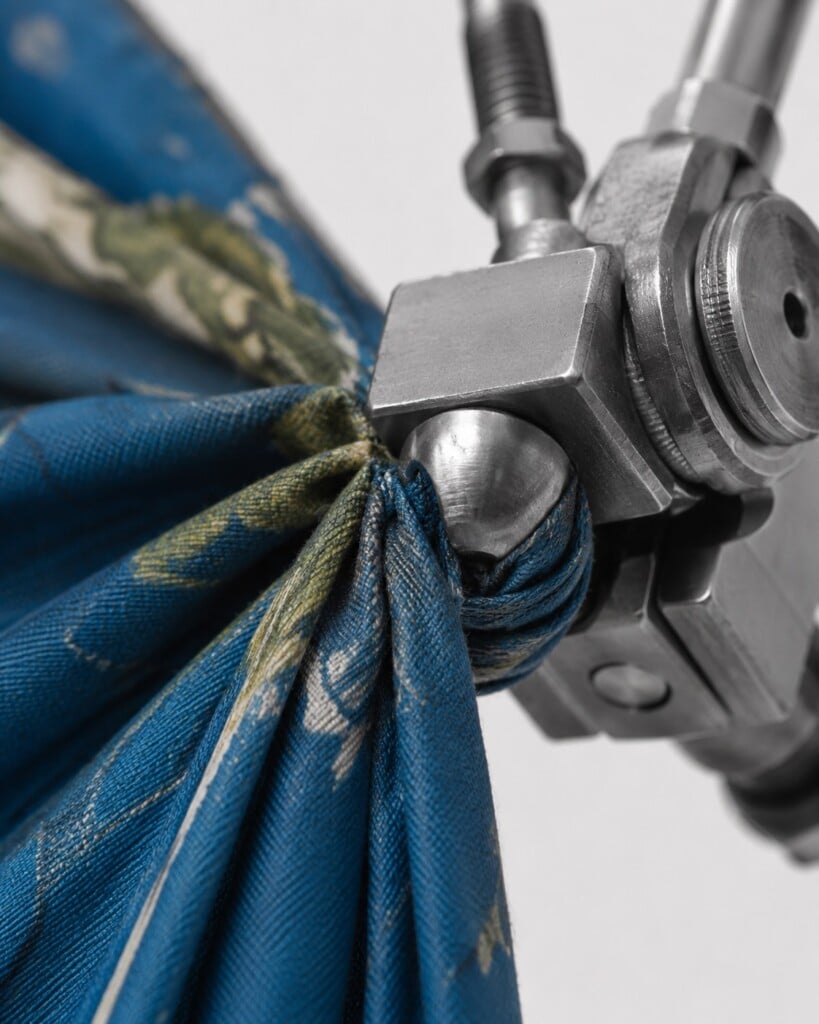
At first glance it looks like a large sculptural installation: a map of the Earth is stretched, compressed and warped by a structure of industrial clamps, cables and metal supports. Every element seems to be holding it together, but at the same time contributes to distorting its shape. It’s exactly this ambiguity that sits at the heart of World Stress Test, an AI-made work by Russian artist DAMN TRUE.
The planet isn’t shown as a solid body, but as a fragile surface, closer to a piece of fabric caught between opposing forces. The continents are still recognizable, but they’ve lost the proportions and stability we’re used to seeing them in.
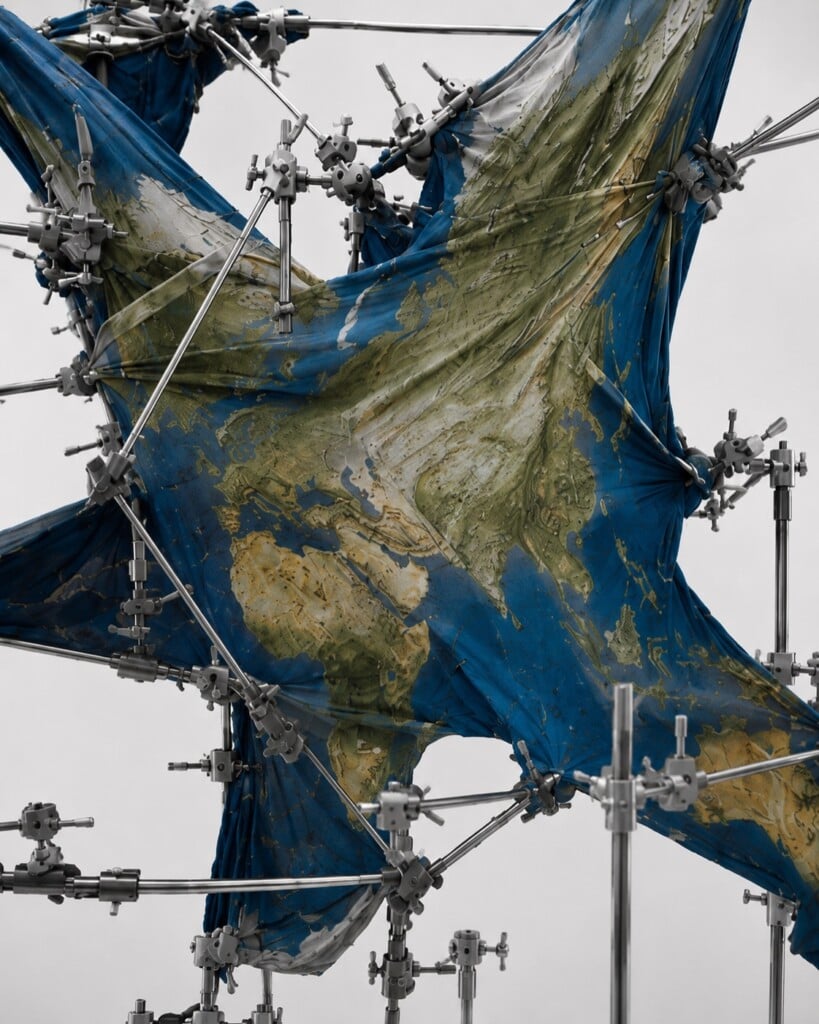
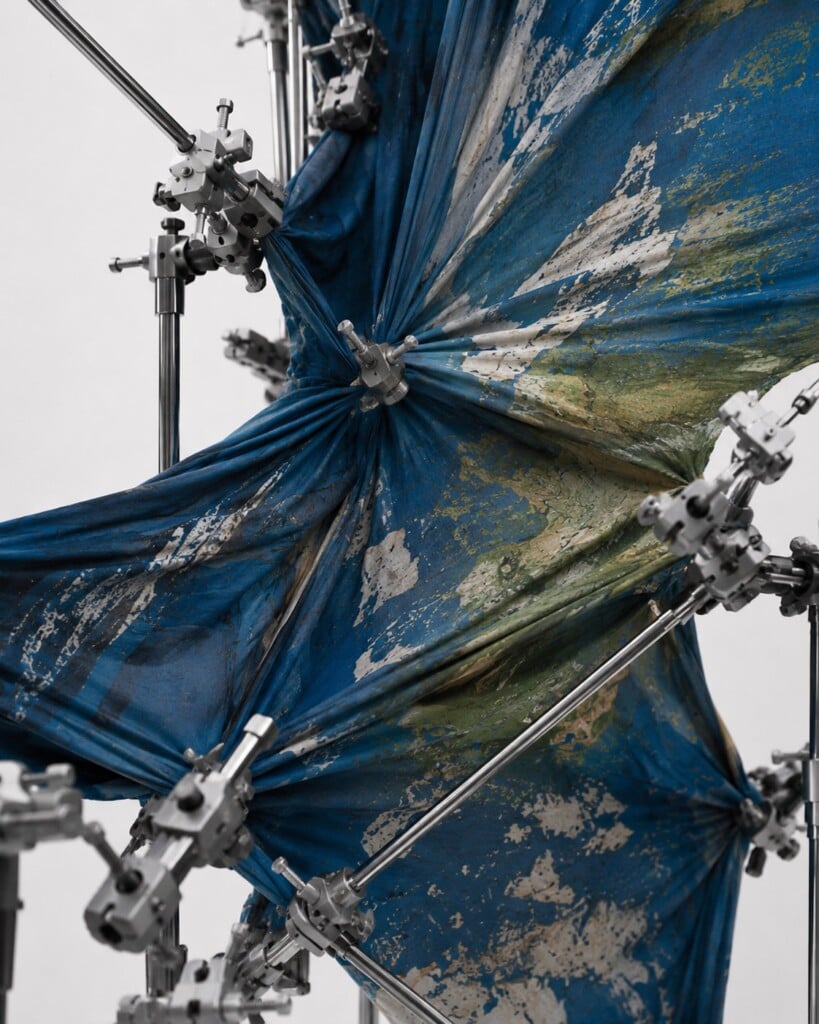
The structure surrounding the map reads at once as industrial machinery, a torture device, or a chaotic makeshift set built from balanced tripods. It could be there to measure the planet’s resistance, to keep it alive, to bear its weight, or to push it to the breaking point. This is where the work becomes a metaphor for our relationship with Earth. Every human intervention comes from a desire to use, exploit, organize, correct or even preserve the planet, but it inevitably leaves a mark on its surface. The structures we build to hold it up can turn into new forms of pressure. Every support point stops it from collapsing, but also produces a new distortion.
The title, World Stress Test, echoes the trials used to check how much a material, an organism or a system can withstand before failing. An experiment in which the Earth is put through environmental, economic and political pressures, by a human being convinced it can control every consequence.
DAMN TRUE, born in 1994 and based in Balakovo, is an artist working at the boundary between digital and physical media, using artificial intelligence, collage, photography and image manipulation. He calls his own research P[AI]NTING ART. For him, artificial intelligence isn’t an autonomous author, but a tool for producing errors, distortions and images that would be difficult or impossible to make in reality. Recurring themes in his work include memory, disappearance, digital noise and the search for authenticity in a world turned into an interface.
World Stress Test also lives in that same ambiguous zone. Despite taking on the look of a monumental sculpture, the work is presented as part of the P[AI]NTING ART research. The image doesn’t show something that exists, but something that could exist, and precisely because of that, it manages to make a very real condition visible.
The question the work leaves open isn’t just how much longer the planet can hold out, but how much the hands trying to support it are the ones deforming it.