Long before the Milano Cortina 2026 Olympics brought curling back into the spotlight, and long before Gustaf Westman’s Curling Bowl, Achille Castiglioni had already envisioned the Bulbul Kettle. An object inspired by the stones we’ve been seeing everywhere on our feeds these days.
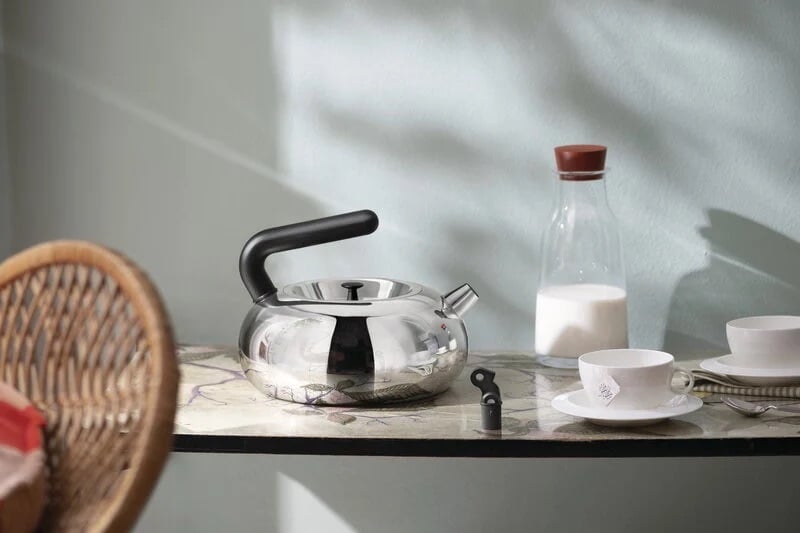
It’s the late 1980s when Castiglioni designs a kettle that looks like it came straight off an ice rink. The silhouette is, in fact, that of a curling stone: a rounded stainless-steel body, an arched handle that echoes the sport’s grip, a solid yet playful presence. As often happens in his work, the reference is never didactic, but intuitive—almost a visual game that turns an everyday object into something surprising.


And yet, like many ideas that were simply ahead of their time, the Bulbul went for years without a producer. The market wasn’t ready—or perhaps it couldn’t fully grasp the subtle design irony that made the object so special.

Only much later did the project find its way to Alessi, 26 years on, proving once again how Castiglioni’s design could move through eras without losing its freshness. And today the Bulbul feels more relevant than ever—not because it ever chased a trend, but because it had already sensed its symbolic power decades ago.