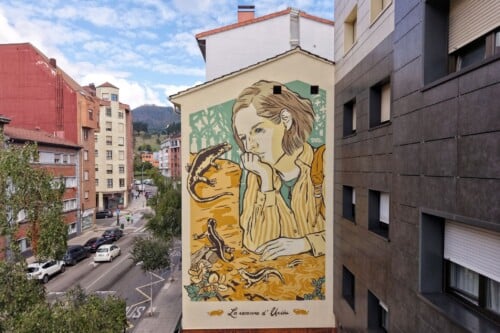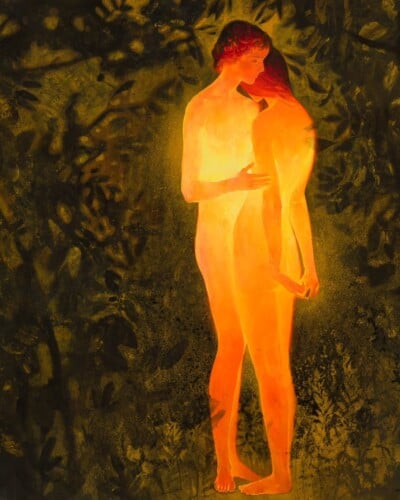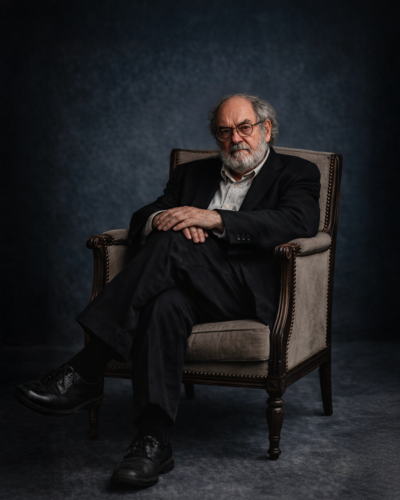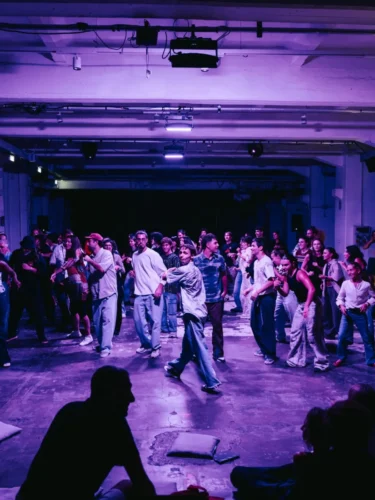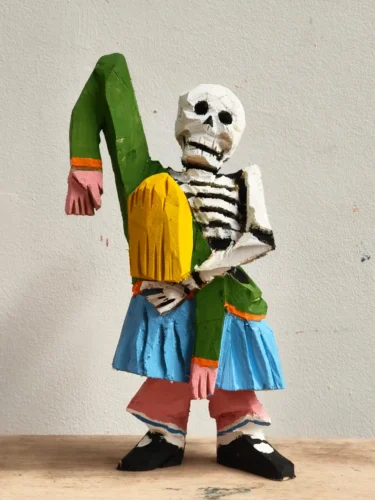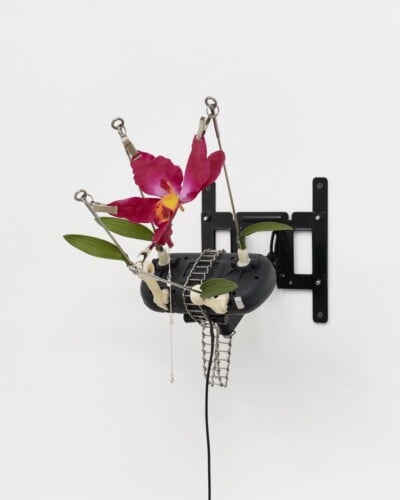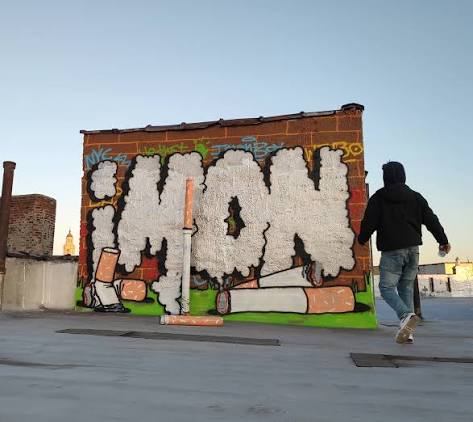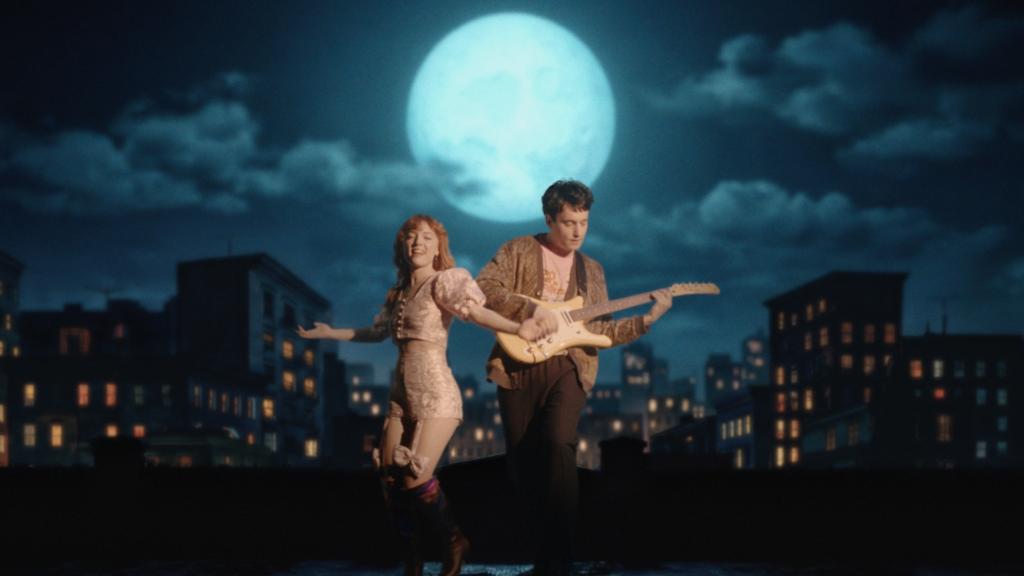
The music video for La felicità e basta, the song with which Maria Antonietta and Colombre took part in the Sanremo Festival 2026, tells the story of the two protagonists escaping from a museum all the way into space. We spoke with director Danilo Bubani and Generative AI Director Lorenza Liguori about the creative process behind the video: from the possibility of using artificial intelligence in a popular context such as the Festival to the hybrid creative process that brings together live action, stop motion, AI, and VFX.

For Bubani, the starting point is always the same: storytelling. “As a director and author, I’ve always had a cinematic approach to images. But without a story, an image remains nothing more than a sequence of frames.” It is precisely from this awareness that the project was born, conceived as a first concrete experiment in a workflow capable of developing a narrative without being immediately blocked by traditional production limits.

In this sense, artificial intelligence was not conceived as a shortcut, but as a tool within a broader creative process. The video in fact comes out of a hybrid workflow that, as mentioned earlier, combines live action, stop motion, AI-generated imagery, and VFX, each used for a precise narrative function.

While telling us about the project, Bubani and Liguori insisted on one point in particular: the role of writing within this process. Prompts are often discussed as a new form of contemporary writing, but what does that really mean when working on a film?
“For me, the prompt is not a screenplay—it couldn’t be—but that doesn’t mean they have nothing in common,” Bubani explains. “Like a screenplay, a prompt tries to evoke a world, a tone, a tension. The difference is that the screenplay supports the story, while the prompt alone does not. If there isn’t a real story underneath, it remains just a command given to a machine.”
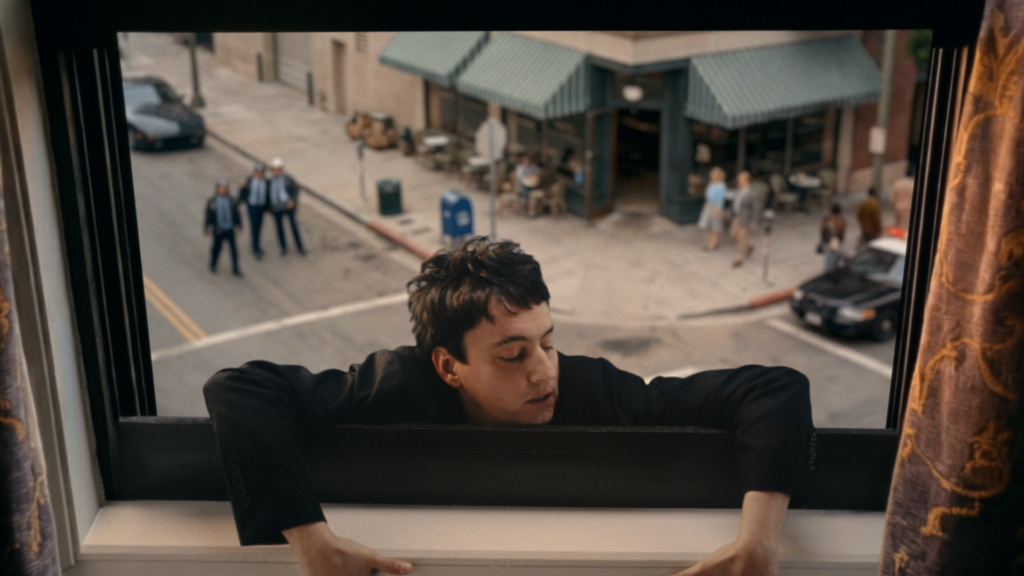
The prompt therefore becomes one of the tools through which the project takes shape, but not its core. At the center remains the working method built by the team: a workflow that puts live action, stop motion, AI, and VFX into dialogue in order to build a coherent visual narrative.
For Liguori, however, the prompt is much closer to cinematic writing than one might think. “It is not simply a sequence of technical instructions, but a narrative device that translates a mental image into a visual scene. When you write a prompt, you already need to have the atmosphere, composition, lighting, space, and rhythm of the shot clearly in mind. In this sense, the process closely resembles cinematic writing: you are building a world, not just generating an image.”

The difference is that this is a dialogic form of writing, one that evolves through attempts, corrections, and intuitions. “It is a process very close to directing: you write, observe the result, and then rewrite in order to refine the vision.” Behind every image in the music video, in fact, there were dozens of attempts before arriving at the final version.
In this project, the prompt was not used merely as a technical tool for generating images, but became directly involved in the film’s narrative construction. “We weren’t interested in simply obtaining beautiful images,” Bubani says. “We wanted them to exist within a story. That’s where the prompt stops being technical and becomes language.”

The video builds suspended and almost unreal environments—from the Asian city to the theater filled with balloons, passing through the spaceship—designed to amplify the sense of escape and suspension present in the song. As Liguori explains, “In the case of La felicità e basta, the prompts were built starting from the meaning of the song. Each environment stemmed from the desire to amplify the sense of escape and suspension that runs through the entire track.”
One of the most complex aspects of the project was maintaining coherence among the different visual languages. In a workflow like the one used for this video, the prompt has to be in constant dialogue with images that already exist. “The prompt could not work only as a single image,” Liguori says. “It had to belong to an already defined aesthetic and integrate with the live-action footage.”

This paradoxically makes prompt writing more precise than in a fully generative project. “It has to respect the perspective, lighting, texture, and movement of the real scene, otherwise the integration doesn’t work.”
As often happens in creative processes, the unexpected also played an important role in the development of the video. Some unforeseen results generated by the tools suggested new visual directions, leading the team to rethink certain scenes. In other cases, it was necessary to push the machine to its limits in order to obtain the desired image.

“Sometimes it is precisely the error or the unexpected that opens up narrative possibilities you hadn’t foreseen,” Liguori says. “That’s where the prompt stops being just an execution tool and becomes almost a space for creative discovery.”
The project also fits into a particular production context: that of a music video tied to a mainstream event such as the Sanremo Festival. Bringing a hybrid and experimental visual language into such a popular context was one of the most interesting challenges of the work.

“We took the risk of completely disrupting the traditional way of doing things,” Liguori explains. “We believe that artificial intelligence does not replace creativity, but on the contrary makes it even more central.” For Bubani and Liguori, however, this experience above all represents a starting point. More than a stylistic exercise, La felicità è basta was the first test of a working method they will continue to develop in other projects as well. As Bubani concludes: “Prompts are a resource, not the solution. Without a well-written story and without a human-guided process, a result like this would not have been possible.”