In the heart of the Marais, Ariana Papademetropoulos brings her universe—suspended between mysticism, surrealism, and pop imagery—to France for the first time. With Glass Slipper, her new solo exhibition at Thaddaeus Ropac Paris, the artist constructs an immersive environment in which everyday reality begins to crack, giving way to an ambiguous dimension where the familiar suddenly becomes enigmatic.
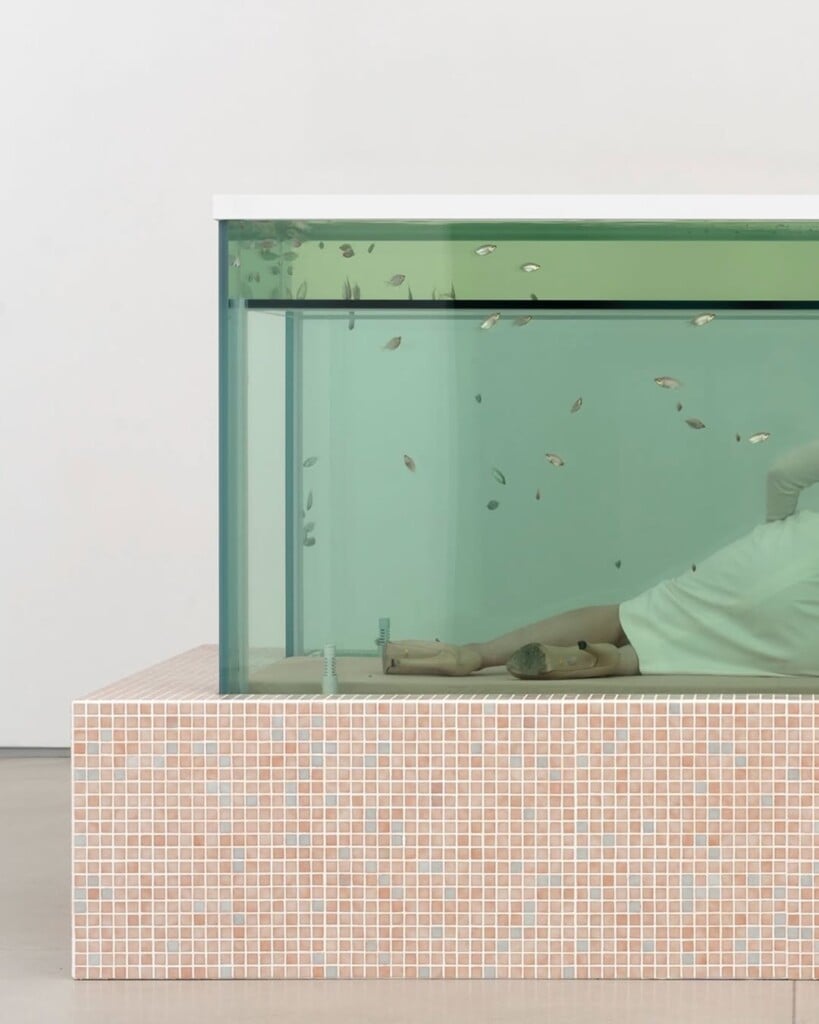
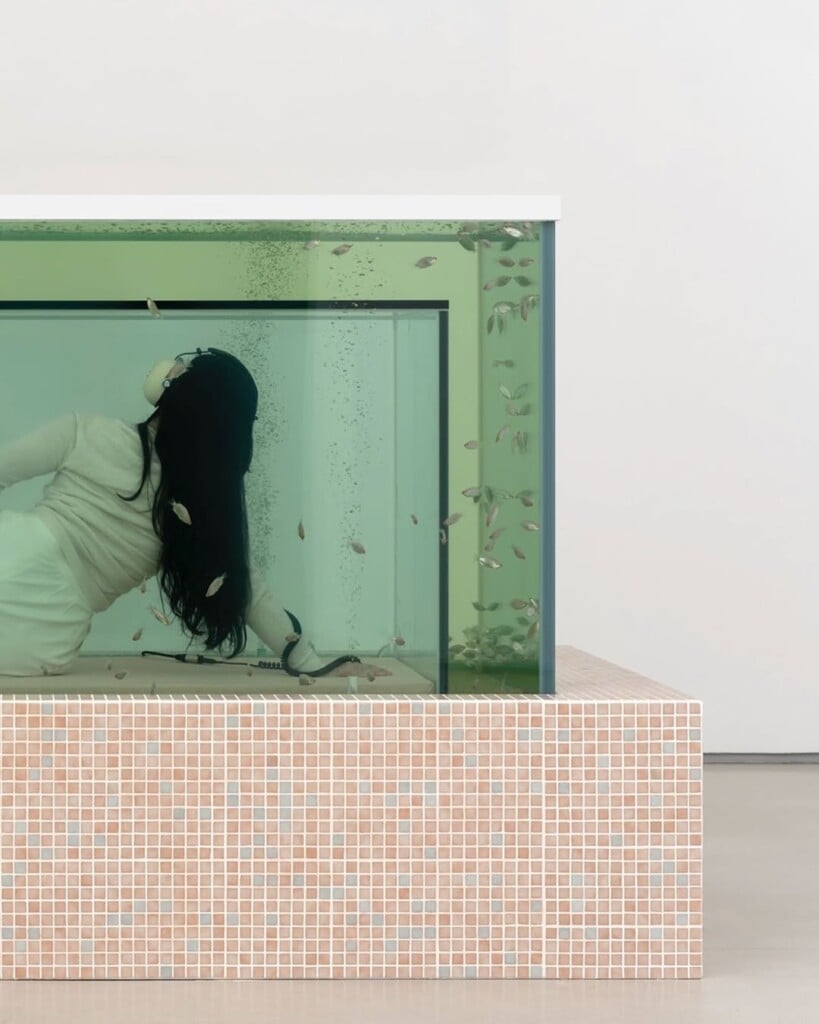
At the center of the exhibition is Water Based Treatment, a huge walk-in aquarium over four meters long, conceived as a liminal space within the gallery. Visitors can step inside the glass structure and lie down on an integrated mattress, surrounded by a school of shimmering fish, while an ambient soundscape composed by Nicolas Godin of the French duo Air transforms the experience into a state of sensory suspension. The installation functions at once as an intimate refuge and a theatrical stage, where time slows down and perception becomes unstable.
Visualizza questo post su Instagram
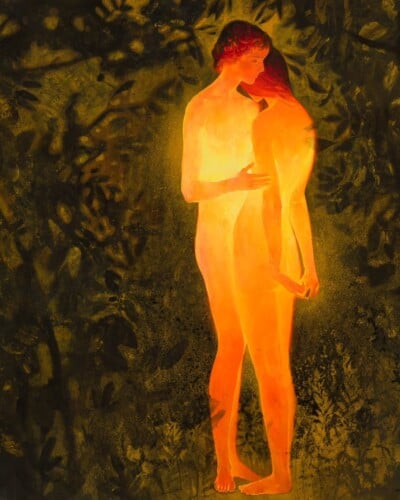
Around this core, the new large-scale paintings challenge the boundaries between interior and exterior, between domestic space and natural landscape. Gingham chairs and Louis XV armchairs emerge within unstable settings, as if pulled into dreamlike territories. The images oscillate between hyperrealism and vaporwave atmospheres, while references ranging from The Wizard of Oz to Jungian psychology construct an imaginary suspended between the subconscious and pop culture.


Upstairs, the atmosphere becomes even more artificial. Three iridescent shell-shaped phone booths, inspired by the vintage interiors of the Tropicana in Las Vegas, hang from the walls like objects out of time. By lifting the receivers, visitors can listen to recorded conversations between the artist and her medium, entering a dimension that blends spirituality, performance, and fiction. Alongside these installations, a series of small-scale works depicts microwaves in flames, reworking classical motifs—such as Correggio’s Jupiter and Io—through the language of contemporary household appliances, creating short circuits between art history and everyday life.