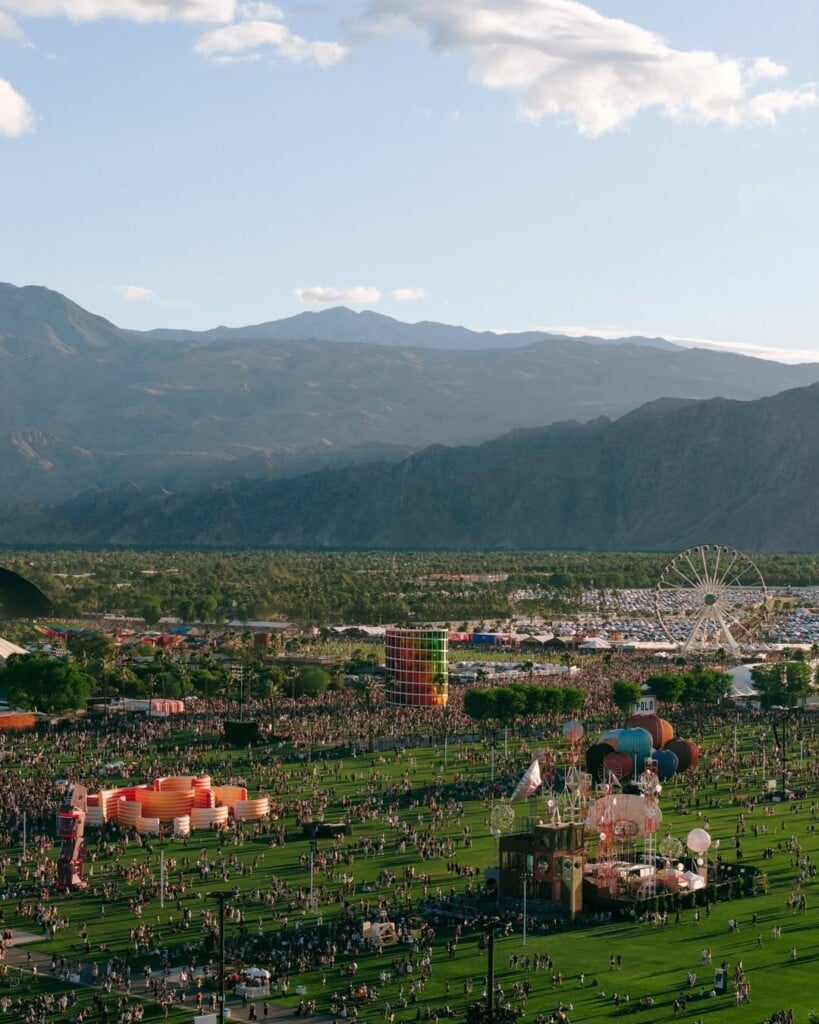
As much as Coachella often seems on the verge of losing its appeal, each year the most mainstream festival transforms the Californian desert into an open-air laboratory where art, design and immersive installations help define the identity of the event. This year’s edition further strengthens this direction, introducing new interventions that show how the artistic experience has become just as central as the musical lineup. Among the most interesting highlights of this year are MAZE by Sabine Marcelis, the felt animations by Andrea Love and an immersive installation inspired by the imagery of Radiohead and KID A MNESIA.
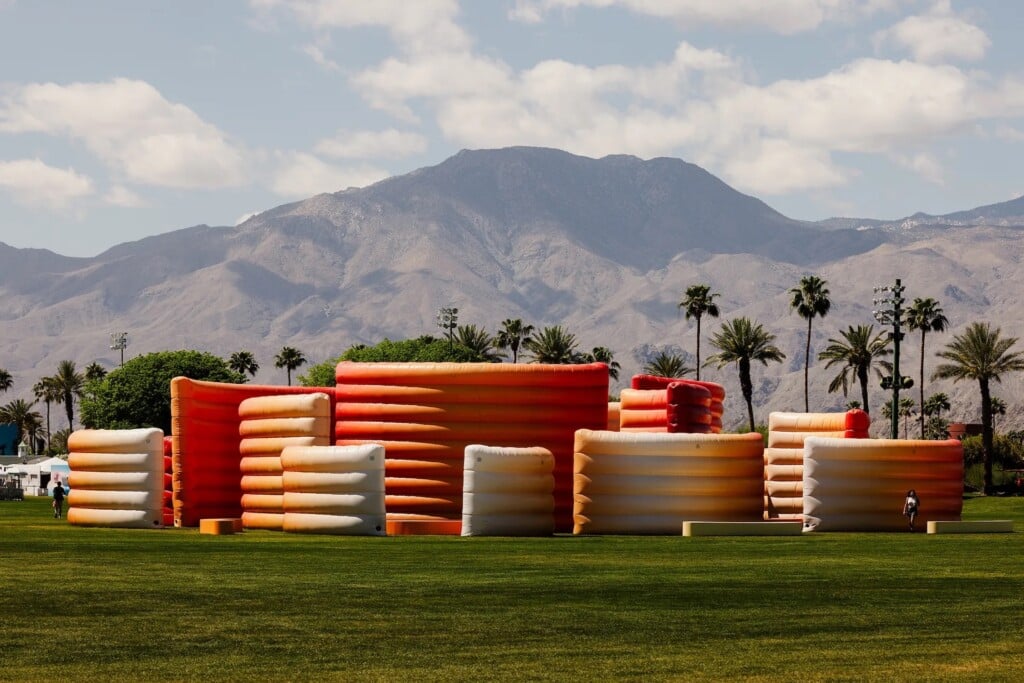
Among the interventions most aligned with the festival’s atmosphere is MAZE, the new installation designed by Sabine Marcelis. For Coachella 2026, the Dutch designer created an inflatable structure in warm sunset tones, conceived as a large maze that visitors can walk through. The work unfolds through soft walls and air-filled volumes that create immersive pathways, transforming the space into a playful and accessible environment.
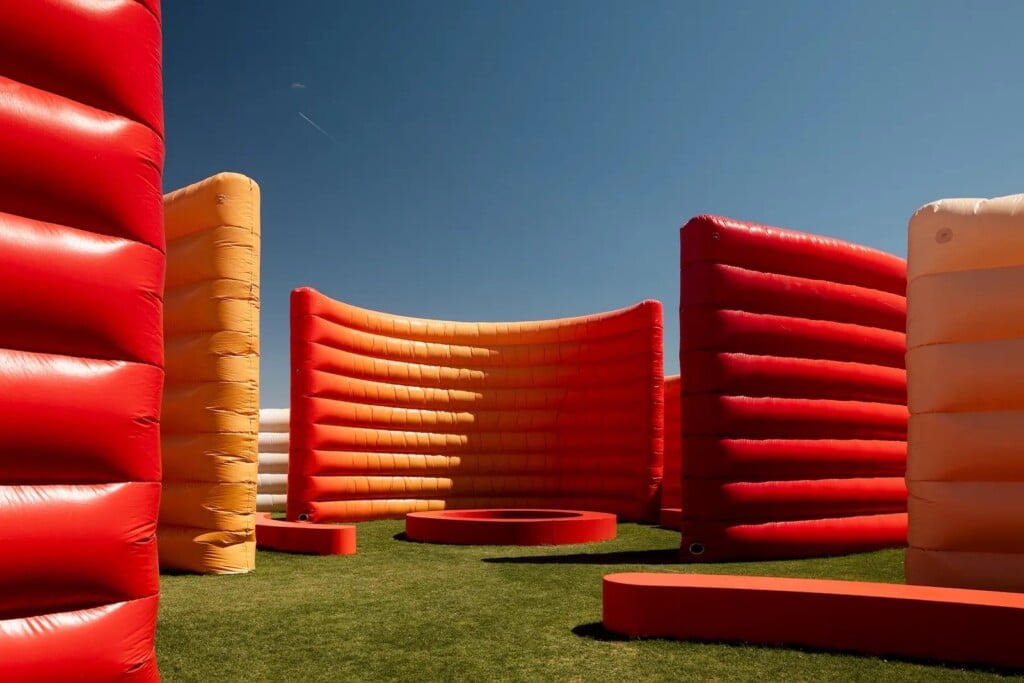

Color, a central element in Marcelis’ practice, becomes the protagonist here: the inflatable surfaces take on gradients that echo the Californian desert sky, interacting with natural light during the day and becoming even more evocative as the sun sets. The installation invites visitors to move, get lost and meet, emphasizing the collective dimension of the festival through a lightweight yet highly scenographic intervention.

Alongside large-scale installations, Coachella 2026 also introduces a new direction in its visual communication. A few years ago we already talked about Andrea Love’s handcrafted approach to animation, and this year her work has become part of the festival’s official communication through a series of teaser videos created in felt stop motion. The animations reinterpret iconic Coachella moments, transforming them into soft, tactile visual narratives. Created frame by frame, these contents bring a warm, handcrafted aesthetic to the festival’s social channels, standing apart from more traditional digital graphics and helping build a more recognizable visual identity.
This collaboration shows how Coachella’s artistic direction goes beyond physical installations, also extending into communication, turning promotional content into fully-fledged creative projects.
Among the most evocative additions of the 2026 edition is also The Bunker, an immersive project linked to the universe of Kid A Mnesia, built around Kid A and Amnesiac, Radiohead’s fourth and fifth albums released in 2000 and 2001. Originally launched in virtual form by Epic Games in 2021 for consoles and computers, the experience now takes physical form at Coachella, where from the outside it appears as a large grass-covered mound, emerging between the 2025 and 2026 editions of the festival and blending naturally into the desert landscape.
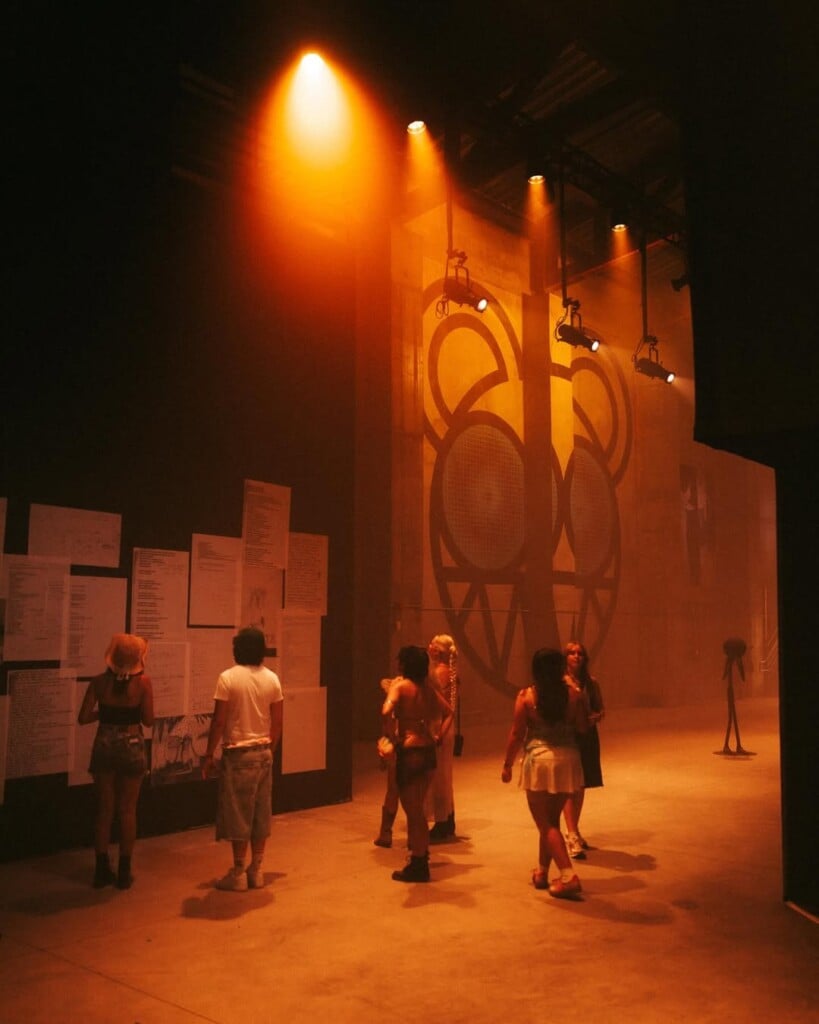
Climbing to the top, visitors can observe the festival from above, with panoramic views of the mountains and surrounding area. The atmosphere shifts, however, when approaching the sides of the hill, where large steel doors suggest the presence of a hidden space, almost a subterranean bunker, turning the structure into a mysterious and narrative-driven element.

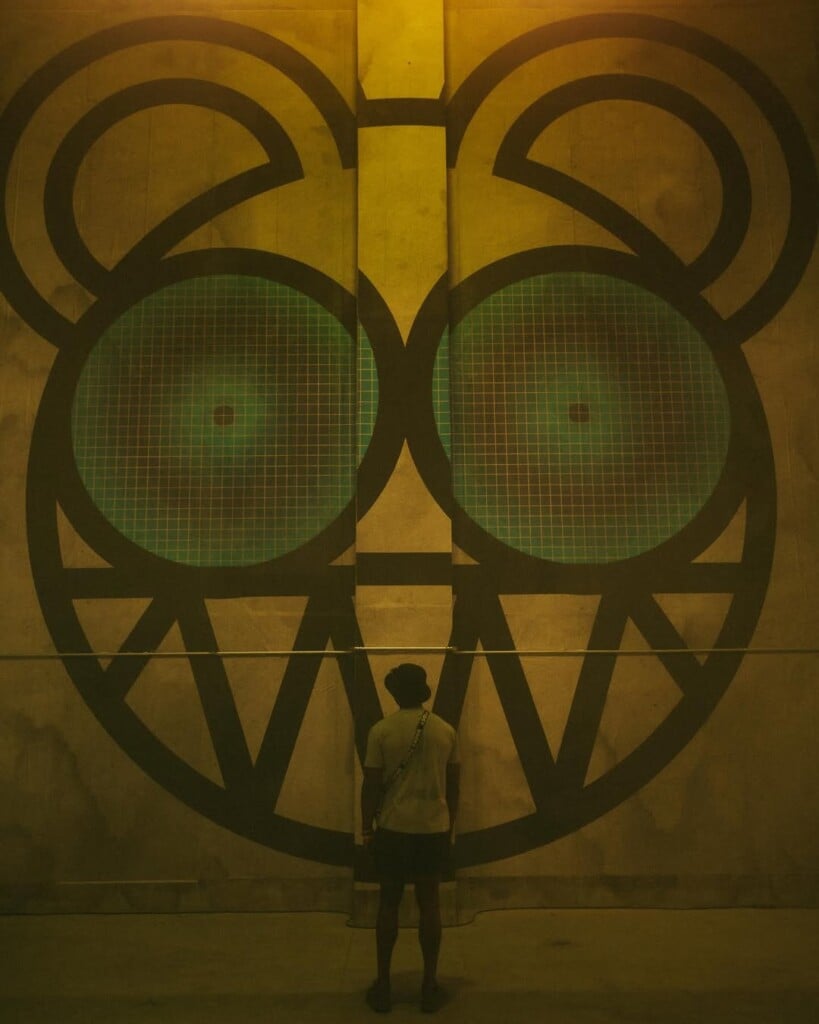
Free and accessible by reservation, the experience takes shape as an immersive exhibition built around the music, artworks and visual themes developed by the band together with longtime collaborator Stanley Donwood. After Coachella, the project will become itinerant, with stops planned across North America, including San Francisco, Mexico City, Chicago and Brooklyn.
With these new collaborations, Coachella 2026 keeps attention high around a festival that, even if it’s no longer what it once was, continues to fascinate. It remains a place where contemporary art, design and music come together to shape a truly unique experience.