Just last week, After All, a solo exhibition by Davide Allieri curated by Damiano Gullì, opened at Triennale Milano. With distinctly apocalyptic undertones, helmets serving as protective shells, and installations crafted from everyday objects, the artist takes us on a unique journey into an altered vision of a possible future where humanity struggles to “survive its own ruins,” as noted in the exhibition’s curatorial text. We spoke with Davide Allieri to delve into his fascination with dystopian atmospheres, abandoned shells, and how this solo show fits into the complex landscape of contemporary Italian art.
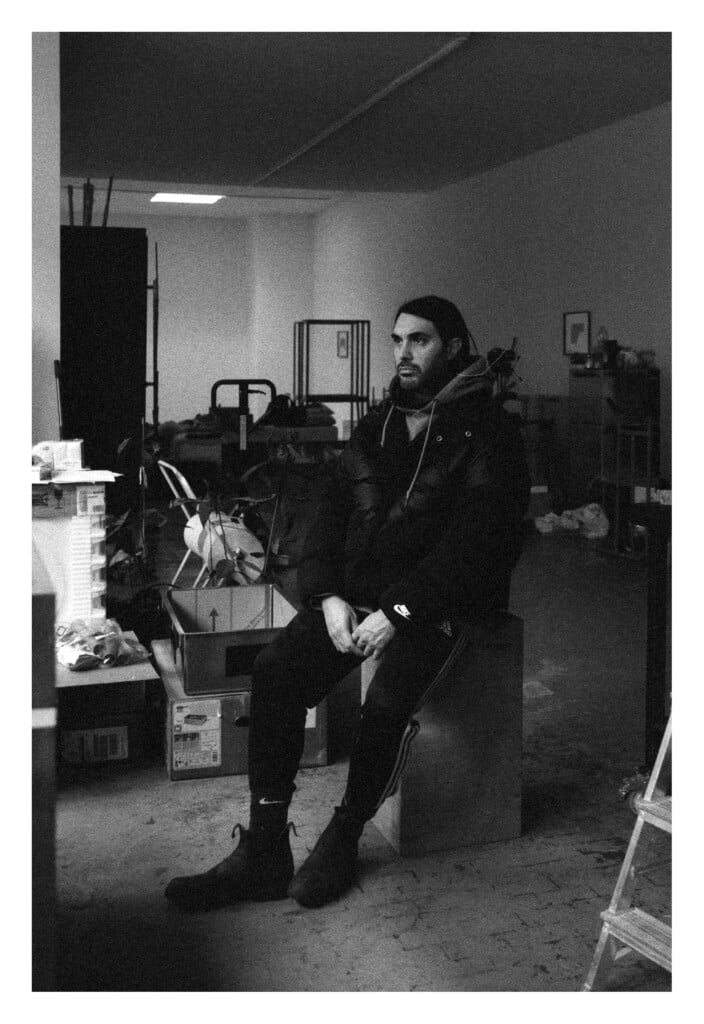
In your work, you use everyday objects like helmets and drones, transforming them to create a dystopian atmosphere. What draws you to these specific objects, and how do their new forms help convey a sense of isolation or alienation to the viewer?
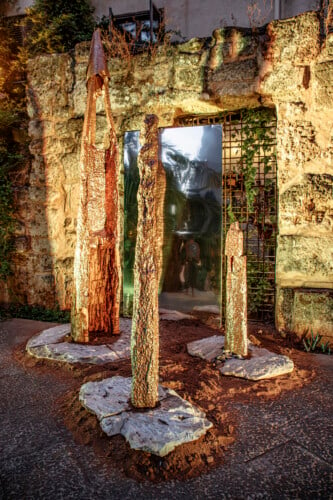
The creative process I use involves taking elements from reality, modifying them by reconstructing their design, and overturning their meanings and functions. I then reintroduce them in different materials, such as fiberglass, aluminum, and others. My idea, using clichés tied to a cinematic vision of the future, is to strip these elements of their original meanings and functions, reimagining them as new creatures or elements. They retain some recognizable features but can transform into something else entirely.
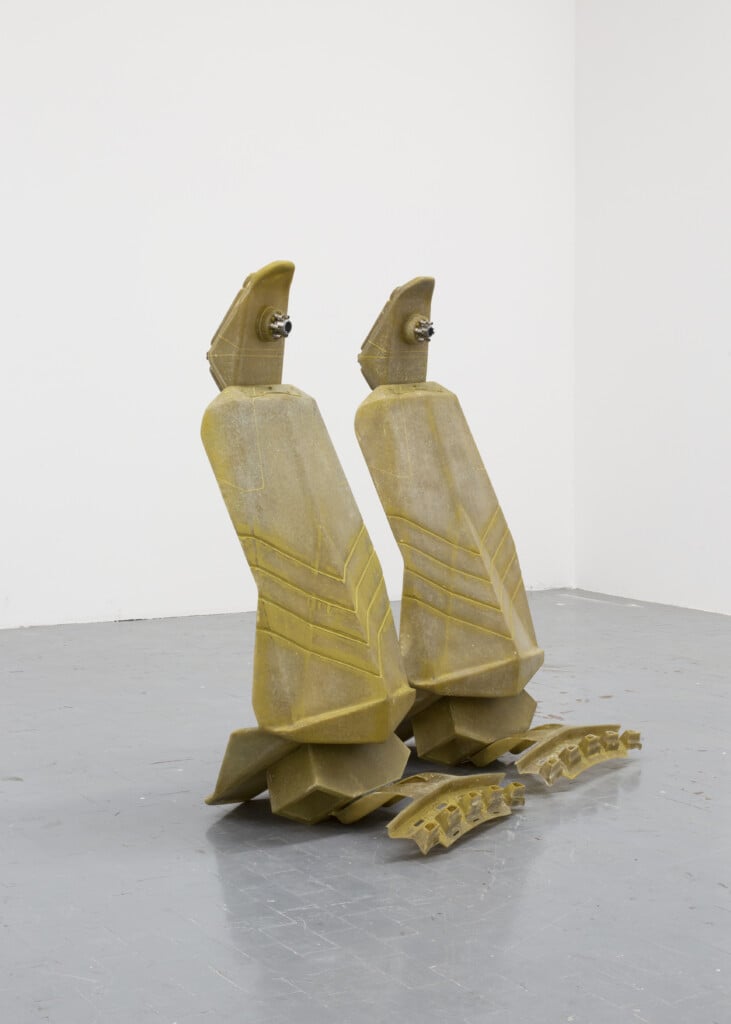
TX9KD_POD Seats, 2023 | ph. courtesy Galerie Hubert Winter
The concept of “abandoned shells” is central to this exhibition, suggesting attempts at survival or protection in a desolate landscape. What inspired this theme, and how do you think it reflects contemporary anxieties or aspirations?
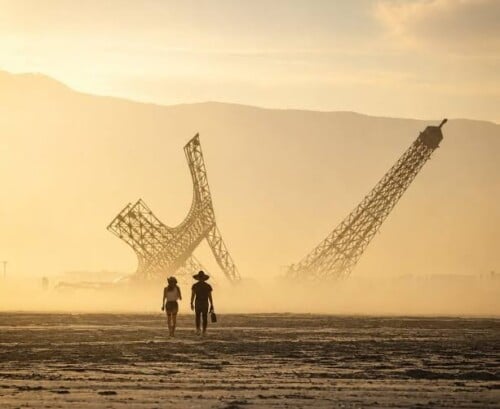
I’d say real life inspired it, especially the COVID period, with our obsessions and fears about going out, meeting people, or simply breathing the air. That was an incredibly important moment for me, especially since I come from Bergamo, where I was born and lived until I was twenty. The COVID crisis hit Bergamo harder than any other Italian city. It drove me to think about protective and isolating devices as a way to express this obsession and fear of nature and the outside world. The idea is to create elements that allow one to isolate oneself from the external world and, in a way, protect oneself.

Satellite System, 2023 | ph. courtesy Galerie Hubert Winter
“After All” evokes a landscape of abandonment with references to post-apocalyptic themes and brutalist architecture. What message or emotions do you hope to convey through this exploration of decay and remnants?
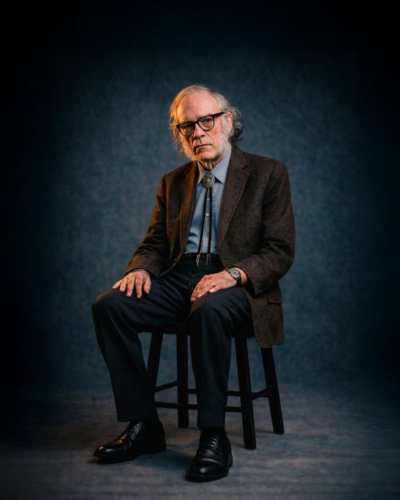
I aim to clearly express a sense of discomfort about the present and the future. This alteration of space-time is central to my vision and, as the title suggests, also represents an epic view of humanity. It reflects the possessive, schizophrenic, dangerous, and unsettling aspects of our experience. I simply translate what I live through into my work. My personal experience is fundamental in shaping what I create. Living in the suburbs, I encounter extreme poverty daily—especially after COVID and the war in Ukraine. I walk through streets that have become open-air landfills. Through my work, I amplify what I experience every day.

OXYGEN HELMET, 2024 | ph. courtesy dell’artista, foto Davide Allieri Studio.
How does After All fit into the broader narrative of contemporary Italian art? Are there unique artistic themes or challenges in Italy today that you feel are reflected in this exhibition?
The sensation of a dystopian future—or rather, a dystopian present—is something I also see in other artists, such as Giulia Cenci and Diego Marcon. There’s a connection with other artists, especially European ones. My work ties into a shared feeling that’s very much alive. My interpretation comes through my materials, visions, installations, and drawings, but this type of sentiment has always existed. You can trace it back to Friedrich, Romanticism, Edvard Munch, and numerous 20th-century movements. This feeling has transcended time.