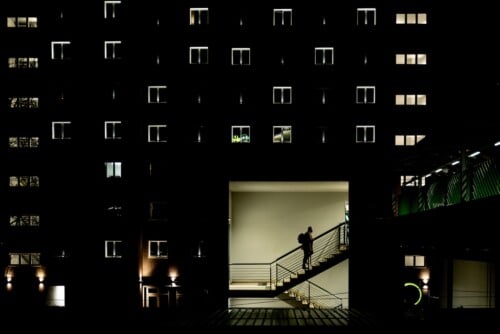
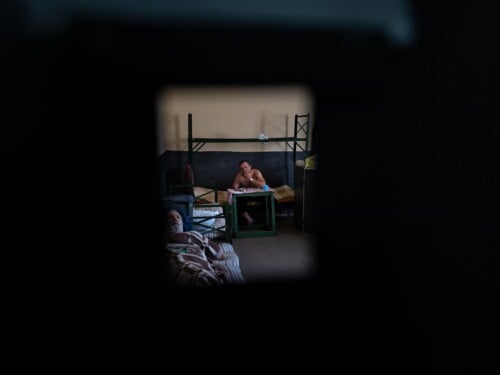
Filippo Romano, born in 1968, is a documentarist and architecture photographer who has focused his research on urban narration and all that gravitates around it. After graduating from the I.S.I.A. in Urbino, completes his
His photographic production is quite vast: while architecture images are distinguished by their compositional precision and the cleanliness of the scenes, those that focus on people are instead intense and emotional and bring out the relationship of empathy with the subject, which it goes beyond the research path and becomes a true vocation.
Us at Collater.al have asked Filippo a few questions about him and his work:
When did you realize you wanted to be a photographer?
When I saw Robert Frank’s book “The Lines of My Hand”, I discovered a type of photography that from the documentary derailed anarchically in a poetic, autobiographical account: Frank never repeated himself, he stopped photographing when he was on the ridge of the wave and then resume years later and has always detested the small power system of photography…
I like this kind of photographers, worth this freedom to be, worth in terms of quality of work, just go to see Frank’s fashion photos for Aspesi (he was more than sixty years old)… fantastic, free, they put and bring to their knees so young photography that spies from the W.Tillmanns hole which in my opinion has truly understood Frank, a great author who must be read and studied beyond The Americans.
Is there a particular reason why you selected these photographs?
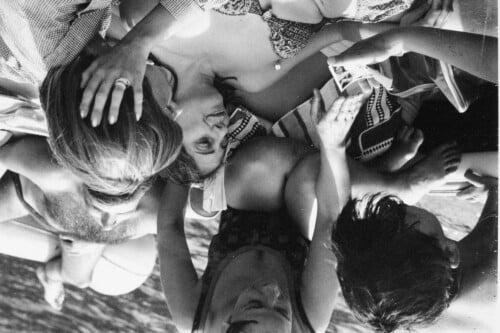
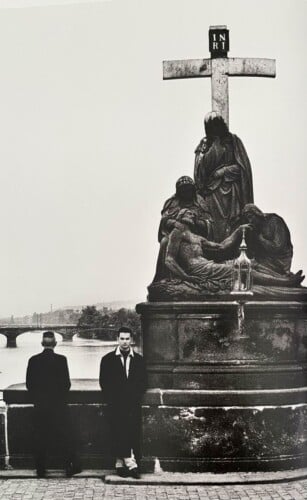
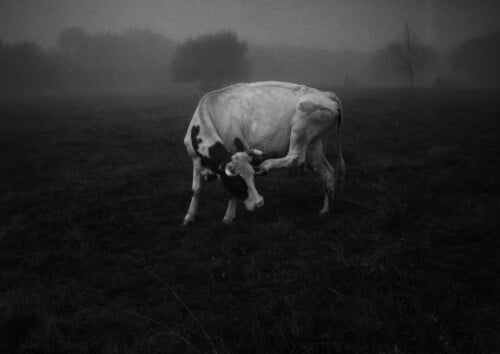
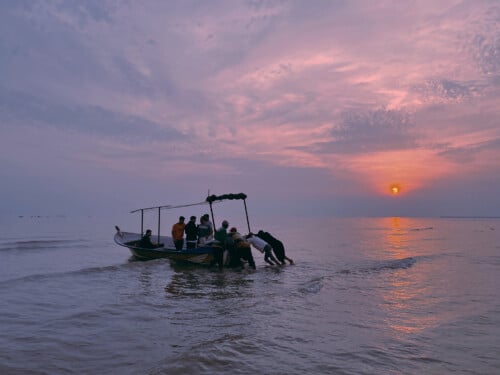
I chose to propose a cross story, images that I love beyond the projects carried out, which are like seeds, which could become a project, a reflection or simply: I love them without an objective reason.
Have there been books, movies or experiences that have influenced your way of producing images?
Besides The Lines of My Hand, I could mention a lot more, but I would like to mention “Pentothal’s extraordinary adventures” by Andrea Pazienza and “Fuochi” by Lorenzo Mattotti, that aren’t two photographic books to mislead and leave the ghetto of photographers; but also “Alice in the Cities” by Wenders and road movies in general … the bars of Star Wars.
There is a picture, among those you’ve taken, what more represents you?
I choose the sniper’s photo for the nice repulsion that generates me and because it symbolically sheds light on the photographic gesture that is, and remains, quite similar. The static evidence of a sniper who doesn’t shoot at all, but who is fully dressed as a sniper, not by chance is a picture taken in a Luna Park, a symbol of the human

What do you think is and will be the task of photography? And what message do you want to communicate?
The future task of photography, I hope, is to exist as a narrative and as an art form and not as a kind of visual pollution.
Follow Filippo’s take over on @Collater.al Instagram profile!