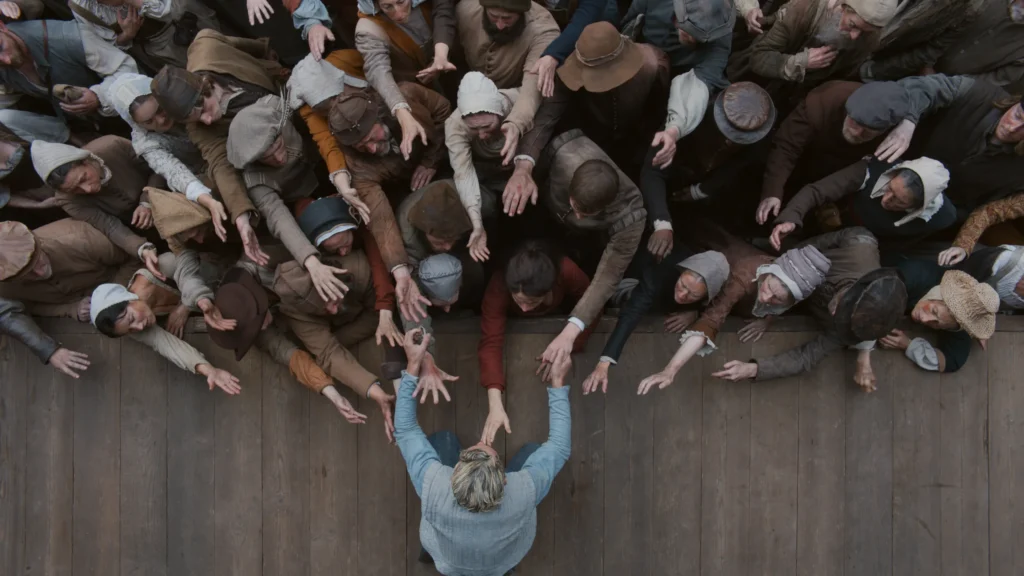
We cried all our tears watching Hamnet.
The film by Chloé Zhao, released in Italy last February 5 and widely talked about, receiving unanimous acclaim, tells the story that led to the creation of one of the greatest theatrical masterpieces of all time: Hamlet.
On one side we have William Shakespeare, played by Paul Mescal; on the other, his wife Agnes Hathaway, masterfully portrayed by Jessie Buckley. In between, we find late 16th-century England, Nature playing a fundamental role in people’s lives, the building and maintaining of a family, a vocation to follow, popular beliefs, and a romantic reverence for the occult.
The aspect we want to focus on, however, is the musical one, in particular the music that accompanies the film’s finale. Agnes, driven by despair and anger, but also by curiosity to see what her husband is doing in London, finds herself at the Globe Theatre, at the premiere of Hamlet. Here, surrounded by the crowd, she discovers that her husband has given the protagonist the name of their deceased son.
Beyond the words spoken on stage, there are no dialogues. Everything she feels — his almost shame, the suffering, the absence — is conveyed through unspoken looks, slow and measured gestures. And it is at this moment that we start to hear the notes of a violin: a melody that accompanies the scene and the emotions we feel on the other side of the screen.
It is “On the Nature of Daylight” by English composer Max Richter, who composed the entire score for Hamnet, for which he is Oscar-nominated.
We let ourselves go, slowly, to the respectful crescendo of the music, capable of transforming sadness into lightness, suffering into liberation. Only afterward, once the credits have rolled, do we realize that the same music has already accompanied us in other moments of revelation, suspended between darkness and light.
“On the Nature of Daylight” is not an original piece created for Hamnet, but a composition that Richter first released in 2004 as the second track on the album The Blue Notebooks, conceived as a protest album against the Iraq War.
Since then, Hollywood seems to have fallen in love with this track, using it for some of the most memorable scenes in films and TV series.
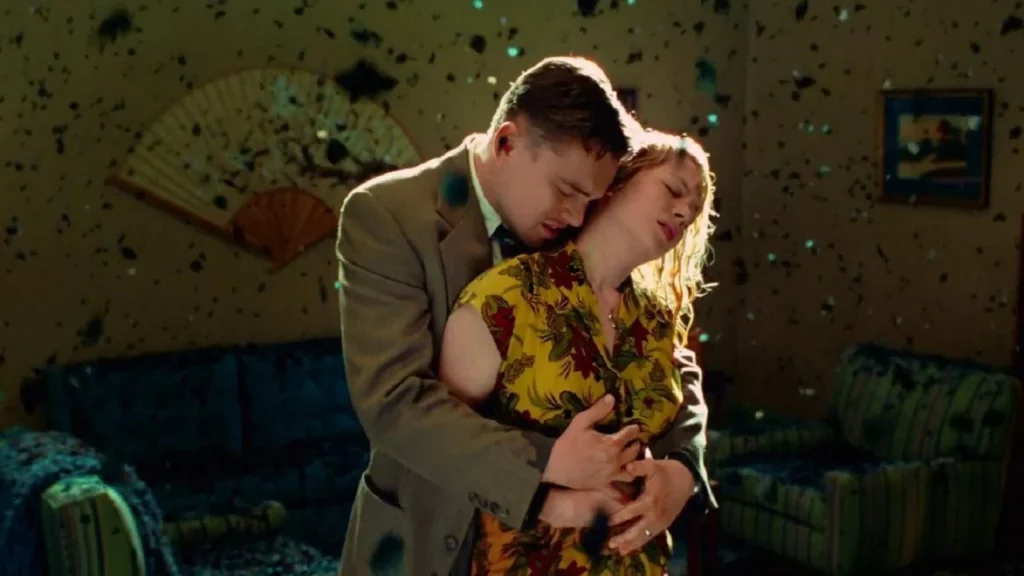
The most well-known and memorable is certainly the scene in Shutter Island, in the dream where Leonardo DiCaprio finds his wife, who begs him to forget her and wake up. Even here, although the scene is in the early part of the film, it is full of pathos and built on a slow emotional crescendo.
A few years later, we hear it again at the beginning and especially in the final scene of Arrival by Denis Villeneuve. In this film, a screenplay masterpiece, “On the Nature of Daylight” also serves a structural role: it is no coincidence that the notes heard at the opening return in the closing.
But not only films: also TV series.
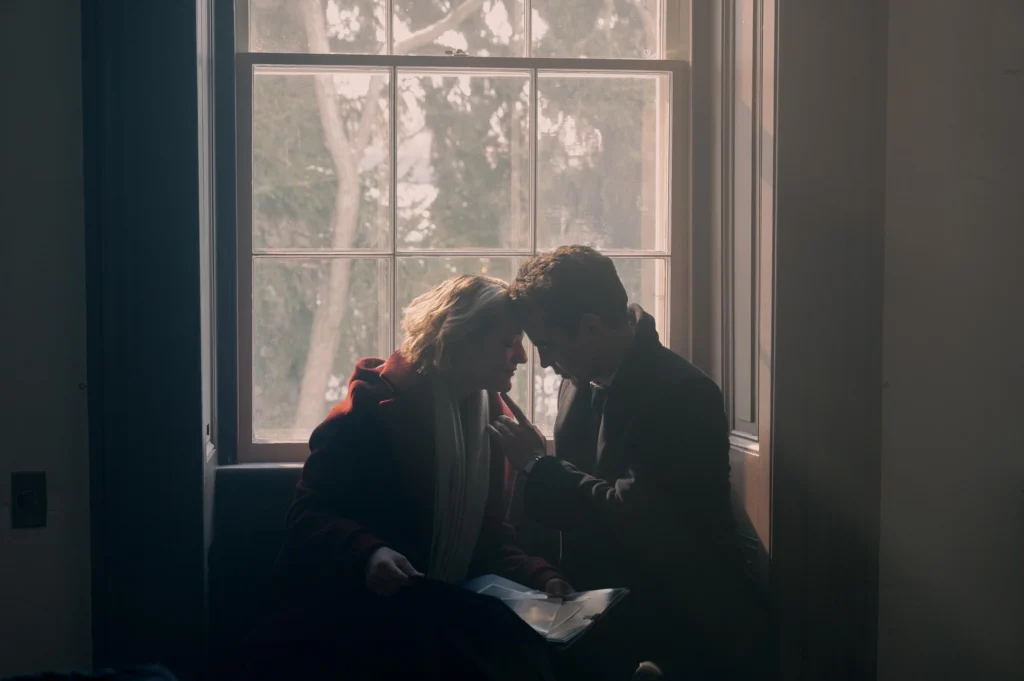
Max Richter’s track accompanies the moment in The Handmaid’s Tale when Nick sees June again after she has escaped, and meets their daughter Nichole for the first time.
More recently, it was chosen for the epilogue of the undoubtedly most moving episode of The Last of Us, dedicated to the story of Bill and Frank.
Although some may wonder whether the use of “On the Nature of Daylight” is becoming a cliché for certain scenes, we feel that in Hamnet it fits perfectly not only with the finale but with the entire story. It is not surprising that Chloé Zhao herself said that, when reaching an advanced stage of production and recording the final scene without a definitive music track, the choice of this piece felt almost natural.
In short, it had to be this way. And the final result proves it.