It’s hard to quantify the impact that Japanese anime have had on popular culture, and not only that, throughout the western world in the last 40 years. The influences can be found in every aspect of contemporary creativity, from music to fashion, from architecture to art, in a crescendo of citations, tributes and collaborations.
To be clear, Kanye West has repeatedly stated directly and indirectly that Akira by Katsuhiro Ōtomo is one of his most important cultural references – just look at the video for Stronger where Ye impersonates Tetsuo Shima, one of the two protagonists of the Japanese mangaka’s cyberpunk masterpiece, or one of his total red outfits during the first DONDA listening party, which recalls the iconic one of the other protagonist of Akira, Shotaro Kaneda.

It is within this framework of contaminations, cross-references and cultural references that the exciting collaboration between Rei Kawakubo’s Japanese brand Comme des Garçons and Katsuhiro Ōtomo, which dates back to 2013, should be framed. The project is also inspiring because of the mutual prominence Comme des Garçons and Katsuhiro Otomo have had in their respective fields of interest and how much their work has inspired millions of people around the world.
If in the 80’s/90’s Ōtomo exported anime out of Japan to a mainstream level – I still remember the first TV viewing of Akira on what was then TELE+ in the mid 90’s – Rei Kawakubo and Comme des Garçons, in the same period, with their Paris shows marked the beginning of a new era for Japanese fashion.
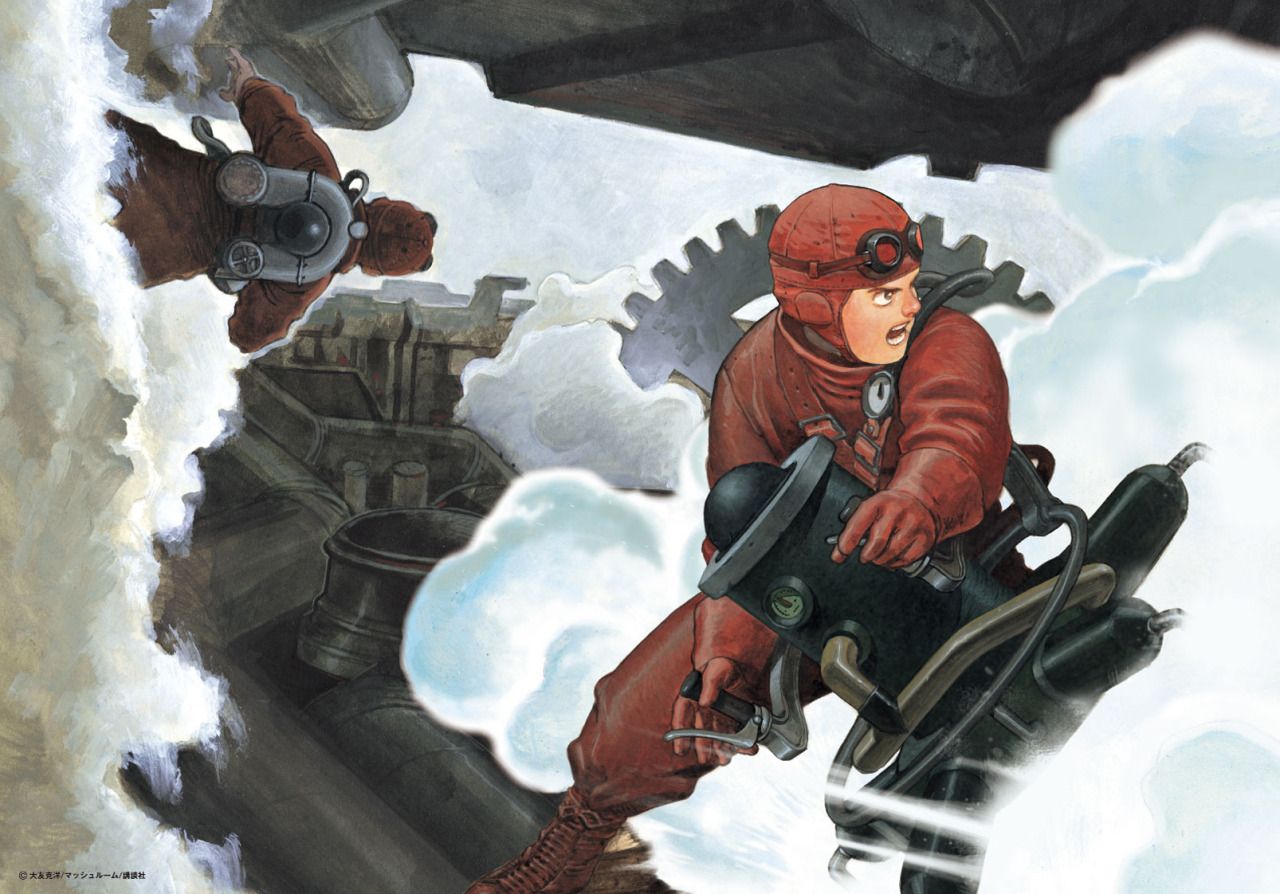
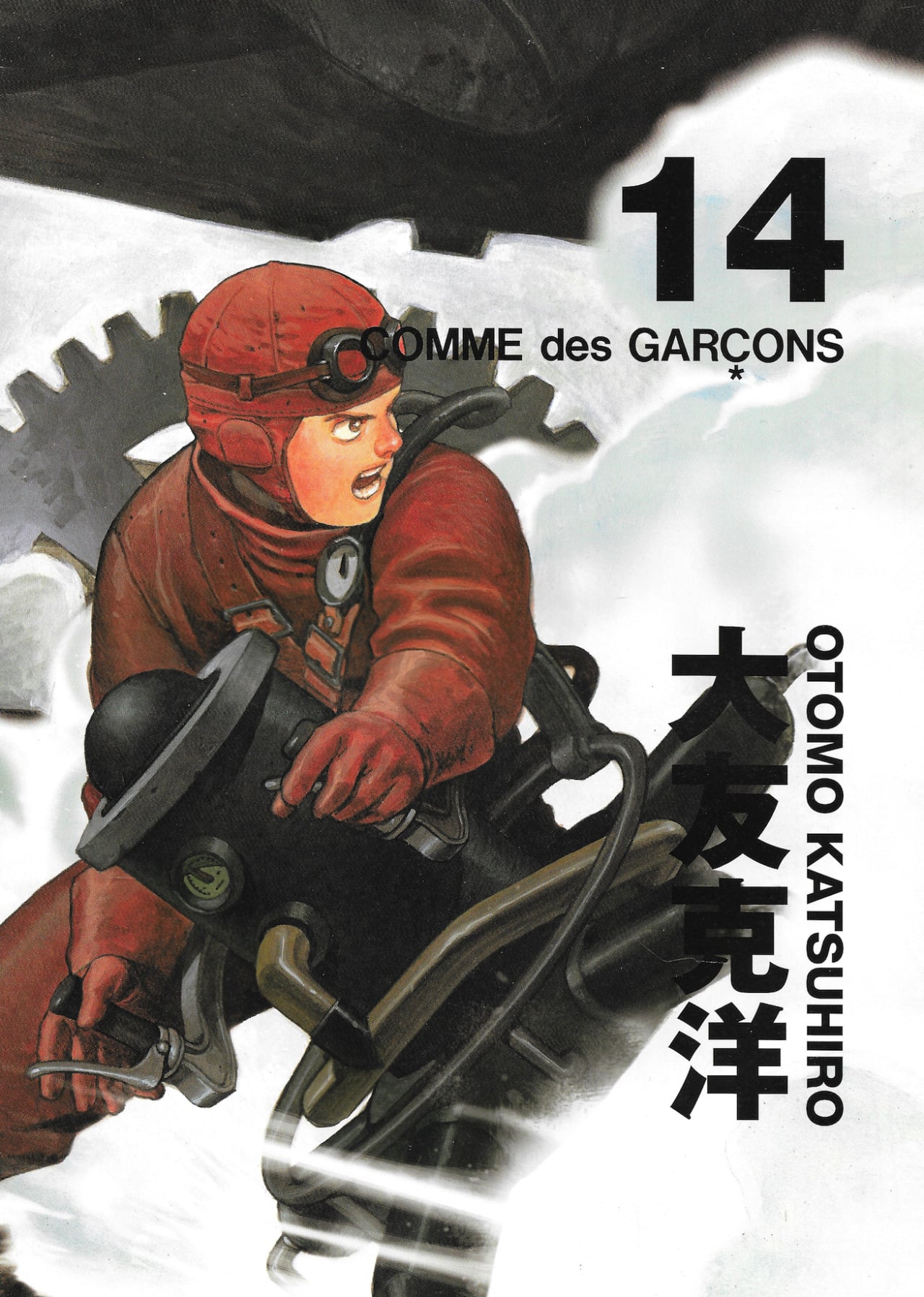
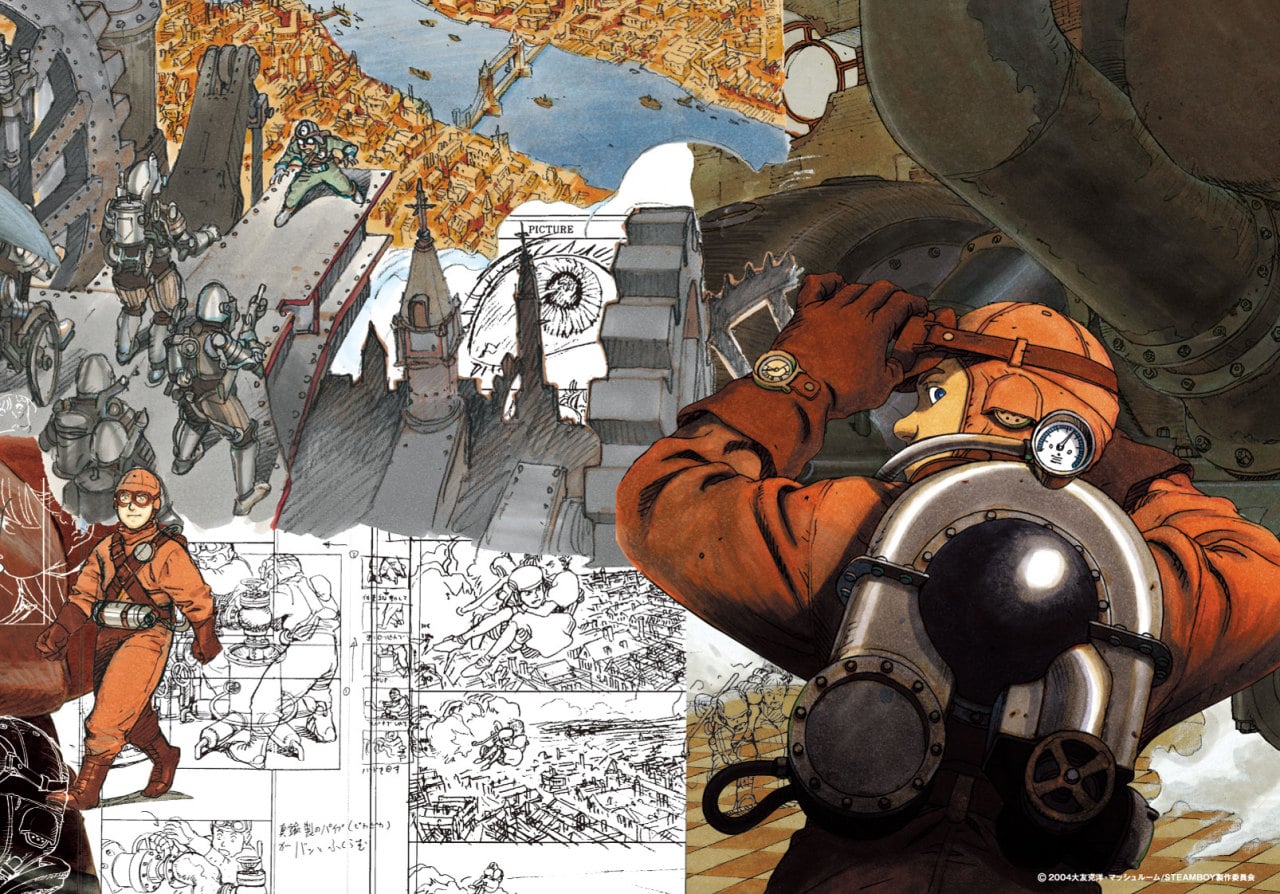
The project that involved Comme des Garçons and Katsuhiro Ōtomo saw the Japanese cartoonist and director be the protagonist, with his drawings and characters, of a series of booklets released throughout 2013. Among others we find Shōtarō Kaneda of Akira, Ray Steam, the protagonist of Steamboy – steampunk anime of 2004 set in an alternate Victorian England of 1866 on the eve of the first Universal Exposition – to name the most famous, but we also find references to other works of the mangaka as Memories of 1995.
The result is a series of small masterpieces made of drawings, sketches and images of Otomo’s films that you can take a look at below.