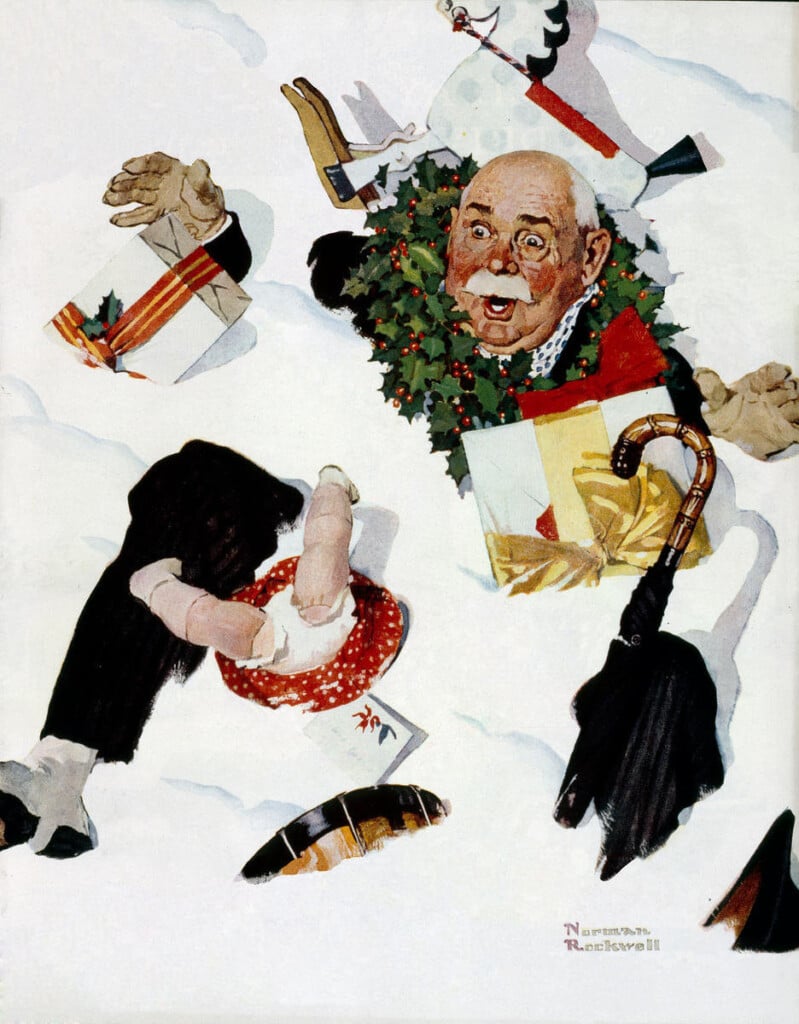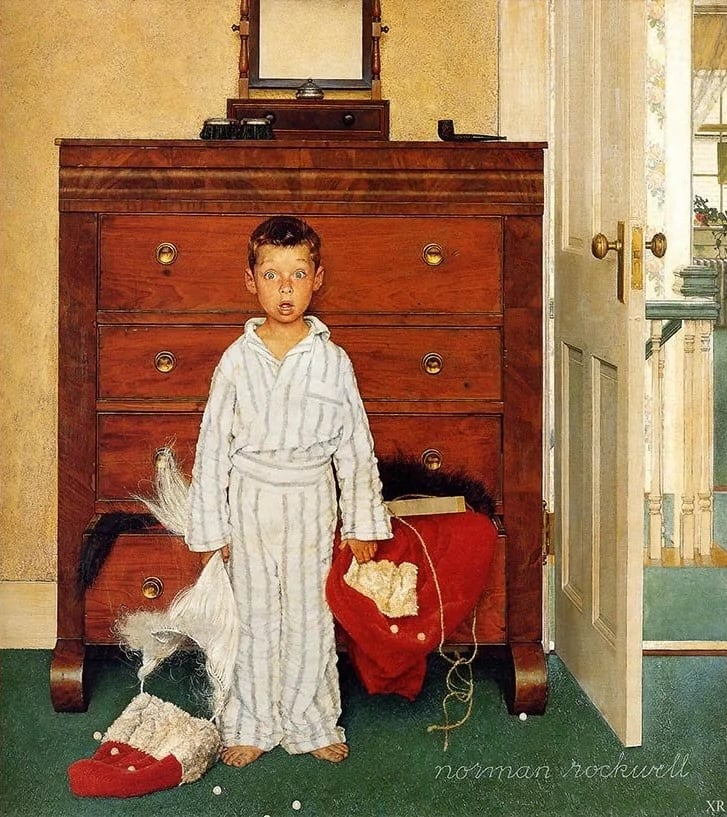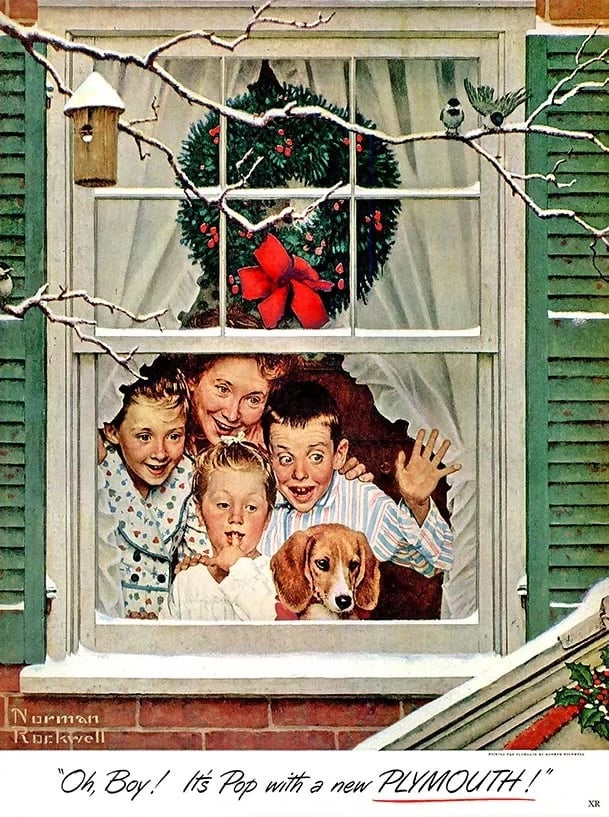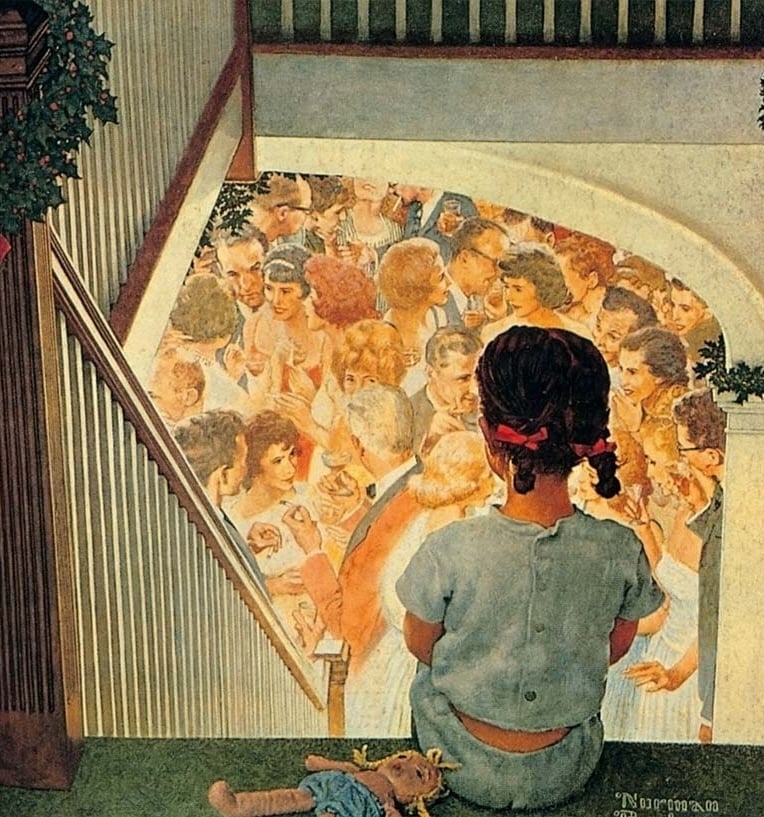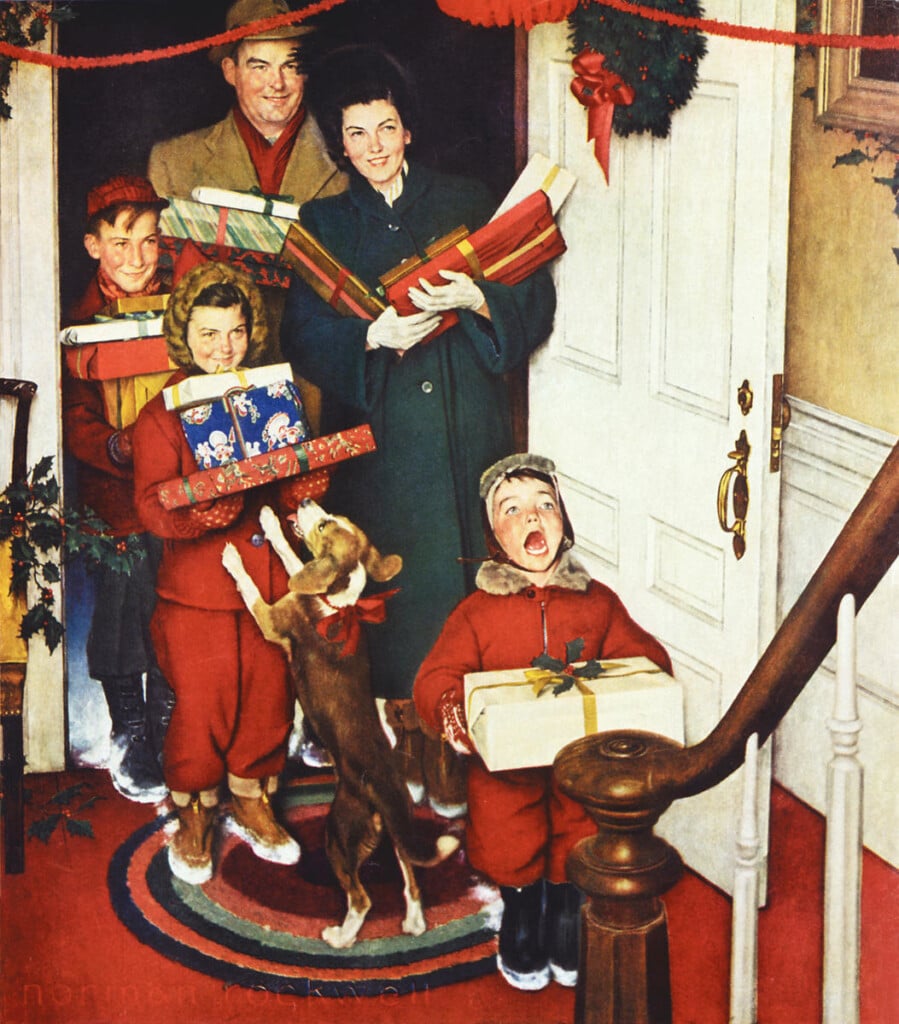
The crowded stations filled with people returning home, running to the window to see the snow that fell overnight, discovering the truth about Santa Claus—these are all moments that surely belong to someone’s Christmas, yet they have entered everyone’s imagination thanks to one person, one artist: Norman Rockwell.
We are in America in the 1910s. From a very young age, Norman Rockwell showed a strong talent for drawing; at 14 he enrolled at the New York School of Art, and two years later he began studying at the National Academy of Design. It was during this period, at just 16 years old, that he received his first professional commission as an artist: 4 different Christmas-themed designs for greeting cards. Perhaps a sign of what his career would become.
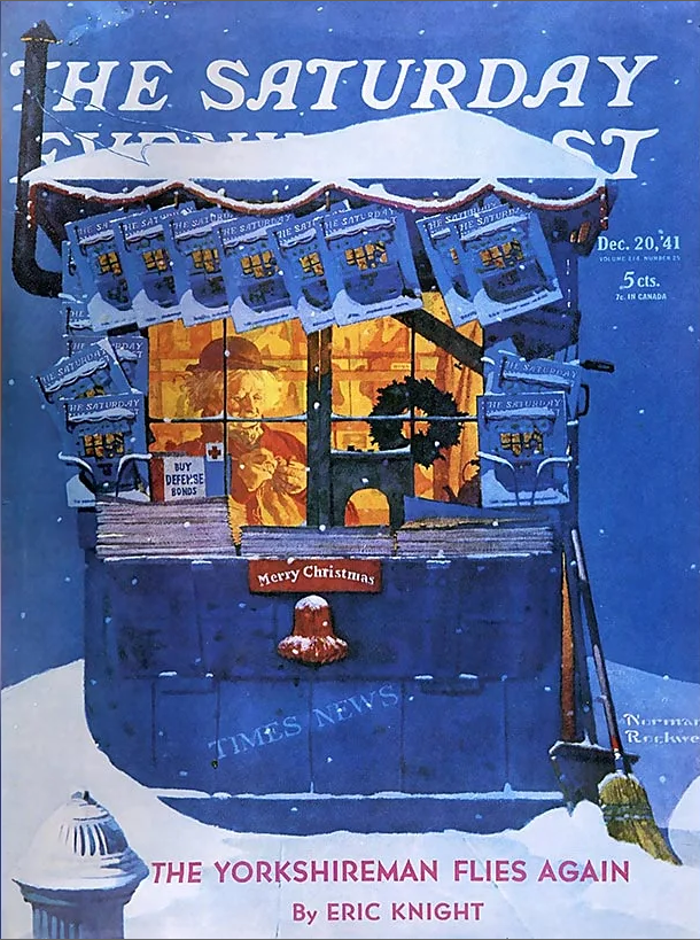
Rockwell then began portraying American life and culture in all its nuances, eventually reaching the collaboration that made his illustrations accessible to the wider public: his work with The Saturday Evening Post. The role of George Horace Lorimer, editor of The Saturday Evening Post, was fundamental; he had the insight to use specific moments of the year—like the Christmas holidays—to commission artists to create dedicated cover illustrations. An idea that might seem obvious today (perhaps even ordinary), but at the time represented a true revolution that had a positive impact on sales: during Lorimer’s tenure, the Post’s circulation grew from several thousand to over a million copies.
At the center of this strategy was Rockwell himself, who became so specialized in Christmas illustrations that the imagery he created is the very one we still have today—so much so that he has been called “the inventor of the American Christmas”, which then became everyone’s Christmas.
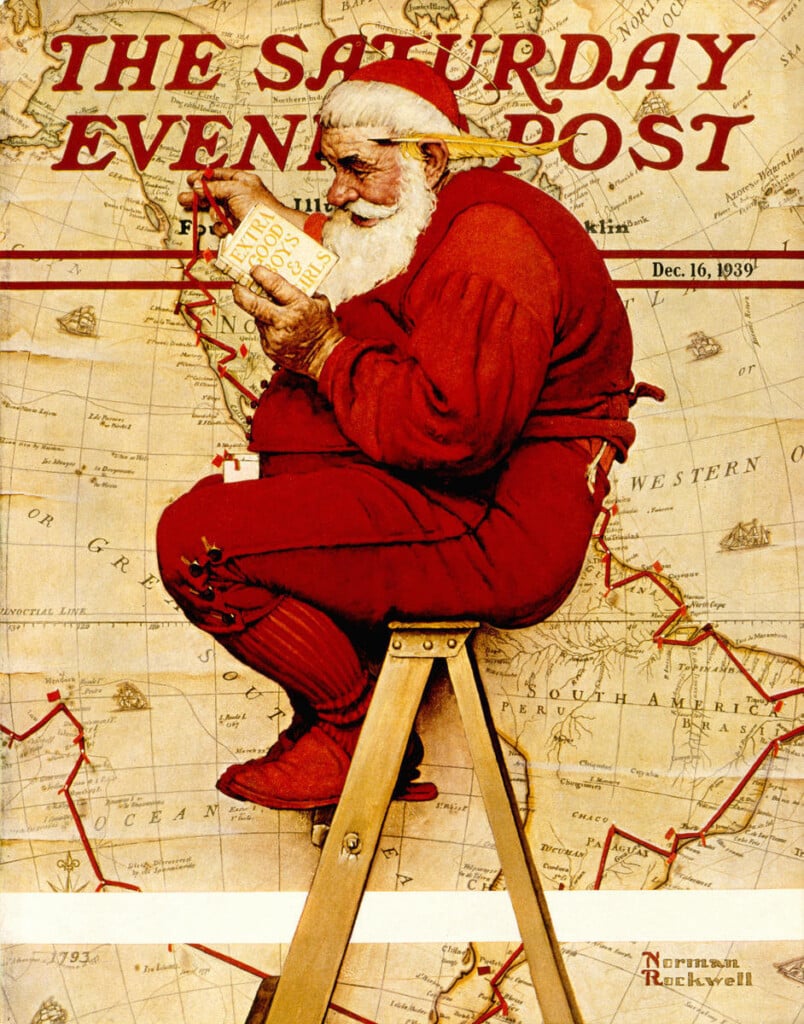
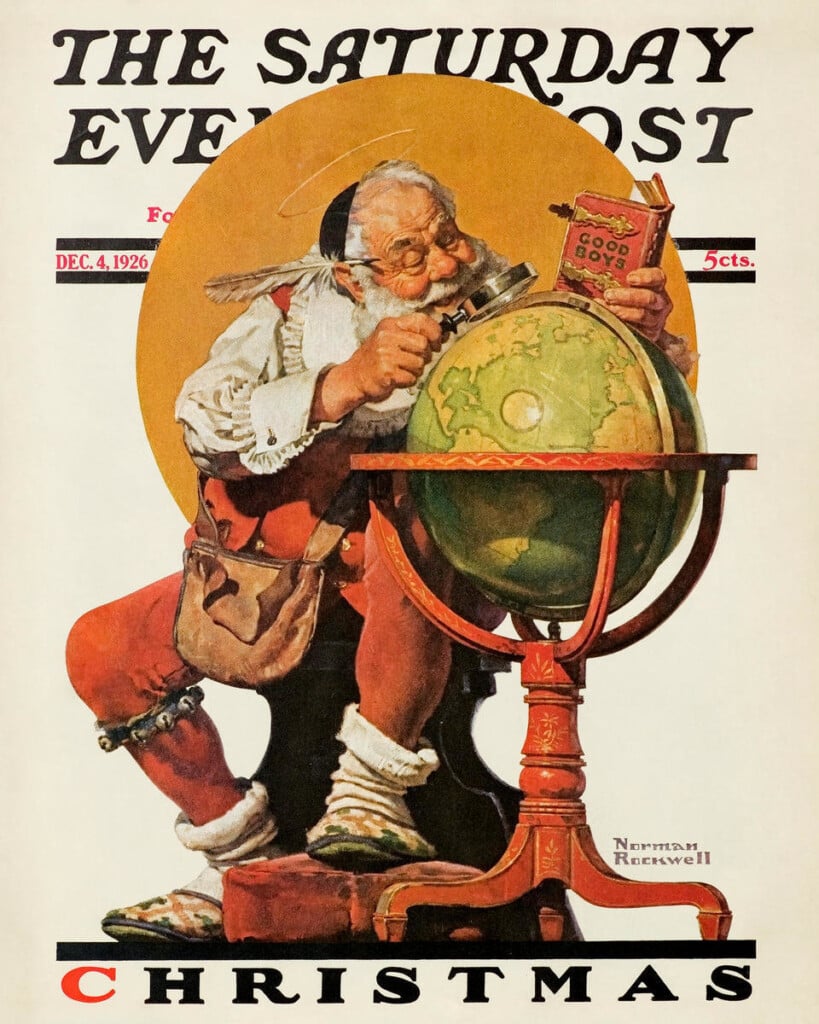
Not only Santa Claus busy doing everything from studying maps to reading every single letter—Norman Rockwell went deeper, portraying both the frenzy that precedes the holidays and the more melancholic and nostalgic moments.
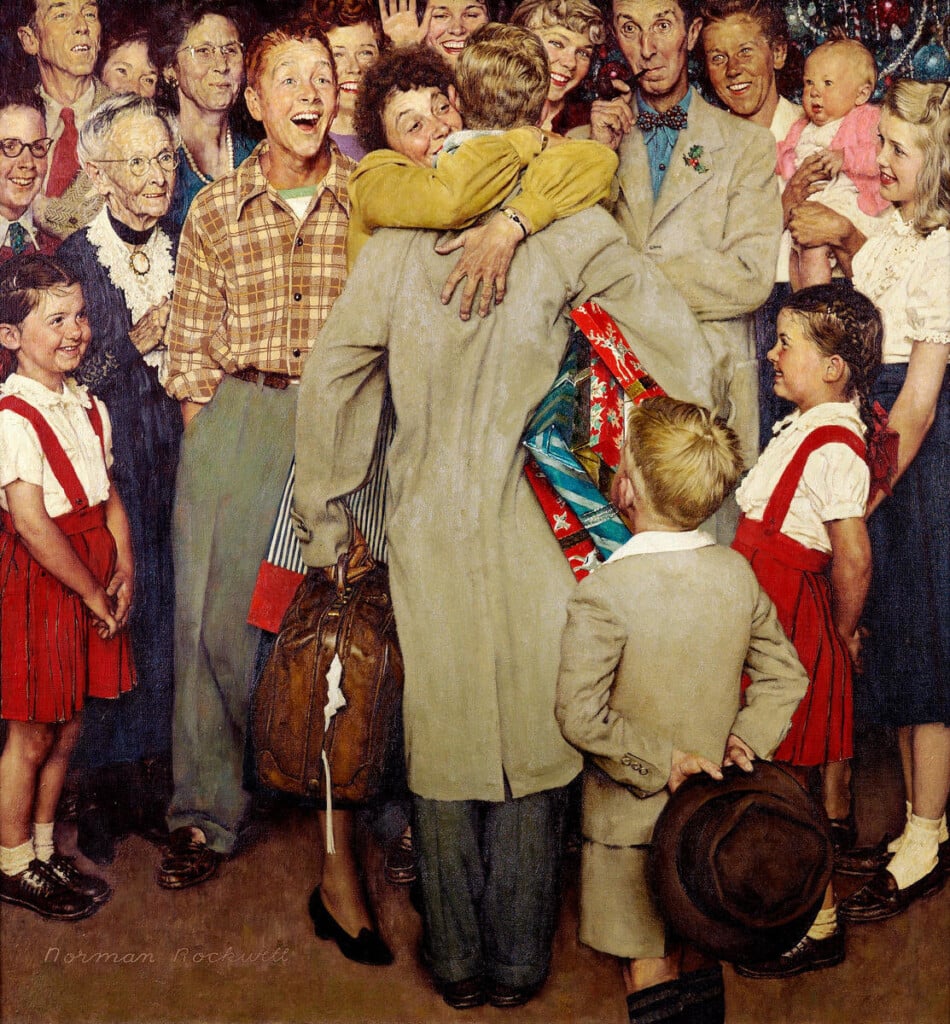
Two illustrations are certainly the most emblematic of his idea of Christmas.
Christmas Homecoming is not just a simple illustration—it is a family self-portrait. The moment is that of returning home, and at the center of the scene we can spot Rockwell himself (he is the man smoking a pipe).
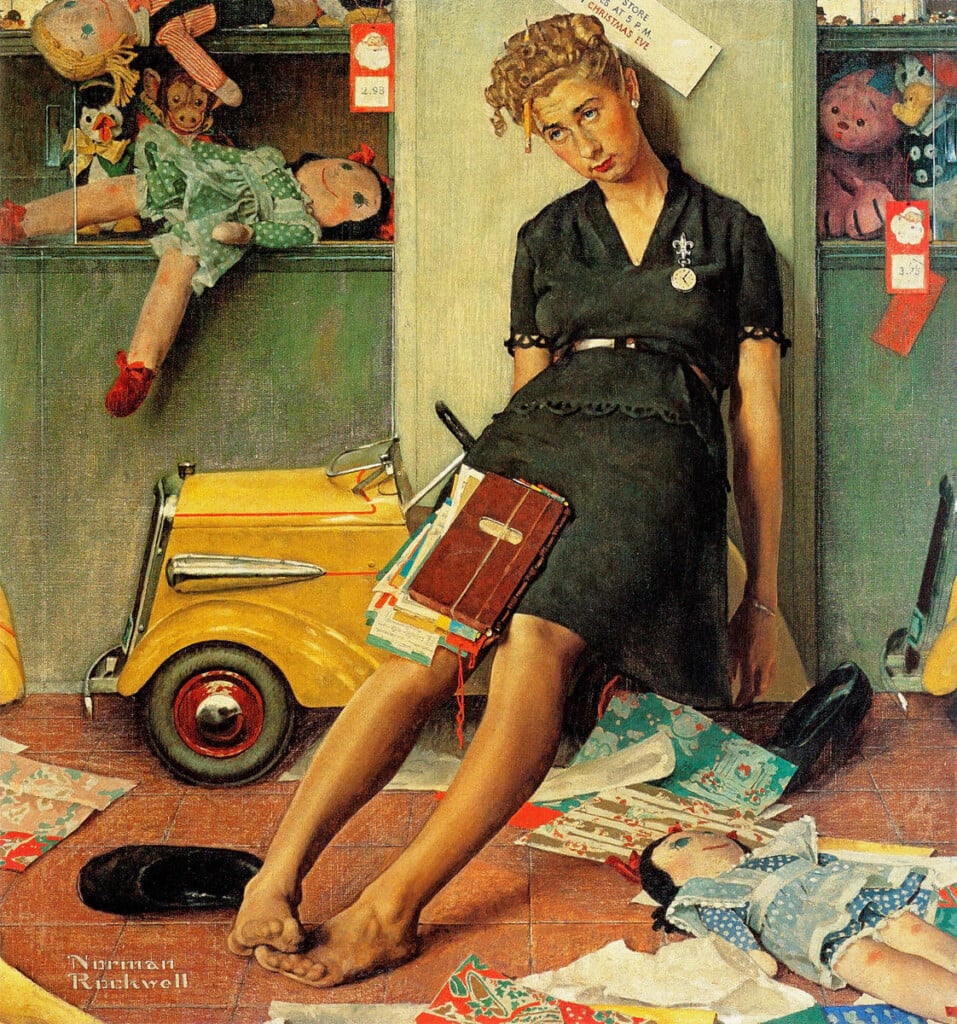
The other emblematic illustration—demonstrating his ability to portray the world around him—is Christmas Rush (Tired Salesgirl on Christmas Eve). The image portrays a shop assistant, likely from the Marshall Field department store, exhausted after a holiday shift.
It is precisely this ability of Rockwell—not idealizing Christmas, but portraying its everyday aspects, even those lacking the typical holiday magic—that makes his illustrations timeless, even after a hundred years.