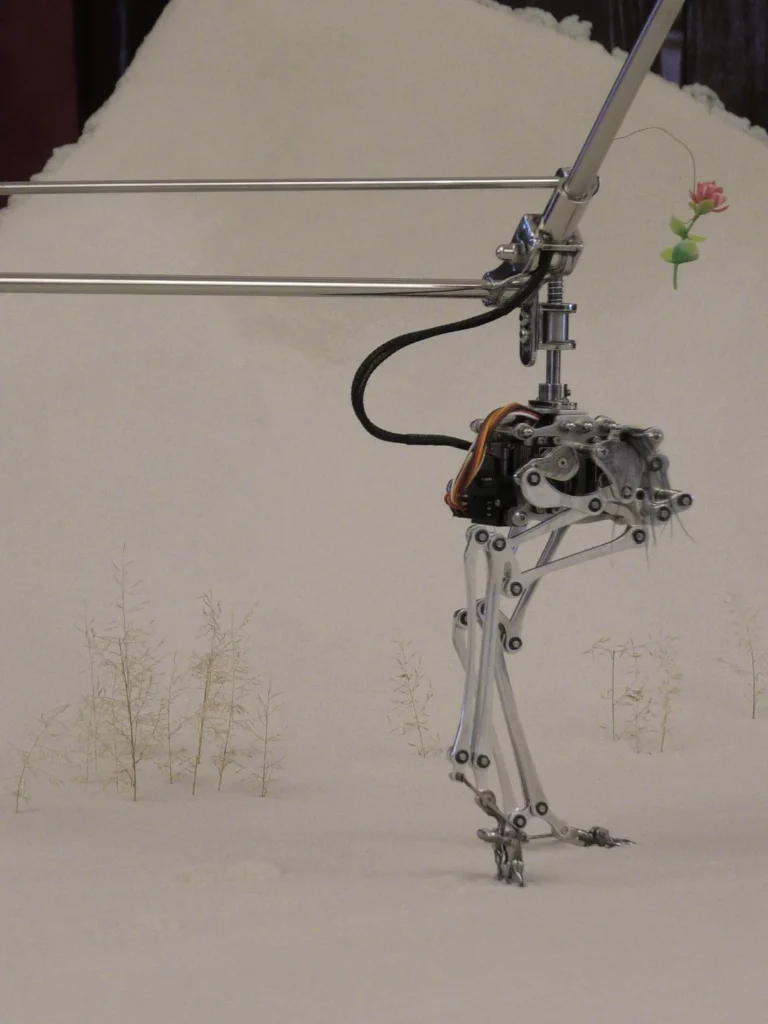
A landscape of sand crossed by a slow and relentless movement. No Bird (2025) by the artist duo UJOO+LIMHEEYOUNG is a kinetic installation composed of electronics, stepper motors, aluminum, stainless steel, brass, sand, and light devices. A mechanical system built with engineering precision that, instead of producing efficiency, stages a fragile narrative of extinction.
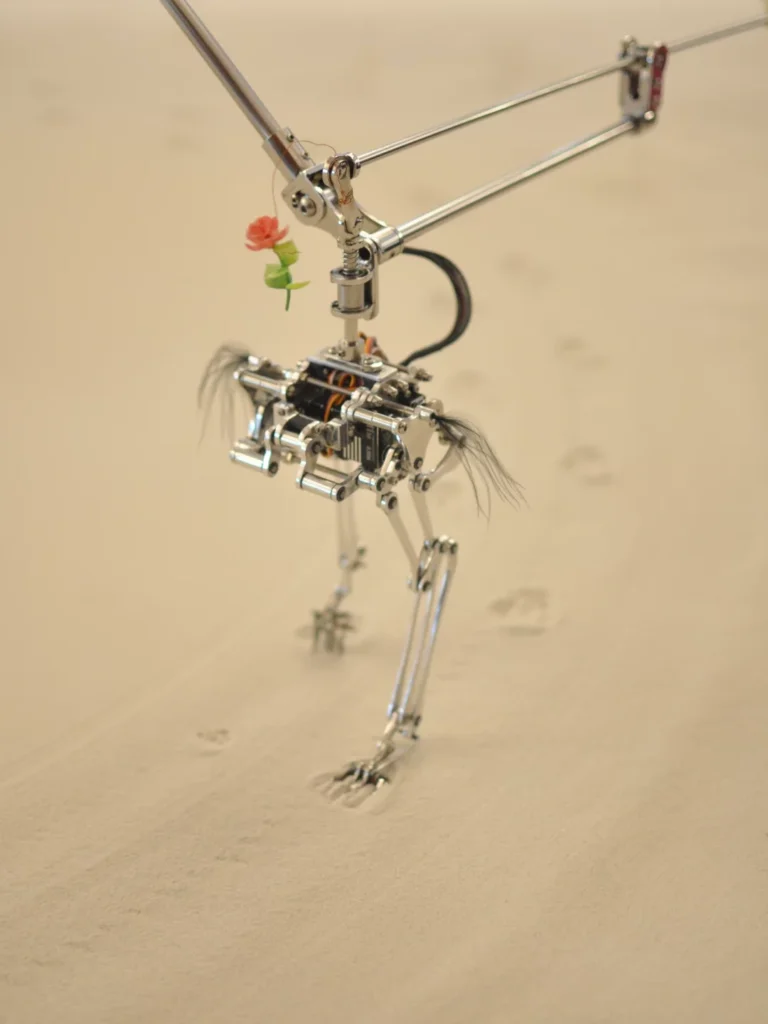
The work takes shape from the imagination of flightless birds. They lived on islands without predators and had stopped lifting into the air because they no longer needed to. Then humans arrived, and that same evolutionary choice turned into vulnerability. Many species disappeared. From this comes a simple yet disarming question: if their footprints had been erased, would they have managed to survive?
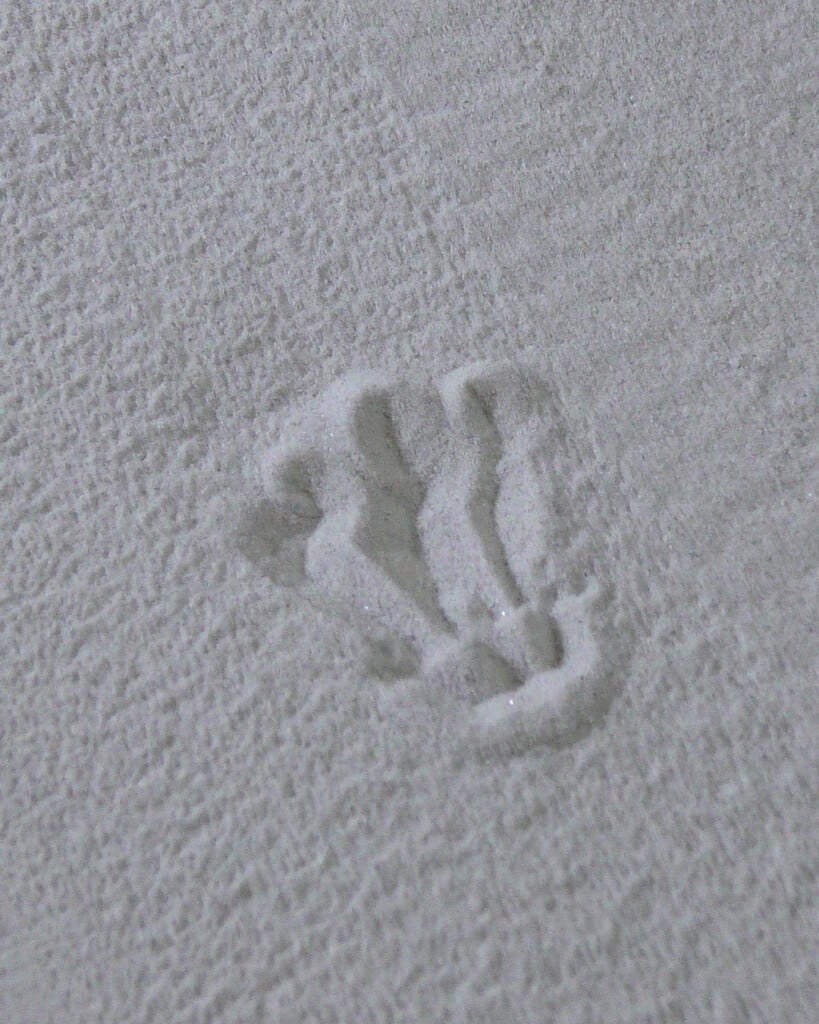
Thus No Bird was born: a machine that advances across the sand, placing mechanical legs and imprinting clear, recognizable traces. The gesture is repetitive, as if an invisible body were truly moving through space. Immediately behind it, a second device follows the same path. A brush-like head scratches the outlines of the footprints, a thin metal rake redistributes the grains, and finally soft bristles level the surface until it becomes uniform again. Every mark is methodically erased.
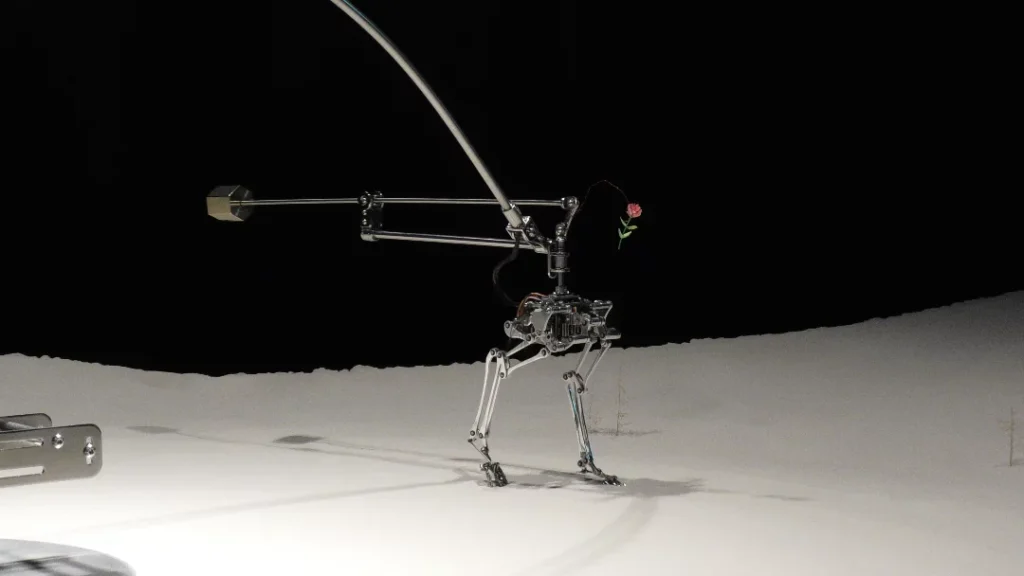
The result is a cyclical choreography in which formation and erasure endlessly chase one another. The sand becomes a temporary archive, a surface that receives and forgets at the same instant. To remember and to remove, to generate and to extinguish, to destroy and to repair: the mechanism of the installation mirrors that of human survival.
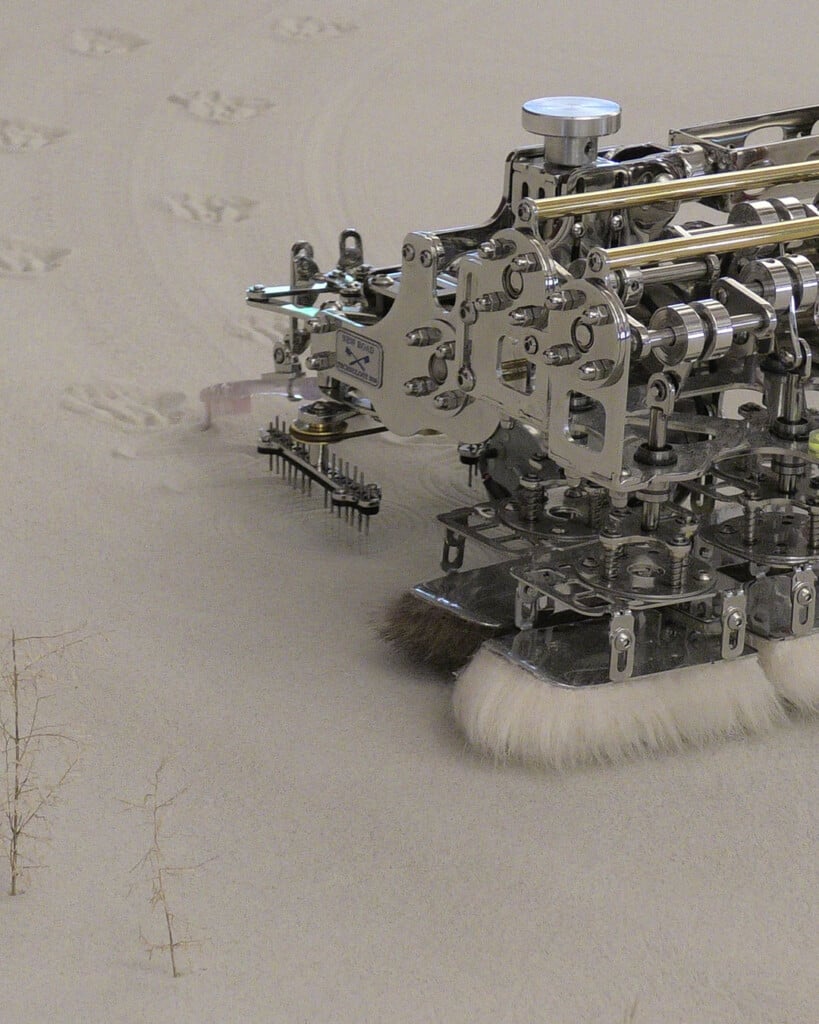
The bird is never present, except as a trace and as an absence. Metal, brass, and circuits evoke an organism that no longer exists. Technology does not celebrate progress, but constructs a melancholic image of what has been lost. Absence becomes the true body of the work.
Presented as part of the fourth edition of the Seoul Arts & Tech Festival Unfold X 2025, titled Let Things Go: 관계들의 관계, the installation engages with the idea of letting go and with the relationships between presences and disappearances. If our existence is founded on a continuous alternation of traces and erasures, an inevitable question remains open: what kind of mark are we leaving on the world? And are we still capable of becoming a gentler presence for what surrounds us?