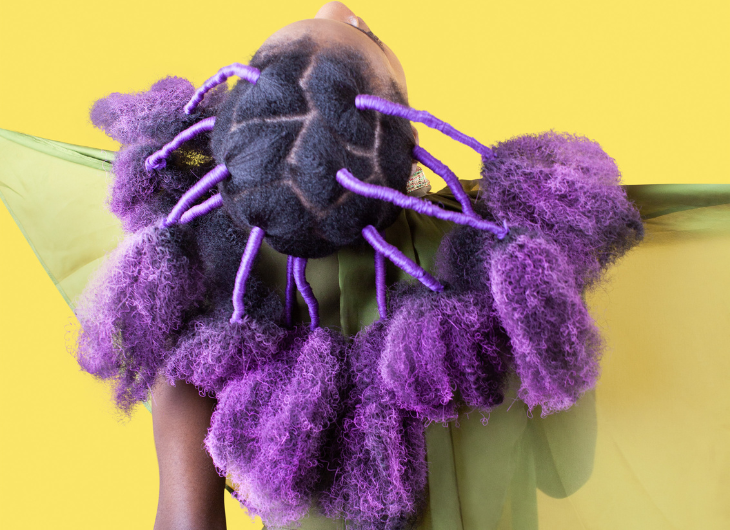
In the 1960s, the Nigerian photographer JD ‘Okhai Ojeikere photographed over 1000 women with the aim of documenting, in a research on the evolution of postcolonial African society and the diversification between ethnic groups, the complexity and symbolism hidden behind the hairstyles of Nigerian women. African hair braiding methods date back thousands of years and Nigerian hair culture is a rich and extensive process that begins in childhood. The methods and variations have been influenced by socio-cultural patterns, historical events and globalization. Hairstyles range from being purely decorative to conveying deeper and more symbolic meanings, revealing marital/social status, age and tribal/family traditions.
Hair braiding in Nigeria is a process that has historical and cultural roots that continue to influence today’s generation. Children often reproduce the unique styles of their tribe during “culture day” at school and girls show up in traditional hairstyles at cultural dances, parties and special events such as weddings. Sometimes, these strange “architectures” are named after objects they resemble, such as pineapples, baskets or skyscrapers.
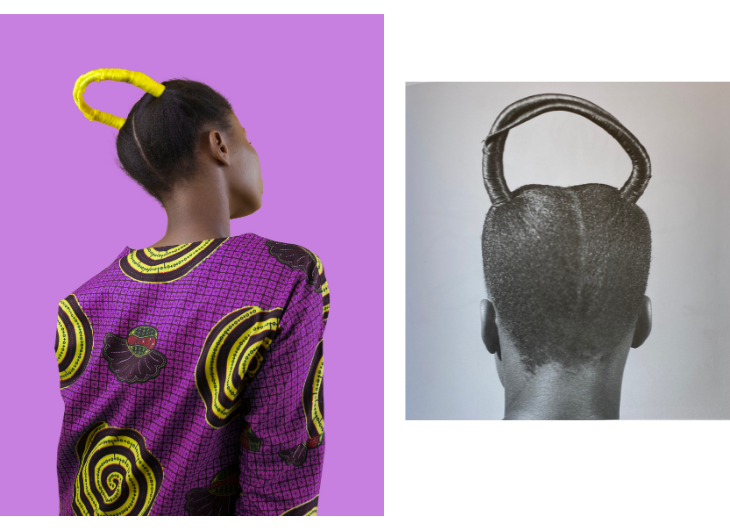
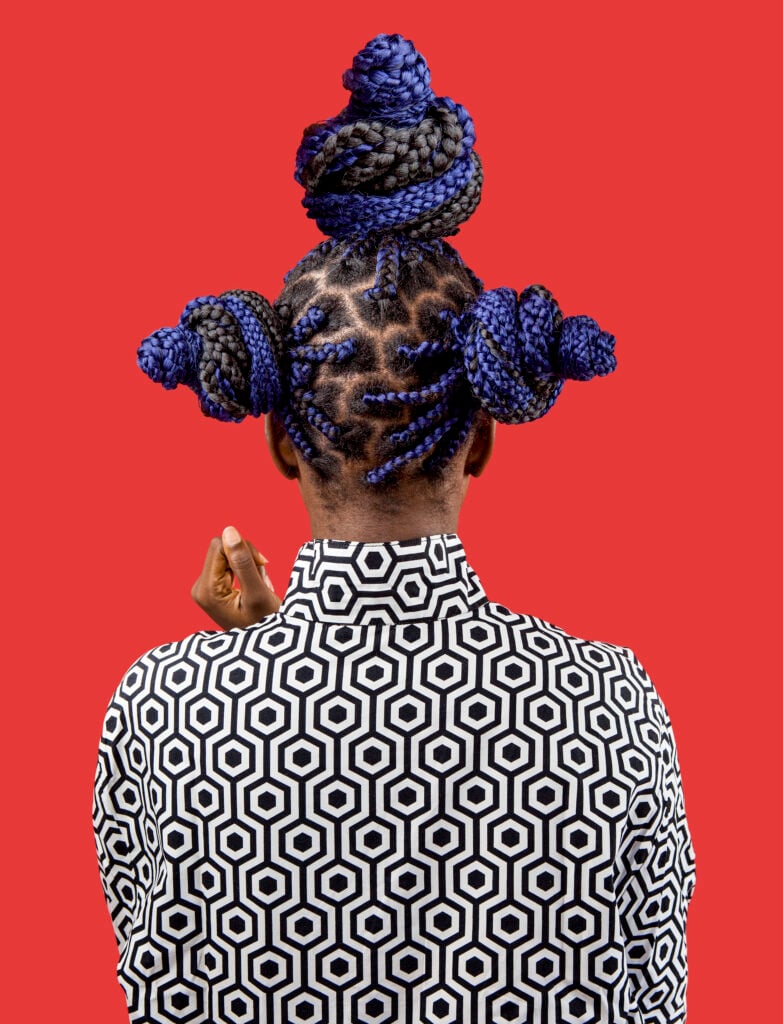
More than 60 years later, photographer Medina Dugger, originally from the United States but living in Lagos for years, has decided to celebrate this incredible work with her “Chroma: an ode to JD ‘Okhai Ojeikere”, an imaginative and contemporary series that recreates Ojeikere’s hairstyles in color, but not only. From the 60s to today, some of the more intricate and traditional styles are seen less frequently in metropolitan cities: “Chroma” therefore aims to preserve and encourage an ancient Nigerian practice, representing it in a contemporary perspective.
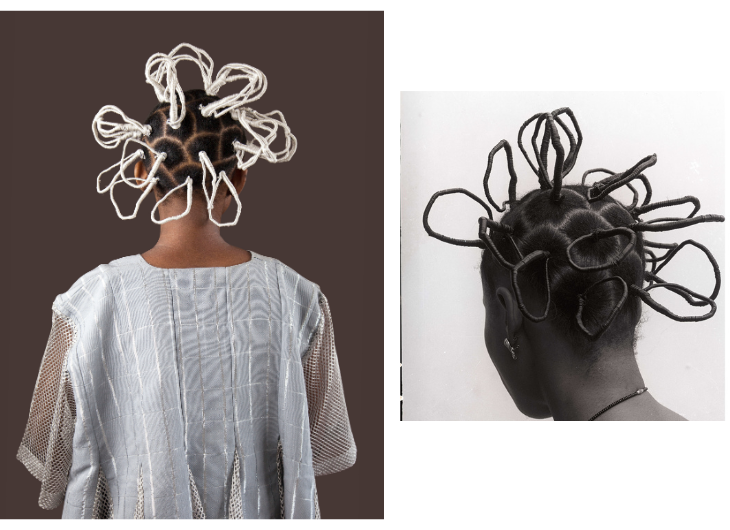
The photographed women are portrayed in dresses by contemporary Nigerian designers and local tailors, in an explosion of color and joy and the materials used for the series such as colored weaves, wools, threads, beads, shells and colored hair sprays were sourced in the Balogun Market on the island of Lagos. The series is also a tribute to the artistry required to craft these intricate hairstyles, a practice with which most people, regardless of their background or ethnicity, can identify. Highlighting both traditional and contemporary designs, the series takes a more whimsical approach to Ojeikere’s documentary style and recontextualizes hairstyles, to highlight both current and fictional hair patterns, celebrating the art of Nigerian hair culture.
Medina contacted local hairstylist Ijoma Christopher who recreated the hairstyles. The process of creating the hairstyles was collaborative and agreed upon through discussions between Medina, the models and the hairdresser. Strong attention is also given to the clothing that sees garments designed by Medina herself and by local stylists.