Since the 1990s, everything that was considered taboo for Mexican cinematography has been overcome with awareness and freedom that has been cleared of all censorship and Y tu mamá también can be considered the point from which this evolution begins.
In 2001 Alfonso Cuarón, together with his collaborator and director of photography Emmanuel Lubezki, breaks into the scene with a Mexican indie road-trip that crosses, in climax, the immature feelings of two young boys and the strength of a woman who leaves behind a more complex past.

The feature film manages to maintain a strong social critique, a distinctive element of Latin cinema since the 1960s, without renouncing to entertain the viewer with a good plot in which to recognize himself.
A novelty also with regard to the inclusion of making-of in 4:3 format, the use of tools such as voice-over and the “mirada objetiva irreal“, like as the total detachment between the look of the camera and that of the protagonists.


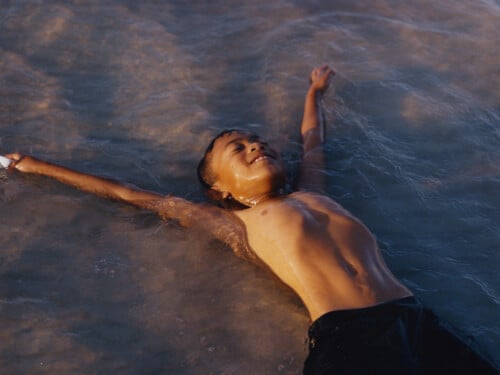
Today Cuarón’s film continues to travel through the collective memory because it remains relevant in telling the story of a generation of young people unable to understand their emotions in a world that is just as confused. All told through a vintage film, almost dirtied by the salt that brings us back to breathe the summer breeze and the scent of hot days by the sea.


The essence is the same that Monica Figueras, Spanish photographer, manages to crystallize in her photographic collections where the protagonists are the sea, the crowded beaches in summer and the gentle carefreeness that follows.

A conscious choice and explained by the sentence on the landing page of his website “Close for winter, well be back in Summer”.


Did you know: The ending scene where they talk while having a coffee was the first scene filmed.
Genre: Drama
Director: Alfonso Cuarón
Director of photography: Emmanuel Lubezki
Writers: Carlos Cuarón, Alfonso Cuarón
Stars: Maribel Verdú, Gael García Bernal, Daniel Giménez Cacho