A uterus firing eggs at its enemies, a cancer cell singing lullabies while inviting the audience to join in its own funeral song. A face scanned down to the millimeter and reincarnated in six different versions, each corresponding to a realm of the Buddhist Wheel of Life. What holds together images so different, so apparently incompatible? The answer lies entirely in the name of their creator: Lu Yang, an artist born in Shanghai in 1984 who trained in the New Media Art department of the China Academy of Art in Hangzhou (a student of Zhang Peili, the pioneer of Chinese video art), and who in every work collapses biomedical horror, kawaii aesthetics and Eastern metaphysics into the same frame, without ever letting one register dominate the others. It’s a philosophical laboratory disguised as an LED screen, where Buddhism, neuroscience, biomedicine and otaku culture are made to collide.
The most original feature of Lu Yang’s work isn’t the use of technology but the way technology is treated as a lens through which to reread ancient doctrines. From early works like Wrathful King Kong Core (2011), the artist stages bodies manipulated by electrical impulses, prosthetics, neural signals, not to indulge a cyberpunk aesthetic, but to raise an uncomfortable, almost clinical question about the relationship between will and biological automatism.
The same logic runs through UterusMan (2013), a genderless superhero whose body takes the anatomical shape of a uterus and who fights enemies with “genetic attacks” and chromosomal mutations, a work that, behind its pop irony straight out of a ’90s video game, questions the very idea that sex and identity are fixed biological facts rather than constructions as manipulable as a character in a game engine.
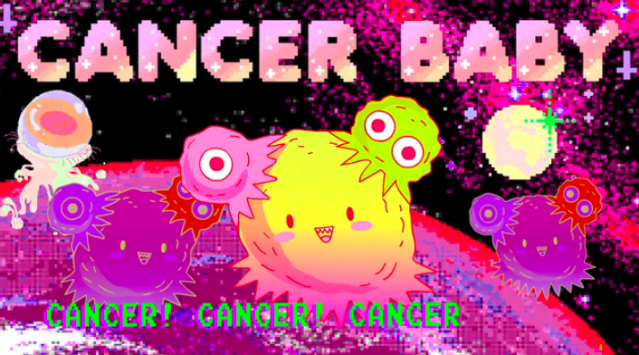
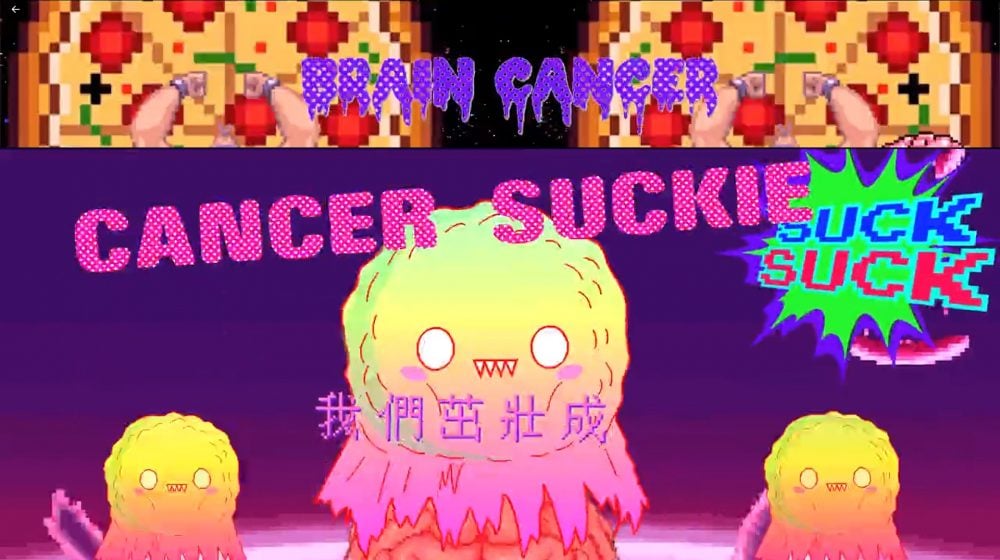
Cancer Baby (2014) pushes the same method to its extreme consequences, cancer cells transformed into “kimo-kawaii” characters that sing and dance, inviting viewers to chant along with them grotesque slogans about their own destruction. It’s a calculated moral short-circuit: disease and biological horror are rendered adorable precisely to force the viewer to confront the fragile boundary between the self and what threatens it from within.
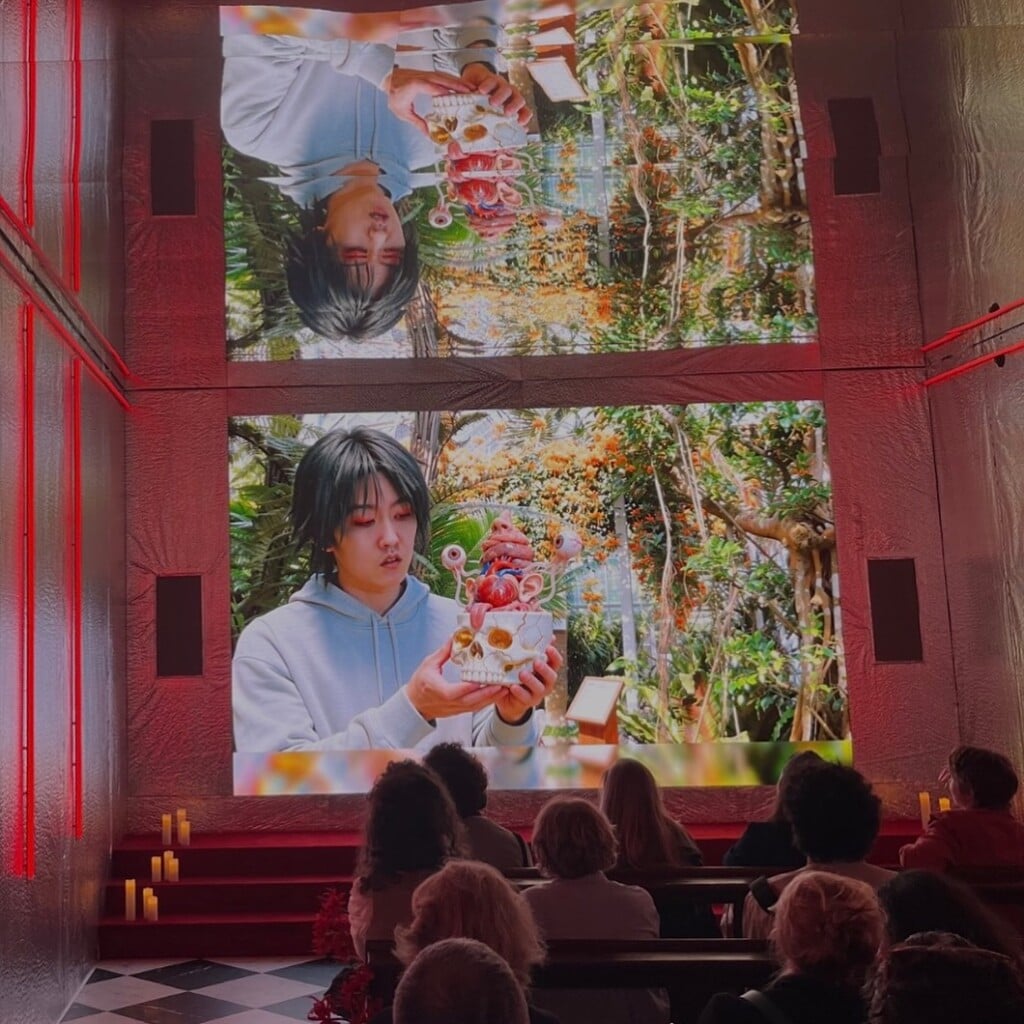
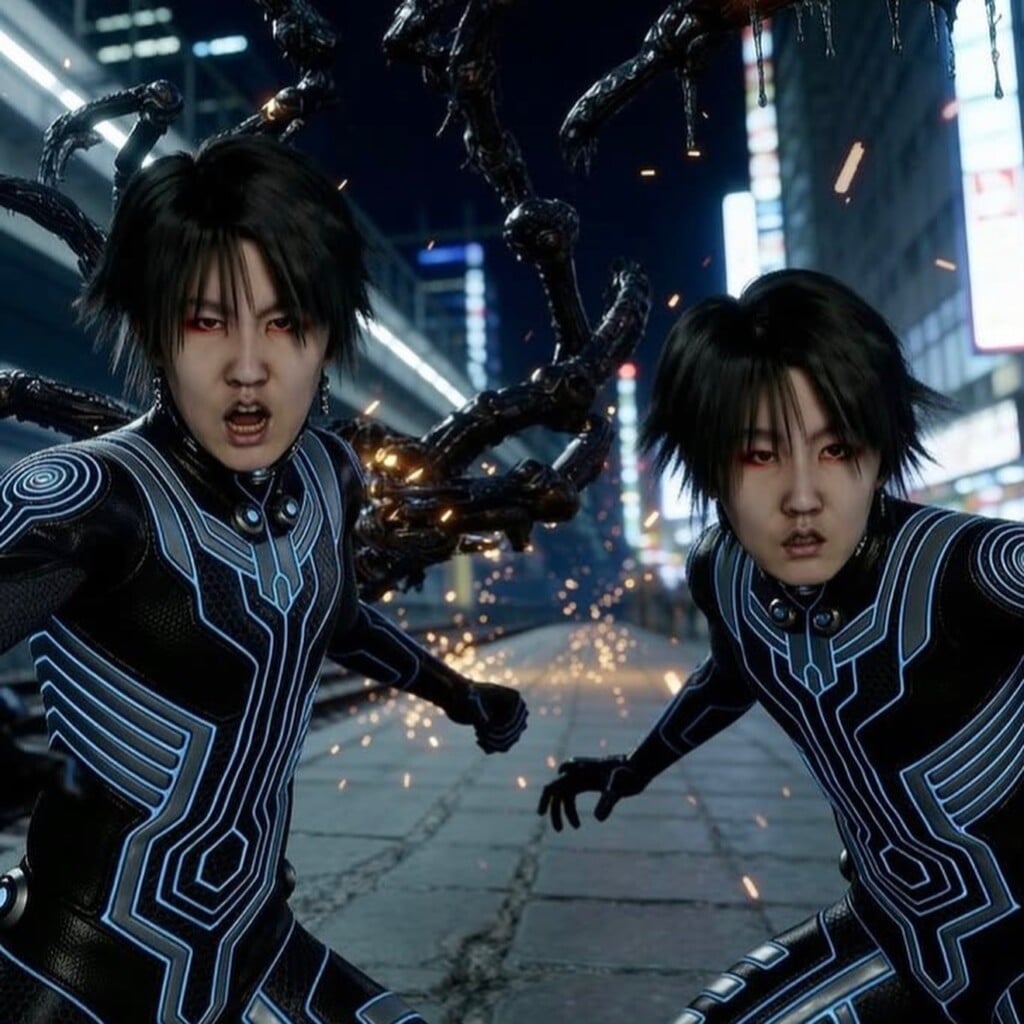
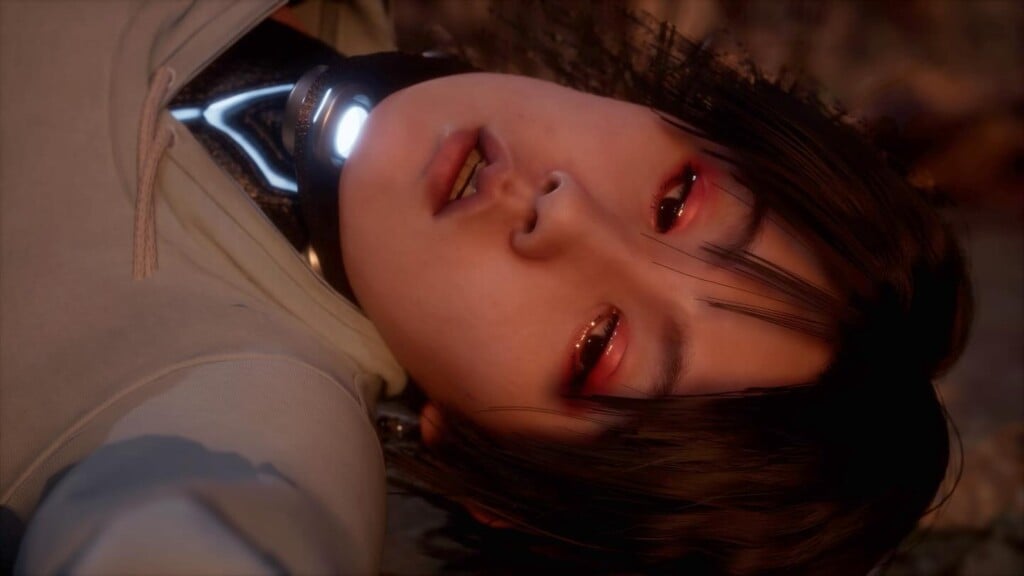
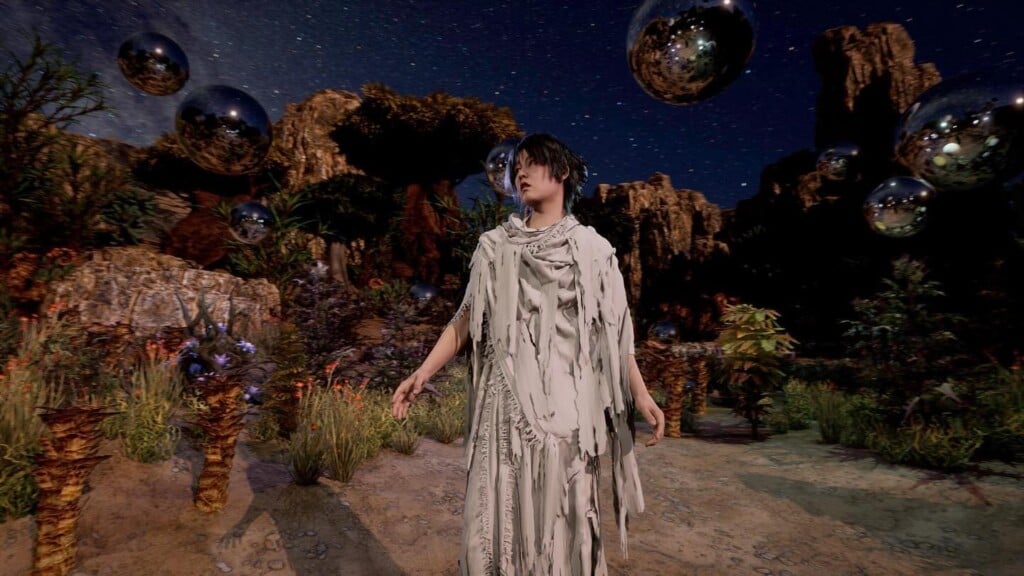
The project that established Lu Yang internationally, with the BMW Art Journey award in 2019, Deutsche Bank Artist of the Year in 2022, a presence in the Central Pavilion of the 2022 Venice Biennale (The Milk of Dreams) and solo shows at ARoS in Aarhus, the New Museum in New York, and on through Fondation Louis Vuitton in 2024 and MUDEC in Milan in 2023, is the DOKU cycle: a digital avatar built from a high-definition facial scan of the artist’s own face, able to reproduce its expressions with near-total fidelity.
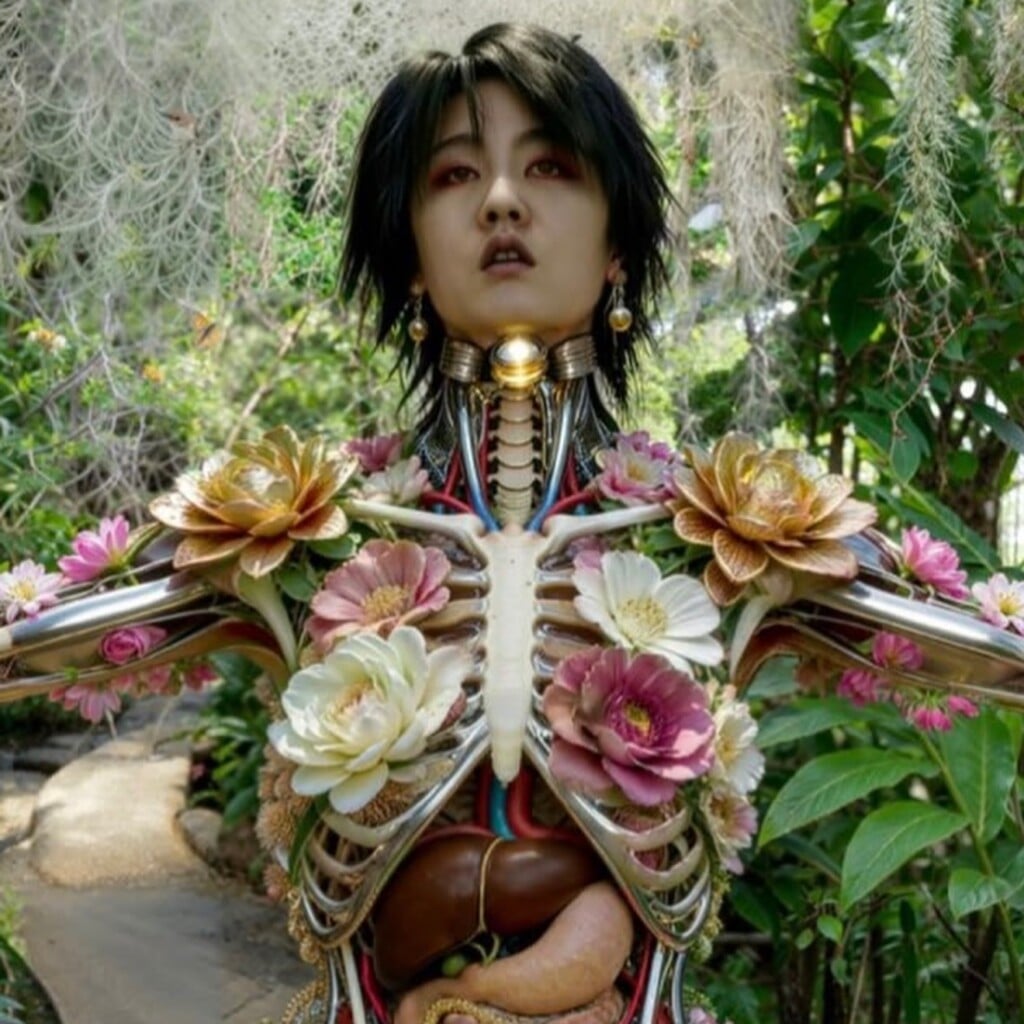
The name comes from the Japanese Buddhist expression dokusho dokushi: we are born alone, we die alone. It’s a choice that immediately signals Lu Yang’s distance from an entire Western tradition of the avatar as fantastical projection, second life, liberating mask (think Second Life, or social media identities). DOKU is not a disguise, it is, in the artist’s own words, an attempt at Buddhist visualization: the practice by which intensely imagining another form of oneself serves, paradoxically, to weaken attachment to the ego rather than reinforce it. DOKU’s six incarnations (Hell, Hungry Ghosts, Animals, Humans, Asura, Heaven) trace the six realms of the Buddhist Wheel of Life, and in works like DOKU – the Self (2022) the avatar literally passes through its own symbolic decapitation: the death of the self staged as a necessary condition for escaping it.
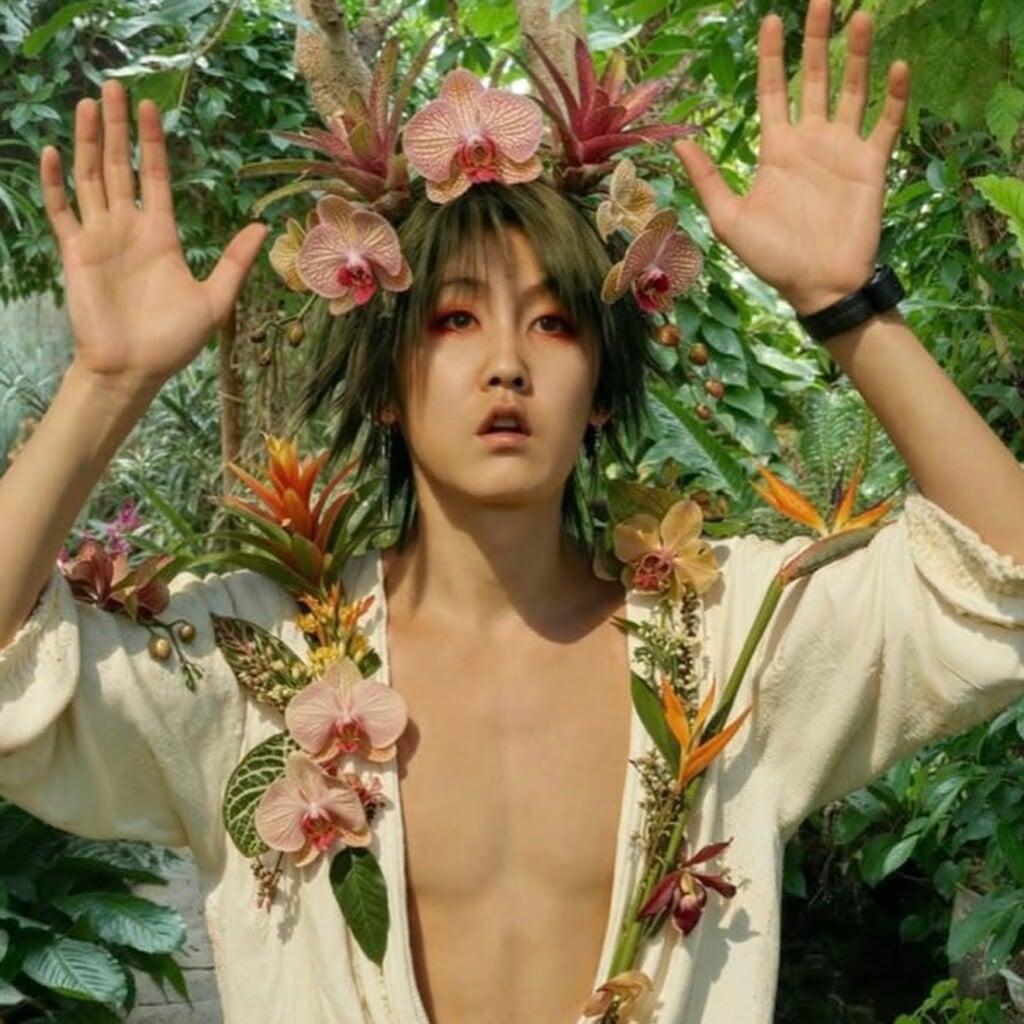
There’s a subtle reversal here compared to the optimistic posthumanism that has dominated much of the rhetoric around virtual reality. Lu doesn’t promise technological transcendence, but uses the most sophisticated technology available to tell a doctrine that, two thousand five hundred years before graphics engines existed, already held that the self was an illusion to move through, not an asset to defend. The fact that the artist identifies in non-binary terms, and that the DOKU avatar is explicitly without a fixed gender, isn’t an added identity detail, but the coherent logic of a way of thinking in which every stable category is provisional, renegotiable, ultimately as technical as a rendering parameter.
Lu Yang doesn’t invent out of thin air, their aesthetic draws on otaku subculture, on the anime and Japanese video games that shaped a generation of Chinese youth, and it dialogues with artists like Miao Xiaochun. But unlike those who use these references purely as style, Lu Yang takes them seriously as genuine worldviews, on par with religious traditions, and that’s where the originality lies.
One question remains open: can a hyperrealistic avatar really teach detachment from one’s own self, or does it risk becoming an even harder version of that self to let go of? Lu Yang offers no answers, they show the problem and leave it to the viewer to work through.