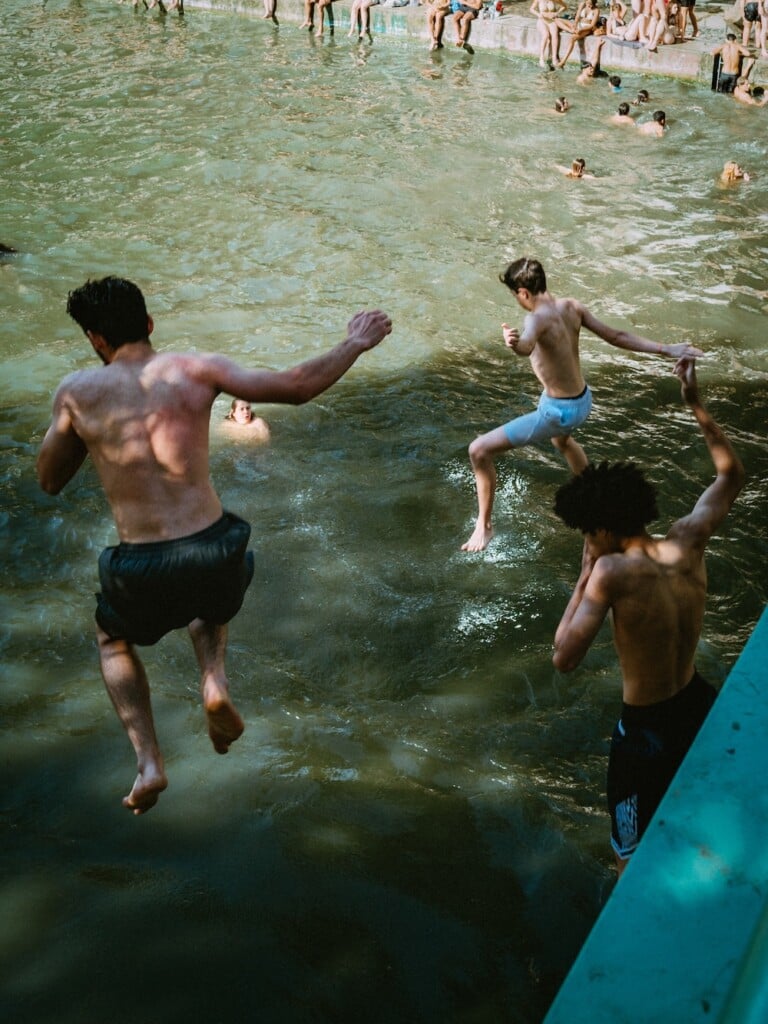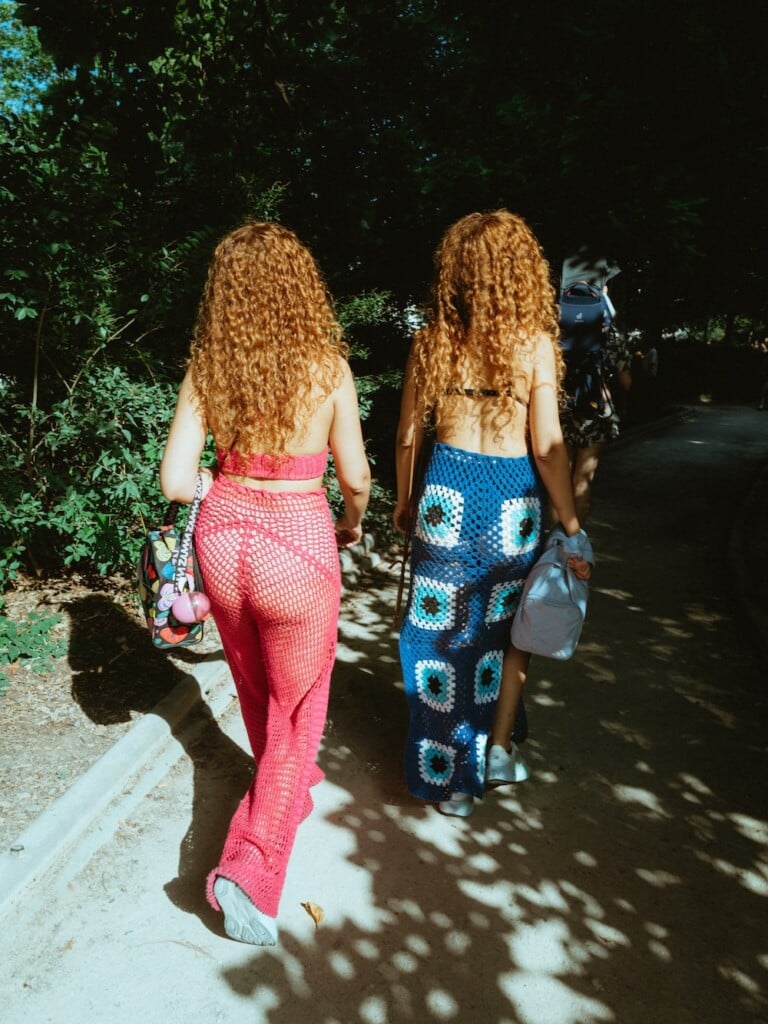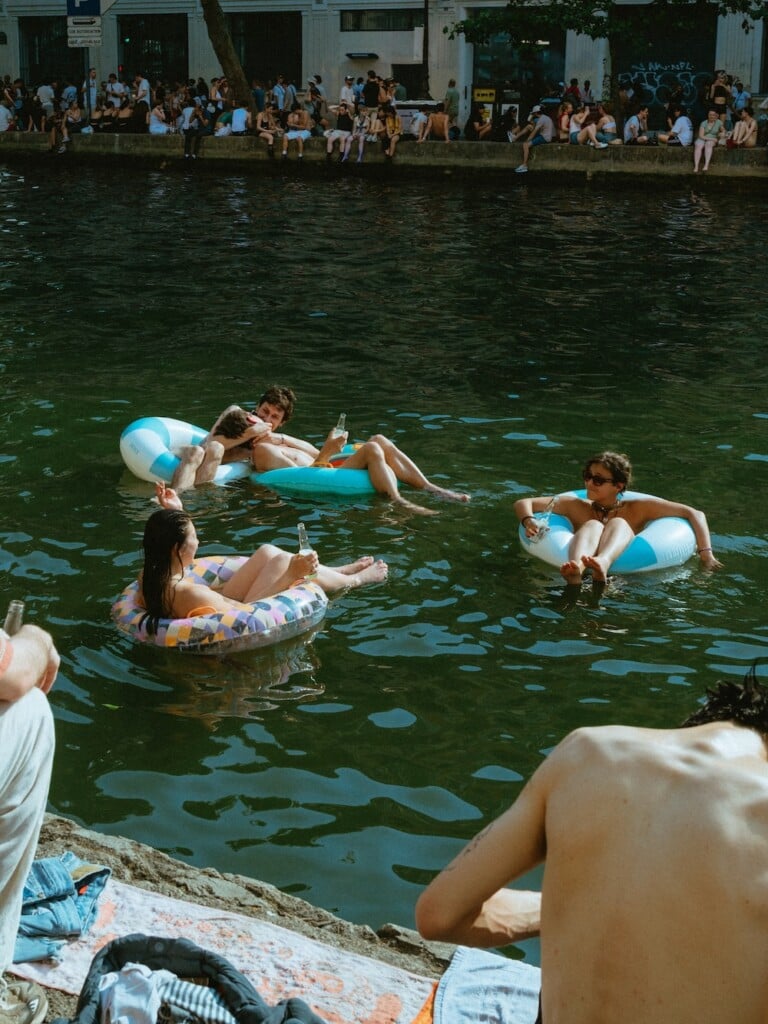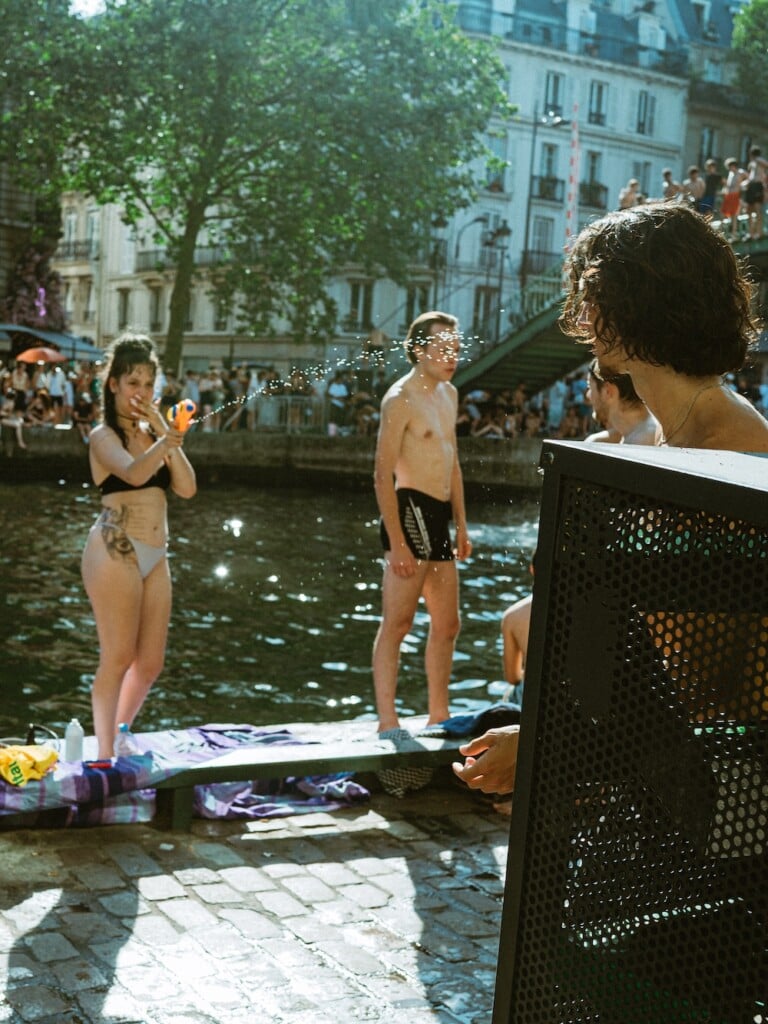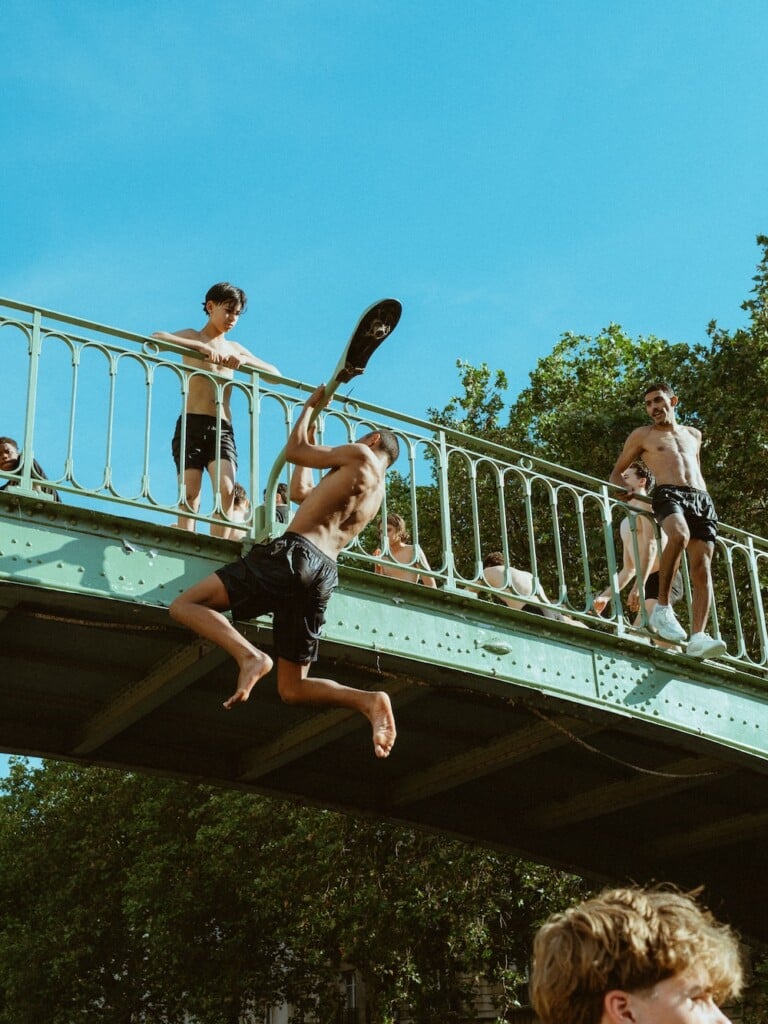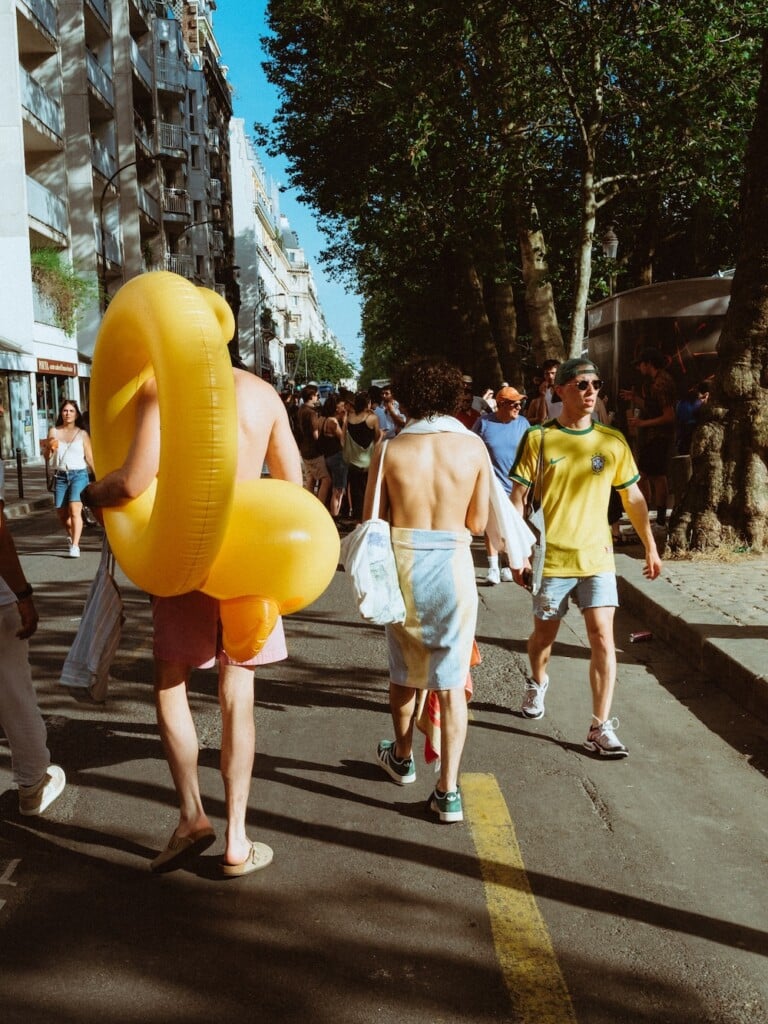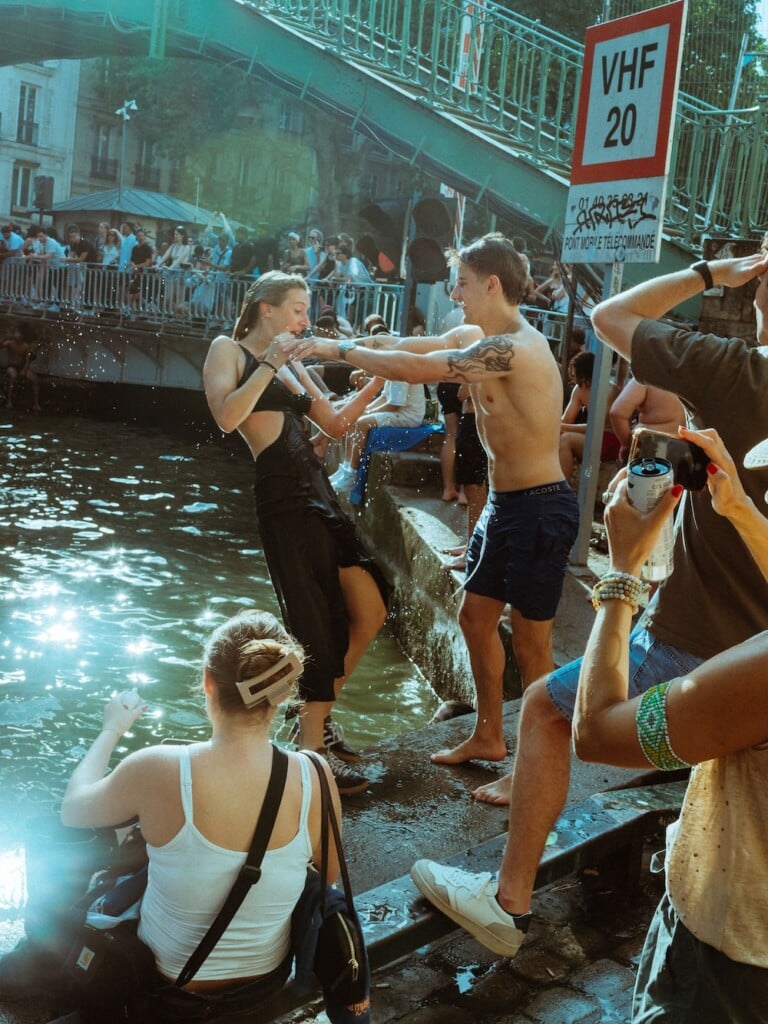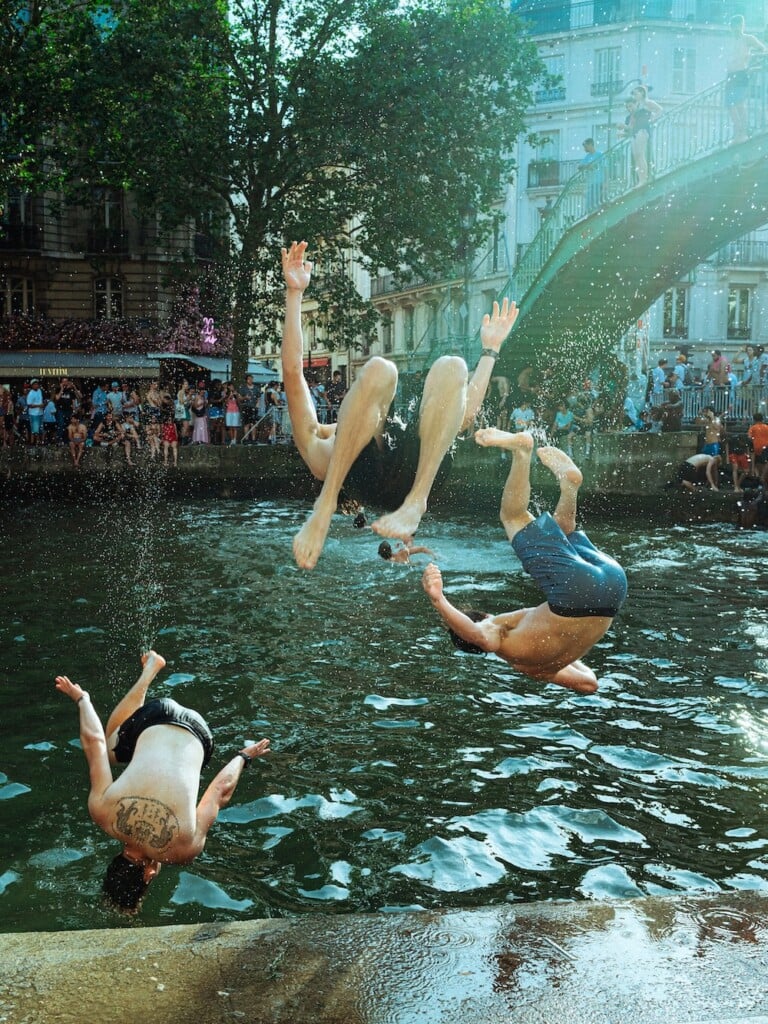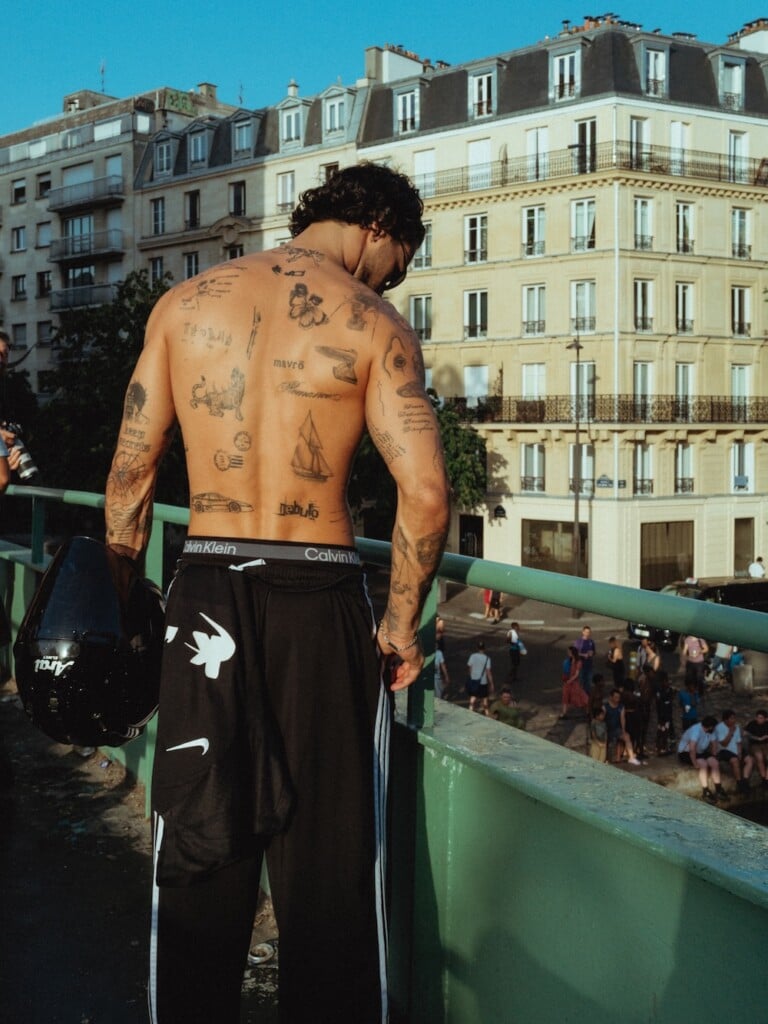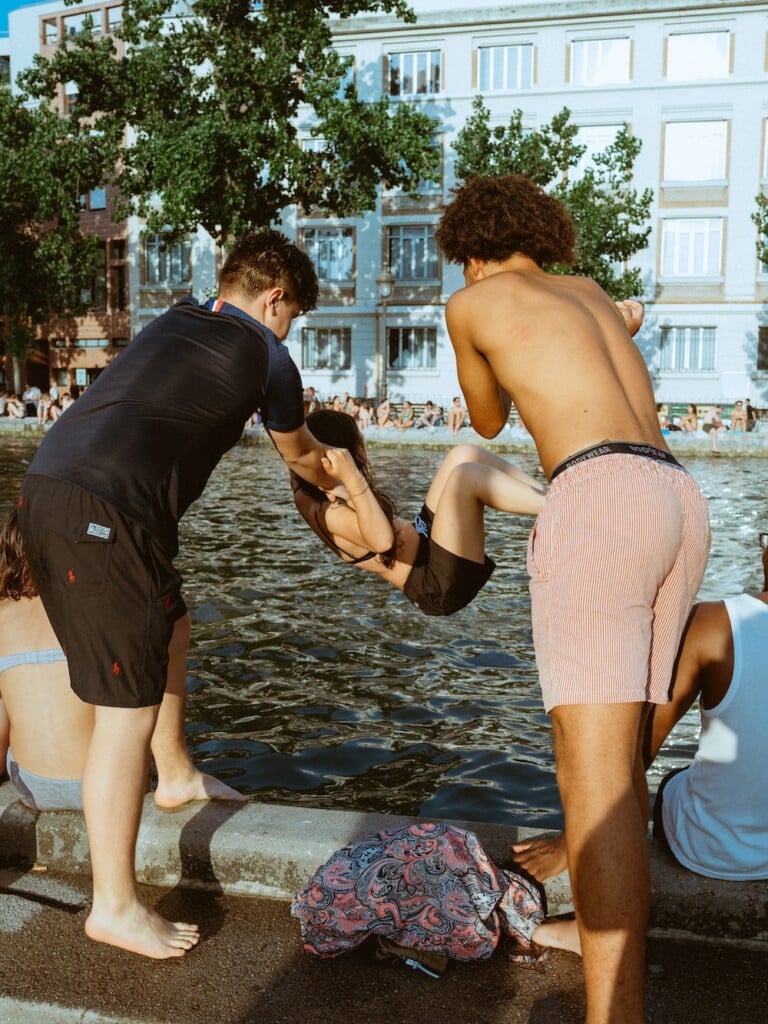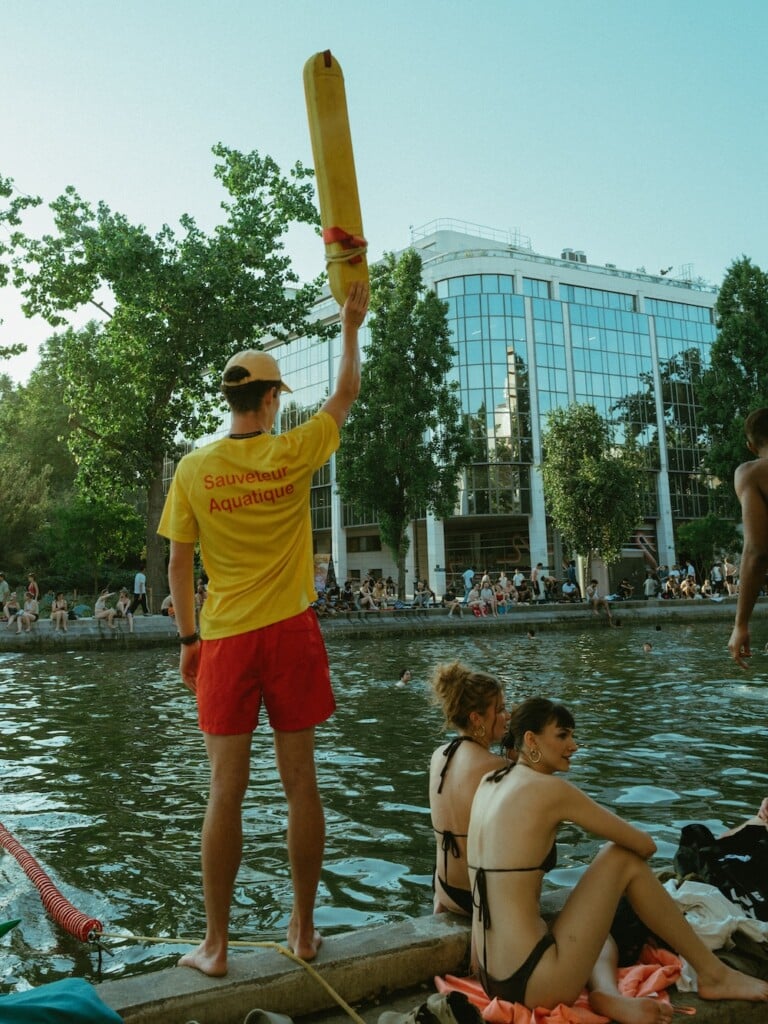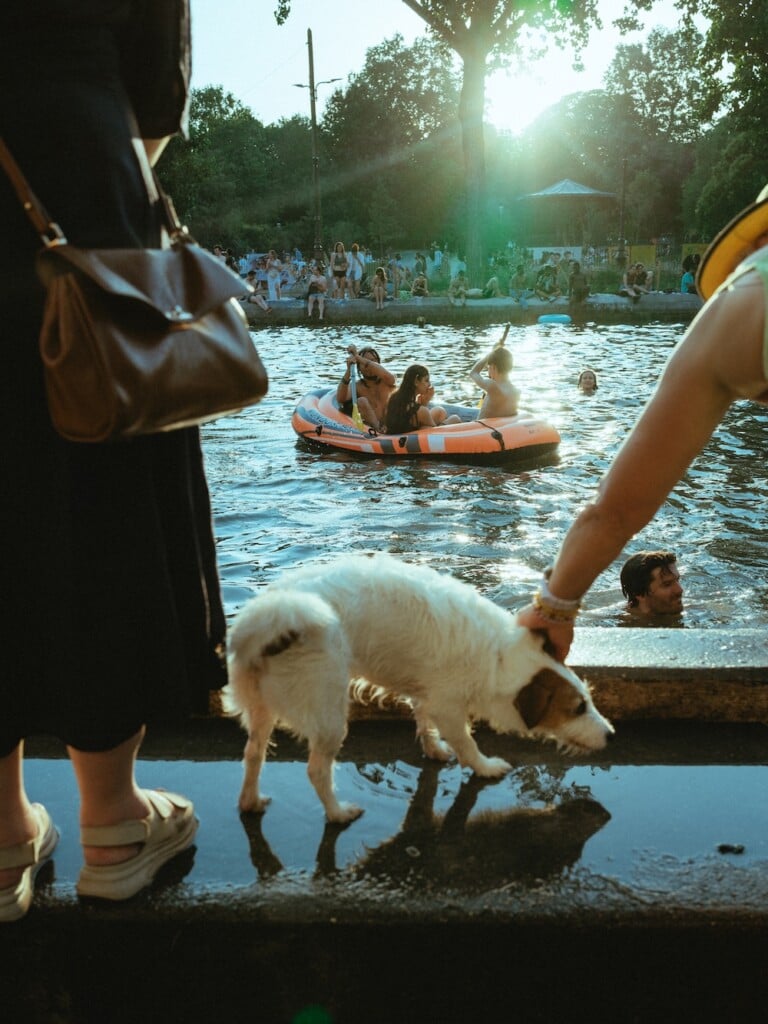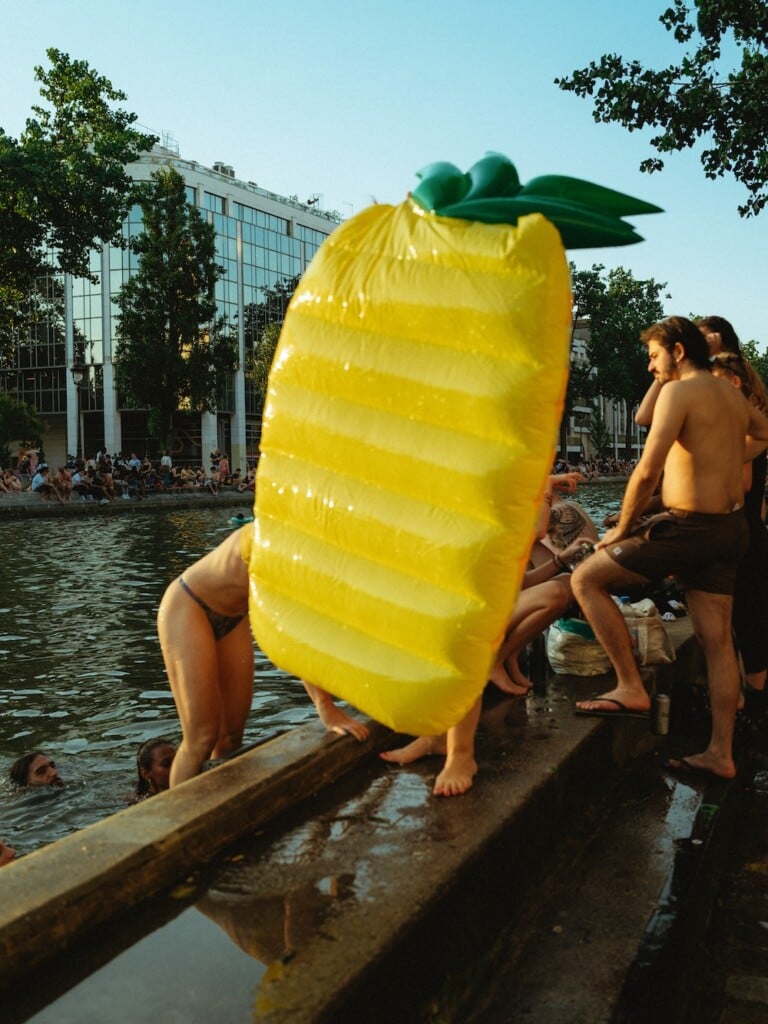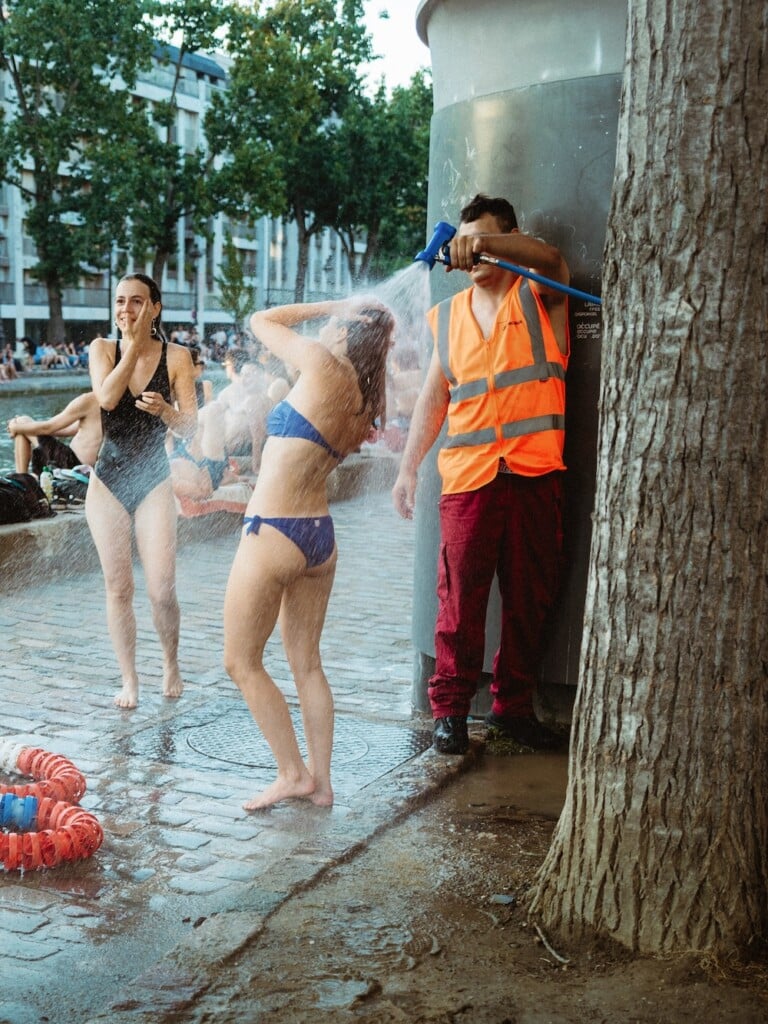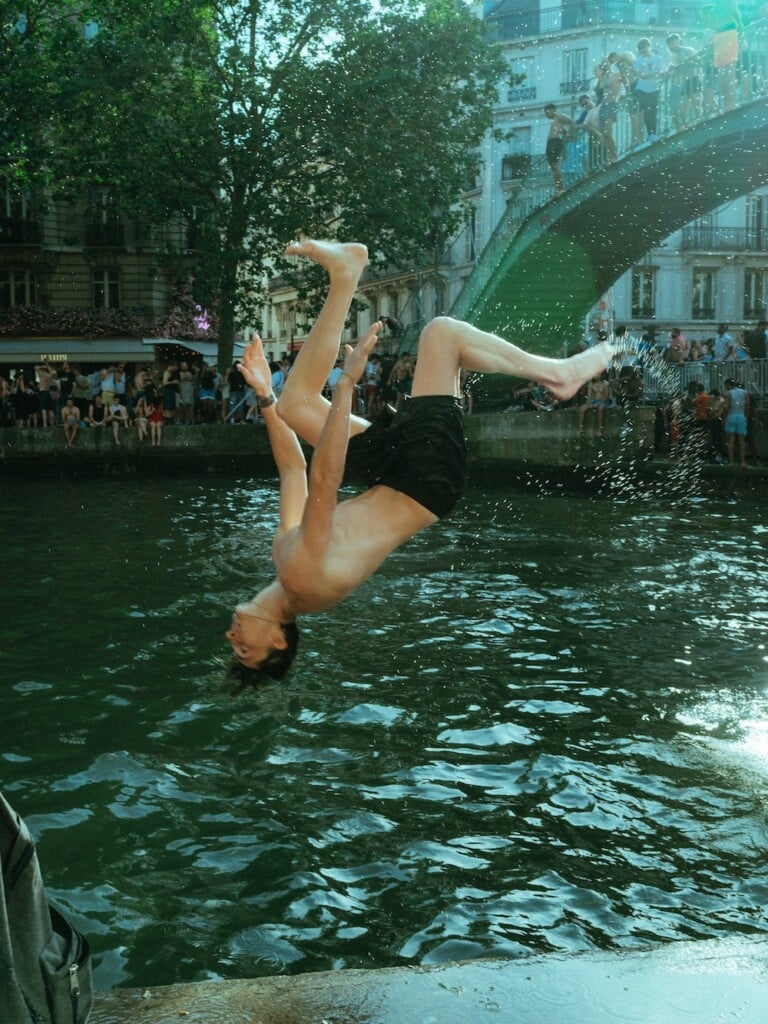
This summer, Paris let its guard down. As the heat became unbearable, the Canal Saint-Martin turned into an unofficial beach, with people diving from bridges, bodies soaking in the water, and social rules temporarily suspended. It is precisely this short circuit—the city melting away and, for a few days, ceasing to be itself—that became the subject of Parisian Heat Wave, the new project by French photographer Philippe Farfelan, known on social media as Evenskild.
The phenomenon documented by Farfelan is not an isolated one. This summer, the canal was at the center of unusual media attention, fueled by a heatwave that led city authorities to tolerate—and in some areas effectively legitimize—what for years had been considered an act of urban transgression. The walkways and bridges, normally crossed absentmindedly by commuters, became improvised diving boards, while the canal’s usually avoided murky waters filled with bodies seeking relief from the heat.
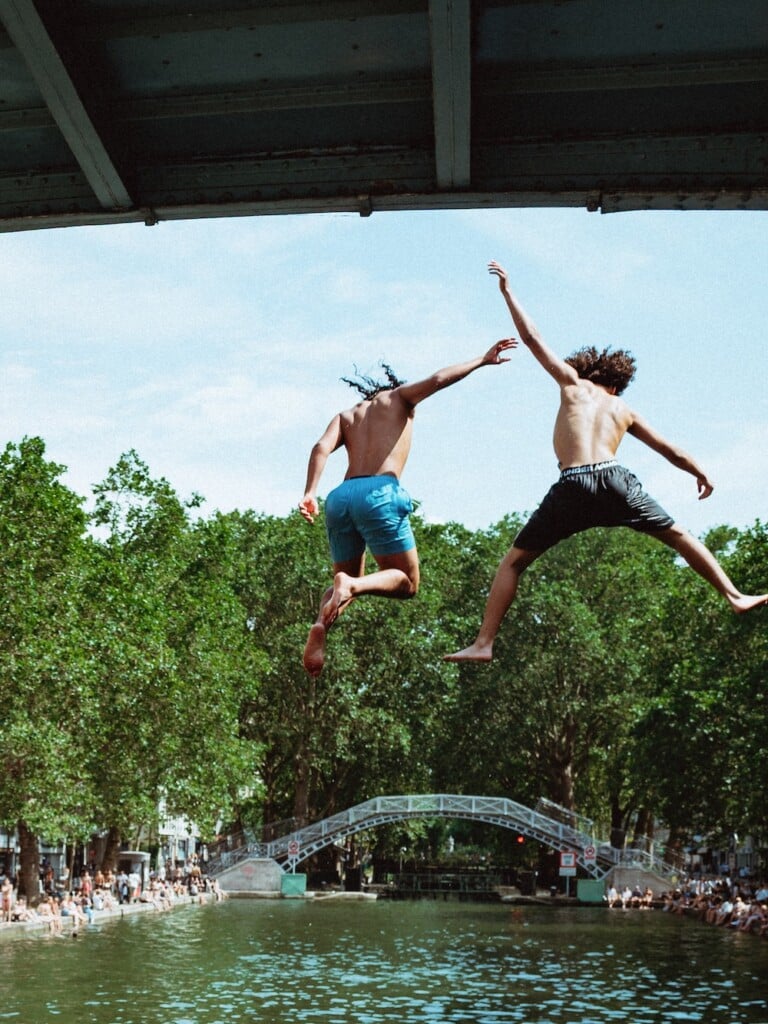
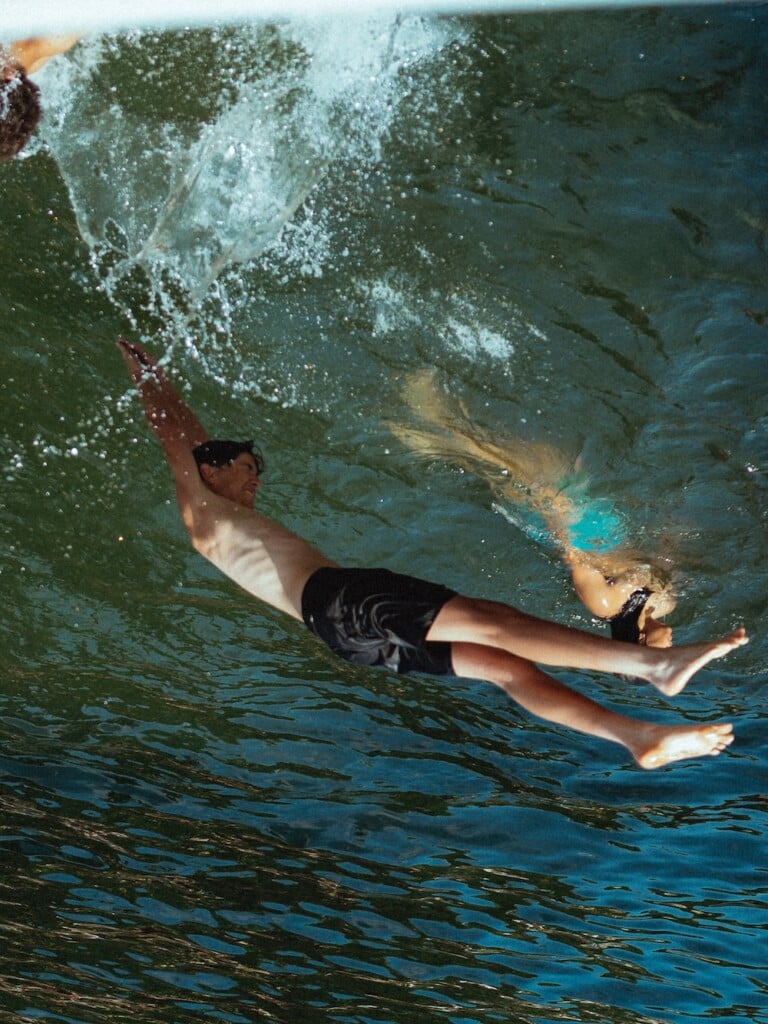
With Parisian Heat Wave, Evenskild does not simply document a weather event, but captures a social interlude. As he explains himself: “This summer, Paris let its guard down. As the heat became unbearable, the Canal Saint Martin turned into an unofficial beach where people escaped the city, dove from bridges, and let themselves drift together in the water. For a few days, the usual rules seemed to disappear. I photographed this brief moment of collective freedom, a city transformed by the heat before everything quietly returned to normal.”
It is precisely this word, “brief,” that defines Farfelan’s perspective. His images do not attempt to depict the climate crisis in the abstract, but rather its immediate and physical impact on the city. Extreme heat becomes a narrative device capable of temporarily overturning the urban hierarchy: bodies take the place of cars, the murky water becomes a communal swimming pool, and the controlled elegance associated with the Parisian imaginary gives way to a joyful, physical disorder.
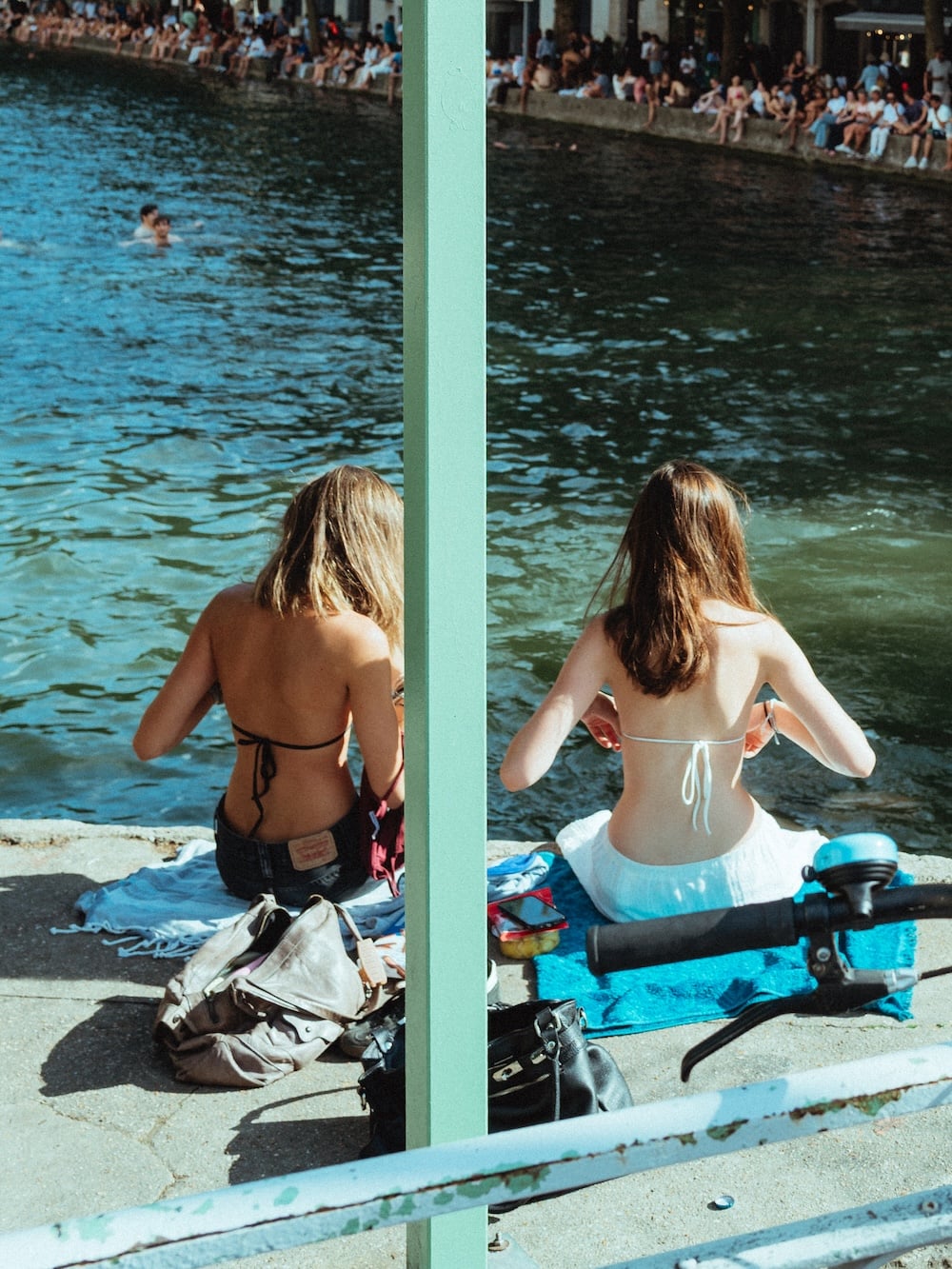
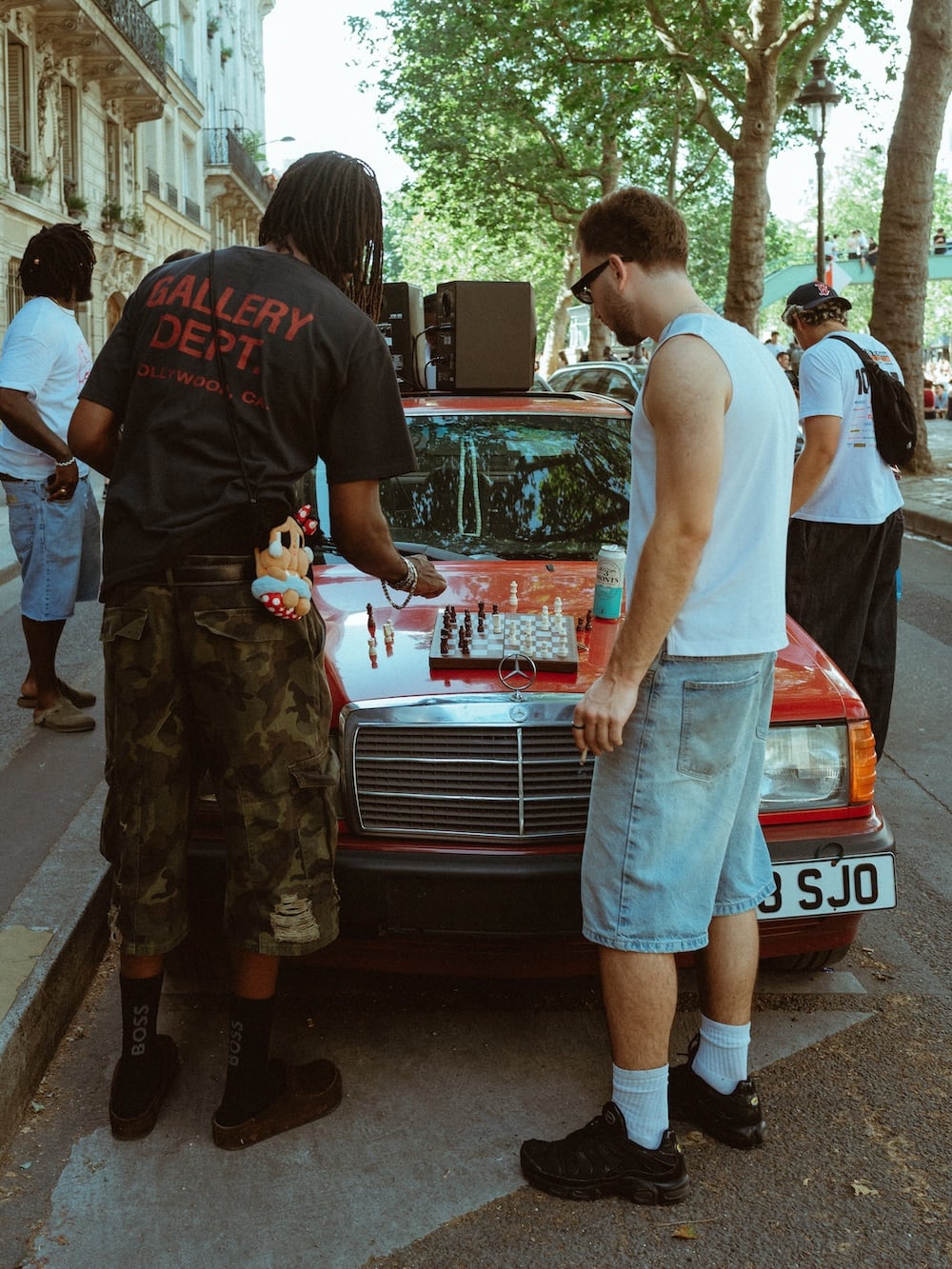
Farfelan chooses not to emphasize the climate drama through apocalyptic imagery, instead capturing the almost euphoric lightness of people who, out of necessity, allow themselves a freedom that is normally forbidden.
The result is a series that exists in the tension between two different temporalities: that of the climate emergency becoming increasingly tangible, and that of the suspended, almost vacation-like moment of a community reclaiming public space for a few days. Before everything, as Evenskild himself writes, quietly returns to normal.