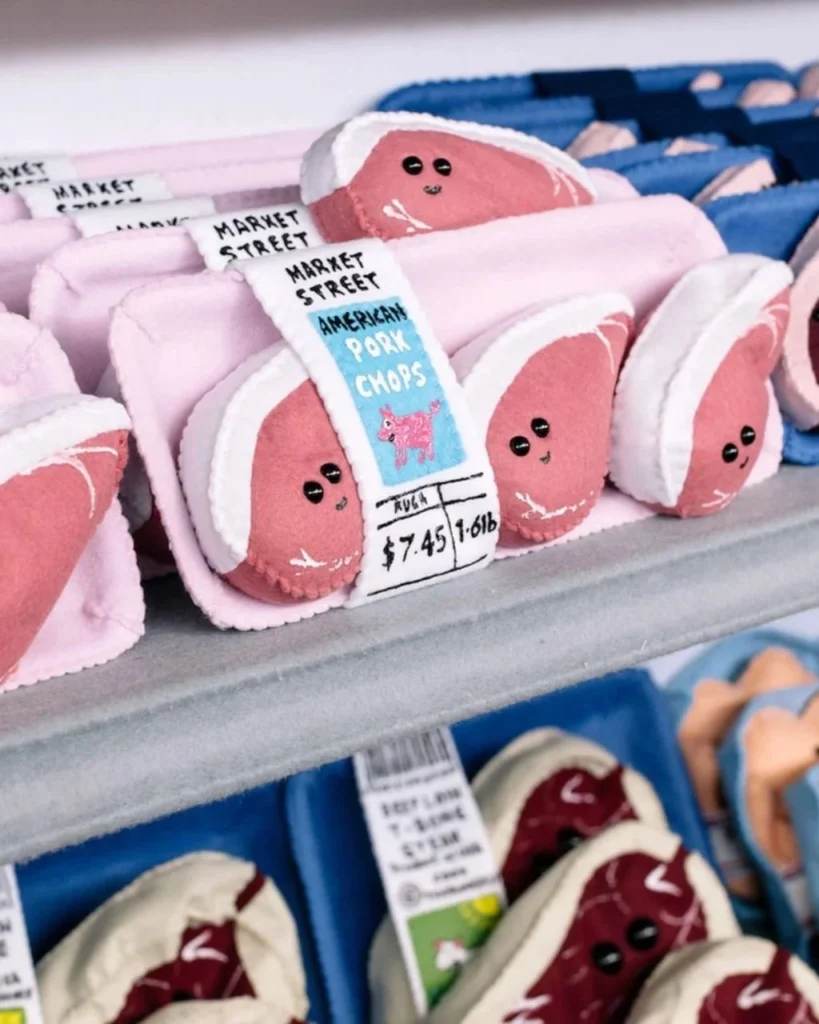
Lucy Sparrow had already sewn a supermarket once before, back in 2018, it was called Sparrow Mart and it occupied the second floor of a hotel in Los Angeles with over 31,000 handmade grocery items. Since then, the English artist has kept turning the most unlikely spaces into felt, from her London Delicatessen to The Bourdon Street Chemist, an entirely hand-stitched pharmacy. With The Beginning of Convenience, her first museum show in the United States, Lucy Sparrow returns to the format that made her famous, this time inside The Momentary, the museum in Bentonville, Arkansas, the town where Walmart was born.
It’s not a minor detail. Bentonville is where, in 1950, Sam Walton opened the small store that would go on to become the retail giant we know today. Sparrow takes that history and rewinds it a few decades, rebuilding an ’80s-’90s style supermarket, the moment when grocery shopping stopped being pure necessity and started promising speed, convenience, a bit of fun too. That’s where the exhibition’s title comes from, The Beginning of Convenience, the beginning of the convenience we still understand today.
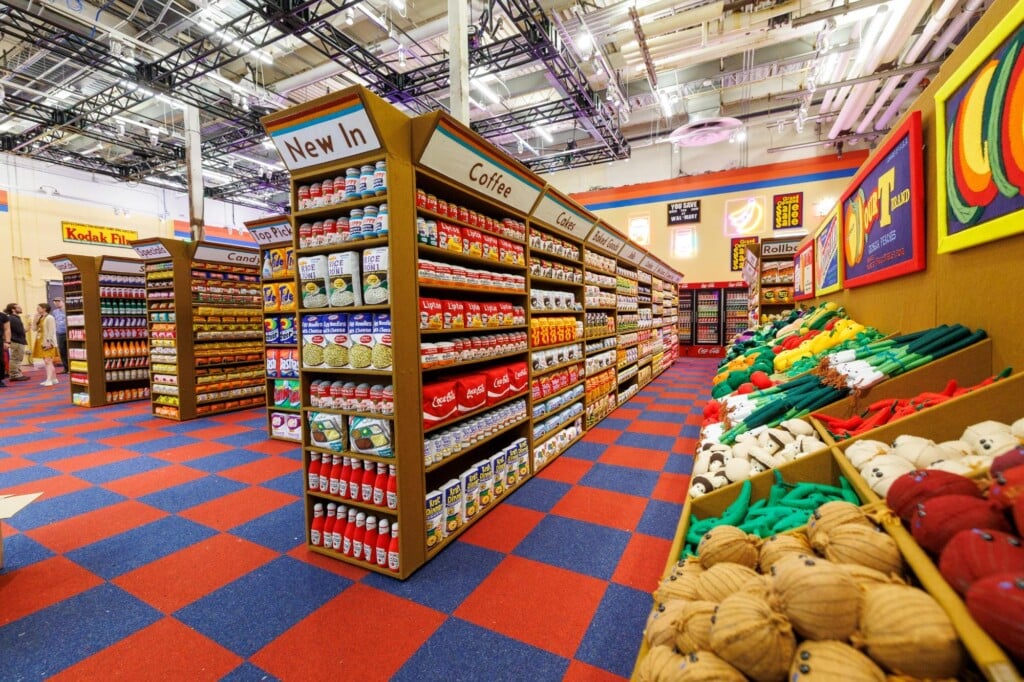
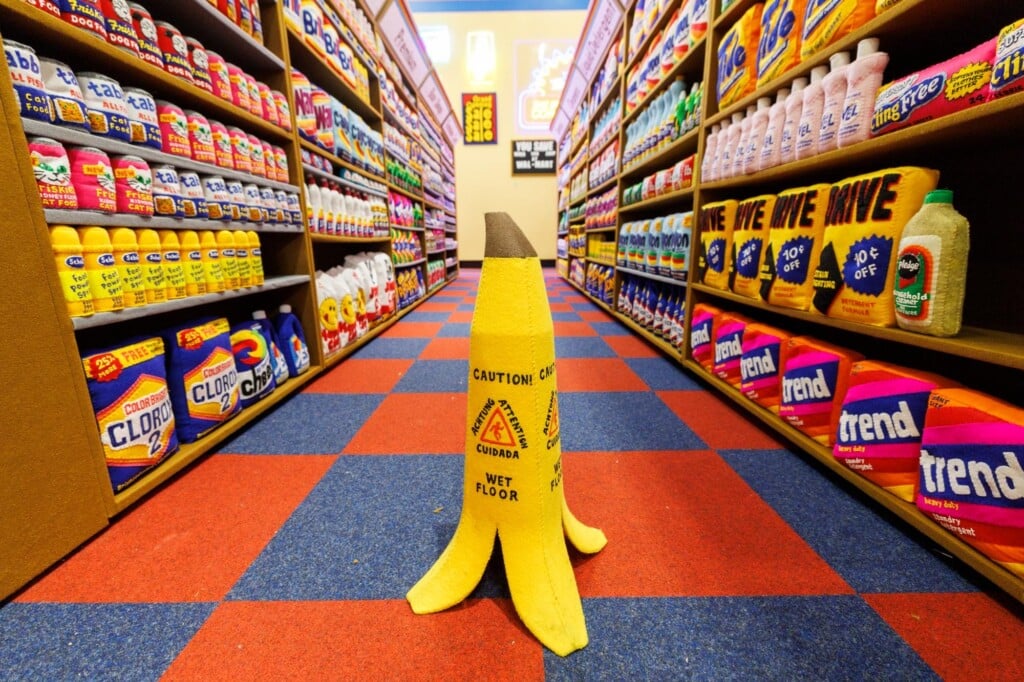
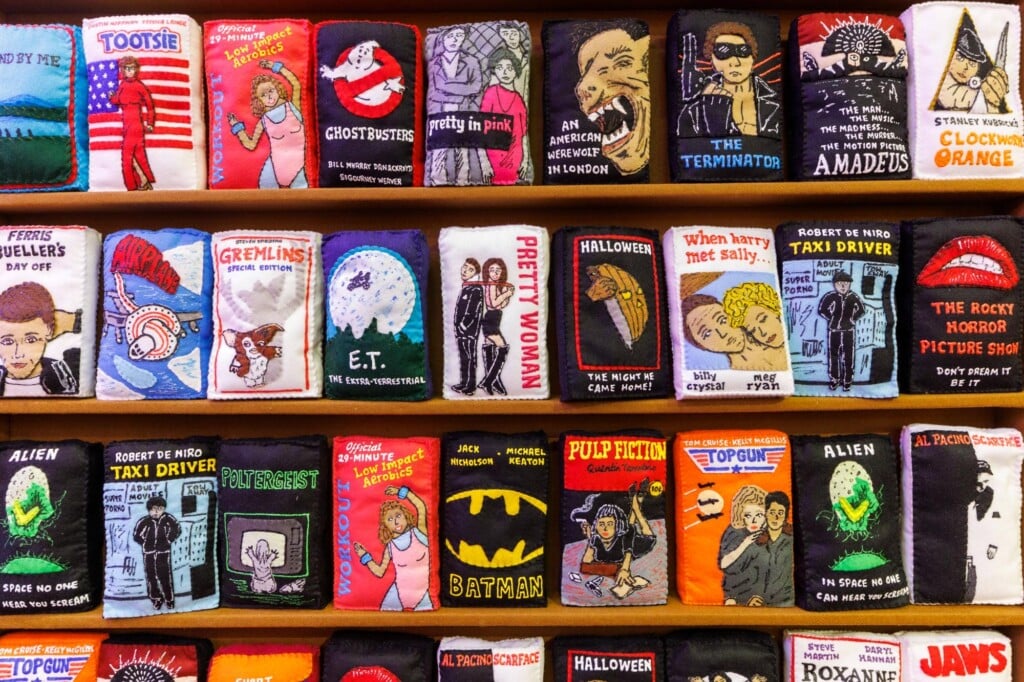
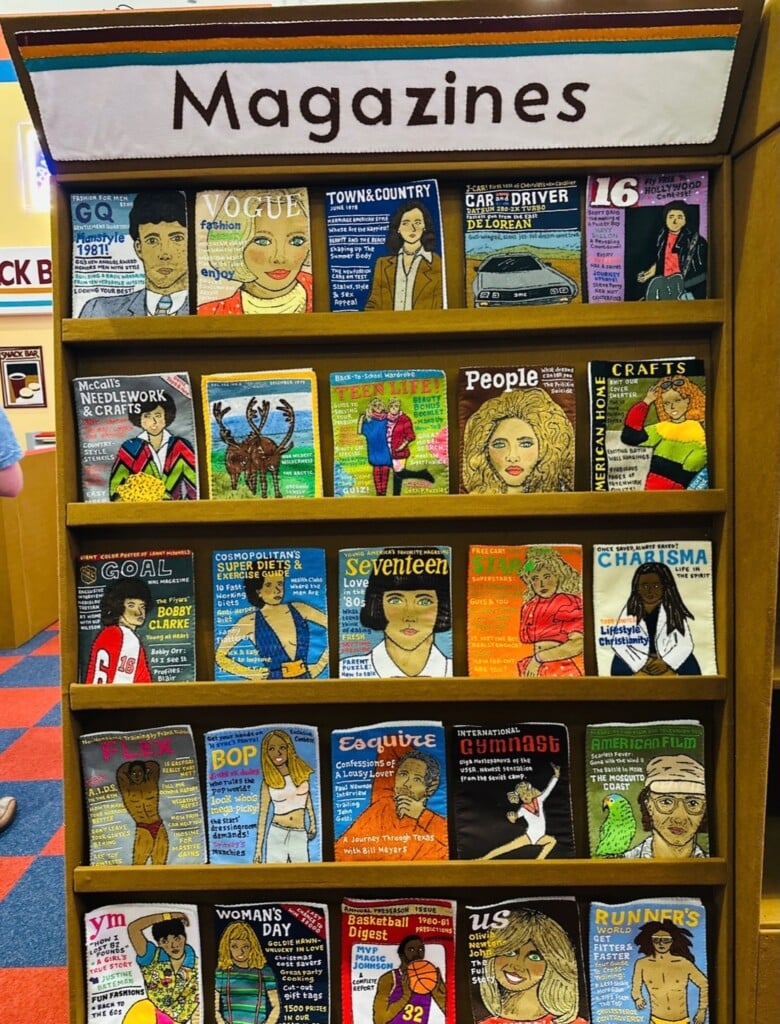
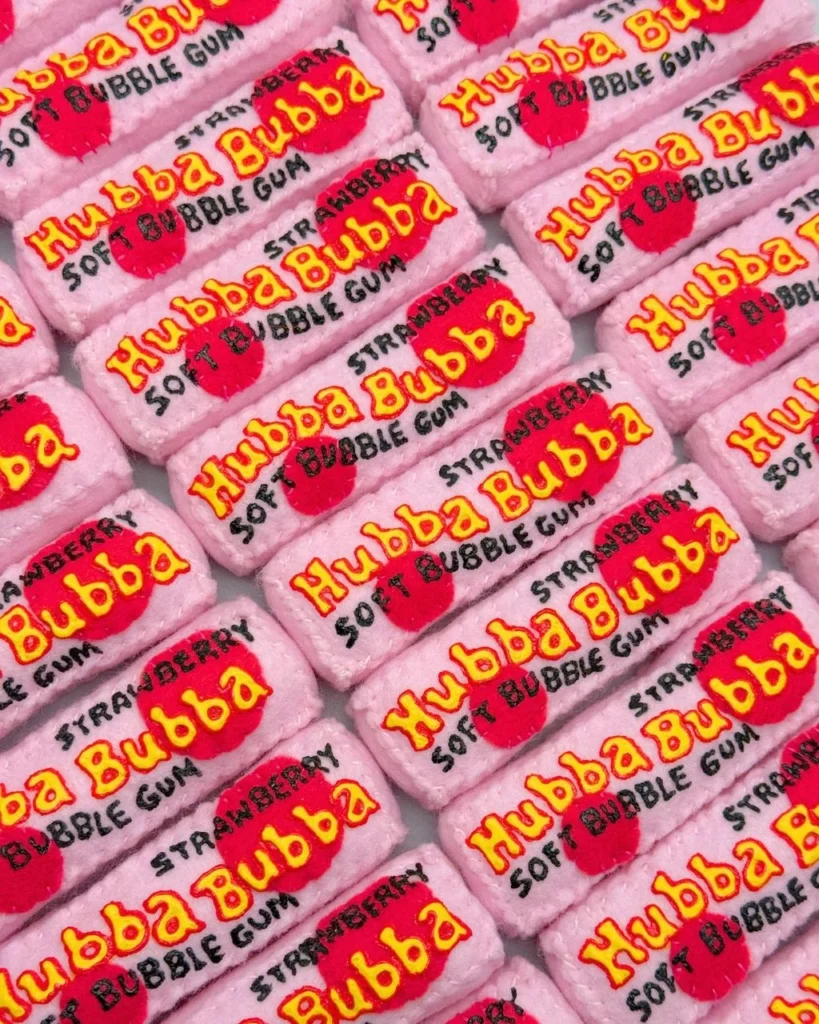
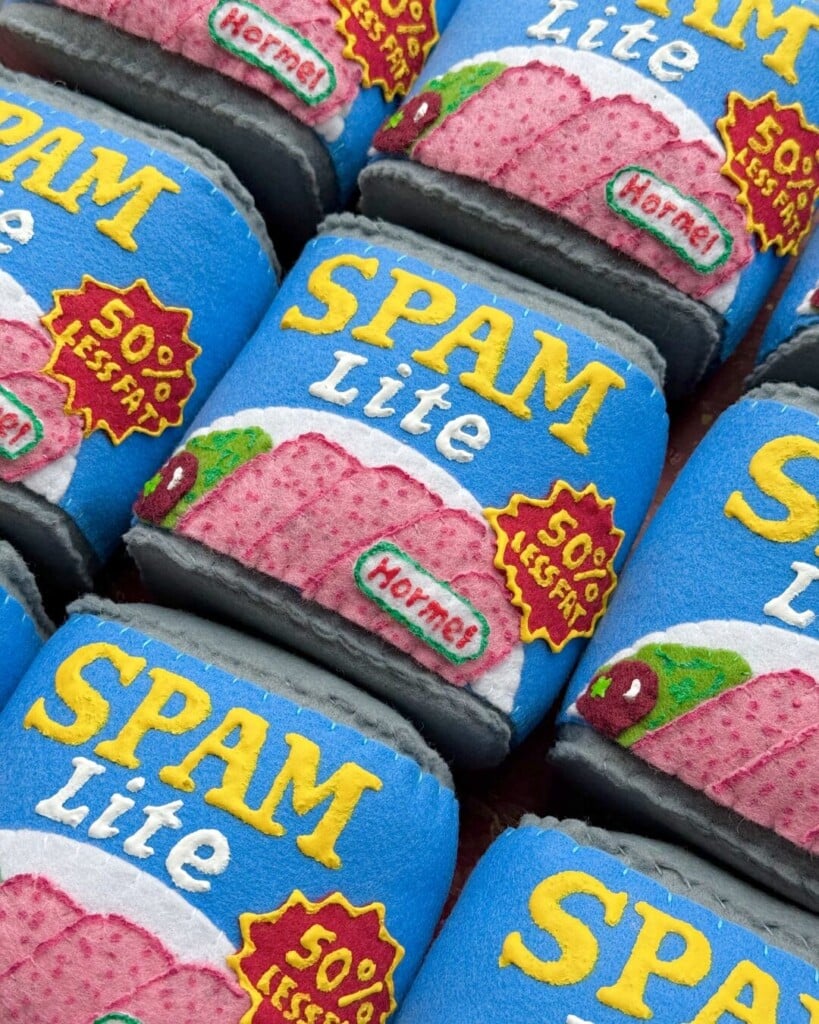
The number of objects on display is almost comical, more than 20,000 handmade pieces, spread across 4,000 square metres of exhibition space. There are Spam tins, cans of Dole pineapple, packs of Hubba Bubba, VHS tapes stacked on the shelves, “wet floor” signs shaped like bananas. Making the experience even more immersive is a soundtrack in the style of old supermarket music and announcements played over the loudspeaker that, in a deliberately fuzzy tone, call for the parents of a little girl named Lucy who’s gone missing in the photo department, a small biographical easter egg Sparrow scatters through her own installation.
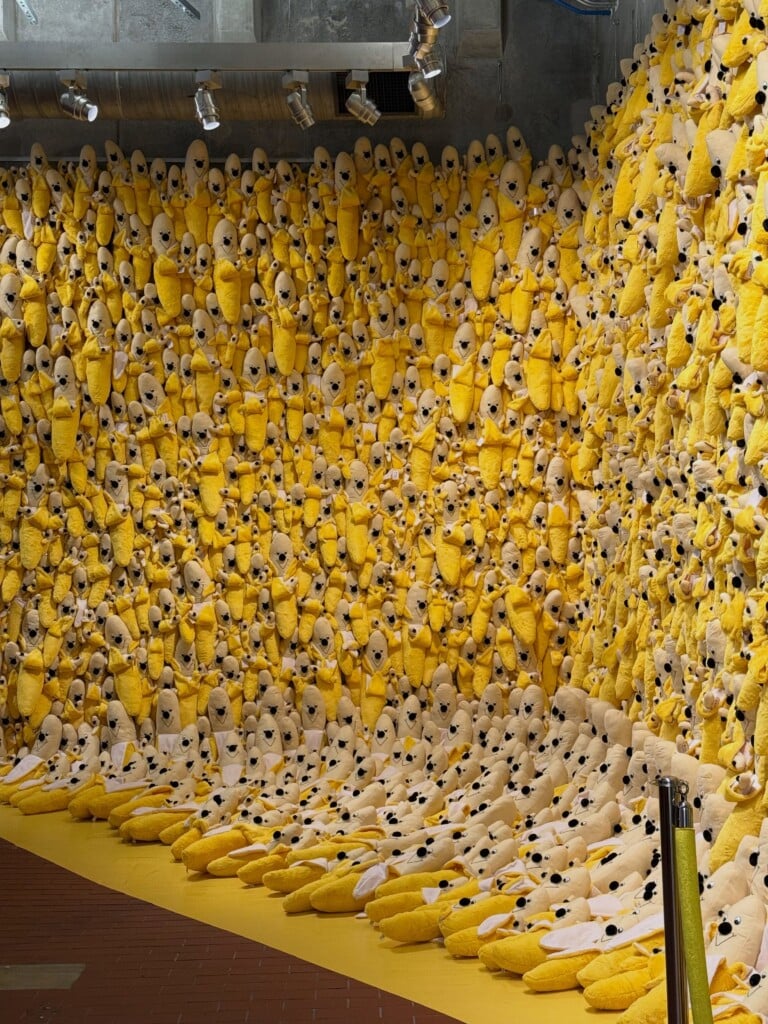
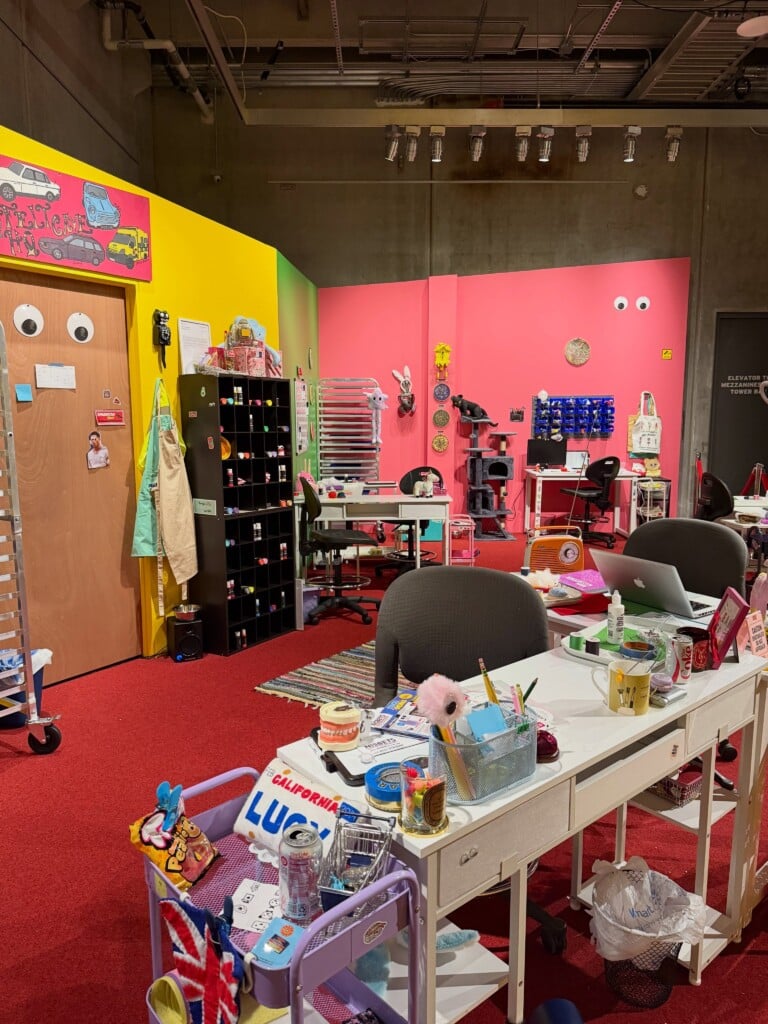
Past the supermarket area, visitors are met by the Banana Room, a floor-to-ceiling installation with over 3,000 plush bananas. It’s not just an aesthetic flourish, but a piece of the artist’s own biography, she received her first felt banana as a child, a gift from her father, followed years later by a larger one named Sebastian, now a true mascot of her practice. Next to it, a reconstruction of her London studio, the Felt Cave, a former ambulance station converted into a workshop, complete with a fake window reproducing the real view onto the street, an “HR department” populated by bespectacled bananas, and a canary-yellow cuckoo clock.
What makes Sparrow’s work interesting isn’t just the sheer quantity, but the way she manages to disarm an imagery we usually associate with corporations, brands, mass consumption. At a time when grocery shopping has become, for many, synonymous with budget anxiety and rising prices, rebuilding a supermarket entirely by hand, thread by thread, stitch by stitch, feels almost like an act of gentle resistance against everything that same supermarket represents today.
The Beginning of Convenience will remain on view through 11 July, 2027.