Do we really like mold? After the success of mushrooms and in the midst of an era of gloom, the answer can only be yes. We have previously discussed the art world’s trend towards “living works,” not just using the fungus as a symbol but as a genuine protagonist in an eco-sustainable revolution. The analysis then focused on the fascination for the ugly, finding various common links, suggesting that our society no longer seeks “beauty” and perfection but is rather inclined towards an authentic language. In line with this trend is mold, a biological phenomenon that fascinates many artists and beyond. Perhaps one of the first to explore this was Alberto Burri with his series Le Muffe, marking a shift in art towards organic matter and metamorphosis. Some now refer to it as bioart, a “form of artistic expression that places life at the center of works,” as stated in Treccani. Natural processes and the use of biological material serve art, leaving room for chaos and the unexpected, aligning with the approach of many contemporary artists who are increasingly close to science and multidisciplinary research. Mold, once an object of disgust, enters the collective imagination, transforming its perception and even becoming cool and trendy. From Toilet Paper to Kathleen Ryan, let’s explore some examples.
The Glittering Mold
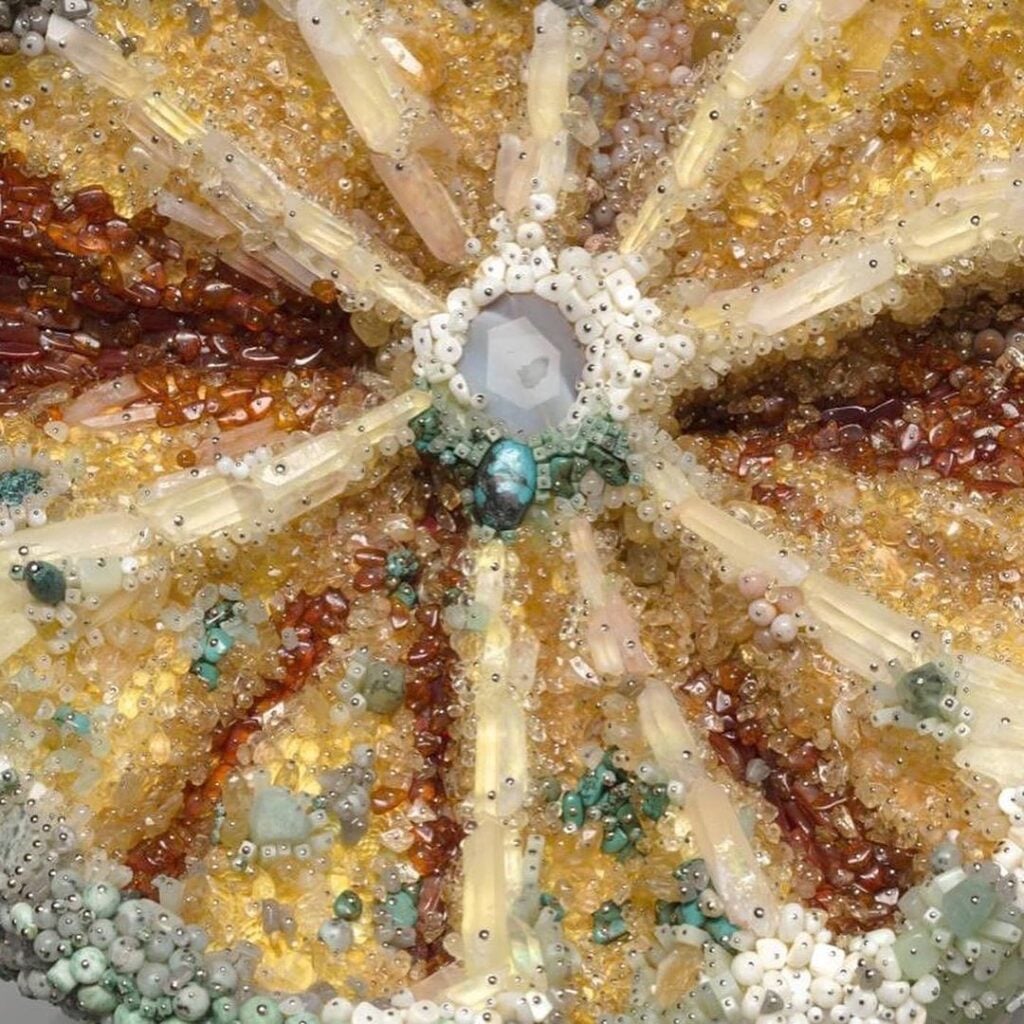
If you are art enthusiasts, your Instagram algorithm has surely presented you with one of Kathleen Ryan‘s works. You can recognize them by the originality of the subject—decomposing fruit adorned with sparkling gemstones. This isn’t a reproduction of mold; the Californian artist literally lets the fruit rot, observes the process, and later covers it with stones that mimic its colors and nuances. Her intention is to capture the truth of decay. The choice of stones to cover the rotten parts of the fruit, such as freshwater pearls, rose quartz, amber, and amethyst, establishes a connection with the life force of the earth, even though mold represents decay; it is the most vibrant part. In an intriguing juxtaposition, the healthy parts of the fruit are adorned with industrially manufactured glass pearls, expressing the artificial and industrial nature of mature integrity. In Ryan’s works, decomposition becomes more captivating and precious than the composure of mature parts, challenging conventions and revealing beauty in transience.

Revisiting the Anthropocentric Model
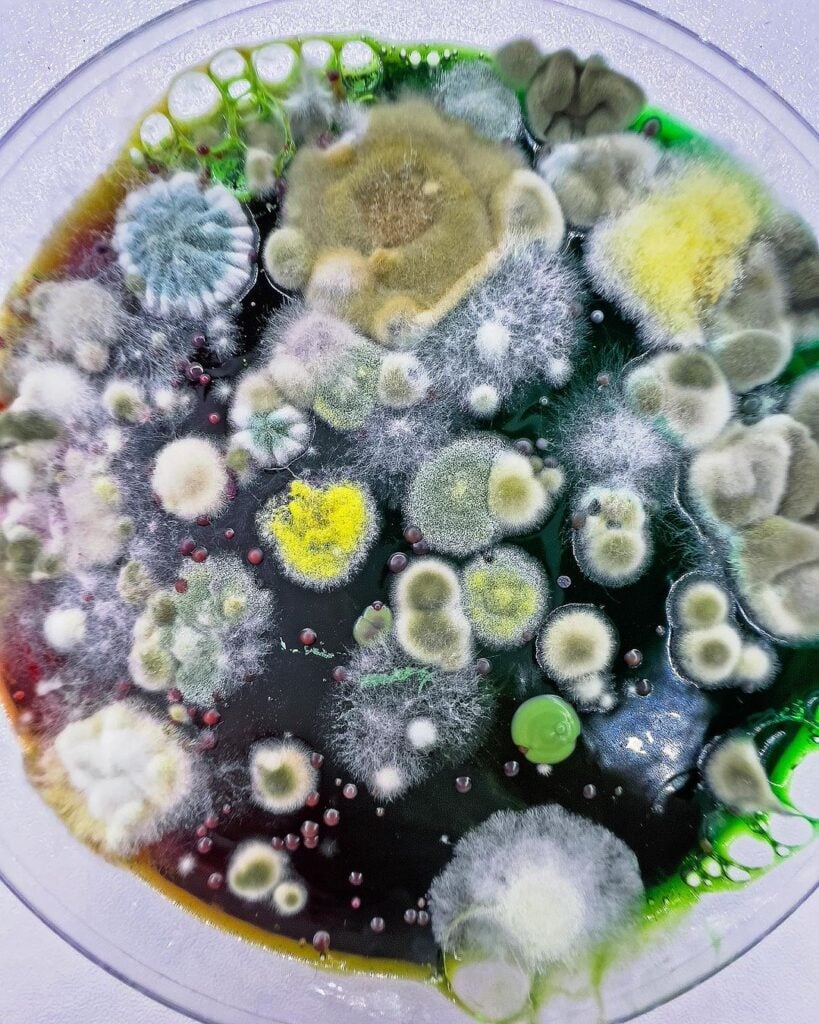
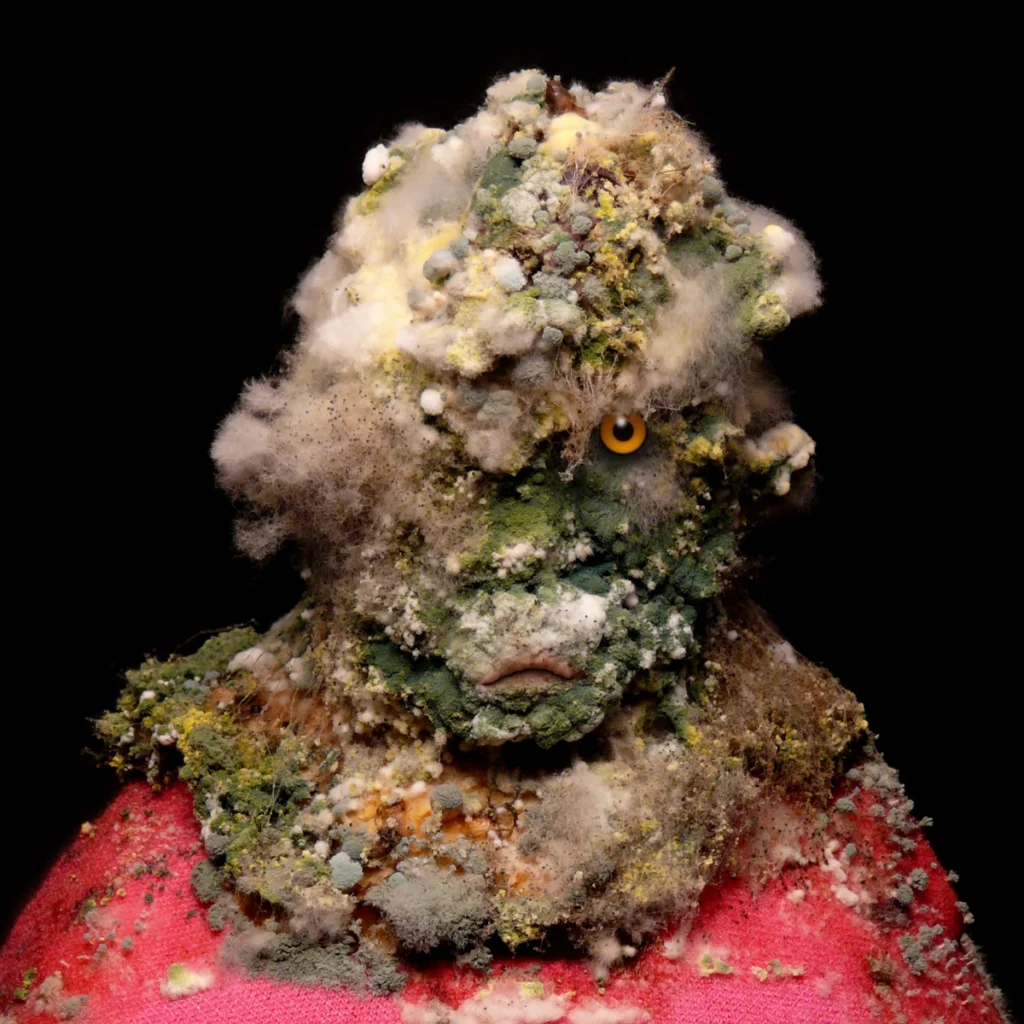
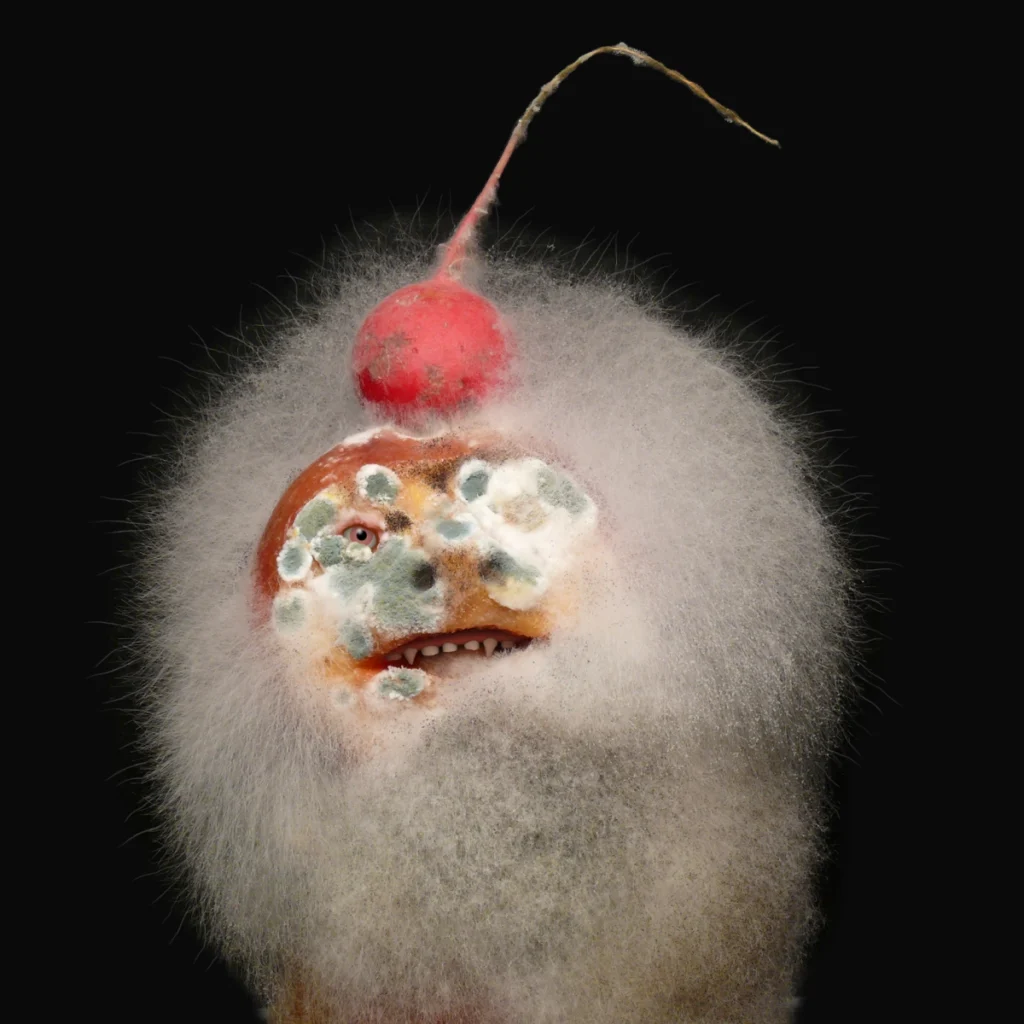
From glitter, let’s shift to the raw reality presented by the German artist Karin Andersen. With her photographs – specifically the series Naughty Messy Nature – Andersen aims to challenge the anthropocentric perspective that has prevailed for centuries in the human approach to the natural ecosystem and its creatures. The undisputed protagonist is mold, an invisible process to the human eye but charged with immense power. The artist herself describes this project as “participatory,” emphasizing that «The creators of the works are not human beings but infinitely small microscopic organisms: mold fungi». Andersen allows the mold to proliferate and documents a single, unique moment, unreproducible due to its constant transformation. The result is a series of portraits of other beings that reject a definition but instead «celebrate the creative disharmony generated by biological and natural processes, regardless of human efforts to impose harmony, symmetry, and order».
Towards a More Scientific Art
If we consider the two examples mentioned above and reflect on the direction contemporary art is taking, it is evident that the trend of mold is nothing but a confirmation of an increasingly scientific art. Especially emerging artists today undertake hybrid and multidisciplinary research, reflecting the collective need for new languages that go beyond simple two-dimensional visual representation. Sculptures, installations, and living works cater to the necessity for experimentation, sometimes even overshadowing painting, which is increasingly less appreciated by new generations, and simultaneously contributing to bridging the gap between science and art. It is common today to encounter an artist and engage in a conversation with them about geology or microbiology, showcasing the scientific approach of art, positioning itself as a collaborator in progress. In this regard, it is important to mention the writer and physicist Charles Percy Snow, who argued that the separation between the two cultures – the scientific and the humanistic – can exist but is unnatural. Are they not both human attempts to represent the complexity of the world?