Lee Miller walked into Dachau on April 30, 1945, with a camera and the certainty that no one would believe her without proof. She had been a model for Vogue, then a student and muse of Man Ray in Paris, then a war correspondent for the very magazine that once put her on its cover.
For the rest of her life she barely spoke of what she had seen. Her archive, thousands of negatives, stayed locked in an attic for decades, rediscovered only after her death by a son who knew nothing of that past. Miller had believed in photography as proof, as testimony no one could deny.
That certainty no longer holds. An image can be generated in seconds and proves nothing anymore, while anyone who really returns from a place of horror risks being told they made it up with software. In this episode of WHAT IF, we bring Lee Miller into the present and ask her what’s left of the witness in a world where seeing no longer means believing.
You photographed Dachau so the world could never say “we didn’t know.” Today an image proves nothing anymore: everything can be fabricated. What’s left of the witness, when seeing no longer means believing?
When I walked into the camps I shot like a woman possessed, precisely because I knew that without photographs no one would believe it. I cabled Vogue a single line: “I implore you to believe this is true.” Photography was the last thing that couldn’t be denied.
You’ve fabricated a world where even that line wouldn’t be enough anymore. You made every image suspect just to be able to fake some, and in doing so you disarmed the people telling the truth too. The next person who walks into a camp, and there will be more, will come back with their photographs and be told: “cute, did you make that with AI?” You’ve invented the perfect way to believe in nothing. Tomorrow’s executioners thank you.
You came out of Surrealism: impossible images built by hand, as art. Today machines produce impossible images by the billion, as content. Is this the triumph of Surrealism, or its death?
Man Ray would have laughed in my face at the idea. We made impossible images to crack open the real, to force you to see what you thought you already knew. The impossible was a jolt, and it worked precisely because everything else was true.
A machine that churns out the impossible by the ton cracks nothing open: it fills the crack in. If everything is impossible, nothing is anymore, and wonder dies of abundance. That’s not Surrealism. That’s wallpaper. We broke the dream of normality; you’ve made the dream normal, and sold it by the yard.
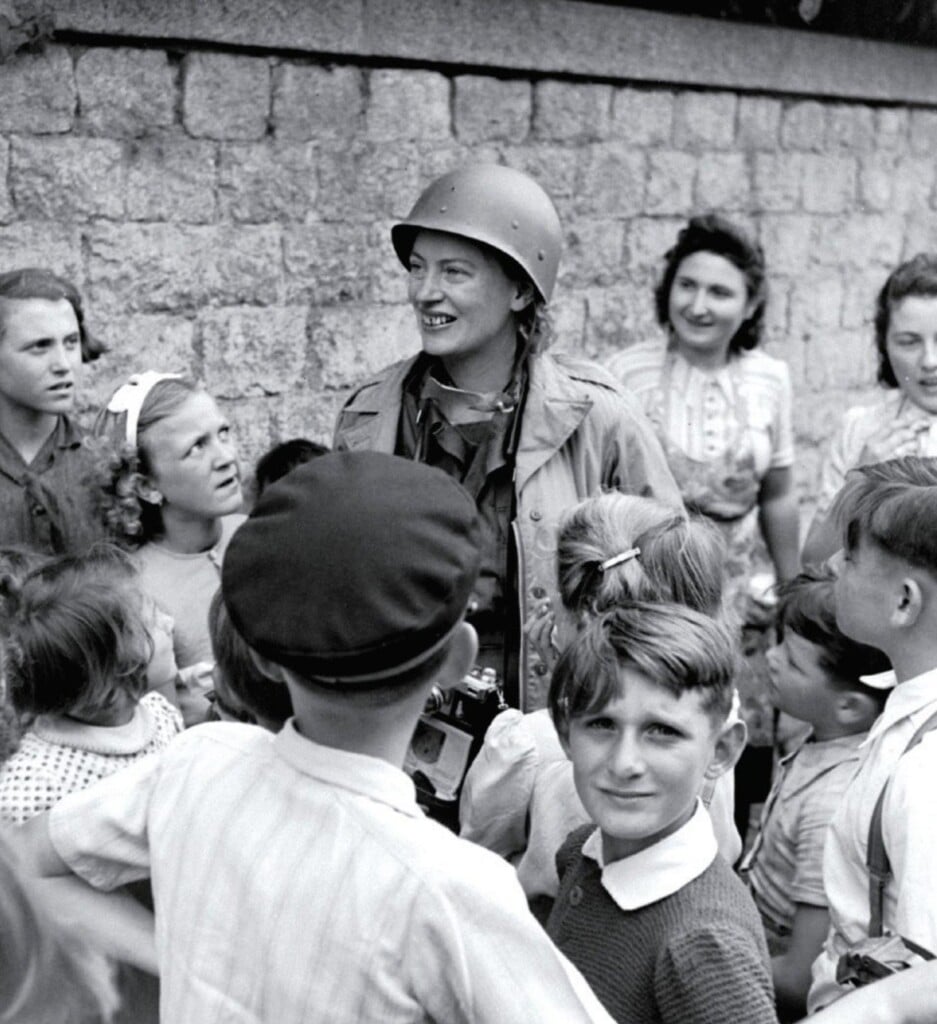
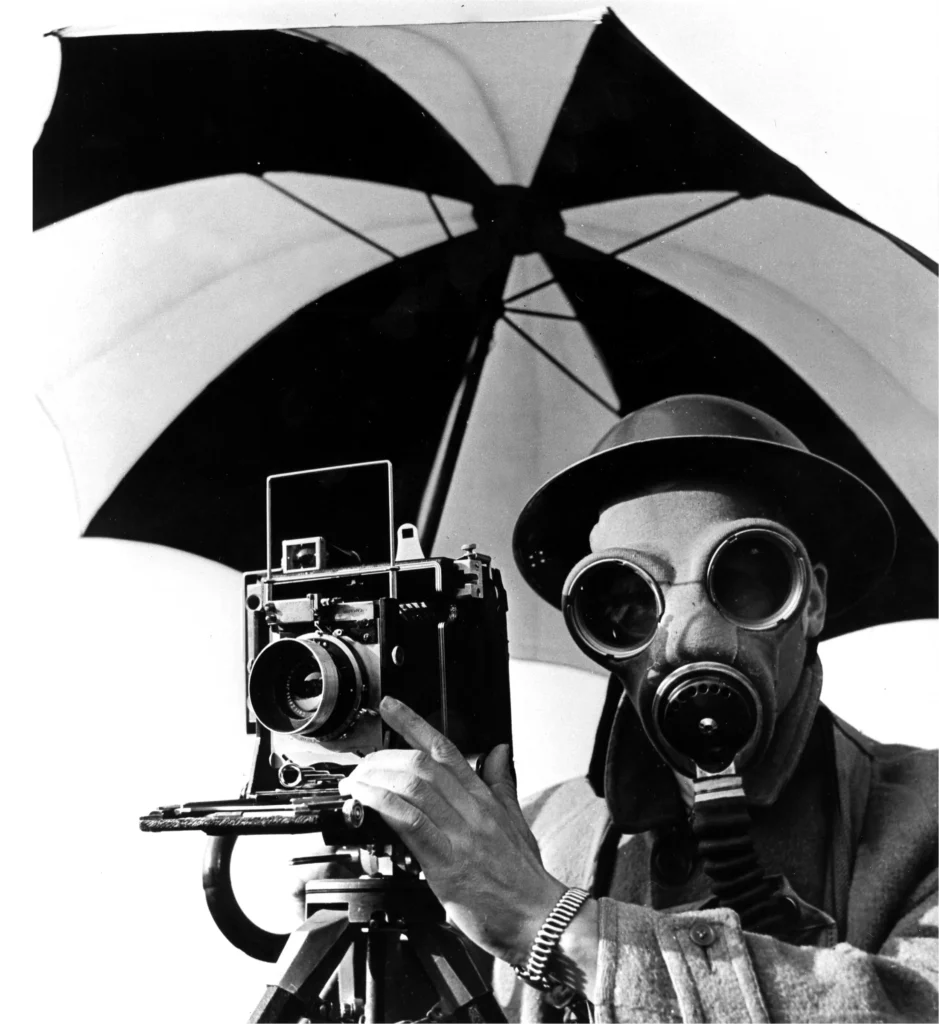
You were a model before you were a photographer: you knew both sides of the lens. Today we’re all, constantly, watched and watching. What did standing on both sides teach you that the feed doesn’t?
Standing in front of the lens taught me what the camera does to a person: it turns them into a surface, possesses them a little. That’s why, once I moved behind it, I knew exactly what I was doing to the people I photographed. I knew the weight of that act.
Your feed puts you on both sides a thousand times a day, but it strips away exactly that awareness. You watch and you show yourselves without ever feeling the weight of either gesture. It’s the difference between stealing a glance knowing it’s a theft, and doing it believing it costs nothing. It always costs something. You’ve simply stopped feeling it.
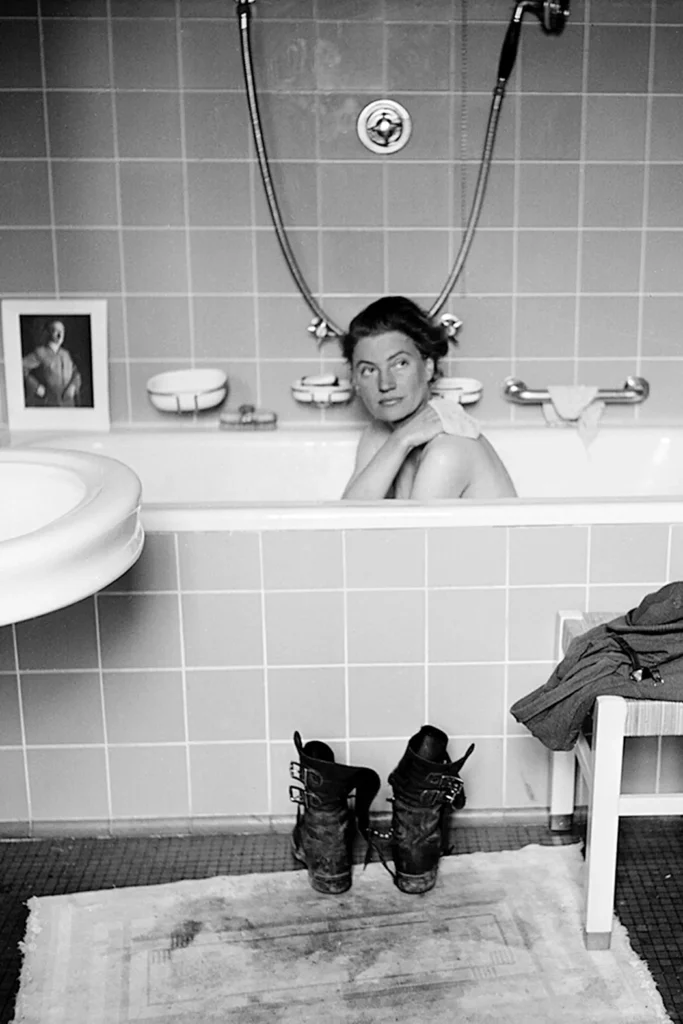
Your most famous photograph shows you in Hitler’s bathtub, hours after seeing the camps. A staged image, constructed, yet utterly true. What’s the difference between that and a fake made today by a machine?
I built that photograph with Dachau’s mud still on my boots, which I left on his bathmat on purpose. Every detail was a choice, yes, but every detail was true: I was really there, I had really seen it, and that tub really was his. The staging existed to tell a truth, not to replace one.
A fake made by a machine does the exact opposite: it wears the look of truth to say something that never happened. One is a metaphor; the other is a lie. They resemble each other the way an actor crying resembles a con man crying. The gesture is the same. The only thing that changes is everything.
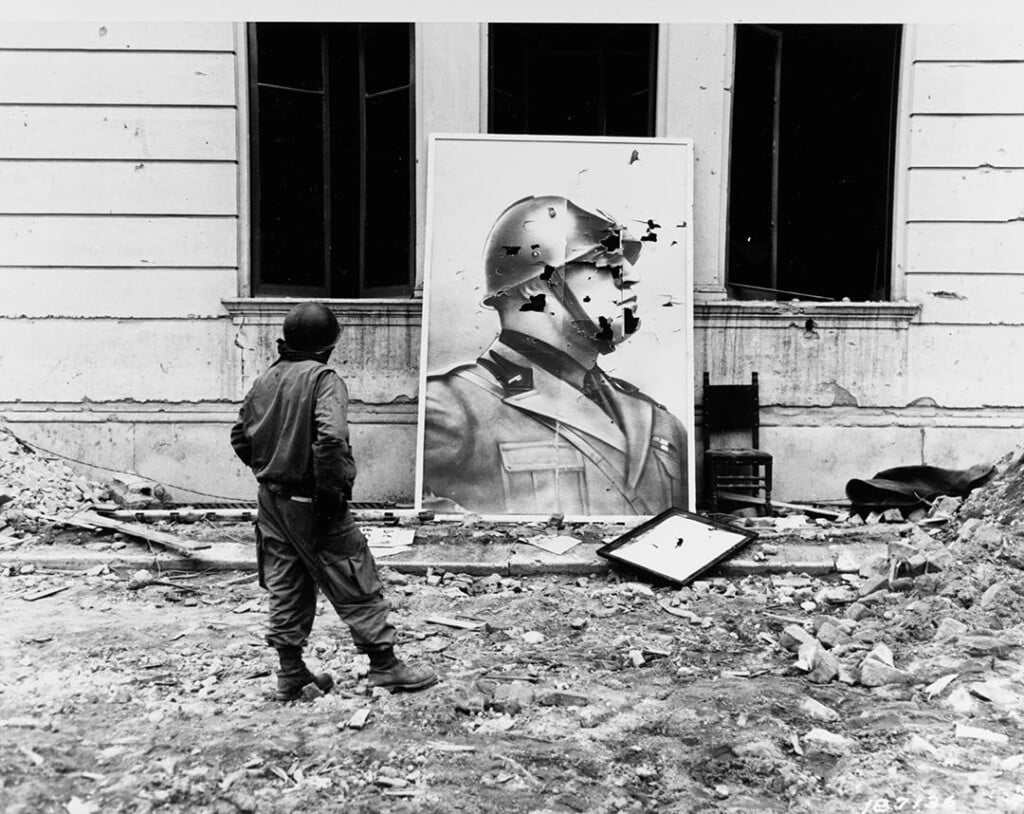
You saw the real war, from the inside. Today war arrives as a scroll, sandwiched between ads. What have we lost, turning horror into content?
We’ve lost the right to be shaken by it. When one of my photographs of the camps ran in a magazine, it stopped you cold: you had to put the cup down and reckon with what you’d just seen. It was unbearable, and it was supposed to be.
You’ve put horror in the same stream where you pick out shoes and look at cats. A child under the rubble, then an anti-wrinkle cream, then a joke. The scrolling itself numbs you: it’s not that you’ve become cruel, it’s that the format stops you from feeling. War as content doesn’t inform you about war. It trains you not to feel it. And that’s far worse than ignorance, because it wears the face of awareness.
You came back from the war and didn’t speak of it for decades. Today we’d call that silence trauma. Looking has a cost. And yet today we look at everything and seem to feel nothing. How do you explain that?
I paid for what I saw, and I paid for it for the rest of my life, in ways we didn’t even have names for back then. I stopped talking about it because really looking gets inside you and never leaves. That cost was the proof that I had truly looked.
You look far more than I ever did and pay nothing for it, and that should unsettle you more than my silence does. Not because you’ve become insensitive, but because you’ve found a way to look without seeing. The image passes through you and leaves no trace. I envy and fear that lightness of yours in equal measure. The pain of looking was unpleasant, but it was human. Feeling nothing at all is the closest thing to a machine any of you have ever become.
So tell me: is there still a reason to pick up the camera and make a true image?
More than ever, precisely because it’s become difficult. When everyone can fabricate false images with one finger, going somewhere real, looking a true thing in the eye and bringing it back becomes an almost subversive act. A luxury. A form of courage.
I never photographed to make pretty pictures. I photographed to say “I was there, and this happened.” As long as one single person is willing to go, to see, and to come back with the proof, the witness isn’t dead. Just rare. And rare things, my boy, have always been the only ones worth anything.