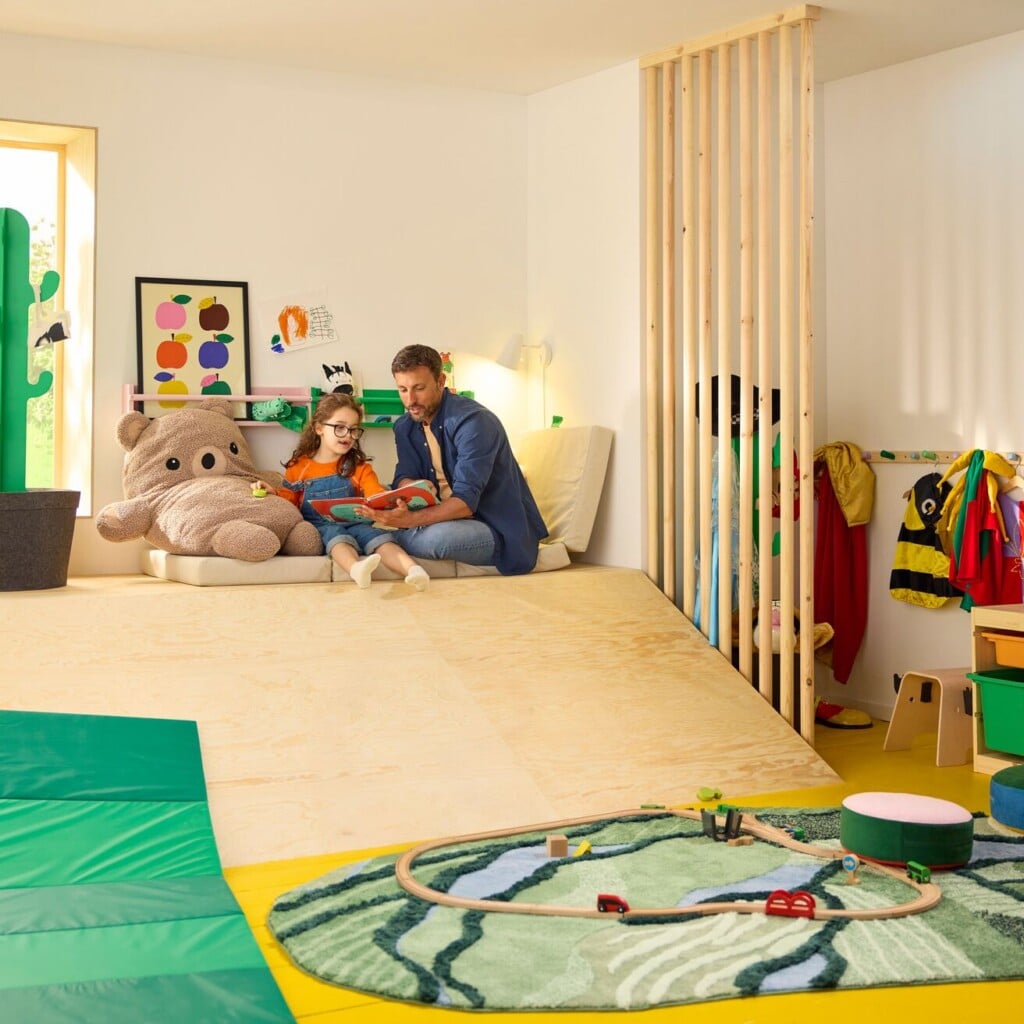
The new Grejsimojs collection by IKEA is conceived as a return to play—not as a childish interlude, but as a universal language capable of moving across ages, roles, and rooms.
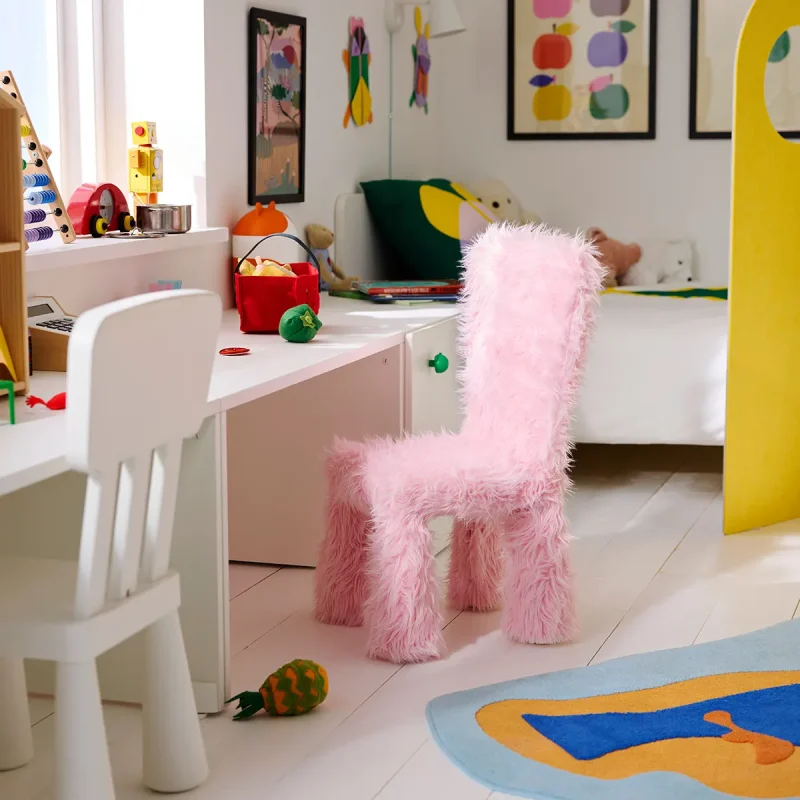
Among the most emblematic pieces is a small fur-covered chair, pink or light blue, designed by Carl Öjerstam. It’s a reinterpretation of IKEA’s iconic Mammut chair that seems to nod to the visionary interiors of Nanda Vigo, where color and material became experience.
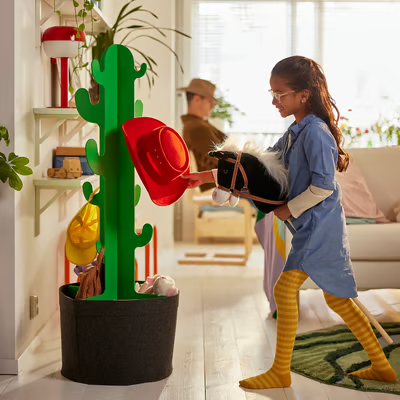
In the same way, the stylized cactus-shaped coat rack recalls the one created by Guido Drocco and Franco Mello for Gufram, an icon of Italian radical design from the 1970s, here reimagined with irony and lightness.
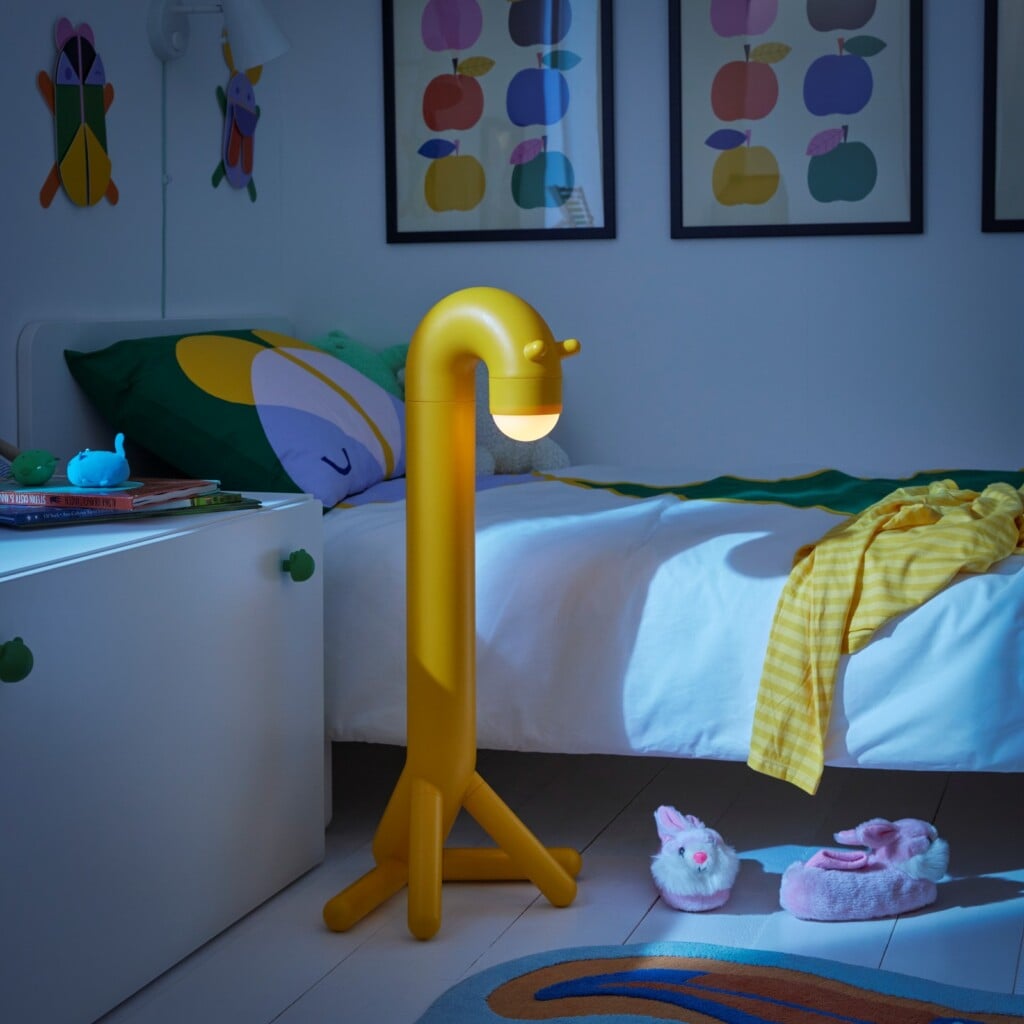
Then there’s the wireless lamp shaped like a seated giraffe, one of the objects that best conveys the collection’s approach. Initially designed on four legs, it was rethought because a child could have tipped it over too easily. Around it are winged stools, storage objects that resemble small creatures, and a pencil holder that looks as if it stepped straight out of an animated dream by Hayao Miyazaki, as noted by Domus.
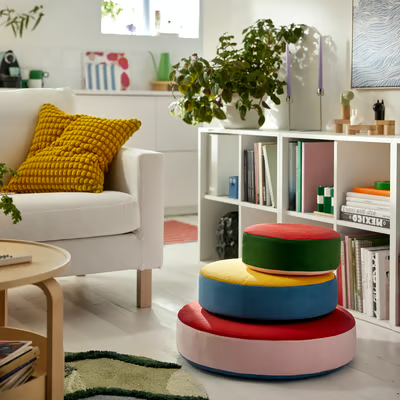
Available in Italy from the end of January, Grejsimojs includes 33 pieces that combine playful shapes, tactile textures, and pop colors, turning the domestic object into an invitation to action. This isn’t about decorating, but about activating space and those who inhabit it: children, parents, young adults, and everyone in between.
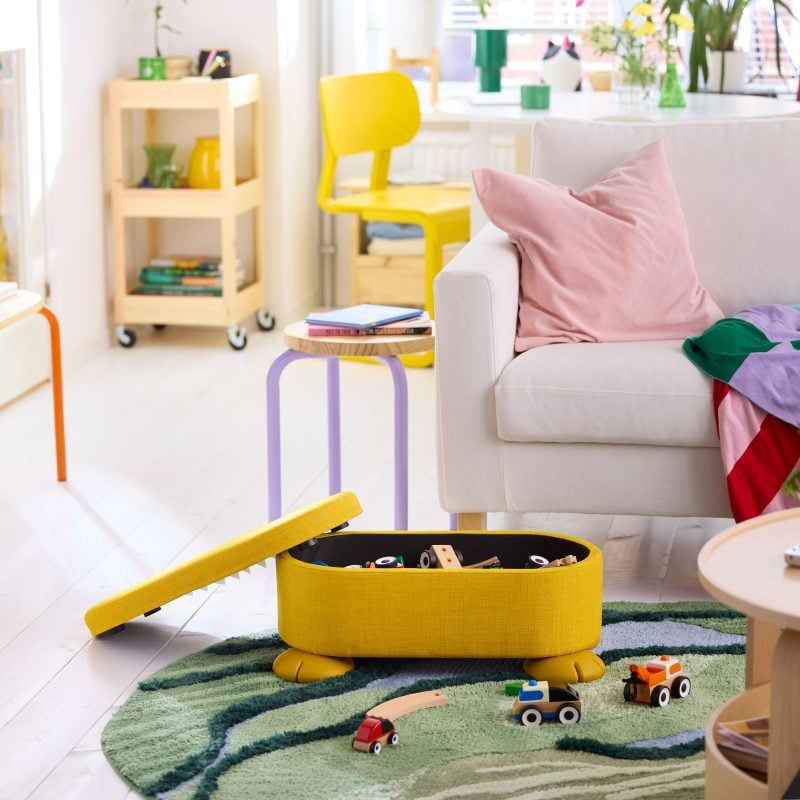
At the heart of the project is IKEA’s Play Report, a study showing how families and children want more moments of play, and how the home can become the natural place to reduce stress and build connections. Grejsimojs is therefore not just a simple assortment update, but an independent collection developed over two and a half years by a dozen designers.
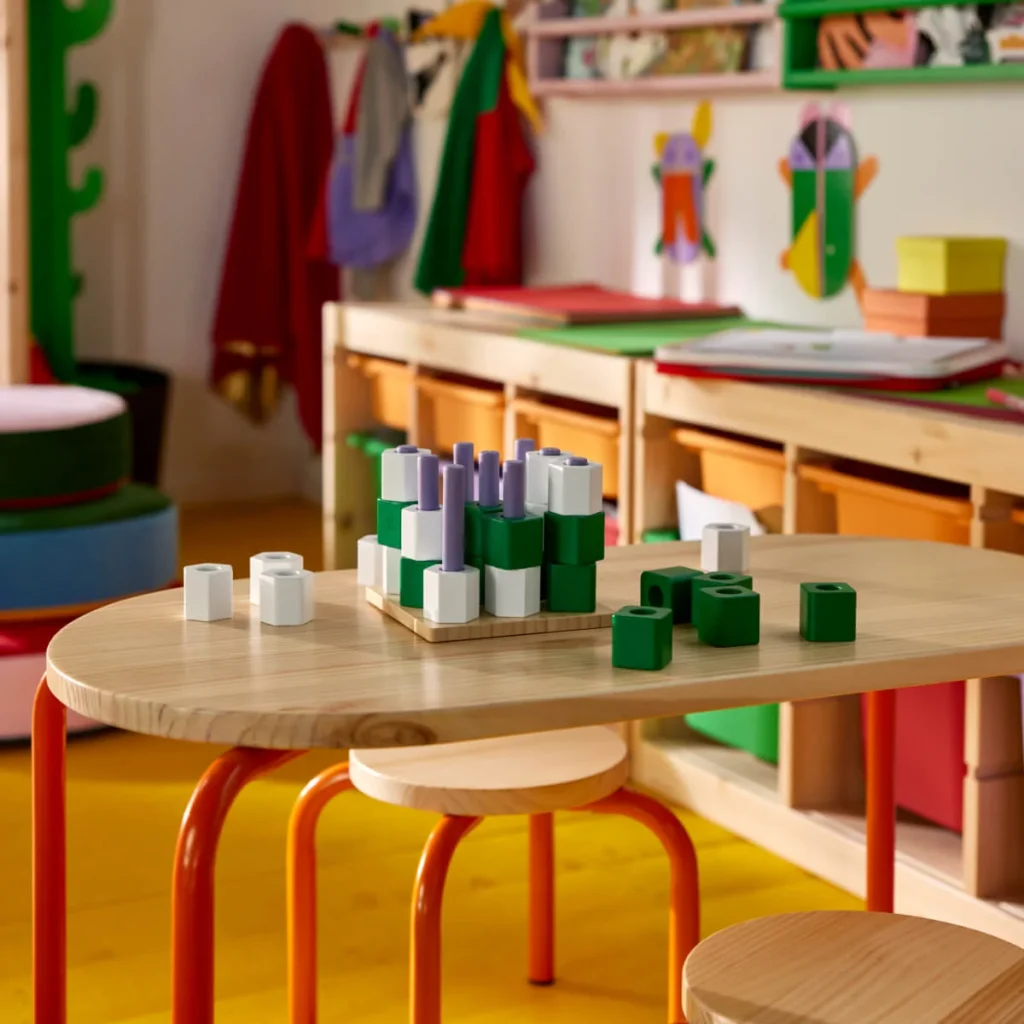
The goal isn’t to entertain children, but to lower the barriers between adults and kids. Objects don’t teach—they suggest. Sitting, stacking, dragging, balancing. At this point, play design becomes an intentional gesture.
Grejsimojs is also a response to the shifts of the digital era: no demonization of technology, but a conscious choice to work with the physical world, made of weight, balance, and material. Not nostalgia, but a gentle cultural gesture that brings play back to the center of everyday life, as a shared and deeply contemporary practice.